The Detour Problem: Master Indirect Paths to Success
Scientifically Reviewed · Dr. Marwa Abd-Alazim · October 10, 2026
Review Criteria & Clinical Standards
This content undergoes rigorous scientific peer-review and medical editorial standards at Arab Psychology Network to ensure clinical accuracy, validity, and compliance with evidence-based guidelines from leading psychological and healthcare authorities (APA / WHO).
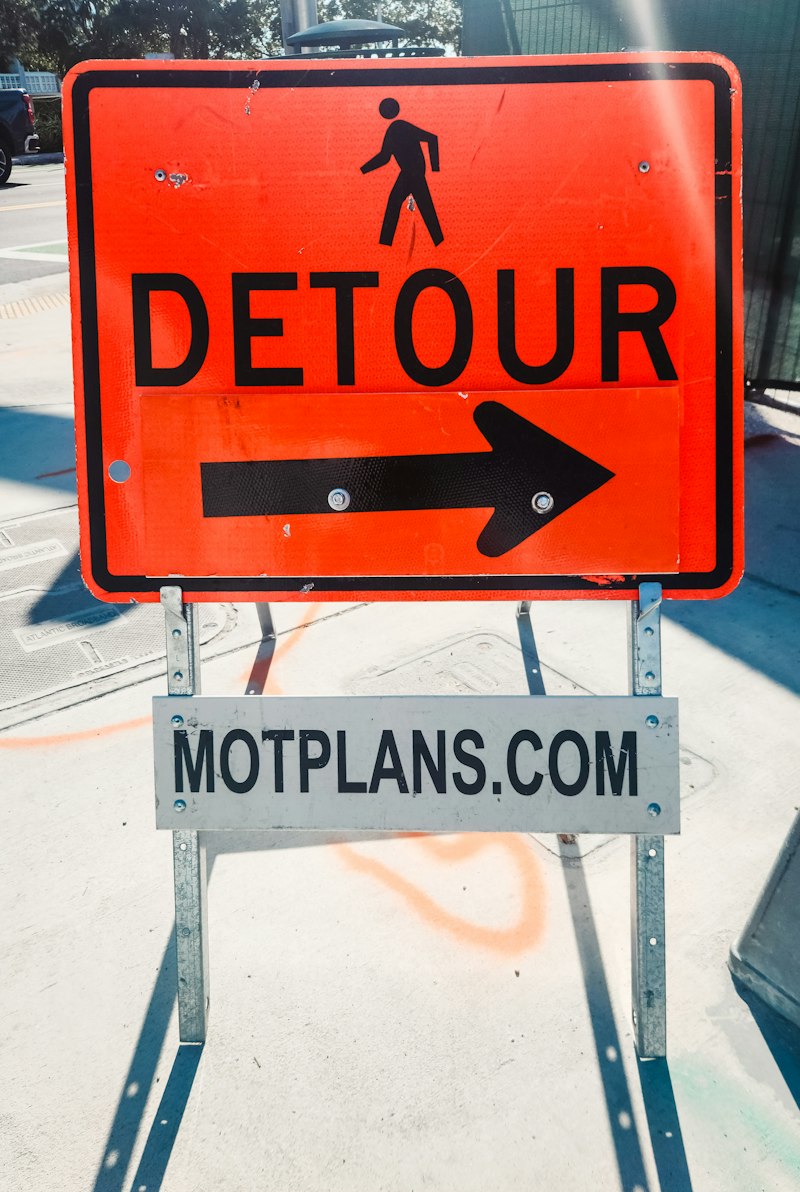
The Core Definition of the Detour Problem
The detour problem, a fundamental concept within cognitive psychology, describes a specific class of tasks where individuals are compelled to choose a route that intentionally deviates from the most direct or obvious path to reach a desired target location. This cognitive challenge requires an individual to bypass immediate obstacles or less favorable direct options by first moving away from the goal, or along a longer path, before ultimately converging on it. It inherently involves a conflict between the innate human tendency to seek the shortest route and the necessity to adopt a seemingly inefficient, circuitous path to achieve a successful outcome.
At its essence, the detour problem highlights the intricate processes of decision-making, problem-solving, and spatial reasoning that underpin human navigation and planning. It moves beyond simple Euclidean distance calculations, demanding a more sophisticated mental model of the environment and an understanding of dynamic constraints. The core idea is that optimal pathfinding is not always synonymous with the physically shortest distance; sometimes, a temporary ‘retreat’ or a longer initial trajectory is the only viable or most efficient strategy in the long run, particularly when direct routes are obstructed, hazardous, or otherwise unavailable.
This psychological construct has been extensively explored across various domains, including route planning, everyday navigation, and broader aspects of spatial cognition. Researchers investigate how people perceive, evaluate, and ultimately decide to undertake a detour, shedding light on the cognitive mechanisms involved when faced with non-optimal initial choices that lead to optimal long-term results. Understanding these processes is crucial for comprehending human adaptive behavior in complex environments.
Historical Context and Research Origins
The systematic study of the detour problem gained significant traction within the field of cognitive psychology, particularly in the late 20th and early 21st centuries, as researchers delved deeper into the complexities of human navigation and spatial cognition. While the concept of indirect routes has always existed in human experience, the scientific focus shifted towards understanding the underlying cognitive computations and decision-making biases that influence such choices. Key researchers like Klatzky, Loomis, Golledge, Philbeck, Langley, Meilinger, Rosenbaum, Waller, Vogel, Wood, and Luck have contributed substantially to the current understanding through their pioneering work.
The origins of this research can be traced to a broader interest in how humans mentally represent and interact with their physical environment, moving beyond simple stimulus-response models to investigate higher-order cognitive functions. Early studies often involved controlled laboratory experiments, utilizing virtual environments or carefully designed physical mazes, to observe and quantify human behavior when direct paths were blocked or suboptimal. This methodological approach allowed researchers to isolate variables and systematically test hypotheses about factors influencing detour decisions and their impact on performance.
For instance, studies by Klatzky et al. in the mid-2000s extensively examined the effects of detours on route learning and navigation performance, highlighting the cognitive costs associated with non-direct paths. Concurrently, work by Langley & Meilinger explored motivational aspects, such as the influence of rewards, and cognitive strategies, like reliance on landmarks, in the context of detour route planning. These foundational studies laid the groundwork for a more nuanced understanding of the cognitive challenges posed by detours, establishing the detour problem as a distinct area of inquiry within cognitive science.
Factors Influencing Detour Decisions in Route Planning
When individuals are presented with the option of taking a detour during route planning, several cognitive and environmental factors come into play, significantly influencing their ultimate decision. One critical factor is the availability and quality of additional information regarding the alternative route. Research by Vogel et al. (2010) demonstrated that people are considerably more inclined to choose a detour when they possess detailed knowledge about its characteristics, such as the precise number of turns involved and its estimated length. This suggests that uncertainty is a major deterrent; when the cognitive load of evaluating an unknown path is reduced by clear information, the perceived risk and effort associated with the detour decrease, making it a more viable option.
Beyond explicit information, extrinsic motivators also play a pivotal role. Langley & Meilinger (2010) found that the presence of a reward significantly increases the likelihood of individuals opting for a detour. This indicates that the potential for a tangible benefit can outweigh the inherent cognitive cost or perceived inefficiency of a longer path. The prospect of a reward, whether monetary, time-saving, or experiential, can reframe the decision from one of pure spatial optimization to a cost-benefit analysis where the “cost” of the detour is offset by the “benefit” of the reward. This highlights the interplay between cognitive processes and motivational states in complex decision-making scenarios.
Furthermore, the perceived complexity of the direct route versus the detour path can influence choices. While not explicitly detailed in the original text regarding route planning choices, the literature on spatial cognition suggests that a direct route perceived as overly complex, perhaps due to frequent turns, heavy traffic, or difficult intersections, might implicitly encourage the selection of a simpler, albeit longer, detour. This decision reflects a cognitive trade-off: avoiding mental effort and potential frustration on a complicated direct path, even if it means extending travel time or distance. The human mind often seeks to minimize cognitive strain, and a clear, albeit longer, path can sometimes be preferred over a shorter but mentally demanding one.
Impact of Detours on Navigation Performance
The introduction of detours has measurable and often detrimental effects on navigation performance, particularly concerning the acquisition and retention of route knowledge. Studies conducted by Klatzky et al. (2006) in virtual environments revealed that detours can have a significant negative effect on route learning performance. This impairment arises because detours disrupt the formation of a coherent, linear mental representation of the path. When a route is direct, individuals can easily create a cognitive map that links sequential segments. However, a detour introduces a deviation that requires temporary abandonment of the primary goal-direction, followed by a re-orientation, making the overall spatial learning process more arduous and prone to errors.
The cognitive challenges posed by detours are further exacerbated under conditions of time pressure. Klatzky et al. (2005) found that detours had an even more pronounced negative effect on navigation performance when people were given a limited amount of time to complete the task. In such high-pressure situations, cognitive resources are already strained, and the additional mental load required to process and execute a detour can overwhelm an individual’s working memory capacity. This leads to increased errors, slower reaction times, and a reduced ability to adapt effectively to unexpected changes, underscoring the importance of sufficient cognitive processing time when navigating complex or altered routes.
The disruption caused by detours extends beyond simple route memorization; it also affects the ability to maintain a sense of direction and overall spatial awareness. Detours can force navigators to rely more heavily on specific landmarks or transient cues, rather than a robust understanding of the global spatial layout. This piecemeal approach to navigation makes it harder to generalize knowledge to new situations or recover from subsequent navigational errors. Consequently, the cognitive effort invested in managing a detour can detract from the resources available for building a comprehensive and flexible mental map of the environment, leading to less efficient and less confident navigation overall.
Cognitive Processes in Spatial Cognition
The detour problem offers profound insights into the intricate cognitive processes that underlie spatial cognition, particularly during route planning. One significant finding relates to the influence of route complexity on spatial memory. Rosenbaum & Waller (2009) demonstrated that more complex routes, characterized by numerous turns, intersections, or segments, consistently resulted in poorer memory performance. This suggests that the human cognitive system has limits in encoding and retrieving highly intricate spatial information, especially when that information deviates from a straightforward path. The increased cognitive load associated with processing and remembering a complex detour can deplete attentional resources, thereby hindering the formation of stable spatial memories.
Furthermore, an intriguing aspect of spatial cognition in the context of detours is the strategic shift in reliance on environmental cues. Langley & Meilinger (2011) discovered that people tend to rely more heavily on landmarks when planning routes that involve detours. When faced with a non-direct path, the global orientation or cardinal directions become less immediately useful, prompting individuals to anchor their navigation on salient, easily identifiable features in the environment. Landmarks provide critical reference points that help segment the detour into manageable parts, offering temporary goals and confirming progress, thereby compensating for the disrupted sense of overall direction that a detour can cause.
This reliance on landmarks underscores the adaptive nature of human spatial cognition. When the optimal strategy of following a direct path with a clear mental map is unavailable, individuals instinctively switch to a heuristic-based approach, leveraging perceptual information from the environment. This compensatory strategy, while effective for navigating specific detour segments, might come at the cost of developing a comprehensive, allocentric spatial representation of the entire environment. The cognitive system prioritizes immediate navigational success over the long-term goal of building a robust mental map, especially when the immediate task is challenging.
A Practical Example: Navigating a Road Closure
Consider a common everyday scenario: a person, let’s call her Sarah, is driving to a new restaurant across town, relying on her familiar mental map of the city. Her usual, most direct route involves a major arterial road. As she approaches a key intersection, she encounters a prominent sign indicating a sudden road closure due to an unforeseen emergency or construction. This immediately presents her with a detour problem. Her initial cognitive inclination is to follow the direct path, but that option is now unavailable, forcing her to consider an alternative. The “target location” remains the restaurant, but the “most direct route” is blocked.
The “how-to” of applying the psychological principle unfolds as Sarah engages in rapid problem-solving and decision-making under pressure. First, she accesses her cognitive map, looking for alternative main roads. If she has a GPS device, it might immediately suggest a new route. This external information, much like the “additional information” in research, helps reduce her uncertainty. The GPS might display the new path’s length and estimated time, making the detour more palatable. If no GPS is available, she must rely solely on her internal spatial knowledge, recalling other streets that eventually lead in the general direction of the restaurant.
Next, Sarah evaluates the suggested detour (either from GPS or her memory). She might weigh the perceived complexity of the detour—does it involve many turns? Does it pass through an unfamiliar neighborhood? If the detour appears straightforward, even if longer, she is more likely to accept it. Her decision is also influenced by her motivation; if she’s late and there’s a “reward” (e.g., meeting friends who are already there), she might choose the quickest detour, even if it feels less familiar. As she proceeds on the detour, she will likely pay heightened attention to landmarks—stores, unique buildings, or distinct intersections—to confirm she is on the correct path, as her usual route cues are absent. This step-by-step cognitive engagement illustrates the practical implications of the detour problem in real-world navigation.
Significance and Broader Impact
The study of the detour problem holds immense significance for the field of cognitive psychology, offering a robust framework for understanding human decision-making, problem-solving, and adaptation in dynamic environments. It moves beyond simplistic models of rational choice, revealing the complex interplay between spatial perception, memory, motivation, and environmental information that guides our navigational behaviors. By dissecting how individuals cope with deviations from expected paths, researchers gain critical insights into the flexibility and limitations of human cognitive architecture, particularly under conditions of uncertainty and constraint. This understanding is fundamental to building comprehensive theories of human intelligence and adaptive behavior.
The applications of insights derived from the detour problem are far-reaching and impact various domains today. In urban planning and architecture, understanding how people perceive and navigate detours can inform the design of more intuitive and resilient public spaces, ensuring effective wayfinding even during disruptions. For transportation systems and autonomous vehicles, this research is crucial for developing sophisticated route planning algorithms that not only find optimal paths but also anticipate human cognitive responses to unexpected obstacles, potentially offering detours that are more psychologically acceptable or easier to follow. This can lead to more user-friendly GPS systems and self-driving cars that better mimic human navigational intelligence.
Furthermore, in the realm of human-computer interaction, these findings are instrumental in designing more effective navigation interfaces and mapping applications. By recognizing that users prefer detours with clear information or when a reward is present, developers can optimize how alternative routes are presented, minimizing user frustration and cognitive load. In educational psychology, insights into spatial memory and cognitive load associated with complex routes can inform teaching strategies for subjects requiring spatial reasoning. Even in clinical settings, understanding how individuals with cognitive impairments process detours can aid in developing rehabilitation strategies for spatial disorientation. Ultimately, the detour problem provides a lens through which to enhance human-environment interactions across a multitude of practical contexts.
Connections to Related Concepts and Broader Categories
The detour problem is deeply intertwined with several other core psychological concepts and theories, providing a rich area for interdisciplinary exploration. It is intrinsically linked to the concept of cognitive load, as processing detours inherently increases the mental effort required for route planning and execution. The challenge of integrating new information, updating mental maps, and maintaining situational awareness during a deviation places significant demands on an individual’s working memory. When cognitive load becomes excessive, performance declines, leading to errors and increased frustration, as evidenced by studies on navigation performance under limited time.
Moreover, the phenomenon highlights the use of heuristics and biases in decision-making. While ideally, individuals would calculate the objectively optimal route, in reality, they often rely on mental shortcuts or simplified rules (heuristics) to navigate complex situations like detours. For instance, the preference for clearer, well-defined detours over shorter but ambiguous ones, or the heightened reliance on salient landmarks, are examples of such heuristic strategies. These strategies, while often efficient, can sometimes lead to suboptimal choices or increased cognitive effort, revealing the trade-offs inherent in human cognitive processing.
This area of study firmly belongs to the broader subfield of Cognitive Psychology, which focuses on mental processes such as perception, memory, problem-solving, and language. However, its implications extend into other related fields, including Environmental Psychology, which examines the interplay between individuals and their physical surroundings, and Human Factors (or Ergonomics), which applies psychological principles to the design of systems and products, such as navigation aids. The detour problem serves as a compelling model for understanding how human cognition interacts with complex spatial environments to achieve goals, providing a microcosm for broader principles of intelligent behavior and adaptation.