Diffuse Bipolar Cells: How Your Retina Shapes Perception
Scientifically Reviewed · Dr. Marwa Abd-Alazim · October 1, 2026
Review Criteria & Clinical Standards
This content undergoes rigorous scientific peer-review and medical editorial standards at Arab Psychology Network to ensure clinical accuracy, validity, and compliance with evidence-based guidelines from leading psychological and healthcare authorities (APA / WHO).
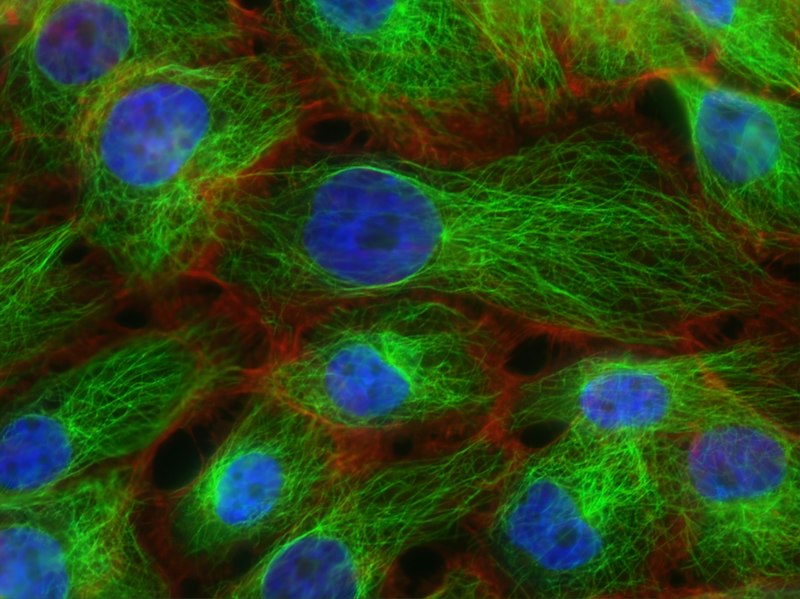
Diffuse Bipolar Cell
Core Definition and Fundamental Role
The diffuse bipolar cell represents a critical class of interneurons within the vertebrate retina, acting as a foundational conduit for visual information transfer from primary photoreceptors to downstream ganglion cells. At its anatomical and functional core, this cell type is distinguished by its high degree of convergence, gathering synaptic inputs from a substantial population of photoreceptors over a relatively wide receptive field. This extensive spatial integration is precisely what the term “diffuse” denotes, contrasting sharply with more localized pathways, such as those of midget bipolar cells, which process highly restricted spatial inputs. By translating the graded hyperpolarizing potentials of photoreceptors into modulated electrical signals at its axon terminals, the diffuse bipolar cell initiates the complex retinal processing required to convey essential aspects of the visual scene—such as overall luminance, coarse spatial structures, and motion—to the brain.
At the physiological level, the operation of the diffuse bipolar cell relies on a sophisticated cascade of neurochemical transmission. In darkness, photoreceptors continuously release the neurotransmitter glutamate; upon absorbing photons, these photoreceptors hyperpolarize, causing a rapid decrease in glutamate release. Diffuse bipolar cells are tuned to detect these fluctuations through specialized membrane receptors, splitting their responses into two primary polarities: the ON-bipolar pathway and the OFF-bipolar pathway. While ON-bipolar cells depolarize when light reduces glutamate levels, OFF-bipolar cells hyperpolarize under the same conditions. Because a single diffuse bipolar cell pools signals from dozens of photoreceptors, it performs a spatial summation of these inputs, dramatically increasing the signal-to-noise ratio and enabling the visual system to detect weak optical stimuli that would otherwise go unnoticed by individual photoreceptors.
Beyond acting as simple relay stations, diffuse bipolar cells actively shape the spatial and temporal characteristics of the early visual signal. This early processing is influenced by lateral inhibitory feedback from horizontal cells in the outer retina, which sharpens spatial contrast and refines the receptive field borders of the bipolar cells. Furthermore, the segregation of visual inputs into parallel ON and OFF pathways at this early synaptic junction prevents signal degradation and allows the brain to process increments and decrements of light simultaneously. This highly efficient division of labor ensures that the visual cortex receives a pre-sorted, high-contrast representation of the external environment, laying the framework for complex features like edge detection, motion tracking, and depth perception.
Anatomical Characteristics and Retinal Location
The morphology of the diffuse bipolar cell is elegantly adapted to its role as a wide-field integrator. These neurons are structurally stratified within the retina, with their cell bodies residing in the inner nuclear layer (INL), their highly branched dendrites extending into the outer plexiform layer (OPL), and their axonal terminals projecting into the inner plexiform layer (IPL). The defining anatomical feature of these cells is the vast lateral spread of their dendritic arbor in the OPL. This expansive dendritic tree enables them to establish physical contact with numerous photoreceptor terminals, predominantly rods, although certain subtypes also form synapses with multiple cone photoreceptors, allowing them to sample information across a broad retinal surface area.
The spatial organization of diffuse bipolar cell axons within the IPL is highly organized and determines their functional connectivity with downstream partners. The IPL is divided into distinct parallel sublaminae that segregate different types of visual information; specifically, the axons of OFF-bipolar cells terminate in the outer sublamina (sublamina a), where they synapse with OFF-ganglion cells, while the axons of ON-bipolar cells project deeper to terminate in the inner sublamina (sublamina b), synapsing with ON-ganglion cells. This strict laminar targeting ensures that the parallel channels of light and dark information remain segregated as they pass from the bipolar cells to the ganglion cells, preserving the spatial and temporal fidelity of the visual signal before it is sent to the brain.
Ultrastructural analyses using electron microscopy have revealed that diffuse bipolar cells form highly specialized junctions known as ribbon synapses with photoreceptor terminals in the OPL. These synapses are designed for the rapid, continuous, and non-decremental release of neurotransmitters, allowing the bipolar cells to register subtle, graded shifts in light intensity. Depending on the subtype, these dendritic contacts can be invaginating, where the dendrite penetrates deep into the photoreceptor terminal, or flat, making superficial contact with the base of the terminal. The specific synaptic structure, combined with the localized expression of metabotropic or ionotropic glutamate receptors, determines whether the diffuse bipolar cell will function within the ON or OFF pathway, highlighting the precise structural-functional mapping of these interneurons.
Electrophysiological Properties and Signal Transduction
The electrophysiological behavior of diffuse bipolar cells is characterized by the generation of graded potentials rather than all-or-none action potentials. Because these cells traverse only a short physical distance within the retina, they do not require action potentials to propagate signals along their axons; instead, they utilize continuous, analog membrane potential fluctuations to encode the intensity and duration of visual stimuli. When light falls on the retina and hyperpolarizes photoreceptors, the resulting decrease in glutamate release causes a corresponding shift in the bipolar cell’s membrane potential. This graded response system allows for an incredibly nuanced representation of the visual scene, capturing fine gradations of contrast and brightness that would be lost in a digital, spike-based signaling system.
Signal transduction within these cells is mediated by distinct classes of post-synaptic glutamate receptors that dictate their physiological polarity. In ON-diffuse bipolar cells, transduction is mediated by metabotropic glutamate receptors, specifically mGluR6, which are coupled to an intracellular G-protein cascade that closes non-specific cation channels in the dark; light-induced reduction in glutamate relieves this inhibition, causing the cell to depolarize. Conversely, OFF-diffuse bipolar cells express ionotropic glutamate receptors, such as AMPA or kainate receptors, which directly open cation channels in response to glutamate, causing these cells to depolarize in the dark and hyperpolarize in the light. This divergent receptor expression is the molecular mechanism that splits the uniform photoreceptor input into parallel, complementary processing pathways.
The spatial summation properties of diffuse bipolar cells also influence their temporal response profiles. Because they pool inputs from multiple photoreceptors, their response reflects an average of the light activity across their entire receptive field, which helps to filter out high-frequency spatial noise. However, this spatial pooling comes with a trade-off, as it slightly reduces spatial resolution compared to the point-to-point private lines of the midget pathway. The intrinsic biophysical properties of the diffuse bipolar cell membrane, including specific voltage-gated calcium and potassium channels, are finely tuned to balance this trade-off, optimizing both the speed of signal transmission and the integration of weak, low-contrast stimuli under challenging lighting conditions.
Diverse Subtypes and Their Functional Specialization
The term “diffuse bipolar cell” encompasses a highly diverse group of neurons rather than a single, uniform population. These cells are classified into multiple distinct subtypes based on their genetic profiles, dendritic connectivity, axonal stratification depths, and physiological responses. This cellular diversity allows the retina to process multiple features of the visual environment in parallel, maximizing the efficiency of the visual system.
Among the classified varieties of these interneurons, several prominent categories are recognized based on their photoreceptor connectivity and physiological responses:
- Rod Bipolar Cells: These cells exclusively receive input from rod photoreceptors and operate as high-sensitivity channels dedicated entirely to scotopic, or low-light, vision.
- Diffuse ON-Cone Bipolar Cells: These neurons integrate signals from multiple cone photoreceptors and depolarize in response to light increments, stratifying within the inner sublamina of the inner plexiform layer.
- Diffuse OFF-Cone Bipolar Cells: These cells pool signals from multiple cones and depolarize in response to light decrements, projecting their axons to the outer sublamina of the inner plexiform layer.
Each of these subtypes is characterized by a unique molecular signature, expressing specific combinations of ion channels, neurotransmitter receptors, and cell-adhesion molecules that dictate their synaptic partners. For example, rod bipolar cells utilize a specialized, indirect pathway to transmit their signals to ganglion cells, relaying information through AII amacrine cells, which then distribute the signals to both ON and OFF pathways. In contrast, diffuse cone bipolar cells typically establish direct chemical synapses with ganglion cells, allowing for faster signal transmission. This intricate division of labor ensures that the retina can process a vast range of visual inputs, from the capture of a single photon in near-total darkness to rapid motion detection under bright daylight conditions.
Historical Discoveries and Methodological Advancements
The scientific understanding of the diffuse bipolar cell has evolved in tandem with major technological breakthroughs in neuroanatomy and physiology. The structural identification of these cells began with the pioneering work of the Spanish neuroanatomist Santiago Ramón y Cajal in the late 19th and early 20th centuries. Utilizing the Golgi staining method, which silver-impregnates a tiny fraction of neurons in their entirety, Cajal was able to visualize the detailed morphology of retinal cells. His meticulous drawings provided the first evidence of bipolar cells with widely spreading dendrites, establishing the foundational morphological categories that researchers still use today and supporting his revolutionary neuron doctrine, which stated that the nervous system is composed of discrete, communicating cells.
In the mid-20th century, the development of electron microscopy allowed researchers to peer beyond light-microscopic limits and resolve the complex synaptic relationships of the outer and inner plexiform layers. Landmark studies by neuroscientists such as John E. Dowling, Brian B. Boycott, and Heinz Wässle mapped the exact wiring diagram of the retina, distinguishing the diffuse integration of rod and cone inputs from the highly localized, one-to-one connections of the midget system. Electron microscopy confirmed the existence of ribbon synapses and clarified how the dendrites of diffuse bipolar cells physically associate with photoreceptors, providing a structural explanation for the spatial summation observed in physiological experiments.
In the modern era, the integration of electrophysiology, immunohistochemistry, and transcriptomics has further resolved the functional complexity of these interneurons. Intracellular and patch-clamp recordings have allowed scientists to measure the precise graded potentials of individual diffuse bipolar cells in response to localized light stimuli, confirming their center-surround receptive field organization. Meanwhile, high-throughput single-cell RNA sequencing has revealed the exact genetic profiles of various diffuse bipolar cell subtypes, mapping the specific receptors and channels they express. These advanced molecular tools have transformed the diffuse bipolar cell from a simple anatomical link into a highly specialized computational unit, demonstrating its active role in processing sensory information.
Functional Significance in Visual Processing
The primary functional significance of the diffuse bipolar cell lies in its capacity for spatial summation, a mechanism that is critical for maximizing visual sensitivity. By pooling weak, subthreshold signals from dozens of individual photoreceptors, these cells can generate a robust graded potential that exceeds the threshold required to activate downstream ganglion cells. This pooling is especially vital under scotopic, or low-light, conditions, where individual photon captures are rare and noisy; without the spatial summation performed by diffuse rod bipolar cells, the visual system would be unable to construct a coherent image in dim environments, severely limiting nocturnal vision and spatial orientation in the dark.
In addition to enhancing sensitivity, diffuse bipolar cells contribute significantly to contrast detection and edge enhancement through their center-surround receptive field structure. This organization is characterized by an antagonistic relationship between the center of the receptive field, which receives direct input from photoreceptors, and the surround, which is modulated by lateral inhibitory signals from horizontal cells. When a uniform light source illuminates both the center and the surround, the lateral inhibition suppresses the cell’s overall response; however, when a light-dark edge falls across the receptive field, the imbalance between center and surround excitation generates a strong signal. This mechanism highlights spatial gradients of light, allowing the visual system to emphasize boundaries, outlines, and shapes, which are the fundamental building blocks of object recognition.
Furthermore, the segregation of diffuse bipolar cells into parallel ON and OFF pathways optimizes the temporal efficiency of the visual system. Because these pathways operate simultaneously, they allow the retina to signal both rapid increases and decreases in light intensity without delay. This parallel processing is crucial for detecting motion, as a moving object constantly creates transient light increments and decrements across different regions of the retinal mosaic. By relaying these dynamic signals through separate, dedicated channels, diffuse bipolar cells ensure that the brain receives a highly responsive, real-time stream of visual information, allowing for rapid tracking of moving stimuli and immediate behavioral responses to environmental changes.
Clinical Relevance and Pathological Implications
Given their central position in the retinal circuitry, any disruption to the structure or function of diffuse bipolar cells can lead to profound visual deficits. One of the most prominent clinical conditions associated with these interneurons is congenital stationary night blindness (CSNB), a heterogeneous group of genetic disorders characterized by a severe impairment of night vision. In many forms of CSNB, the primary pathology is located at the synapse between rod photoreceptors and rod bipolar cells, which are a major class of diffuse bipolar cells. Mutations in genes encoding the mGluR6 receptor, the G-protein subunit Go, or the TRPM1 cation channel disrupt the intracellular signaling cascade, preventing the rod bipolar cells from depolarizing in response to light and effectively blocking scotopic vision while leaving photopic, daylight vision relatively intact.
The progression of diagnostic and therapeutic research regarding these retinal pathways generally follows a structured sequence of clinical translation:
- Genetic Mapping: Identifying the precise mutations, such as those in the mGluR6 signaling cascade, that impair diffuse bipolar cell function.
- In Vitro Modeling: Utilizing animal models and electrophysiological assays to study the cellular pathology of signal transmission failure.
- Therapeutic Intervention: Developing gene therapies, neuroprotective agents, or retinal prostheses designed to bypass or restore the damaged interneuron networks.
In addition to congenital disorders, diffuse bipolar cells are heavily affected in progressive, degenerative retinal diseases such as retinitis pigmentosa (RP). Although RP primarily targets and destroys rod photoreceptors first, the subsequent loss of sensory input triggers a cascade of secondary remodeling throughout the inner retina. Deprived of their synaptic partners, diffuse bipolar cells undergo dendritic retraction, downregulate their glutamate receptors, and may eventually undergo apoptosis. Understanding this secondary degeneration is crucial for the development of sight-restoring therapies, such as retinal prostheses or optogenetic interventions; for these therapies to succeed, the surviving diffuse bipolar cells must remain structurally intact and capable of processing electrical or optical stimulation, making them a primary target for neuroprotective research.
Connections within the Retinal Network
The diffuse bipolar cell is a highly integrated hub within the complex neural network of the retina, maintaining precise synaptic connections in both the outer and inner plexiform layers. In the OPL, the dendrites of these cells receive direct, excitatory input from photoreceptors, integrating signals from a broad spatial area. At the same time, they are modulated by inhibitory feedback from horizontal cells, which form reciprocal synapses with both photoreceptors and bipolar cell dendrites. This lateral inhibitory network is responsible for establishing the antagonistic surround of the bipolar cell’s receptive field, performing the initial spatial filtering that sharpens contrast and prepares the visual signal for higher-order processing.
In the IPL, the axonal terminals of diffuse bipolar cells distribute their processed signals to a diverse array of postsynaptic partners, including amacrine cells and retinal ganglion cells. Amacrine cells, which comprise a highly diverse group of inhibitory interneurons, provide lateral and feedback inhibition within the inner retina, modulating the temporal dynamics and gain control of the bipolar cell output. For example, rod bipolar cells synapse onto AII amacrine cells, which utilize specialized gap junctions to pass the signal to ON-cone bipolar terminals, and inhibitory glycinergic synapses to pass it to OFF-cone bipolar terminals. This circuit allows scotopic signals to access the main cone-driven pathways, illustrating how diffuse bipolar cells are integrated into multi-layered processing loops.
Ultimately, the signals processed by diffuse bipolar cells are transmitted to retinal ganglion cells, whose axons form the optic nerve and project directly to the brain. The specific connectivity between diffuse bipolar cell subtypes and different classes of ganglion cells determines the receptive field properties of those ganglion cells. For instance, diffuse cone bipolar cells synapse directly onto wide-field ganglion cells, contributing to their high sensitivity to motion and overall luminance changes. This complex network of feedforward excitation, feedback inhibition, and lateral integration ensures that the visual information leaving the retina is highly organized, compressed, and optimized for interpretation by the visual cortex.
Broader Theoretical Contexts in Neuroscience
The study of the diffuse bipolar cell offers profound insights that extend far beyond retinal physiology, serving as a fundamental model for understanding sensory processing and neural circuit design throughout the central nervous system. The spatial summation performed by these cells is a classic example of how neural networks manage the trade-off between sensitivity and spatial resolution. This computational strategy is replicated across multiple sensory modalities, such as in the somatosensory system, where wide-field tactile receptors pool inputs to detect faint vibrations, and in the auditory system, where broad-frequency tuning curves enhance sound detection in noisy environments. By examining the biophysical mechanisms of the diffuse bipolar cell, neuroscientists can deduce universal principles of sensory integration.
Furthermore, the segregation of visual signals into parallel ON and OFF pathways at the level of the diffuse bipolar cell illustrates a core principle of neural coding: the division of sensory information into complementary, parallel channels. This design prevents signal decay, minimizes biological noise, and doubles the dynamic range of the sensory system. Similar parallel processing strategies are observed in other brain regions, such as the motor cortex, which utilizes separate populations of neurons to control opposing muscle groups, and the olfactory system, which segregates different odorant features into parallel processing streams. The diffuse bipolar cell provides a clear, highly accessible example of how a simple molecular variation—such as the expression of different glutamate receptors—can establish these parallel channels at the very first synapse of a sensory pathway.
Finally, the center-surround receptive field organization of the diffuse bipolar cell, mediated by lateral inhibition from horizontal cells, represents a canonical example of neuronal circuit computation. Lateral inhibition is a fundamental mechanism used by the brain to prevent the over-saturation of neural circuits, reduce redundant information, and highlight changes across space and time. This computational algorithm is utilized in cortical columns, sensory relay nuclei, and artificial neural networks designed for image recognition. Consequently, the detailed characterization of the diffuse bipolar cell not only enhances our understanding of how we see, but also contributes to the broader theoretical framework of how complex neural networks transform raw, noisy environmental inputs into clear, actionable sensory perceptions.