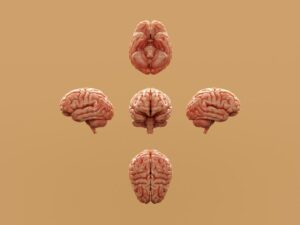
Direct Selection: How Evolution Hardwires Your Instincts
Scientifically Reviewed · Dr. Marwa Abd-Alazim · August 20, 2026
Review Criteria & Clinical Standards
This content undergoes rigorous scientific peer-review and medical editorial standards at Arab Psychology Network to ensure clinical accuracy, validity, and compliance with evidence-based guidelines from leading psychological and healthcare authorities (APA / WHO).
The Core Definition of Direct Selection
Direct selection, in the context of evolutionary biology and evolutionary psychology, is fundamentally defined as the process by which a specific heritable trait increases the immediate fitness of the individual organism carrying that trait, thereby improving their likelihood of survival to reproductive age and enhancing their overall reproductive success. This mechanism operates as a primary driving force of natural selection, favoring alleles that confer a direct, measurable advantage in navigating the challenges of the environment—such as securing resources, avoiding predation, or resisting disease. The core idea is that the benefit of the trait is internalized by the carrier; the trait’s success is measured by the propagation of that individual’s own genetic material into the next generation, unlike other forms of selection which might involve benefits to relatives or group members.
The fundamental mechanism underpinning direct selection involves differential survival and reproduction. If, for instance, a mutation arises that allows an organism to metabolize a new food source more efficiently, that organism will likely garner more energy, maintain better health, and thus be more capable of producing viable offspring than its conspecifics lacking the trait. Over successive generations, this advantageous allele will increase in frequency within the gene pool because the individuals possessing it contribute disproportionately more descendants. This continuous filtering process sculpts biological structures and behavioral predispositions, ensuring that only the most effective adaptations for individual survival and reproduction persist.
It is crucial to understand that direct selection focuses squarely on the consequences of a trait for the individual’s viability and fecundity. This mechanism explains why traits that seem self-serving, such as enhanced visual acuity or superior problem-solving skills, become widespread. These traits are not maintained because they benefit the group or the species abstractly, but because they provide a competitive edge in the struggle for existence and the subsequent competition for mates. Therefore, direct selection is the engine behind many of the most recognizable and ubiquitous biological and psychological adaptations observed across the tree of life, linking specific genetic variations directly to enhanced individual performance.
Distinguishing Direct Selection from Other Mechanisms
While direct selection is a subset of natural selection, it must be carefully differentiated from related evolutionary forces such as kin selection and sexual selection, which operate through distinct pathways to influence genetic frequency. Sexual selection, for example, often involves traits that are detrimental to survival (e.g., the peacock’s massive tail makes it vulnerable to predators) but are maintained because they drastically increase mating success, thus enhancing reproductive success through attraction rather than viability. In contrast, a trait favored by direct selection, such as enhanced camouflage or robust immune function, always provides a tangible and immediate benefit for the organism’s persistence in the face of environmental threats.
Kin selection, theorized primarily by William D. Hamilton, presents another key contrast. Kin selection explains the evolution of altruistic behaviors that reduce the actor’s direct fitness but increase the inclusive fitness of their relatives who share genes (e.g., a worker bee sacrificing itself for the hive). Direct selection, however, strictly concerns traits that maximize the individual’s *own* contribution to the next generation, without relying on the success of relatives. An individual who develops superior hunting skills due to direct selection benefits personally from the increased caloric intake, translating directly into better viability and more resources for their own progeny, whereas altruism driven by kin selection involves an indirect genetic payoff.
The distinction is paramount when analyzing complex human behaviors. Many psychological traits, such as xenophobia or cooperation within a small group, may involve a combination of selective pressures. However, the core cognitive architecture that allows for rapid learning or efficient memory storage—traits that dramatically improve an individual’s ability to navigate a complex social and physical environment—are overwhelmingly products of direct selection. These skills provided a competitive advantage in securing resources and avoiding danger for the individual organism throughout the Pleistocene epoch, leading to their robust establishment in the human genotype.
Historical Roots and Darwinian Principles
The concept underlying direct selection is deeply rooted in the foundational work of Charles Darwin and Alfred Russel Wallace regarding natural selection in the mid-19th century. Although Darwin did not use the specific term “direct selection,” his entire framework rested on the principle that organisms possessing variations that better enable them to survive and reproduce in their environment will leave more descendants. The famous phrase “survival of the fittest,” coined later by Herbert Spencer, perfectly encapsulates the essence of direct selection: the environment acts as a filter, favoring those individuals whose inherent traits directly enhance their ability to persist and multiply.
The early development of these ideas involved meticulous observation of differential survival rates in various species. Darwin’s studies of finches in the Galapagos Islands, for instance, demonstrated how beak shape—a trait directly affecting the ability to consume available food sources—was directly selected for based on environmental conditions. During periods of drought, finches with larger, stronger beaks could crack tougher seeds and thus had higher survival rates, leading directly to the prevalence of those genes in the subsequent population. This historical context established the primary role of direct environmental pressure in shaping evolutionary pathways, cementing the idea that individual viability is the crucial metric.
As the field progressed into the modern synthesis in the early 20th century, combining Darwinian principles with Mendelian genetics, the focus remained on the gene as the unit of inheritance and the individual as the unit of selection. Direct selection provides the clearest example of this unit-of-selection dynamic, where the success or failure of a specific allele is immediately reflected in the organism’s observable fitness. This historical trajectory confirms that direct selection is not merely one type of selection, but the fundamental, most straightforward mechanism by which adaptive evolution occurs.
The Role of Direct Selection in Human Psychology
Within evolutionary psychology, direct selection is instrumental in explaining the existence of numerous domain-specific cognitive mechanisms that characterize the human mind. Traits such as highly sophisticated language abilities, spatial reasoning skills, and the capacity for complex planning are viewed as evolved psychological adaptations that were directly favored because they conferred massive survival and reproductive advantages to the individual ancestors who possessed them. Language, for instance, allows for efficient coordination, teaching, and knowledge transfer, skills that directly improve individual hunting success, defense against threats, and accumulation of vital information.
Consider the development of theory of mind—the ability to attribute mental states (beliefs, desires, intentions) to oneself and others. This cognitive capacity is essential for navigating the complex social dynamics of human hunter-gatherer societies. An individual with a superior theory of mind can better predict the actions of rivals, avoid social manipulation, and form more advantageous alliances. This enhanced social intelligence directly translates into better resource acquisition and higher social status, which are powerful predictors of reproductive success in human evolutionary history. Therefore, the selection pressure for complex cognitive abilities was intense and direct.
Furthermore, direct selection helps explain our innate biases and heuristics. For example, humans exhibit a strong tendency towards loss aversion—the psychological observation that the pain of losing something is psychologically twice as powerful as the pleasure of gaining something equivalent. In an ancestral environment characterized by resource scarcity, losing a vital cache of food or a necessary tool could mean certain death. Therefore, a psychological mechanism that strongly motivated the avoidance of losses over the pursuit of gains would have been directly selected for, maximizing the individual’s probability of surviving long enough to reproduce.
A Practical Example: The Evolution of Fear Responses
A powerful real-world example illustrating direct selection is the evolution of the human fear and fight-or-flight response, specifically concerning innate fears of common ancestral threats like snakes or spiders. While not all fears are innate, the predisposition to acquire fear rapidly for certain stimuli is a clear evolutionary adaptation. In the ancestral environment, an individual who immediately recognized and reacted to the visual pattern of a snake, rather than pausing to analyze the threat, had a significantly higher chance of survival.
The application of direct selection in this scenario can be broken down step-by-step. First, the variability exists: some early hominids possessed neural architecture that triggered immediate physiological arousal (increased heart rate, adrenaline release) upon visual identification of a serpent-like form, while others reacted slowly or not at all. Second, the selective pressure is extreme: encountering a venomous snake often results in death or debilitating injury, directly eliminating the organism from the gene pool before reproduction. Third, the differential survival occurs: the individuals with the rapid fear-response trait survive the encounter and pass their genes on. Finally, the trait is fixed: the quick, automatic fear response is favored because it provides an immediate and undeniable boost to individual viability, maximizing the chance of escaping predation or venomous attack, thereby securing their fitness.
Significance and Impact in Modern Evolutionary Theory
The concept of direct selection holds immense significance because it provides the foundational logic upon which all other forms of selection and evolutionary change are built. It is the necessary starting point for explaining the evolution of any trait that exists primarily to maintain the life of the individual organism. Without the constant pressure of direct selection weeding out less viable individuals, the intricate balance of biological systems—from cellular repair mechanisms to complex organ systems—would quickly degrade. This explains why virtually every organism is a masterpiece of energy efficiency and robust design; these features were strictly necessary for survival.
In applied fields, understanding direct selection is critical for medicine and conservation biology. In medicine, understanding that infectious agents are under intense direct selection pressure to evade host defenses and maximize their own reproductive success helps explain the rapid evolution of antibiotic resistance. Similarly, in conservation efforts, understanding which traits were directly selected for in a vulnerable population (e.g., resistance to a specific local parasite) is vital for developing effective management strategies that preserve the necessary genetic variability to ensure the species’ future viability in a changing environment.
Furthermore, the recognition of direct selection as the primary evolutionary driver of individual survival shapes the nature of evolutionary modeling. It ensures that researchers prioritize variables that impact individual mortality and fertility when constructing models of population dynamics. It provides the mathematical and conceptual backbone for understanding how small, incremental advantages lead to macro-evolutionary change, transforming slight differences in individual performance into massive shifts in species characteristics over deep time.
Connections to Related Evolutionary Concepts
Direct selection is intimately connected with several other core theories in evolutionary science, most notably the concept of the “Selfish Gene,” popularized by Richard Dawkins. While the selfish gene theory posits that evolution occurs at the level of the gene, seeking to maximize its own replication, direct selection describes the *phenotypic* mechanism through which the gene achieves this goal. The gene that promotes a directly beneficial trait (e.g., stronger bones, better eyesight) is considered “selfish” because the physical manifestation of its benefit is experienced by the individual carrier, improving the gene’s transmission probability.
This process also relates closely to the concept of the environment of evolutionary adaptedness (EEA), a theoretical framework used extensively in evolutionary psychology. The EEA describes the statistical composite of selection pressures faced by a particular species during its evolutionary history. Direct selection, operating within the EEA, shaped the human brain and body by favoring traits that were highly adaptive to the specific challenges—such as nomadic movement, high social interdependence, and reliance on calorie-dense foods—prevalent during the Pleistocene epoch. Understanding the EEA helps us identify which modern psychological mechanisms were products of direct selection for survival traits in an ancient context.
In sum, direct selection is the cornerstone of the broader field of Natural Selection. It serves as the primary and most straightforward filter, ensuring that traits enhancing individual viability are propagated. It falls squarely within the subfield of Evolutionary Biology and its application to human behavior is the central focus of Evolutionary Psychology, providing the foundational explanation for the existence of many of our most complex and beneficial physical and cognitive adaptations.