Psychological Disorder: Decoding the Mind’s Complexity
Scientifically Reviewed · Dr. Marwa Abd-Alazim · October 7, 2026
Review Criteria & Clinical Standards
This content undergoes rigorous scientific peer-review and medical editorial standards at Arab Psychology Network to ensure clinical accuracy, validity, and compliance with evidence-based guidelines from leading psychological and healthcare authorities (APA / WHO).
The Core Definition of Disorder
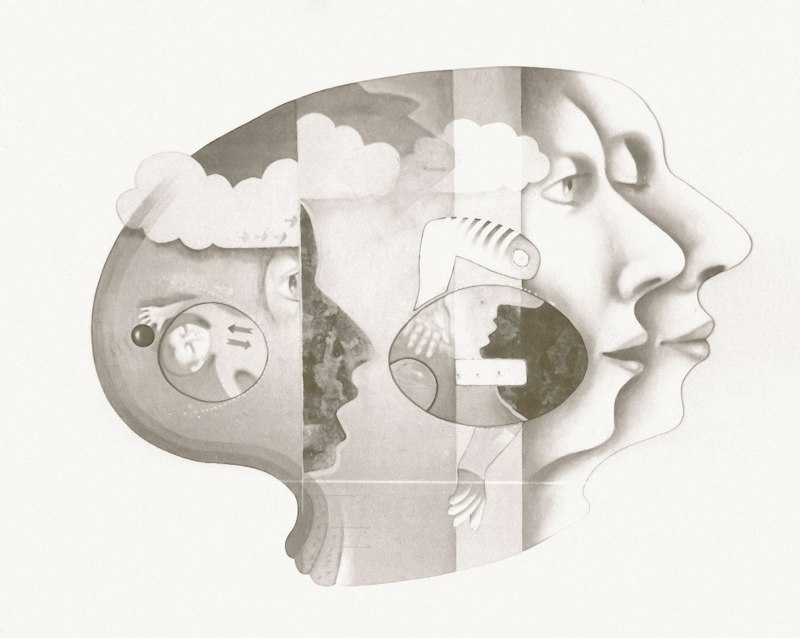
The concept of disorder fundamentally refers to a state characterized by a lack of order, structure, or typical functioning, often leading to confusion, disruption, or deviation from expected norms. While broadly applicable across various domains, from physical systems to societal structures, in psychology, the term primarily denotes a significant disturbance in an individual’s cognition, emotion regulation, or behavior. This disturbance typically reflects a dysfunction in psychological, biological, or developmental processes underlying mental functioning, leading to substantial distress or impairment in social, occupational, or other important areas of life.
At its core, a psychological disorder signifies a departure from a state of internal balance or homeostasis, where an individual’s mental and emotional processes are no longer operating in an integrated or adaptive manner. This disruption can manifest as difficulties in perceiving reality accurately, managing emotional responses effectively, or engaging in behaviors that are congruent with personal goals or societal expectations. The key idea is a breakdown in the ordinary, adaptive mechanisms that allow individuals to navigate their environment and maintain their overall well-being.
Expanding beyond the individual, the original understanding of disorder also encompasses broader systemic imbalances. These can range from physical environments lacking essential resources or proper sanitation to complex societal structures exhibiting economic, social, or political imbalances. Such external forms of disorder, while not psychological disorders themselves, can profoundly impact an individual’s mental and emotional states. For instance, chronic exposure to poverty or discrimination can be significant stressors that contribute to the development or exacerbation of psychological distress and specific mental health conditions, illustrating the intricate interplay between individual psychological well-being and the order of external systems.
Historical Perspectives on Conceptualizing Disorder
Historically, the understanding and treatment of what we now classify as psychological disorder have undergone profound transformations, evolving from ancient supernatural explanations to modern scientific and biopsychosocial models. In ancient civilizations, mental afflictions were often attributed to demonic possession, divine punishment, or spiritual imbalances, leading to treatments that ranged from exorcism and prayer to herbal remedies and crude surgical interventions like trepanation. This era lacked a systematic understanding of mental processes, and individuals experiencing severe psychological distress were frequently ostracized or subjected to inhumane conditions.
A significant shift began with figures like the Greek physician Hippocrates, who proposed that mental and physical illnesses had natural, rather than supernatural, causes, linking them to imbalances in bodily humors. However, it was not until the Enlightenment and the work of reformers such as
Philippe Pinel in the late 18th century that a more humane and scientific approach to mental illness began to take hold. Pinel advocated for “moral treatment,” emphasizing kindness, meaningful activity, and a respectful environment for patients in asylums, challenging the prevailing view of mental illness as incurable madness. This period marked the nascent stages of recognizing mental conditions as treatable diseases rather than moral failings.
The 19th and 20th centuries witnessed the formalization of psychiatry and the development of diagnostic systems. Pioneering figures like
Emil Kraepelin advanced a classification system for mental disorders based on observable symptoms and prognosis, laying the groundwork for modern diagnostic manuals. Later,
Sigmund Freud introduced psychoanalysis, emphasizing unconscious conflicts and early life experiences as determinants of psychological distress. The mid-20th century saw the rise of behaviorism and cognitive psychology, shifting focus to observable behaviors and thought processes. This culminated in the development of standardized diagnostic criteria, such as those found in the
Diagnostic and Statistical Manual of Mental Disorders (DSM), which has continuously evolved to reflect a more nuanced and evidence-based understanding of psychological conditions, moving towards a more objective and empirically supported approach to defining and categorizing disorder.
Manifestations of Disorder: A Psychological Lens
Within the realm of psychology, disorder manifests in a myriad of ways, primarily characterized by patterns of thought, feeling, and behavior that deviate significantly from cultural norms and cause considerable distress or impair an individual’s functioning. Mental disorder encompasses a broad spectrum of conditions, each with distinct diagnostic criteria but often sharing common underlying mechanisms of dysregulation. For instance,
depression, a prevalent mental disorder, is characterized by persistent sadness, loss of interest or pleasure, and disturbances in sleep, appetite, and energy, profoundly impacting an individual’s daily life and relationships.
Another common manifestation is
anxiety disorder, which involves excessive worry, fear, or apprehension that is disproportionate to the actual threat, often accompanied by physical symptoms like heart palpitations, sweating, and trembling. Conditions like generalized anxiety disorder, panic disorder, and social anxiety disorder fall under this category, illustrating how an individual’s alarm system becomes dysregulated, leading to persistent states of hyperarousal and avoidance. At the more severe end of the spectrum lies
psychosis, a profound form of mental disorder involving a significant loss of contact with reality, characterized by hallucinations, delusions, and disorganized thought and speech, fundamentally altering an individual’s perception and interpretation of their environment.
Beyond specific diagnostic categories, emotional disorder often highlights difficulties in emotional dysregulation, which is the inability to manage or respond to emotional experiences effectively. This can manifest as intense mood swings, impulsive behaviors, self-harm, or chronic feelings of emptiness, significantly hindering an individual’s ability to maintain stable relationships or cope with life’s stressors. While sometimes a symptom of broader mental disorders, emotional dysregulation itself can be a core feature of conditions like Borderline Personality Disorder and frequently underlies various forms of psychological distress, emphasizing the critical role of emotional competence in overall mental health.
Practical Example: Understanding Social Anxiety Disorder
To illustrate the concept of psychological disorder in a relatable context, consider social anxiety disorder, also known as social phobia. This condition exemplifies a specific type of disorder where an individual experiences intense fear and anxiety in social situations, often driven by a dread of being judged, scrutinized, or humiliated by others. Unlike typical shyness, which is a personality trait that rarely causes significant distress or impairment, social anxiety disorder involves a pervasive and debilitating fear that interferes with daily life, personal relationships, and professional or academic pursuits.
Imagine a common real-world scenario: a person with social anxiety disorder is invited to a colleague’s birthday party. The invitation immediately triggers a cascade of anxious thoughts and physical sensations. They might start catastrophizing, envisioning themselves saying something foolish, being awkward, or standing alone and appearing rejected. Physically, they might experience a racing heart, sweating, trembling, and nausea at the mere thought of attending. These anticipatory anxieties can be so overwhelming that they lead to significant avoidance behaviors, such as declining the invitation or finding an excuse to leave early, thereby reinforcing the cycle of fear and isolation.
The “how-to” of this psychological principle applies through a self-perpetuating cycle of negative cognition, emotion, and behavior. The individual’s distorted beliefs about social situations and their own social competence (e.g., “I will definitely embarrass myself,” “Everyone will think I’m boring”) fuel intense feelings of fear and shame. These feelings, in turn, lead to behavioral responses like avoidance or subtle safety behaviors (e.g., staying quiet, avoiding eye contact) during social interactions. While these behaviors might temporarily reduce anxiety, they prevent the individual from learning that their fears are often unfounded and perpetuate the disorder by denying opportunities for corrective experiences. This intricate interplay demonstrates how a psychological disorder disrupts adaptive functioning, leading to significant personal distress and functional impairment.
Significance and Impact in Psychology and Society
The study and understanding of psychological disorder are of paramount importance to the field of psychology, forming the bedrock of clinical psychology and abnormal psychology. It provides the framework for identifying, classifying, and developing effective interventions for conditions that cause immense suffering and impair the lives of millions globally. Without a clear conceptualization of what constitutes a disorder, psychologists would lack the tools to diagnose, prognosticate, and treat mental health conditions, thereby hindering efforts to alleviate distress and promote well-being. Understanding disorder allows researchers to investigate its etiology, risk factors, and protective factors, paving the way for evidence-based prevention and treatment strategies.
Beyond academic and clinical practice, the concept of disorder has far-reaching applications across various societal domains. In healthcare, it guides public health initiatives aimed at reducing the prevalence and impact of mental health conditions, informing policy decisions regarding resource allocation for mental health services. In education, recognizing disorders like ADHD or learning disabilities allows for the implementation of tailored support systems, ensuring that students with diverse needs can access appropriate learning environments. Moreover, in the justice system, an understanding of mental disorder is crucial for assessing criminal responsibility, determining competency to stand trial, and implementing rehabilitative programs.
The impact of disorder extends deeply into the fabric of society, influencing economic productivity, social cohesion, and individual quality of life. The original content rightly points out that economic and social disorders, such as those caused by discrimination, poverty, and inequality, can have significant impacts on individuals and society as a whole. These broader systemic issues are not merely external factors; they are also powerful social determinants of mental health, contributing to the onset and persistence of psychological disorders. A society that fails to address these fundamental imbalances often witnesses higher rates of mental illness, increased social unrest, and a significant burden on healthcare systems, underscoring the interconnectedness of individual psychological well-being and the order of the broader social environment.
Connections to Related Psychological Concepts
The concept of disorder is intrinsically linked to several other core psychological terms and theories, particularly within the domain of abnormal psychology and psychopathology. It stands in direct contrast to concepts of psychological well-being, adaptive functioning, and mental health. While disorder denotes a deviation from healthy functioning, psychopathology is the scientific study of mental disorders, encompassing their symptoms, causes, development, and consequences. Similarly, mental illness is often used interchangeably with mental disorder, though some distinctions are made, with “illness” sometimes implying a more severe or medically oriented condition.
The discussion of disorder also deeply intersects with the concept of distress. Psychological disorders invariably involve significant emotional, cognitive, or behavioral distress for the individual or those around them. This distress is a key criterion in many diagnostic systems, differentiating a clinical disorder from mere eccentricity or a transient negative mood. Furthermore, understanding disorder requires consideration of resilience, which refers to an individual’s capacity to adapt successfully in the face of adversity, trauma, or significant sources of stress. A lack of resilience or overwhelming stressors can predispose individuals to developing disorders, while enhancing resilience is often a goal of therapeutic interventions.
Moreover, the genesis and maintenance of psychological disorders are often influenced by factors identified in other subfields of psychology. For instance, cognitive psychology helps explain how distorted thought patterns (e.g., negative automatic thoughts, cognitive biases) contribute to conditions like depression and anxiety. Social psychology illuminates how societal factors like stigma, discrimination, and social support networks can impact mental health outcomes. Developmental psychology examines how early life experiences, attachment styles, and developmental milestones can either foster resilience or create vulnerabilities to disorder, highlighting the multifaceted and integrated nature of psychological well-being and dysfunction.
Prevention, Treatment, and Broader Context
Preventing and reducing the prevalence of psychological disorder requires a comprehensive, multi-layered approach that extends beyond individual-level interventions to encompass societal and environmental factors. As highlighted in the original content, creating and maintaining systems of order is crucial. This involves ensuring access to adequate resources such as food, water, shelter, and quality healthcare, which are fundamental for physical and mental well-being. Furthermore, establishing robust systems of justice and regulation, alongside promoting equitable access to education and economic opportunities, can mitigate societal stressors that contribute to mental distress and the development of disorders.
From a clinical perspective, effective treatments for psychological disorders are diverse and continually evolving. Psychotherapy, which involves various talk-based therapies such as Cognitive Behavioral Therapy (CBT), Psychodynamic Therapy, and Dialectical Behavior Therapy (DBT), helps individuals understand and modify maladaptive thought patterns, emotional responses, and behaviors. Pharmacotherapy, which utilizes medications like antidepressants, anxiolytics, and antipsychotics, targets neurochemical imbalances associated with certain conditions. Often, a combination of psychotherapy and pharmacotherapy yields the most effective results, tailored to the individual’s specific disorder and needs, with the ultimate goal of restoring adaptive functioning and improving quality of life.
In its broadest context, the study of disorder firmly belongs to clinical psychology and abnormal psychology, which are dedicated to the scientific understanding and treatment of mental health conditions. However, its implications resonate throughout nearly every subfield of psychology, including developmental psychology, social psychology, and cognitive psychology, as these areas contribute to our understanding of the factors that lead to, maintain, or protect against disorder. The ongoing challenge is to integrate these diverse perspectives into a holistic framework that addresses disorder not just as an individual affliction but as a complex phenomenon influenced by biological predispositions, psychological processes, and socio-environmental contexts, promoting a more resilient and healthy society.