Visual Perception: How Distorted Imagery Reveals Your Mind
Scientifically Reviewed · Dr. Marwa Abd-Alazim · October 5, 2026
Review Criteria & Clinical Standards
This content undergoes rigorous scientific peer-review and medical editorial standards at Arab Psychology Network to ensure clinical accuracy, validity, and compliance with evidence-based guidelines from leading psychological and healthcare authorities (APA / WHO).
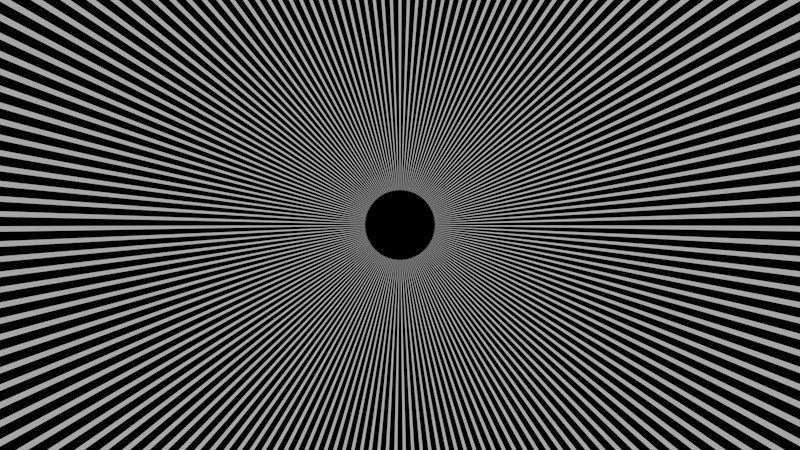
Introduction to the Distorting-Video Procedure in Psychology
The Distorting-Video Procedure, within the realm of psychological research, refers to a systematic methodological approach involving the deliberate and controlled alteration of video stimuli to investigate various aspects of human cognition, perception, and emotion. Unlike its common technical definition in digital media production, where video distortion is often an artistic or aesthetic choice, its application in psychology is fundamentally scientific. Researchers employ this procedure to create precise experimental conditions, allowing them to isolate specific variables, challenge sensory processing, and observe how alterations in visual information impact mental processes. This technique leverages advanced digital media manipulation tools, transforming them into instruments for probing the intricacies of the human mind.
At its core, the procedure aims to manipulate the visual input received by participants, thereby enabling the study of how the brain constructs meaning from potentially ambiguous or altered sensory data. This can involve a spectrum of modifications, from subtle changes in color and luminosity to more profound spatial or temporal distortions. By carefully controlling the nature and extent of these alterations, psychologists can design experiments that reveal underlying mechanisms of visual perception, test the robustness of memory, explore the processing of emotional cues, and even uncover susceptibility to cognitive biases. The precision afforded by digital video technology ensures that these manipulations are replicable and quantifiable, lending scientific rigor to the investigations.
The procedure’s utility extends across numerous subfields of psychology, offering a versatile tool for both fundamental and applied research. For instance, it can be used to simulate real-world scenarios where visual information is compromised or misleading, such as in studies of eyewitness testimony, or to create controlled environments for therapeutic interventions. The ability to systematically distort elements within a video allows researchers to dissect complex psychological phenomena into manageable, observable components, providing invaluable insights into how humans perceive, interpret, and react to their dynamic visual environment. This scientific application elevates video distortion from a mere technical process to a sophisticated psychological research instrument.
Foundational Principles and Mechanisms
The effectiveness of the Distorting-Video Procedure in psychological inquiry hinges on several foundational principles related to human perception and cognition. Central among these is the understanding that human visual perception is not a passive reception of sensory data but an active, reconstructive process influenced by prior knowledge, expectations, and attentional focus. By introducing distortions, researchers can investigate how these internal factors interact with altered external stimuli. For example, blurring can test the brain’s capacity for pattern recognition under reduced clarity, while color shifts might explore the impact of chromatic cues on emotional valence or object identification. These manipulations challenge the perceptual system, revealing its adaptive capabilities and limitations.
Key mechanisms employed in the Distorting-Video Procedure align closely with techniques used in professional video editing. These include effects such as blurring, which reduces detail and challenges the brain’s ability to extrapolate information; color shifting, which can alter mood or object salience; and chroma keying, which allows for the seamless integration or removal of elements, creating scenarios that defy normal expectations. More complex image distortions, such as perspective warps, radial distortions, or twirl effects, can profoundly alter spatial relationships and motion cues, providing opportunities to study depth perception, object constancy, and the integration of visual information over time. Each type of distortion is selected strategically to target specific psychological processes, providing a nuanced understanding of how different visual attributes contribute to overall perception and interpretation.
Furthermore, the procedure often leverages principles from Gestalt psychology, which emphasizes that the whole of perception is greater than the sum of its parts. When a video is distorted, it can disrupt Gestalt principles such as proximity, similarity, closure, or continuity, forcing the perceptual system to either struggle to form a coherent whole or generate novel interpretations. This disruption allows psychologists to observe how individuals attempt to make sense of incomplete or contradictory visual information, shedding light on the brain’s inherent drive for meaning-making and its strategies for resolving perceptual ambiguities. The controlled nature of these distortions ensures that any observed psychological effects can be attributed directly to the altered visual input, rather than uncontrolled external variables.
Historical Development and Pioneers
While the technical capabilities for digital video distortion are relatively recent, the underlying concept of manipulating visual stimuli for psychological research has a longer history, evolving alongside technological advancements. Early perceptual psychology experiments in the late 19th and early 20th centuries, for instance, often used static images or simple mechanical devices to present altered visual information. Researchers like Hermann von Helmholtz and Ernst Mach explored basic principles of visual perception through carefully constructed optical illusions and modified static displays, laying the groundwork for understanding how the brain processes and interprets sensory input. These early efforts, though rudimentary by today’s standards, established the utility of controlled visual manipulation in psychological inquiry.
The true emergence of the Distorting-Video Procedure as a sophisticated research tool coincided with the proliferation of video technology and, critically, the development of digital non-linear editing systems in the late 20th century. Before digital tools, altering moving images was a labor-intensive and often imprecise analog process, limiting its application in rigorous psychological experiments. However, with the advent of powerful software packages like Adobe After Effects and Apple Motion, which are mentioned in the original context as tools for technical video distortion, psychologists gained unprecedented control over visual stimuli. This digital revolution allowed for precise, repeatable, and varied manipulations of video footage, making it feasible to systematically study the effects of dynamic visual distortions on human cognition and behavior. The 1980s and 1990s marked a period of rapid integration of these technologies into experimental setups.
Pioneering researchers in fields such as cognitive psychology and experimental psychology quickly recognized the potential of these digital tools. They adapted techniques originally developed for film and television production to create controlled experimental paradigms. While no single “pioneer” is solely credited with the Distorting-Video Procedure as a psychological method, its development was a collaborative evolution within the research community, driven by the increasing accessibility and sophistication of digital video editing software. Researchers who focused on areas like eyewitness testimony, face perception, and emotion recognition were among the first to systematically employ these methods, pushing the boundaries of what could be studied about human interaction with dynamic, altered visual environments.
Methodological Applications in Research
The Distorting-Video Procedure is a highly versatile tool with a broad range of methodological applications across various psychological domains. In cognitive psychology, it is frequently employed to study memory processes. Researchers might present participants with a video of an event and then later test their recall by showing them either the original video or a version with subtle distortions—for instance, an object changing color, or a background detail being added or removed. This allows for the investigation of memory accuracy, susceptibility to misinformation, the nature of false memories, and the impact of visual cues on recall confidence. By precisely controlling the nature of the distortion, researchers can pinpoint which aspects of an event are most vulnerable to alteration and how these alterations affect subsequent memory reports.
Another significant application lies within the study of social cognition and emotion perception. Videos of social interactions or individuals expressing emotions can be systematically distorted to investigate how people interpret non-verbal cues. For example, facial expressions might be subtly altered to create ambiguity, allowing researchers to study how individuals attribute emotions when visual information is unclear, or how cultural factors influence the interpretation of distorted emotional displays. Similarly, distortions in body language or group dynamics within a video can provide insights into social categorization, prejudice, and the formation of first impressions. This approach offers a controlled way to probe the complex interplay between visual input and social judgment.
Furthermore, the procedure is invaluable in experimental psychology for investigating fundamental aspects of visual perception and attention. Researchers can use distorted videos to create perceptual illusions or to study how selective attention operates under conditions of visual complexity or ambiguity. For example, a video might feature a distorted background designed to distract from a foreground task, allowing for the measurement of attentional capacity and distraction effects. By manipulating variables such as the speed, intensity, or type of distortion, psychologists can gain a deeper understanding of the neural and cognitive mechanisms that underpin how we attend to and process dynamic visual information in our environment, ultimately contributing to theories of attention, object recognition, and scene comprehension.
Illustrative Research Scenarios
To illustrate the practical application of the Distorting-Video Procedure, consider its use in studying eyewitness testimony and the malleability of memory. In a typical experimental setup, participants would first be shown a short, realistic video depicting an event, such as a simulated crime or an accident. This initial viewing serves as the baseline memory encoding phase. After a delay, which could range from minutes to days, participants are then asked to recall details about the event. However, a crucial part of the procedure involves a manipulation: some participants might be shown a slightly distorted version of the original video during a subsequent memory test or during a “re-exposure” phase, while others see the original or receive no visual cue. The distortion could be subtle, like changing the color of a perpetrator’s shirt, altering a specific object in the background, or even adding a minor detail that wasn’t present in the original scene. This controlled alteration allows researchers to investigate how new, albeit manipulated, visual information can interfere with or even overwrite original memories, affecting recall accuracy and confidence.
A specific step-by-step example might involve:
- Baseline Recording: A high-fidelity video of a staged event (e.g., a brief interaction between two individuals where a small item is exchanged) is recorded.
- Distortion Application: Using professional video editing software (e.g., Adobe After Effects), a specific element in the video is subtly altered. For instance, the color of the exchanged item might be changed from blue to green, or a distinct logo on a character’s clothing might be blurred. The key is that the distortion is plausible enough not to immediately alert the viewer to its artificiality.
- Participant Exposure: A group of participants is randomly assigned to view either the original video or the distorted version. Another group might serve as a control, seeing no video at all or a completely unrelated one.
- Memory Assessment: After a predetermined retention interval, all participants complete a questionnaire or are interviewed about the event they witnessed. They might be asked specific questions about the altered detail (“What color was the item exchanged?”) and asked to rate their confidence in their answers.
- Data Analysis: Researchers then compare the memory recall accuracy and confidence levels between the groups. They can determine if exposure to the distorted video led to a higher incidence of incorrect answers regarding the altered detail, or if it influenced overall memory for other aspects of the event.
This methodology provides empirical evidence for how easily memories can be influenced by post-event information, particularly when presented visually.
Another compelling scenario involves the study of emotional regulation and perception. Researchers might create a series of videos depicting individuals expressing various emotions, such as joy, anger, or sadness. Subsequently, these videos are subjected to specific distortions: for example, the intensity of facial muscle movements associated with an emotion could be reduced, or the color saturation of the video could be altered to make the scene appear more muted or vibrant. Participants are then exposed to these original and distorted emotional videos, and their physiological responses (e.g., heart rate, skin conductance), self-reported emotional experiences, and cognitive appraisals (e.g., “How intense was the emotion?”) are measured. This allows psychologists to understand how subtle visual cues influence the recognition and processing of emotions, how individuals cope with ambiguous emotional information, and the mechanisms by which emotional responses can be modulated. The procedure can also be used in therapeutic contexts, for instance, by gradually distorting anxiety-provoking stimuli in exposure therapy to help individuals manage their emotional reactions more effectively.
Psychological Significance and Broader Impact
The Distorting-Video Procedure holds profound psychological significance, primarily by offering a unique lens through which to examine the fundamental workings of the human mind. It provides invaluable insights into the active and often reconstructive nature of visual perception, demonstrating that what we “see” is not merely a direct registration of reality but a complex interpretation influenced by internal cognitive processes. By systematically altering visual input, researchers can pinpoint the boundaries of perceptual accuracy, identify common cognitive biases, and understand how the brain fills in missing information or resolves ambiguities. This understanding is critical for developing comprehensive theories of visual processing, attention, and consciousness, contributing significantly to the theoretical foundation of cognitive science.
Beyond its theoretical contributions, the procedure has substantial broader impact, particularly in understanding the implications of digital media in contemporary society. In an era dominated by manipulated imagery and videos, techniques like the Distorting-Video Procedure can shed light on how susceptible individuals are to misinformation and disinformation. Studies utilizing distorted videos can assess how easily people can be misled by altered content, how quickly they detect fabrication, and what factors contribute to the credibility of visual information. This research directly informs efforts in media literacy education, helping individuals develop critical evaluation skills necessary to navigate a complex digital landscape increasingly populated by sophisticated deepfakes and other forms of synthetic media. The insights gained from these studies are crucial for fostering a more discerning and resilient public.
Furthermore, the procedure’s findings have practical implications across various domains. In legal psychology, for instance, understanding how visual distortions affect eyewitness testimony can lead to improved protocols for collecting and evaluating evidence, thereby enhancing the fairness and accuracy of legal proceedings. In clinical psychology, the controlled manipulation of visual stimuli can be integrated into therapeutic interventions. For example, gradually introducing distorted images or videos of phobic stimuli in exposure therapy can help patients habituate to their fears in a safe and controlled virtual environment. The ability to precisely calibrate the level of distortion allows therapists to tailor interventions to individual patient needs, making the therapeutic process more effective and less overwhelming. This underscores the procedure’s dual role in both advancing theoretical knowledge and providing actionable solutions to real-world problems.
Therapeutic and Societal Implications
The therapeutic implications of the Distorting-Video Procedure are particularly promising, especially within the context of virtual reality (VR) and augmented reality (AR) therapies. For individuals suffering from phobias, anxiety disorders, or post-traumatic stress disorder (PTSD), exposure to triggers can be overwhelming. By employing video distortion, therapists can create controlled, graded exposure scenarios. For instance, a patient with arachnophobia could be shown a video of a spider that is initially heavily blurred or stylized, gradually reducing the distortion as they habituate to the stimulus. This allows for a gentle desensitization process, where the patient’s emotional response can be managed and modulated, making exposure therapy more accessible and less distressing. The precision of digital distortion enables a highly personalized and adaptive therapeutic experience, tailored to the patient’s specific tolerance levels and progress.
Beyond direct exposure, the procedure can also support cognitive restructuring in Cognitive Behavioral Therapy (CBT). Patients with distorted self-perception, body image issues, or social anxiety might benefit from viewing videos of themselves or social interactions that have been subtly manipulated. For example, a video of a social interaction could be distorted to exaggerate perceived negative reactions from others, allowing the therapist to help the patient challenge these catastrophic interpretations in a safe, simulated environment. Conversely, distortions could be used to normalize perceived flaws, helping individuals develop a more realistic and positive self-image. These applications leverage the visual power of video to directly address and modify maladaptive thought patterns and emotional responses, offering a dynamic complement to traditional talk therapy.
Societally, the insights derived from the Distorting-Video Procedure are crucial for fostering critical media literacy and combating the spread of misinformation in the digital age. As deepfakes and other forms of sophisticated visual manipulation become more prevalent, understanding how the human mind processes and responds to distorted visual information is paramount. Research using this procedure can inform educational initiatives designed to teach individuals how to identify altered content, recognize the psychological cues of manipulation, and develop healthy skepticism towards digitally fabricated media. This knowledge empowers citizens to be more discerning consumers of online content, strengthening democratic processes and promoting a more informed public discourse. The societal impact extends to policymaking, where understanding the psychological vulnerabilities to visual manipulation can guide regulations and ethical guidelines for the creation and dissemination of digital media.
Interconnections with Other Psychological Theories
The Distorting-Video Procedure inherently connects with a multitude of other psychological theories, enriching both its application and the theories themselves. One prominent connection is with Cognitive Load Theory. When videos are distorted, they often increase the cognitive effort required to process information, as the brain struggles to make sense of ambiguous or contradictory visual cues. Researchers can use this procedure to measure how different types and levels of distortion affect cognitive load, providing insights into the brain’s processing capacity and the efficiency of various perceptual strategies. For instance, a highly blurred video of a complex scene would impose a greater cognitive load than a mildly color-shifted one, allowing for a nuanced understanding of how visual complexity interacts with cognitive resources.
Another significant theoretical link is to Schema Theory, which posits that individuals interpret new information based on existing mental frameworks or schemas. When a video is distorted in a way that contradicts established schemas (e.g., a familiar object appearing in an impossible location due to spatial warping), it creates a cognitive dissonance that the brain must resolve. The Distorting-Video Procedure can be used to investigate how robust schemas are to contradictory visual evidence, how quickly individuals update their schemas, or if they instead rationalize the distortion to maintain cognitive consistency. This helps in understanding the dynamic interplay between top-down (schema-driven) and bottom-up (data-driven) processing in visual comprehension and memory formation.
Furthermore, the procedure is deeply intertwined with theories of attention and memory. By selectively distorting elements within a dynamic scene, researchers can study selective attention—how individuals focus on certain parts of a video while ignoring others, especially when distractions are present in the form of subtle or overt distortions. In terms of memory, it allows for the empirical examination of reconstructive memory, source monitoring, and the misinformation effect, where post-event information (in this case, a distorted video) can alter or implant false memories. These connections highlight how the Distorting-Video Procedure serves as a powerful empirical tool for testing and refining fundamental theories across cognitive, social, and developmental psychology, pushing the boundaries of our understanding of human information processing.
Subfields and Future Directions
The Distorting-Video Procedure finds its primary home within several key subfields of psychology, notably Experimental Psychology, Cognitive Psychology, and Media Psychology. In experimental psychology, it is valued for its ability to create tightly controlled conditions for manipulating visual stimuli, essential for isolating variables and determining cause-and-effect relationships in human behavior. Cognitive psychology leverages it to probe the mechanisms of perception, attention, memory, and decision-making by observing how these processes react to altered visual input. Media psychology, a growing field, utilizes it to understand the psychological impact of digital media, including the effects of visual manipulation on attitudes, beliefs, and social behavior. Additionally, aspects of Social Psychology, particularly in studies of social perception and impression formation, also benefit from this methodology.
Looking to the future, the Distorting-Video Procedure is poised for significant advancements, driven by rapid developments in artificial intelligence (AI) and machine learning. Current methods often involve manual or semi-automated application of distortions; however, future research may integrate AI to create dynamic, adaptive distortions that respond in real-time to a participant’s physiological or behavioral cues. This could lead to highly personalized experimental paradigms or therapeutic interventions, where the level and type of distortion are continuously adjusted based on an individual’s emotional state or cognitive engagement. For instance, in exposure therapy, an AI might automatically increase or decrease the distortion of a phobic stimulus based on the patient’s heart rate or skin conductance, optimizing the therapeutic process.
Further research directions include integrating the Distorting-Video Procedure with neuroscientific techniques, such as fMRI or EEG, to explore the neural correlates of processing distorted visual information. This would provide a deeper understanding of which brain regions are activated when confronted with ambiguous or misleading visual cues, and how these activations differ based on the nature of the distortion or individual differences in cognitive style. Ethical considerations will also become increasingly important, particularly as the technology for creating realistic and impactful video distortions becomes more accessible. Establishing guidelines for the responsible use of this procedure in both research and therapeutic contexts will be crucial to maximize its benefits while mitigating potential risks, ensuring that this powerful tool continues to serve the advancement of psychological knowledge and human well-being responsibly.