Double-Simultaneous Stimulation: Master Your Sensory Focus
Scientifically Reviewed · Dr. Marwa Abd-Alazim · October 14, 2026
Review Criteria & Clinical Standards
This content undergoes rigorous scientific peer-review and medical editorial standards at Arab Psychology Network to ensure clinical accuracy, validity, and compliance with evidence-based guidelines from leading psychological and healthcare authorities (APA / WHO).
Introduction to Double-Simultaneous Stimulation
Double-simultaneous stimulation (DSS) is a sophisticated experimental paradigm primarily employed within the fields of neuroscience and psychophysics. At its core, DSS is meticulously designed to investigate the intricate ways in which an individual’s perception and behavior are influenced by the concurrent presentation of two distinct sensory inputs. This technique provides a powerful lens through which researchers can unravel the complex processes of sensory integration, the allocation and modulation of attentional processing, and the subtle yet profound effects that various stimulus attributes exert on our conscious experience and motor responses. It stands as a fundamental tool for dissecting the brain’s capacity to process multiple streams of information simultaneously, offering invaluable insights into the architecture of the human sensory and cognitive systems.
The fundamental premise of DSS rests upon the precise temporal presentation of two stimuli, ensuring their onset and duration overlap significantly, if not entirely. This simultaneity is critical, as it forces the brain to engage in complex computations to either integrate the information from both stimuli, selectively attend to one while filtering out the other, or perceive them as distinct but co-occurring events. The choice of stimuli can span across any sensory modality, including visual, auditory, tactile, olfactory, or gustatory inputs, allowing for a broad exploration of within-modal and cross-modal interactions. By systematically manipulating the characteristics of these paired stimuli, such as their intensity, location, frequency, or semantic content, researchers can systematically probe the rules governing sensory interactions and their downstream effects on cognitive functions like decision-making and motor execution.
The versatility of the DSS paradigm has facilitated its application across a remarkably diverse array of research questions. From understanding how the brain combines disparate sensory signals into a coherent percept, to investigating how limited attentional resources are distributed when faced with competing inputs, DSS offers a robust experimental framework. It has been instrumental in exploring phenomena such as the detection and discrimination of specific stimuli in the presence of distractors, the effects of varying stimulus intensities and temporal properties on perceptual thresholds, and how different features of stimuli can capture or modulate attention. The insights gleaned from DSS experiments are not merely theoretical; they contribute significantly to our understanding of both typical and atypical sensory and cognitive functioning, paving the way for advancements in clinical psychology, neuroscience, and various applied domains.
Fundamental Mechanisms and Principles
At the core of any DSS experiment lies the presentation of two stimuli at precisely the same moment, or with carefully controlled temporal overlap. Typically, one of these is designated as a “known” or target stimulus, whose characteristics are often stable or systematically varied by the experimenter, such as a specific tone, a flash of light, or a localized vibration. The other is an “unknown” or probe stimulus, which might be another instance of the same sensory modality, or from a different modality, and whose properties are also meticulously controlled. The subject’s task is to report their perception, which can range from simply detecting the presence of one or both stimuli, to discriminating subtle differences between them, or even describing the holistic experience of the combined inputs. This reporting can be captured through observable behavioral responses, such as button presses, verbal reports, or eye movements, or through more direct physiological measurements, like brain activity recorded via electroencephalography (EEG) or functional magnetic resonance imaging (fMRI).
The power of DSS resides in its ability to illuminate the intricate processes of sensory integration, a fundamental brain function wherein information from multiple sensory channels is combined to form a unified and coherent representation of the external world. When two stimuli are presented simultaneously, the brain does not merely process them independently. Instead, it actively seeks to integrate them, especially if they are spatially or temporally congruent, leading to phenomena like `perceptual fusion` or `enhancement`. Conversely, if the stimuli are incongruent or sufficiently disparate, the brain might prioritize one over the other, leading to `perceptual segregation` or `suppression` of one input. The outcomes of DSS experiments provide critical data on how these integrative or segregative processes unfold, revealing the neural computations that govern our holistic sensory experience, and how different stimulus attributes, such as intensity, duration, or semantic content, influence these complex interactions.
Furthermore, DSS experiments are invaluable for dissecting the dynamics of attentional processing. When multiple stimuli compete for limited cognitive resources, attention acts as a gatekeeper, modulating the processing of incoming sensory information. By presenting two stimuli simultaneously, researchers can investigate how attention is voluntarily directed (endogenous attention) or involuntarily captured (exogenous attention) by specific stimulus features. For instance, a DSS paradigm can reveal whether attention can be divided efficiently between two distinct sensory streams, or if it must rapidly switch between them. The results often provide insights into the capacity limits of attention, the mechanisms of `selective attention` (focusing on one stimulus while ignoring another), and how `attentional load` impacts the perception of concurrent inputs. Understanding these mechanisms is crucial for comprehending how individuals navigate perceptually rich environments and prioritize relevant information amidst a barrage of sensory data.
Historical Development and Key Contributors
While the formal designation of “Double-simultaneous stimulation” as a specific experimental technique is a more recent development within modern neuroscience and psychophysics, the underlying concept of investigating the effects of multiple concurrent stimuli has deep roots within the broader history of experimental psychology. Early pioneers in the late 19th and early 20th centuries, particularly those engaged in the nascent field of `psychophysics`, often explored how multiple sensations combined or interacted. Researchers like Hermann von Helmholtz and Gustav Fechner laid foundational groundwork for understanding sensory thresholds and the relationship between physical stimuli and psychological experience, which implicitly involved considering how multiple physical inputs might influence a single perceptual outcome. However, these early investigations did not typically employ the highly controlled, paired presentation methodology characteristic of modern DSS.
The formalization and widespread adoption of DSS as a distinct experimental paradigm gained significant momentum during the latter half of the 20th century, coinciding with the rise of cognitive psychology and advanced cognitive neuroscience. As researchers moved beyond simply measuring basic sensory thresholds to understanding complex cognitive processes like attention, `sensory integration`, and `multisensory perception`, the need for precise methods to study stimulus interactions became paramount. The development of sophisticated electronic equipment for stimulus presentation and response recording allowed for the exquisite temporal control required for DSS experiments. This period saw a shift towards paradigms that could systematically manipulate the presence and characteristics of competing or complementary stimuli to unravel the neural and cognitive mechanisms underlying parallel processing and perceptual organization.
In contemporary research, the term “Double-Simultaneous Stimulation” has been formally recognized and extensively reviewed by prominent researchers in the field. For instance, the works of Day & Gold (2011), Lazareva (2012), and Reed & Stone (2017), which are cited in the original source material, highlight the technique’s robust utility and provide comprehensive overviews of its application in various domains of perception and attention research. These contemporary contributions underscore the technique’s evolution from general principles of stimulus interaction to a precisely defined and widely utilized methodology, making these authors key figures in solidifying DSS’s place as an important tool in the arsenal of modern sensory and cognitive scientists. Their work, along with countless others, has shaped how DSS is conceptualized, implemented, and interpreted in current scientific inquiry.
Methodological Approaches in DSS Experiments
The core experimental design of a Double-simultaneous stimulation (DSS) experiment involves the meticulous presentation of two distinct stimuli, often referred to as the primary and secondary stimuli, at the same temporal window. Researchers typically vary several key parameters to dissect their interactive effects. These parameters include the type of sensory modality (e.g., visual, auditory, tactile), the specific attributes of each stimulus (e.g., `intensity`, `duration`, `frequency`, `spatial location`, `color`, `pitch`), and the precise `temporal relationship` between their onsets and offsets. For example, in a visual DSS experiment, two lights might be presented in different visual fields, varying in their luminance and flash duration, while an auditory DSS might involve two tones differing in frequency and volume, played to separate ears or simultaneously within one. The careful manipulation of these factors allows for a precise investigation into the conditions under which stimuli are integrated, segregated, or compete for attentional resources.
To quantify the effects of simultaneous stimulation, a variety of psychophysical methods are employed. These methods are designed to measure subjective experiences and translate them into objective data. Common psychophysical measures include `detection thresholds`, which determine the minimum intensity at which a stimulus can be perceived, and `discrimination thresholds`, which measure the smallest detectable difference between two stimuli. Techniques such as the method of constant stimuli, method of limits, or adaptive staircases are frequently used to establish these thresholds. Additionally, `reaction time` measurements are crucial for assessing the speed of processing and decision-making under simultaneous stimulation, while `accuracy rates` provide insights into the fidelity of perceptual judgments. The application of Signal Detection Theory (SDT) is particularly prevalent in DSS research, allowing researchers to separate a subject’s sensory sensitivity from their response bias, providing a more nuanced understanding of perceptual performance when faced with ambiguous or competing inputs.
Beyond behavioral measures, DSS experiments increasingly incorporate `physiological measurements` to unravel the neural underpinnings of simultaneous stimulus processing. Electroencephalography (EEG) and event-related potentials (ERPs) offer high temporal resolution, allowing researchers to track the brain’s electrical activity as it responds to and integrates dual stimuli. This can reveal early sensory processing stages, attentional modulation, and decision-related activity. Functional Magnetic Resonance Imaging (fMRI), on the other hand, provides high spatial resolution, identifying the specific brain regions and networks involved in processing and integrating concurrent sensory inputs. Other physiological measures, such as electrodermal activity (EDA), pupillometry, or electromyography (EMG), can provide additional insights into arousal, cognitive effort, and motor preparedness, respectively. The combination of precise stimulus control, rigorous psychophysical assessment, and advanced physiological recording techniques makes DSS a powerful and comprehensive methodology for exploring the complexities of `multisensory perception` and attentional control.
Practical Applications and Real-World Examples
To truly grasp the utility of Double-simultaneous stimulation (DSS), it is essential to consider how its principles manifest in everyday life. Imagine a common scenario: a person is engaged in an important phone conversation (an `auditory stimulus`) while simultaneously receiving a vibration alert from their smartphone in their pocket (a `tactile stimulus`). The brain is immediately faced with the task of processing two distinct sensory inputs, each demanding a degree of attention. A DSS paradigm could model this situation by presenting a speech stream to one ear and a tactile vibration to the hand or leg at the same time. Researchers could then measure how the presence of the tactile stimulus affects the listener’s comprehension of the speech, or how quickly they react to the vibration, depending on the difficulty of the auditory task. This helps to quantify the interference or facilitation effects between different sensory modalities and sheds light on how `attentional resources` are allocated in such dual-task environments.
Another compelling real-world example where DSS principles are constantly at play is during the act of driving a car. A driver is simultaneously bombarded with a multitude of stimuli: visual information from the road, traffic signals, and mirrors; auditory inputs from engine noise, traffic, and the car radio; and tactile feedback from the steering wheel, pedals, and seat. All these `sensory streams` must be continuously processed and integrated for safe navigation. A DSS experiment could simulate aspects of this complexity by presenting concurrent visual and auditory (or visual and tactile) stimuli, asking participants to make rapid decisions based on one while ignoring the other, or to integrate them for a combined response. For instance, a visual alert on the dashboard might be paired with an auditory warning sound. DSS research in this area helps design safer vehicle interfaces, predict performance under high cognitive load, and understand the limits of human `multitasking` capabilities, which are critically dependent on effective `sensory integration`.
Beyond immediate safety concerns, DSS principles also extend into more subtle aspects of human experience, such as `product evaluation` and `consumer behavior`. Consider a consumer sampling a new food product. Their perception of taste (gustatory) is often influenced by its aroma (olfactory), texture (tactile), and even the visual appearance of the food itself or its packaging (visual). A DSS approach could investigate how the color of a beverage (visual stimulus) simultaneously presented with a specific taste (gustatory stimulus) impacts the perceived sweetness or quality. By systematically manipulating these paired sensory cues, researchers can uncover instances of `cross-modal integration` where one sense biases another, or `sensory dominance` where one sense overrides the others. This has significant implications for fields like `marketing`, `food science`, and `industrial design`, allowing for the creation of products and environments that optimize the user’s holistic sensory experience.
Significance and Broader Impact in Psychology and Neuroscience
The technique of Double-simultaneous stimulation (DSS) holds profound significance for the fields of psychology and neuroscience because it offers a unique window into the dynamic interplay between different sensory inputs and their cognitive processing. By forcing the brain to contend with multiple stimuli concurrently, DSS experiments provide critical insights into the fundamental mechanisms of `sensory integration`, `perceptual organization`, and the allocation of attentional resources. It helps us understand how the brain constructs a coherent and unified perception of the world from a continuous stream of fragmented sensory information. The findings from DSS studies are instrumental in developing and refining theoretical models of `multisensory perception`, `selective attention`, and `cognitive load`, advancing our fundamental understanding of how the human brain functions under both optimal and challenging conditions.
The practical applications of DSS extend significantly into the clinical domain. In `clinical neuropsychology`, DSS tasks are utilized to diagnose and characterize `sensory processing disorders`, `attentional deficits`, and `perceptual neglect syndromes`. For instance, patients who have suffered a stroke might exhibit `extinction`, a condition where they fail to detect a contralesional stimulus when it is presented simultaneously with an ipsilesional stimulus, even if they can detect each stimulus individually. DSS provides a sensitive and quantitative measure of such deficits, aiding in diagnosis and tracking recovery. Furthermore, insights from DSS research can inform the development of targeted rehabilitation strategies for individuals with `sensory impairments` or `attentional disorders`, helping them to improve their ability to integrate information from multiple senses or to better manage competing sensory inputs in their daily lives. Understanding how simultaneous stimuli are processed in various neurological and psychiatric conditions (e.g., ADHD, schizophrenia) can lead to more effective diagnostic tools and interventions.
Beyond clinical applications, DSS principles are increasingly being applied in various aspects of `human-computer interaction` (HCI), `marketing`, and `education`. In HCI, understanding how users process simultaneous visual, auditory, and haptic (tactile) feedback is crucial for designing intuitive and efficient interfaces, from virtual reality environments to smart device notifications. Marketers leverage DSS insights to create `multisensory branding experiences`, knowing how specific combinations of visual cues, sounds, and textures can influence consumer perception and preference for a product. In education, researchers use DSS to investigate how concurrent classroom stimuli (e.g., a teacher speaking while displaying a visual aid) affect student `attention`, `learning`, and `memory`, leading to more effective instructional strategies. Overall, DSS is not merely a laboratory technique; it is a powerful framework that informs diverse fields by elucidating the complexities of how we perceive, attend to, and interact with a world rich in simultaneous sensory information.
Connections to Other Psychological Concepts and Subfields
The conceptual framework of Double-simultaneous stimulation (DSS) is deeply intertwined with several other fundamental psychological concepts and theories, forming a rich tapestry of understanding regarding perception and cognition. Central to its relevance is its direct relationship with Sensory Integration Theory, which posits that the nervous system organizes sensory information from the body and the environment, enabling the body to be used effectively within the environment. DSS experiments directly probe how the brain combines or separates these sensory inputs. It is also closely linked to various Attention Theories, including those concerning `selective attention` (the ability to focus on one stimulus while ignoring others), `divided attention` (the ability to process multiple stimuli or tasks simultaneously), and `attentional capture` (when salient stimuli involuntarily draw attention). DSS paradigms provide empirical data to test and refine these theories by manipulating the salience and demands of concurrent stimuli.
Furthermore, DSS is an invaluable tool for studying Multisensory Integration, which describes how information from different sensory modalities is combined into a unified and coherent percept. While DSS can be used within a single modality, its most compelling applications often involve `cross-modal integration`, where, for example, a visual stimulus and an auditory stimulus are presented simultaneously. The analysis of `psychophysical data` from DSS experiments frequently employs Signal Detection Theory (SDT) to differentiate between true sensory sensitivity and an observer’s response bias, especially when the detection or discrimination of one stimulus is affected by the presence of another. Concepts like `Perceptual Load Theory`, which suggests that the processing of irrelevant distractors depends on the attentional demands of the primary task, are also directly testable and illuminated through DSS designs, as the simultaneous presentation of stimuli inherently creates a form of perceptual load.
In terms of broader categorization, Double-simultaneous stimulation firmly resides within the domains of Cognitive Psychology, which investigates internal mental processes such as perception, attention, memory, and `problem-solving`. Its reliance on controlled experimental conditions and quantitative measurement also places it squarely within Experimental Psychology. Given its focus on the biological underpinnings of mental processes, especially neural responses to sensory inputs, DSS is also a cornerstone methodology in Neuroscience, particularly `Cognitive Neuroscience` and `Sensory Neuroscience`. Finally, as a technique that systematically measures the relationship between physical stimuli and their subjective psychological correlates, DSS is fundamentally rooted in Psychophysics. These interconnections highlight DSS as a versatile and foundational method that bridges multiple subfields, contributing to a holistic understanding of human perception and behavior.
Future Directions and Research Frontiers
The utility of Double-simultaneous stimulation (DSS) is continuously expanding, driven by technological advancements and evolving theoretical questions in neuroscience and psychology. A significant frontier involves integrating DSS paradigms with advanced neuroimaging techniques to gain a deeper understanding of the neural correlates of simultaneous stimulus processing. Combining DSS with high-resolution methods like fMRI, MEG (magnetoencephalography), or invasive electrophysiology in animal models can pinpoint the specific brain regions, neural circuits, and temporal dynamics involved in sensory integration and attentional modulation when multiple stimuli are present. This will allow researchers to move beyond behavioral observations to directly observe how the brain combines or segregates information at the level of neuronal populations, providing richer insights into the computational mechanisms underlying these processes.
Another promising avenue for DSS research lies in exploring `individual differences` and `developmental trajectories`. Future studies are likely to use DSS to investigate how factors such as age, neurological conditions, genetic predispositions, or extensive training influence an individual’s capacity to process and integrate simultaneous stimuli. For example, understanding how children with `autism spectrum disorder` or `ADHD` perform on DSS tasks compared to neurotypical children could reveal specific sensory processing atypicalities, informing early diagnosis and intervention strategies. Similarly, examining performance across the lifespan can shed light on age-related changes in `multisensory integration` and `attentional capacity`. Additionally, the development of more sophisticated `computational models` that can accurately predict perceptual and behavioral outcomes from DSS experiments will be crucial for generating testable hypotheses and advancing theoretical understanding of how sensory information is optimally combined or selectively processed.
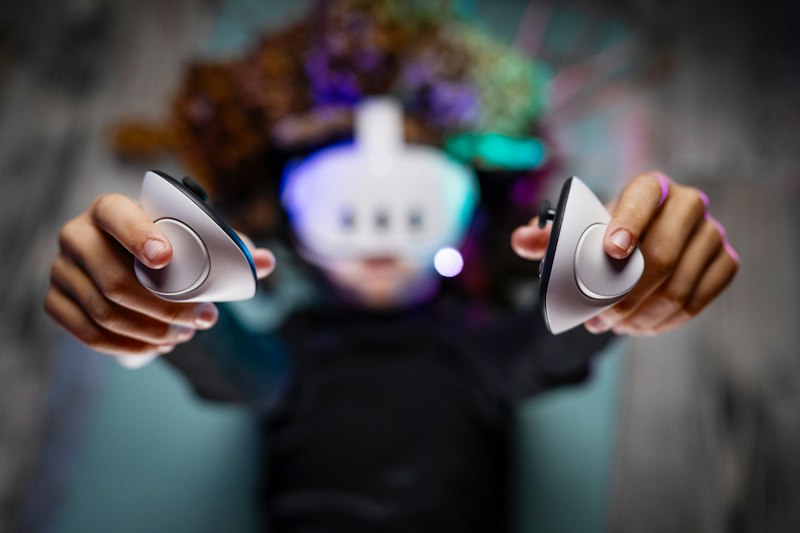
Emerging technologies such as virtual reality (VR) and augmented reality (AR) offer unprecedented opportunities for creating highly controlled and immersive multisensory environments, revolutionizing the application of DSS. These platforms allow for the precise manipulation of multiple sensory inputs within ecologically valid contexts, enabling researchers to study complex `perceptual interactions` that are difficult to replicate in traditional laboratory settings. Furthermore, DSS will continue to be instrumental in exploring higher-order cognitive phenomena, such as `perceptual learning` and `plasticity` (how the brain adapts and reorganizes in response to experience) within `multisensory` contexts. Investigating the neural mechanisms underlying `conscious awareness` and even `subliminal perception` when multiple stimuli are presented simultaneously represents another cutting-edge area, promising to deepen our understanding of the very nature of human experience. These future directions underscore the enduring relevance and adaptability of DSS as a foundational tool for unraveling the complexities of the human mind and brain.