Human Drive: Unlocking the Secret Engine of Behavior
Scientifically Reviewed · Dr. Marwa Abd-Alazim · September 6, 2026
Review Criteria & Clinical Standards
This content undergoes rigorous scientific peer-review and medical editorial standards at Arab Psychology Network to ensure clinical accuracy, validity, and compliance with evidence-based guidelines from leading psychological and healthcare authorities (APA / WHO).
Introduction and Core Definitions of Drive
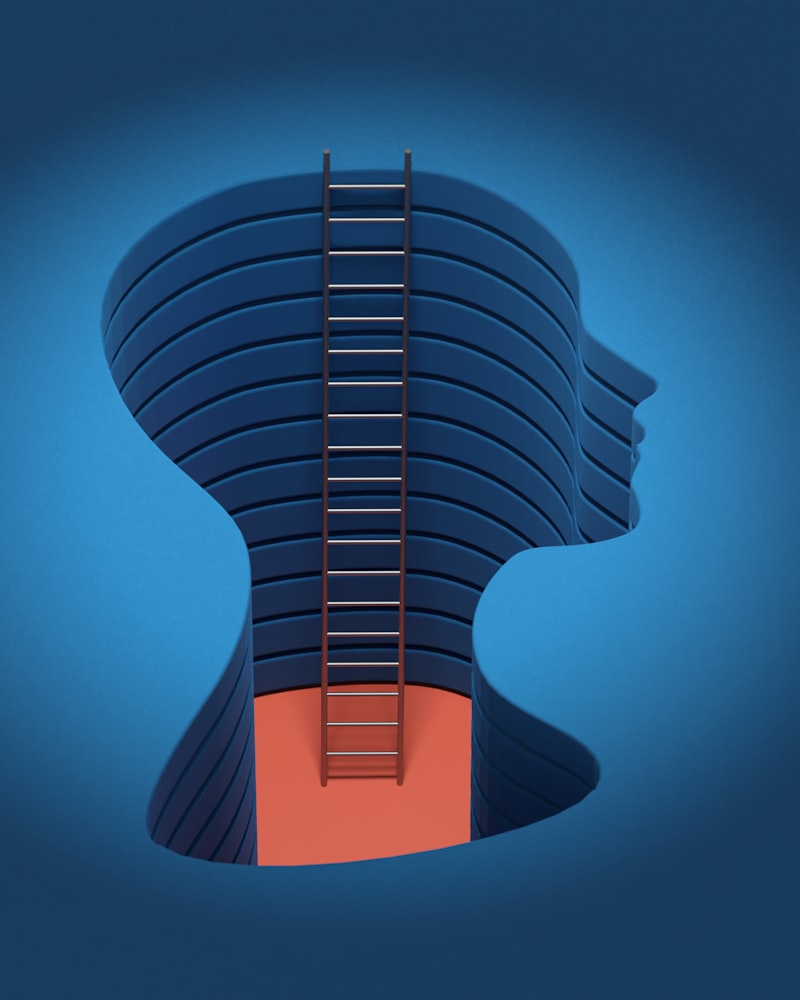
The concept of drive serves as a foundational element across various domains of psychology, particularly in theories attempting to explain the initiation, direction, intensity, and persistence of behavior. Broadly defined, a drive represents an internal, hypothetical state of readiness that motivates an organism toward a specific course of action. This internal pressure is typically experienced as an unpleasant tension or need, compelling the individual to engage in activities designed to reduce that tension and restore equilibrium. This readiness is considered hypothetical in nature because the drive itself is not directly observable, but rather inferred from the antecedent conditions, such as deprivation, and the subsequent goal-directed behavior. The drive acts as an energetic push, distinguishing it from motivation theories that emphasize external pulls or incentives.
In the context of behavioral psychology, particularly the influential theories proposed by Clark Hull, drive (D) was mathematically formalized as a crucial component of behavior potential. Here, drive is a general arousal state that energizes all learned habits, making behavior execution more likely when the drive state is high. It is a non-specific activator; while it increases the vigor of all responses, the specific response selected is determined by the organism’s prior learning history and habit strength. Consequently, understanding drive is essential for explaining why organisms engage in behaviors that are not immediately rewarding but are necessary for long-term survival or homeostasis. The central mechanism linking drive to action is the principle of drive reduction, which posits that behaviors that successfully reduce the internal tension of the drive state are reinforced and more likely to be repeated in the future.
However, the term drive carries a profoundly different, albeit related, meaning within psychoanalytic theory, particularly the work of Sigmund Freud. As the second major definition suggests, drive is a pivotal concept used to understand the intricate relationship between the mind (psyche) and the body (soma). In this framework, the drive is viewed as a borderland concept—a psychic representation of internal bodily demands. It is not merely a biological need but rather the psychological force derived from that need. This psychoanalytic understanding necessitates considering the drive’s object, aim, and source, making it a far more complex and fluid mechanism than the purely physiological concept used in behaviorism. The importance of this concept extends significantly into related areas such as object relations theory, where the drive is seen as always seeking an object through which it can achieve satisfaction, thereby shaping personality and relational patterns.
Historical Context: Freudian Drive Theory (Pulsion/Trieb)
The psychoanalytic conceptualization of drive, known in German as Trieb (often translated inaccurately as instinct), is arguably the most complex and enduring psychological usage of the term. Freud intentionally chose Trieb rather than Instinkt to emphasize that the psychoanalytic drive is not a fixed, innate behavioral pattern common to an entire species, but rather a variable, plastic, and highly individualized psychological force. This Trieb, or pulsion, is defined by its ceaseless quality and its primary role in providing the psychic energy that powers the entire mental apparatus. Unlike instincts, drives are not satisfied by a fixed object but are capable of finding satisfaction through a wide variety of substitute objects and aims, which accounts for the vast complexity and variability of human desire and motivation.
Freud’s understanding of drive evolved significantly over his career. In his early topographical model, drives were initially classified into two main groups: the self-preservative drives (or ego drives), aimed at ensuring the survival of the individual, such as hunger and self-protection; and the sexual drives (or libido), aimed at perpetuating the species and deriving pleasure. These sexual drives were seen as the primary source of neurotic conflict, as societal demands often necessitated their repression or sublimation. This early formulation established the tension between individual biological demands and the constraints of civilization, a tension that remains central to psychodynamic theory. The energy associated with the sexual drives, known as libido, was considered the quantitative measure of mental processes, fueling psychic life.
A significant revision occurred in 1920 with the publication of Beyond the Pleasure Principle, where Freud introduced his final, dualistic drive theory. This model proposed two fundamental, antagonistic classes of drives: Eros (the Life Drive) and Thanatos (the Death Drive). Eros encompasses all forces that bind and conserve, including sexual drives, self-preservation, and constructive energies aimed at creating larger unities. Conversely, Thanatos represents the compulsion toward dissolution, destruction, and a return to an inorganic state. This concept provided a framework for understanding phenomena such as aggression, sadism, masochism, and the repetition compulsion, which seemed to contradict the simple pleasure principle. This late theory profoundly influenced subsequent generations of psychoanalysts, providing a deep, albeit controversial, explanation for the most destructive and creative aspects of human nature.
The Psychical and Somatic Components of Drive
A critical feature of the Freudian drive concept is its function as a mediator between the somatic realm and the psychological realm, truly embodying its description as a concept used to understand the mind and the body simultaneously. The drive’s source is always somatic—a state of excitation, deficiency, or tension arising within the body (e.g., physiological changes associated with hunger or sexual arousal). However, this purely biological source gains psychological significance only when it is translated into a psychic representative, a demand upon the mind for work. This translation means that the tension, originating in the body, must be processed by the ego and id, manifesting as desire, fantasy, and behavioral urgency. The drive is thus the bridge connecting physiological need to psychological striving and conscious experience.
To fully capture this interplay, Freud meticulously detailed four essential elements that constitute every drive. These elements clarify how a simple bodily need transforms into a complex motivating force. First is the source, which, as noted, is the bodily excitation or tension. Second is the impetus, the driving force or the amount of strength associated with the drive, representing its urgency and pressure. Third is the aim, which is always satisfaction, achieved by eliminating the state of excitation at the source. Crucially, the aim can be inhibited or modified through psychological defenses, leading to sublimation or displacement. Finally, the fourth element is the object, which is the entity or activity through which the drive achieves its aim. Unlike instinct, the drive object is highly variable; it is not fixed but is often chosen based on individual experience and circumstance, demonstrating the drive’s plasticity.
The drive’s dependence on finding an object for satisfaction is central to its psychological significance. If the object is unavailable or forbidden, the psychic energy associated with the drive does not simply dissipate; instead, it is diverted, potentially leading to symptom formation, anxiety, or defense mechanisms. For example, a drive originating in somatic sexual tension (source) gains great urgency (impetus) to achieve release (aim). If the culturally appropriate object is unattainable, the energy may be redirected toward a non-sexual object or activity—a process known as sublimation. This dynamic interaction between the internal somatic demand and the external world’s constraints, mediated by the psychic structure, underscores why the drive concept is indispensable for analyzing the development of character, pathological behavior, and the process of civilization itself.
Drive vs. Instinct and Motivation
A precise understanding of the term drive requires careful differentiation from related concepts like instinct and general motivation. In common English usage, drive and instinct are often used interchangeably, but in technical psychological discourse, particularly psychoanalysis, they are fundamentally distinct. An instinct refers to an innate, unlearned, fixed pattern of behavior that is characteristic of a species and reliably triggered by specific environmental stimuli. Examples include a bird building a nest or a spider spinning a web. These behaviors are rigid, species-specific, and have a fixed object and aim. They are highly predictable and stereotypic, serving immediate survival functions within a natural environment.
In contrast, a drive, particularly the Freudian Trieb, is characterized by its high degree of plasticity and detachability from a specific object. While the biological source of the drive is invariant, the object through which satisfaction is sought is acquired through experience and is highly flexible. This flexibility allows human beings to find satisfaction in diverse, symbolic, or culturally mediated activities (e.g., artistic creation, academic achievement). Furthermore, the drive’s aim can be inhibited or deflected, meaning the drive can be partially satisfied or sublimated without achieving its immediate biological goal. This difference highlights the psychological depth of the drive; it is a force that informs culture and individual neurosis, whereas instinct remains tethered to immediate, unvarying biological programming.
When comparing drive theory to broader modern motivation theories, the focus shifts from internal pressure to goal orientation and cognitive mediation. Drive theory, especially in its behavioral form, focuses on regulatory mechanisms and the reduction of internal tension (a push mechanism). Modern cognitive motivation theories, such as Expectancy-Value theory or Goal-Setting theory, emphasize external incentives, cognitive appraisals, expectations, and the conscious pursuit of future goals (pull mechanisms). A key distinction is that drive-based motivation often ceases upon need fulfillment (e.g., when hungry, one eats until full), while complex, human motivation, such as achieving career success, is often cyclical and non-regulatory, sometimes even increasing effort after success. Thus, while drive is a fundamental component of motivation, particularly for basic survival behaviors, it fails to account fully for the complexity of cognitively mediated, long-term human striving.
Biological Basis and Deprivation
The most direct link between the behavioral definition of drive and its physiological origin lies in the fundamental concept that a drive is often created by deprivation of a substance important to life. This statement aligns perfectly with homeostatic models, which dominate the understanding of primary, physiological drives. Homeostasis is the body’s intrinsic ability to maintain internal stability by regulating crucial physiological variables, such as temperature, fluid balance, and nutrient levels. When these variables deviate significantly from their optimal set point, a state of physiological deficiency or deprivation occurs, generating a drive state.
The process begins with a biological imbalance. For instance, when blood glucose levels drop significantly, the deprivation is registered by specific regulatory centers in the brain, primarily the hypothalamus. This physiological signal is then translated into the psychological state known as hunger drive. This internal tension prompts the organism into a state of generalized activity, increasing the likelihood that it will engage in random behaviors until a successful consummatory behavior (eating) is performed. The subsequent intake of food alleviates the physiological deprivation, reduces the internal drive state, and thereby reinforces the preceding behaviors, fulfilling the requirements of the drive reduction model. This mechanism is powerful because the drive state is inherently aversive, providing a strong internal impetus for action.
This biological foundation establishes a clear hierarchy of needs, where drives stemming from critical deprivation—such as the drives for air, water, or sleep—take immediate precedence over other, less urgent motivations. The strength of the drive is directly proportional to the magnitude and duration of the deprivation; the longer an organism is deprived of a vital substance, the greater the internal tension and the more vigorous the resulting behavior will be. Furthermore, the biological drive dictates the quality of the consummatory response; a water-deprived animal will only be satisfied by water, illustrating the specific regulatory function of the drive system. This powerful link between somatic need and behavioral readiness underscores the adaptive evolutionary function of drives: they ensure survival by compelling the organism to seek essential resources necessary for maintaining life.
Classification and Types of Drives
Drives can be systematically categorized based on their origin and function, facilitating a clearer analytical framework. The most common distinction is made between primary drives and secondary drives. Primary drives are those that are innate, unlearned, and directly tied to biological survival and homeostasis.
- Primary Drives: These include hunger, thirst, the need for sleep, and sex. They originate from tissue needs and are universally shared across species. They function immediately upon deprivation to restore physiological balance.
- Secondary Drives: These are drives that are acquired or learned through association with the satisfaction of primary drives. For example, the drive for money is secondary; money itself does not satisfy a biological need, but it has been consistently associated with the means to obtain food, shelter, and security, thus acquiring drive-reducing properties. Similarly, the drive for affiliation or achievement, while complex, often functions as a secondary drive aimed at reducing anxiety or fulfilling needs related to social validation, which historically aid survival.
In the psychoanalytic realm, the classification revolves around the fundamental antagonism established by Freud’s later theory: Eros and Thanatos. Eros, the Life Drive, is the force of creation, love, and self-preservation. Its function is to construct, unify, and bind energy into larger wholes, ensuring the continuation of life. Thanatos, the Death Drive, represents the urge toward destruction, aggression, and the reduction of life to its inorganic state. While Thanatos often manifests externally as aggression toward others, its primary aim is the self, representing a profound urge for rest and the cessation of tension. The interaction and fusion of these two drives, such as the blending of aggressive and libidinal elements in sexuality, explain the complexity of human motivation.
Beyond these physiological and psychoanalytic binaries, other conceptualizations classify drives based on their functional aim. For example, some theorists emphasize mastery drives or competence drives, which are internal urges to interact effectively with the environment, achieve goals, and gain control. These drives are not necessarily deprivation-based but focus on maximizing potential and efficacy. Similarly, drives related to curiosity and exploration are considered inherent motivations that push organisms to seek novelty and information, often overriding the immediate demands of homeostasis. While the term drive has been largely replaced by broader concepts like intrinsic motivation, these classifications highlight that the internal forces compelling behavior extend far beyond simple biological deficiency.
Contemporary Perspectives and Critiques of Drive Theory
While drive theory—especially the strict Hullian model emphasizing automatic drive reduction—was highly influential in the mid-20th century, its dominance has waned in modern psychology. One primary critique centers on the fact that not all human behavior is aimed at reducing tension. Phenomena such as exploratory behavior, intellectual curiosity, and engaging in dangerous sports often involve actively seeking out or increasing stimulation and tension, contradicting the core premise of drive reduction. This led to the development of arousal theory, which posits that organisms seek an optimal level of arousal, rather than the absolute minimum, allowing for behaviors motivated by novelty and stimulation.
Despite critiques of the strict reductionist models, the psychoanalytic concept of drive retains significant theoretical power. Its influence is profoundly visible in contemporary psychodynamic approaches, particularly in object relations theory, as noted in the original entry. Object relations shifted the focus from the internal source of the drive to its object-seeking nature. Drives are understood not merely as pressures seeking release, but as fundamentally relational forces seeking connection and interaction with others. For example, the need for attachment is viewed as a primary psychological drive, essential for development and mental health, demonstrating the shift from a focus on biological regulation to relational needs.
In summary, the concept of drive remains a crucial historical and theoretical landmark. It compels psychologists to consider the powerful, non-cognitive, energetic forces that underpin human action. Whether understood as a hypothetical state of readiness derived from deprivation, or as the ceaseless, plastic psychic representative of somatic demands, the drive concept successfully illustrates that a significant portion of human behavior is fueled by internal pressure demanding satisfaction. Although modern motivation research often utilizes more nuanced terminology incorporating cognitive appraisal and goal systems, the legacy of drive theory continues to provide a vital framework for understanding the essential interplay between our biological needs and our psychological strivings.