Comparative Psychology: What Tiny Flies Reveal About Us
Scientifically Reviewed · Dr. Marwa Abd-Alazim · August 23, 2026
Review Criteria & Clinical Standards
This content undergoes rigorous scientific peer-review and medical editorial standards at Arab Psychology Network to ensure clinical accuracy, validity, and compliance with evidence-based guidelines from leading psychological and healthcare authorities (APA / WHO).
Introduction and Taxonomy
The genus Drosophila encompasses a vast and diverse assemblage of small insects, commonly referred to as fruit flies or, more accurately, vinegar flies due to their attraction to fermenting substances. While often mistaken for common pests, these diminutive organisms represent one of the most significant and widely studied groups in contemporary biological research. Taxonomically, Drosophila belongs to the family Drosophilidae, within the order Diptera, the true flies. This genus boasts thousands of described species, exhibiting remarkable morphological and ecological diversity across global distribution, though the most famous and widely utilized species in laboratory settings is unequivocally Drosophila melanogaster.
The nomenclature of “vinegar fly” arises from their specific ecological niche; they thrive in environments rich in yeast and bacteria associated with the decomposition of fruits and vegetables, particularly those undergoing acetic fermentation. This dietary preference dictates their presence near human habitation, where decaying produce or brewing materials are common, facilitating their accidental global dispersal. Despite their ubiquity, the primary scientific interest in Drosophila stems not from their role as agricultural nuisances, but from their unparalleled utility as a genetic and developmental model system, a status solidified over more than a century of rigorous investigation.
Understanding the taxonomy of the genus is crucial for appreciating its evolutionary breadth. The genus is subdivided into several subgenera, with the subgenus Sophophora containing the crucial species D. melanogaster and its close relatives, known collectively as the melanogaster species group. Other significant groups, such as the Hawaiian Drosophila, demonstrate extreme examples of adaptive radiation, where isolated populations have rapidly evolved specialized morphology and behaviors. This wide phylogenetic range allows researchers to draw comparisons across species, providing deep insights into fundamental biological processes that govern inheritance, development, and speciation, validating Drosophila as a cornerstone of comparative biology.
Historical Significance in Genetics
The ascent of Drosophila to scientific prominence began in the early 20th century, largely attributed to the pioneering work of Thomas Hunt Morgan and his colleagues at Columbia University. Prior to this, foundational genetics relied heavily on plant models, but Morgan sought an animal system that offered rapid generation times, easy maintenance, and observable hereditary traits. D. melanogaster proved ideal, providing large numbers of progeny in a short span and exhibiting easily identifiable mutations, such as variations in eye color (like the famous white-eyed mutant) and wing morphology, which were critical for mapping genes.
Morgan’s laboratory, often referred to as the “Fly Room,” utilized Drosophila to experimentally confirm the chromosome theory of inheritance—the revolutionary concept that genes are linearly arrayed on chromosomes and that specific traits are linked to specific chromosomes. Through meticulous breeding experiments and the observation of crossover events, Morgan and his students, including Alfred Sturtevant, were able to produce the first detailed genetic maps. This work established the principles of linkage, recombination frequency, and sex-linked inheritance, thereby laying the empirical foundation for modern genetics and earning Morgan the Nobel Prize in 1933. The accessibility and robustness of the fly model accelerated the pace of genetic discovery worldwide.
The historical importance of the fly extends beyond classical transmission genetics into molecular genetics. Subsequent generations of researchers capitalized on the fly’s established genetic toolkit to investigate increasingly complex questions, including the nature of gene regulation and the function of specific genes. The historical precedent set by Morgan’s lab ensured that, even as technology advanced, Drosophila remained the preferred system for initially characterizing many fundamental biological pathways, cementing its role as a living archive of genetic knowledge and methodological innovation.
Life Cycle and Morphology
The life cycle of Drosophila melanogaster is characterized by complete metamorphosis, progressing through four distinct stages: egg, larva, pupa, and adult. This relatively short cycle, typically completed within 10 to 14 days at optimal temperatures (around 25°C), is a crucial factor in its utility as a model organism, enabling rapid sequential experimentation across multiple generations. The female fly typically lays hundreds of eggs, depositing them on suitable fermenting substrates. These small, oval eggs hatch within a day into the first instar larvae, initiating the primary growth phase.
The larval stage consists of three instars, during which the organism rapidly increases in size, consuming yeast and bacteria. The larva is essentially a highly efficient feeding machine, characterized by specialized mouth hooks and a segmented body. Importantly, the internal structure of the larva contains imaginal discs—packets of precursor cells destined to form the adult structures, such as wings, legs, and antennae. The development and fate mapping of these imaginal discs have provided unparalleled insights into cellular differentiation and tissue patterning. After the third instar, the larva ceases feeding and seeks a dry spot to pupate, a transition marked by the hardening of the outer cuticle into a protective puparium.
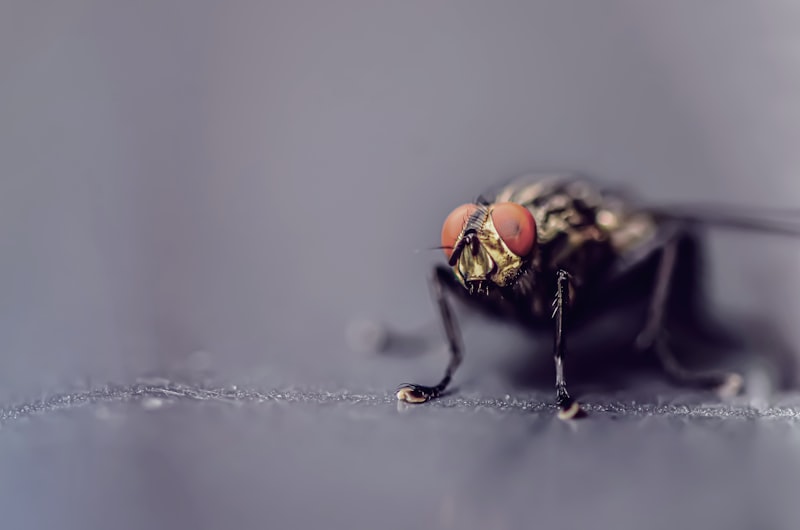
The pupal stage is a period of dramatic reorganization, where the larval tissues are broken down and the adult structures are constructed from the aforementioned imaginal discs. This internal transformation, or metamorphosis, is regulated by precise hormonal signaling, particularly involving ecdysone. The resulting adult fly, or imago, is sexually dimorphic; males are generally smaller, possess distinct sex combs on their forelegs, and have a more heavily pigmented posterior abdomen compared to females. The adult fly’s body plan, organized into a head, thorax, and abdomen, exhibits complex features including compound eyes, three pairs of jointed legs, and a pair of functional wings, serving as an accessible model for studying sensory perception and flight biomechanics.
The Drosophila Genome and Model Organism Status
The status of Drosophila melanogaster as a premier model organism is inextricably linked to the extensive characterization and relative simplicity of its genome. The fly possesses four pairs of chromosomes (two autosomes, one sex chromosome pair, and the tiny “dot” chromosome 4). The complete sequencing of the Drosophila genome was accomplished in 2000, revealing approximately 14,000 protein-coding genes. A remarkable finding from this genomic analysis was the high degree of homology between fly genes and human genes; nearly 75% of known human disease genes have identifiable functional counterparts, or orthologs, in the fly.
This high level of genetic conservation makes Drosophila an invaluable tool for modeling human diseases, ranging from neurodegenerative disorders like Alzheimer’s and Parkinson’s disease to complex conditions such as cancer, diabetes, and cardiovascular dysfunction. Researchers can manipulate the fly ortholog of a human disease gene, observe the resulting phenotypic changes, and screen for potential therapeutic compounds with efficiency and cost-effectiveness that are unattainable in mammalian systems. Furthermore, the established genetic techniques—including P-element transposition, the Gal4/UAS system, and increasingly, CRISPR-Cas9—allow for highly specific and temporally controlled gene expression studies in virtually any tissue.
The advantages of using Drosophila extend beyond genetics and genomics; its small size, ease of handling, low maintenance costs, and high fecundity make it logistically superior for large-scale screening experiments. The vast accumulated knowledge base, including detailed developmental fate maps, comprehensive atlases of gene expression, and thousands of readily available mutant strains, further solidifies its position. These factors collectively ensure that Drosophila remains a fundamental pillar in the biomedical research community, driving discoveries related to fundamental cell biology, metabolism, aging, and immunity.
Neuroscience and Behavior Studies
Despite its small size, the central nervous system of Drosophila exhibits surprising complexity, making it an excellent platform for studying the genetic basis of nervous system development, function, and behavior. The fly brain contains roughly 100,000 neurons, a number manageable enough for comprehensive circuit mapping, yet complex enough to mediate sophisticated behaviors. Studies focusing on neural development have illuminated mechanisms of axon guidance, synaptogenesis, and the establishment of neural identity, many of which utilize the same molecular machinery as vertebrates.
One of the most profound contributions of Drosophila neuroscience involves the characterization of complex behaviors, particularly learning and memory. Pioneering experiments using classical conditioning (e.g., associating an odor with an electric shock) identified key genes, such as dunce and rutabaga, that are essential for memory formation and consolidation. These genes encode components of the cAMP signaling pathway, a pathway now recognized as fundamental to synaptic plasticity across the animal kingdom. The fly model has also been instrumental in dissecting the neural circuits underlying complex motor patterns, circadian rhythms, and sleep regulation, defining core molecular clocks that operate similarly in humans.
Furthermore, Drosophila provides unique insights into sensory biology. Its compound eyes are widely studied to understand photoreceptor function and visual processing, while its sophisticated olfactory system, housed in the antennae and maxillary palps, has been used to map the neural basis of smell perception and chemotaxis. The ability to genetically manipulate individual neurons and observe behavioral outcomes in a controlled environment allows researchers to precisely correlate neural activity patterns with specific actions, providing a powerful bridge between genetics, neuroanatomy, and ethology.
Developmental Biology and Pattern Formation
Perhaps the most celebrated contribution of Drosophila research lies in the field of developmental biology, specifically the elucidation of mechanisms governing body pattern formation. Early work focused on identifying mutations that drastically altered the fly’s body plan, leading to the discovery of a hierarchical cascade of genes that establish the anterior-posterior and dorsal-ventral axes of the embryo. This research, recognized by the 1995 Nobel Prize awarded to Nusslein-Volhard, Wieschaus, and Lewis, identified the crucial classes of developmental genes.
The developmental hierarchy begins with maternal effect genes, which establish broad polarity gradients within the egg. These are followed by zygotic genes, including the gap genes (e.g., hunchback), which define large regional territories; the pair-rule genes (e.g., even-skipped), which establish segments; and the segment polarity genes, which define the boundaries and polarity within each segment. Crucially, at the apex of this regulatory network are the Hox genes (Homeotic selector genes), a highly conserved cluster of transcription factors responsible for assigning specific identity to each body segment (e.g., determining where legs or wings will grow).
The discovery that the fundamental principles of segmentation and axial patterning are controlled by a highly conserved genetic toolkit—the same toolkit utilized, albeit differently, in vertebrates—was a profound realization that revolutionized evolutionary developmental biology (EvoDevo). Drosophila continues to serve as the benchmark for understanding tissue morphogenesis, cell migration, cell-cell signaling pathways (such as Notch, Wingless/Wnt, and Hedgehog), and organogenesis, providing essential mechanistic details often obscured in more complex organisms.
Ecological Niche and Conservation
While laboratory strains of Drosophila melanogaster are meticulously maintained under artificial conditions, the ecological roles of the genus in natural environments are complex and varied. Wild Drosophila species occupy a wide range of niches globally, predominantly acting as secondary decomposers. Their larvae play an important role in breaking down fermenting plant material, thereby contributing to nutrient cycling within forest ecosystems. Their diet, rich in yeasts, makes them critical agents in the dissemination of fungal spores, influencing microbial communities in their environment.
The diversity of the genus is best exemplified by the endemic species of Hawaii, which have undergone spectacular adaptive radiation, producing hundreds of species specialized for different host plants and exhibiting unique mating rituals and morphologies. These species often occupy highly specific, vulnerable habitats, making them subjects of increasing conservation concern. Understanding the ecological pressures that drove such rapid speciation provides insights into evolutionary mechanisms, but also highlights the fragility of specialized biodiversity in the face of habitat loss and invasive species.
In temperate regions, Drosophila populations exhibit seasonal fluctuations, often peaking in abundance during warmer months when fruit is plentiful. Their presence is a natural component of fermentation processes. However, the introduction of invasive species, such as Drosophila suzukii (the spotted-wing drosophila), poses significant challenges to agriculture. Unlike most native vinegar flies that target already damaged or decaying fruit, D. suzukii can oviposit in ripening, undamaged berries and soft fruits, causing substantial economic damage and prompting extensive research into effective pest management strategies that minimize ecological impact while protecting crops.