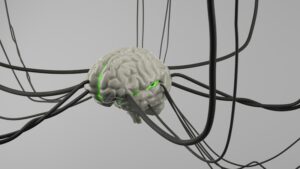
Dynamic Psychology: Unlocking the Forces Driving Your Mind
Scientifically Reviewed · Dr. Marwa Abd-Alazim · August 21, 2026
Review Criteria & Clinical Standards
This content undergoes rigorous scientific peer-review and medical editorial standards at Arab Psychology Network to ensure clinical accuracy, validity, and compliance with evidence-based guidelines from leading psychological and healthcare authorities (APA / WHO).

Introduction and Core Definition
Dynamic psychology represents a fundamental approach within the field that centers its attention on the internal forces, drives, and motivations that underlie human thought and behavior. It is defined as any comprehensive system of psychology that explicitly investigates the causation and energy flow related to mental processes and actions, moving beyond mere description of behavior to understand why behavior occurs. At its most basic, dynamic psychology asserts that behavior is not random or arbitrary, but is instead the result of interacting and often conflicting internal forces, such as instincts, needs, desires, and learned habits, which constantly seek expression or resolution within the individual’s psychic structure.
The core principle distinguishing dynamic psychology from purely descriptive or structuralist models is its emphasis on energy and movement—the ‘dynamics.’ It posits that the mind is a system where psychic energy is constantly being generated, distributed, and transformed, often leading to states of tension or disequilibrium which the organism is inherently motivated to reduce. This foundational concept suggests that all observable behavior, whether rational or irrational, serves a purpose related to the management or expenditure of this internal energy, making the study of motivation, conflict, and defensive mechanisms central to the dynamic perspective.
Furthermore, dynamic psychology often encompasses the study of unconscious influences, recognizing that the primary drivers of action are frequently outside of conscious awareness. This means that a person may offer a socially acceptable rationale for their actions, but the true, deep-seated cause lies in unresolved internal conflicts or powerful, often innate, drives. Understanding the complex interplay between conscious goals and unconscious motivations provides the framework for interpreting complex human phenomena, from creativity and ambition to psychological distress and pathology.
The Fundamental Principles of Dynamic Psychology
A central tenet of the dynamic perspective is psychic determinism, the idea that all mental processes and behaviors—no matter how trivial or seemingly accidental—are causally linked to preceding mental events, drives, or conflicts. Nothing in the psyche occurs by chance; slips of the tongue, dreams, symptoms of mental illness, and even humor are all viewed as meaningful products of underlying dynamic forces. This deterministic viewpoint necessitates a thorough investigation into the history of the individual and the formation of their internal systems of control and motivation.
Another key principle involves the inherent nature of conflict. Dynamic psychology views the human mind as inherently segmented into systems (such as the Id, Ego, and Superego in classical models) that possess divergent goals and demands. This constant internal friction—for instance, between immediate gratification and societal rules—generates psychological tension. Behavior is thus seen as the compromise or resolution reached under pressure from these competing forces, often mediated by defensive mechanisms that attempt to protect the conscious self from anxiety or overwhelming emotional distress stemming from the underlying conflict.
The dynamic model strongly contrasts with earlier or simpler behaviorist models (like the S-R or Stimulus-Response model) by inserting a complex, active organism (O) between the stimulus and the response. While behaviorism focuses solely on observable inputs and outputs, dynamic psychology delves deeply into the internal state, the needs, the stored memories, and the cognitive appraisals of the organism. This focus on the internal psychological machinery makes dynamic psychology a precursor to and partial component of the more comprehensive SOR Psychology (Stimulus-Organism-Response), which acknowledges the mediating role of internal processes in determining behavioral outcomes.
Historical Roots and Key Pioneers
While the systematic study of dynamic processes is most famously associated with early 20th-century movements, the philosophical seeds of dynamic psychology were sown much earlier by thinkers who recognized the force of hidden or unconscious mental activity. Philosophers like Gottfried Wilhelm Leibniz and Johann Friedrich Herbart explored concepts of psychic energy and the threshold of consciousness, laying the groundwork for the idea that mental processes could operate outside of direct awareness and still exert influence on action.
The most significant historical figure in solidifying dynamic psychology as a major psychological framework was Sigmund Freud, whose development of Psychodynamics provided the first comprehensive theory of internal psychic structure, energy distribution, and conflict resolution. Freud’s work, starting in the late 19th and early 20th centuries, detailed how instinctual drives (primarily sexual and aggressive) interact with environmental demands and internalized moral constraints, creating the psychological landscape of the individual. His topographic and structural models provided the lexicon for discussing unconscious motivation and the management of anxiety.
Beyond the psychoanalytic school, the term “Dynamic Psychology” was systematized and broadened by American psychologist Robert S. Woodworth in the early 20th century. Woodworth sought to integrate motivational concepts into experimental psychology, emphasizing that the central task of the psychologist is to understand the causal mechanisms—the ‘dynamic’ forces—that initiate and sustain activity. Woodworth’s work focused less on Freudian conflict and more on the functional autonomy of motives, exploring how primary biological drives can give rise to secondary, complex, and sometimes entirely new psychological motivations that become self-sustaining systems of behavior.
Mechanisms of Motivation and Drive
In dynamic psychology, motivation is rarely viewed as a simple push toward a goal; rather, it is understood as a complex process of tension reduction or the seeking of psychic equilibrium. Drives, whether innate (such as hunger or libido) or acquired (such as the need for achievement or affiliation), represent internal states of lack or excitation. When these drives are activated, they create a state of internal tension, and the resulting behavior is essentially the organism’s attempt to release or satisfy that tension, thereby returning to a more comfortable state of homeostasis.
The complexity arises because these drives rarely operate in isolation. Multiple drives often compete for limited psychic energy, and the eventual behavioral outcome is the one that offers the most efficient or acceptable reduction of the most pressing internal tension. For instance, a person experiencing both a powerful drive for social acceptance and a powerful drive for individual autonomy must navigate this conflict, and their social behavior will reflect the dynamic compromise between these two powerful, competing needs.
Later dynamic models, particularly those influenced by ego psychology and object relations theory, expanded the concept of motivation beyond purely instinctual energy to include the dynamic importance of relational needs and self-esteem maintenance. These theories suggest that much of adult motivation is directed toward maintaining a coherent sense of self and securing meaningful emotional connections with others. Thus, the dynamics of behavior are not just about managing biological instincts but also about navigating the internal representations of relationships and external social reality.
A Practical Illustration
Consider the common scenario of an employee who repeatedly misses deadlines on important, high-profile projects, despite possessing the required skills and actively desiring professional advancement. From a descriptive standpoint, the behavior is simply “poor performance” or “procrastination.” However, dynamic psychology demands an investigation into the causal, motivating forces behind this seemingly self-defeating pattern.
The analysis begins by identifying the conflicting dynamic forces at play. On the conscious level, the employee possesses a strong achievement drive (the desire for promotion and success). However, the repeated failure suggests a powerful, perhaps unconscious, counter-force. This counter-force might be rooted in an unconscious fear of success or a deep-seated feeling of inadequacy (rooted in past experiences or internalized familial messages) that creates anxiety whenever they approach a task requiring perfection.
The psychological application unfolds step-by-step:
- The task (Stimulus) activates the achievement drive (O, internal force A).
- The proximity of success simultaneously triggers the unconscious fear of inadequacy (O, internal force B).
- The conflict between A and B generates extreme anxiety.
- The Ego utilizes a defense mechanism, such as procrastination (delay and avoidance), which temporarily reduces the anxiety by moving the successful completion (and the associated risk of failure/exposure) further into the future.
- The resultant behavior (missing the deadline) is the compromise formation: the person doesn’t have to face the overwhelming anxiety of success or failure, even though it ultimately undermines their conscious goal. Dynamic psychology reveals that the behavior is not driven by laziness but by the powerful, defensive motivation to regulate internal emotional tension.
Therapeutic and Societal Significance
The dynamic perspective is invaluable because it provides a framework for understanding human behavior that is often complex, irrational, and seemingly contradictory. It highlights that the most powerful forces governing our lives are often hidden, giving psychology the tools to look beneath the surface explanations provided by the individual. It shifted the focus of psychological inquiry from simple observation to deep interpretation of underlying motives and life history.
In practice, dynamic psychology forms the theoretical backbone of many modern forms of psychotherapy. Techniques derived from dynamic principles—such as free association, dream analysis, and transference interpretation—are specifically designed to bring unconscious dynamics into conscious awareness. The goal of dynamic therapy is not merely to alleviate symptoms, but to restructure the personality by helping the individual understand and resolve the historical conflicts that are currently maintaining their psychological distress.
Beyond the clinical setting, dynamic concepts have significantly impacted fields like marketing, organizational behavior, and criminal justice. In marketing, understanding the unconscious needs and desires (e.g., the need for power, status, or maternal protection) allows advertisers to create appeals that tap into deep-seated motivations. In organizational psychology, dynamic insights help explain counterproductive workplace behaviors, power struggles, and resistance to change, framing these issues not as simple management failures but as expressions of underlying group or individual dynamic forces.
Connections to Related Theories
Dynamic psychology is most closely and historically tied to Psychoanalytic Theory, which serves as its initial and most detailed application. Psychoanalytic Theory provided the initial structure (Id, Ego, Superego) and energy concepts (Libido, Thanatos) necessary to model the flow of psychic dynamics. However, dynamic psychology is a broader term, encompassing not only classical Freudian models but also subsequent theories that prioritize motivation, drive, and internal conflict, such as Jungian Analytical Psychology, Adlerian Individual Psychology, and various Object Relations schools.
Within the broader category of psychological subfields, dynamic psychology primarily belongs to the category of Personality Psychology, given its focus on the enduring structure and internal organization of the individual, and Abnormal Psychology, where it provides causal explanations for mental disorders stemming from unresolved conflict or trauma. It is also inherently linked to Motivational Psychology, as the study of drive and purpose is the engine of the dynamic approach.
As noted in its foundational principles, dynamic psychology also relates directly to the Stimulus-Organism-Response (SOR) framework, often referred to as SOR psychology. While the SOR model is often associated with cognitive psychology, its recognition that the “Organism” actively mediates and transforms the stimulus into a response aligns perfectly with the dynamic view that behavior is motivated by internal states rather than being a mere reflex. Dynamic psychology provides the detailed content—the conflicts, drives, and defense mechanisms—that explain the complex workings of the ‘O’ component in the SOR equation.
Critiques and Modern Interpretations
Historically, dynamic psychology, particularly its classical form, has faced significant criticism from empirically oriented psychologists. The primary critique is the lack of falsifiability and empirical testability of many of its core concepts, such as psychic energy or unconscious drives, which are difficult to measure objectively or replicate in a controlled laboratory setting. Critics often argue that the models are highly interpretive, meaning the same behavior can be explained by multiple conflicting dynamic hypotheses without clear means of verification.
Despite these methodological challenges, the central importance of motivation and causation remains undisputed, leading to modern adaptations. Today, dynamic concepts are being integrated with findings from cognitive neuroscience and affective neuroscience. Researchers are now exploring the biological underpinnings of motivational systems, emotional regulation, and defense mechanisms, attempting to map dynamic concepts onto specific brain structures and neural networks. For example, concepts like emotional repression are studied through the lens of inhibitory neural circuits, providing concrete, measurable correlates for previously abstract dynamic processes.
The enduring legacy of dynamic psychology lies in its commitment to the complexity of the human experience. It compels psychologists to ask the deeper questions about meaning, purpose, and the internal life of the individual, ensuring that the field does not reduce the richness of human behavior to simple stimulus-response pairings or purely biological substrates. It remains a powerful and essential framework for understanding the internal, often conflicted, journey of the self.