Dynamic Psychology: Why Your Mind Is Always Evolving
Scientifically Reviewed · Dr. Marwa Abd-Alazim · October 14, 2026
Review Criteria & Clinical Standards
This content undergoes rigorous scientific peer-review and medical editorial standards at Arab Psychology Network to ensure clinical accuracy, validity, and compliance with evidence-based guidelines from leading psychological and healthcare authorities (APA / WHO).
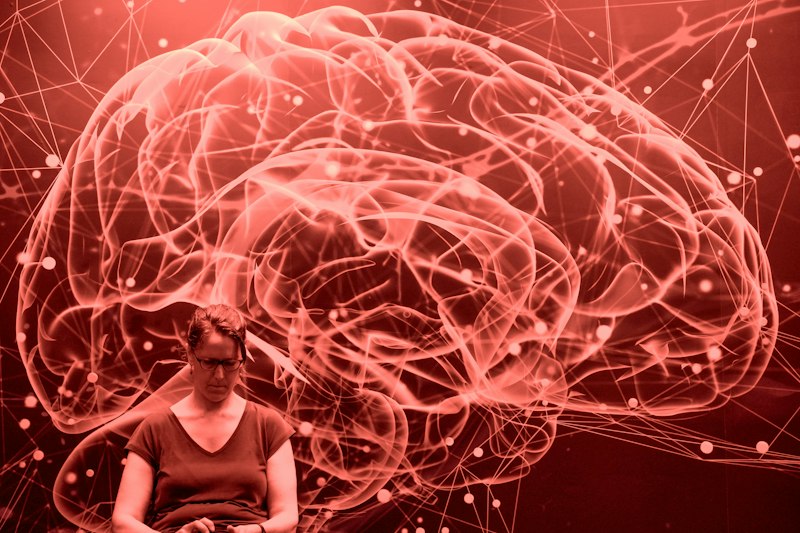
Introduction to Dynamic Processes in Psychology
In the realm of psychology, the term dynamic refers to processes, systems, or interactions characterized by continuous change, activity, and evolution over time. Unlike static views that perceive mental states or behaviors as fixed entities, a dynamic perspective emphasizes the constant flux, interaction, and transformation inherent in psychological phenomena. This concept underscores the understanding that human experience, from individual development to social interactions, is not merely a sequence of isolated events but rather an ongoing, interconnected, and adaptive system. The recognition of dynamism is pivotal for comprehending the complex, multifaceted nature of the mind and behavior, moving beyond simplistic cause-and-effect models to embrace the intricate interplay of numerous factors.
The application of a dynamic lens allows psychologists to explore how various components of a system, whether internal cognitive structures, emotional states, or external environmental influences, continuously shape and reshape each other. This perspective is crucial for studying phenomena that are inherently fluid and non-linear, such as personality development, the progression of mental health conditions, or the intricate dance of social group behavior. By focusing on processes of continual transformation and growth, psychologists can gain deeper insights into the mechanisms underlying adaptation, resilience, and vulnerability, moving towards a more holistic and ecologically valid understanding of the human condition.
The idea that psychological systems are in a state of constant change, adapting to their environment and evolving over time, forms a cornerstone for several influential theories and research paradigms. This article will delve into the core definition of dynamic in psychology, trace its historical evolution through different theoretical frameworks, provide practical examples to illustrate its application, discuss its profound significance for the field, and explore its connections to other key psychological concepts, ultimately demonstrating its pervasive and enduring relevance.
Core Definition: Understanding Psychological Dynamism
At its heart, the concept of dynamic in psychology signifies change, activity, and interaction. It describes a system or process where elements are not fixed but are in continuous motion, influencing and being influenced by other elements within the system and its environment. This implies that psychological states, behaviors, and developments are rarely stagnant; instead, they are the emergent properties of ongoing, reciprocal interactions. For instance, an individual’s mood is not a static characteristic but a dynamic state influenced by recent experiences, physiological factors, cognitive appraisals, and social interactions, constantly shifting and adapting.
Expanding on this, a dynamic psychological process is one that is characterized by inherent variability, adaptability, and the potential for qualitative shifts. It moves beyond simple linear causality, recognizing that effects can also become causes in a continuous feedback loop. This perspective is fundamental to understanding complex human traits and behaviors, such as learning, memory formation, emotional regulation, and social decision-making. These are not merely static functions but active processes that evolve and reorganize based on experience, context, and internal states.
The concept of dynamism is closely related to the idea of dynamism more broadly, which posits that all systems, including living organisms, are in a state of constant change. In psychology, this translates to the understanding that the human mind and behavior are never truly static. Every experience, every interaction, every internal thought contributes to a continuous process of adaptation and evolution. This constant adaptation to the environment, both internal and external, means that psychological systems are inherently flexible and capable of profound transformation over a lifespan.
Historical Roots: From Psychodynamics to Dynamic Systems
The historical trajectory of the term dynamic within psychology is rich and varied, with two major theoretical traditions prominently featuring this concept. The first, and arguably most influential in establishing the term, is psychodynamic theory, pioneered by Sigmund Freud in the late 19th and early 20th centuries. Freud’s model of the mind was inherently dynamic, positing that psychological life is a constant interplay of conflicting forces, primarily unconscious drives (id), moral constraints (superego), and rational thought (ego). The “dynamics” of the mind referred to the ceaseless struggle and interaction among these forces, manifesting as behaviors, thoughts, and emotions. For Freud, psychological symptoms were not random occurrences but rather dynamic compromises or expressions of these underlying conflicts, constantly shifting and seeking resolution.
Following Freud, subsequent psychodynamic theorists like Carl Jung, Alfred Adler, and Erik Erikson continued to elaborate on these dynamic interactions, broadening the scope to include social and cultural influences, and emphasizing lifelong development. Their work consistently highlighted that personality and mental health are not fixed states but are continually shaped by internal and external forces in a complex, evolving dance. The focus remained on understanding the hidden, often unconscious, motivations and their dynamic interplay in shaping conscious experience and observable behavior, particularly in clinical contexts.
A second significant historical development, emerging primarily in the latter half of the 20th century, is Dynamic Systems Theory (DST) in psychology. This approach, drawing heavily from fields like physics, biology, and mathematics, offers a framework for understanding how complex systems change over time. Pioneers such as Esther Thelen applied DST to developmental psychology, viewing development not as a predetermined sequence but as an emergent property of the continuous, reciprocal interaction of multiple components – biological, cognitive, social, and environmental. For example, a child learning to walk is not simply executing a genetic program but is dynamically interacting with their body’s changing proportions, muscle strength, motivation, and the properties of the walking surface.
DST introduced concepts like self-organization, attractors, and bifurcations to psychology, demonstrating that complex patterns of behavior can arise spontaneously from the interaction of simpler components without a central command. This perspective has been particularly influential in developmental psychology, cognitive psychology, and social psychology, offering a powerful lens through which to understand non-linear change, individual differences, and the emergence of novel behaviors. Both psychodynamic theory and DST, though distinct in their origins and methodologies, converge on the fundamental premise that psychological life is inherently dynamic.
Mechanisms of Change: Key Principles of Dynamic Systems
The “how-to” of dynamic processes in psychology is often understood through several core principles, particularly those articulated within Dynamic Systems Theory. One fundamental principle is that of interconnectedness: all components within a psychological system are linked and influence one another. Changes in one part of the system reverberate throughout, leading to ripple effects that can alter the overall state. For example, a change in an individual’s stress levels (physiological component) might impact their cognitive processing (cognitive component), emotional regulation (affective component), and even social interactions (behavioral component). This holistic view emphasizes that isolated analyses often miss the crucial interactive nature of psychological phenomena.
Another key mechanism is feedback loops. Dynamic systems are characterized by continuous feedback, where the output of a process serves as input for subsequent stages. Positive feedback loops amplify change, leading to rapid escalation or snowball effects, such as in panic attacks where initial anxiety symptoms trigger more anxiety. Negative feedback loops, conversely, dampen change and promote stability, helping the system return to a desired state, as seen in physiological homeostasis or emotional self-regulation. Understanding these loops is vital for explaining why some psychological states persist, escalate, or resolve over time.
Furthermore, dynamic systems often exhibit non-linearity, meaning that small changes in initial conditions can lead to large, unpredictable outcomes (often referred to as the “butterfly effect” in chaos theory). This principle helps explain why identical therapeutic interventions might yield vastly different results for different individuals, or why minor life events can sometimes trigger significant psychological shifts. Psychological systems are complex adaptive systems, capable of emergence, where novel patterns of behavior or thought arise spontaneously from the interactions of individual components, rather than being pre-programmed or dictated by a single controlling factor.
These principles collectively highlight that psychological change is rarely linear or predictable. Instead, it involves continuous negotiation, adaptation, and reorganization among multiple interacting variables. The system is always seeking a state of dynamic equilibrium, but this equilibrium itself is fluid and subject to continuous perturbation and adjustment. This perspective encourages psychologists to look beyond simple linear causality and embrace the inherent complexity and fluidity of human experience, providing a more nuanced understanding of how individuals adapt and develop.
Practical Application: Illustrating Dynamic Psychological Phenomena
To illustrate the concept of dynamic in a real-world scenario, consider the psychological process of coping with a significant life stressor, such as job loss. This situation does not elicit a static, one-time reaction; rather, it triggers a cascade of dynamic psychological processes. Initially, an individual might experience acute emotional distress, including shock, anger, or sadness. This initial emotional response is not isolated but dynamically interacts with their cognitive appraisal of the situation (e.g., “This is a catastrophe” vs. “This is an opportunity for change”), their physiological stress response (e.g., increased heart rate, cortisol release), and their available social support network.
The “how-to” of this dynamic process unfolds as the individual attempts to cope. For example, if they engage in problem-focused coping strategies, such as actively searching for a new job or seeking retraining, these actions dynamically influence their emotional state, potentially reducing feelings of helplessness and increasing self-efficacy. Conversely, if they engage in emotion-focused coping, such as seeking support from friends or engaging in mindfulness, these strategies help manage emotional distress, which in turn can free up cognitive resources to think more clearly about future steps. This is a continuous coping cycle, where actions influence thoughts and feelings, which then influence subsequent actions.
Furthermore, the individual’s personality traits, past experiences with stress, and current environmental demands also dynamically contribute. A person with a history of resilience might recover more quickly, while someone prone to rumination might find themselves in a negative feedback loop where anxious thoughts exacerbate distress, making it harder to initiate proactive behaviors. The entire process is a complex, evolving system where multiple factors—thoughts, emotions, behaviors, physiological states, and environmental interactions—are constantly influencing each other, leading to an adaptive or maladaptive trajectory of change over time. The outcome is not predetermined but emerges from the continuous, dynamic interplay of these elements.
Significance and Enduring Impact on Psychological Science
The embrace of a dynamic perspective has profoundly impacted the field of psychology, revolutionizing the way researchers and clinicians understand and address complex human phenomena. Its primary significance lies in moving beyond reductionist views that attempt to isolate single causes for complex behaviors. Instead, dynamic approaches provide a framework for conceptualizing the intricate, multi-layered nature of psychological life, recognizing that mental processes and behaviors are emergent properties of interacting systems. This shift has allowed for a more nuanced understanding of development, psychopathology, and social interaction, acknowledging their inherent fluidity and context-dependency.
In clinical psychology, the impact is particularly evident in the development of psychodynamic therapies, which aim to uncover and resolve unconscious conflicts and patterns of interaction that are dynamically contributing to psychological distress. These therapies recognize that symptoms are not merely problems to be eradicated but are often meaningful expressions of underlying dynamic processes. Similarly, in developmental psychology, dynamic systems theory has transformed the understanding of child development from a stage-based, maturational model to one emphasizing continuous interaction between the child and their environment, explaining why developmental trajectories are so diverse and individual.
Beyond therapy and development, dynamic perspectives have also influenced fields such as social psychology, by illuminating how group behaviors and social structures emerge from the dynamic interactions of individuals, and cognitive science, by modeling cognitive processes as dynamic, self-organizing systems rather than static, rule-based computations. The emphasis on change, interaction, and context provides a more accurate and comprehensive lens through which to analyze human experience, fostering research that explores processes, trajectories, and emergent properties rather than just static states. This has led to more sophisticated research methodologies capable of capturing temporal dynamics and non-linear relationships.
Connections, Related Concepts, and Broader Context
The concept of dynamic in psychology is deeply interconnected with several other key psychological terms and theories, and it resides within broader scientific categories. As discussed, Psychodynamic Theory is historically a primary conceptualization of dynamism, focusing on the interplay of internal drives, conflicts, and unconscious processes. Similarly, Dynamic Systems Theory, particularly in developmental and cognitive psychology, provides a modern, mathematically informed framework for understanding how complex behaviors and mental states emerge from the continuous interaction of multiple components over time. Both theories, despite their different origins and foci, underscore the fundamental principle of constant change and interaction.
Other related concepts include Complexity Theory, which examines systems with numerous interacting parts that exhibit non-linear behavior and emergent properties; Self-Organization, referring to the spontaneous formation of ordered patterns or structures in a system without external guidance; and Feedback Loops, which are crucial mechanisms through which systems regulate themselves and adapt. The principles of Chaos Theory, emphasizing sensitivity to initial conditions and the unpredictability of long-term behavior in complex systems, also find resonance in dynamic psychological models, particularly when explaining individual differences and sudden shifts in behavior.
The broader category to which dynamic processes belong is Systems Theory, a multidisciplinary framework for investigating systems in general. Within psychology, dynamic perspectives are integral to various subfields. In developmental psychology, it informs our understanding of continuous, non-linear growth. In cognitive psychology, it aids in modeling adaptive information processing. In social psychology, it helps explain group dynamics and the emergence of social norms. Furthermore, in clinical psychology, it underpins many therapeutic approaches that consider symptoms as part of a larger, evolving psychological system. The pervasive influence of dynamic thinking highlights its fundamental importance across the diverse landscape of psychological inquiry.
Conclusion: The Enduring Relevance of Dynamic Perspectives
In conclusion, the concept of dynamic is a fundamental and pervasive idea in psychology, illuminating the processes of continual transformation, growth, and development that characterize human experience. From its early conceptualization in psychodynamic theories, emphasizing the interplay of unconscious forces, to its modern articulation in dynamic systems theory, which models psychological phenomena as emergent properties of complex interactions, the dynamic perspective provides an essential framework for understanding the mind and behavior. It moves beyond static interpretations, recognizing that psychological states, traits, and behaviors are constantly evolving, adapting, and reorganizing in response to internal and external influences.
Dynamic processes are critical in the study of complex psychological systems, offering insights into how individuals develop, cope with stress, interact socially, and experience mental health. By embracing concepts such as feedback loops, non-linearity, and self-organization, psychologists can develop more sophisticated models that capture the richness and variability of human functioning. This understanding has important implications for research, guiding investigations into the trajectories of change, the mechanisms of adaptation, and the emergence of novel behaviors and insights.
Ultimately, the enduring relevance of the dynamic perspective lies in its capacity to foster a holistic and ecologically valid understanding of psychology. It champions the view that the human mind is not a fixed entity but a living, breathing system, perpetually engaged in a dialogue with itself and its environment. By appreciating the dynamic nature of psychological processes, researchers and practitioners alike can gain deeper insights into how systems work, how they can be improved, and how individuals can navigate the continuous journey of transformation and growth throughout their lives, leading to more effective interventions and a more comprehensive science of the human experience.