Neuro-Processing: Unlocking Motor and Cognitive Hurdles
Scientifically Reviewed · Dr. Marwa Abd-Alazim · September 16, 2026
Review Criteria & Clinical Standards
This content undergoes rigorous scientific peer-review and medical editorial standards at Arab Psychology Network to ensure clinical accuracy, validity, and compliance with evidence-based guidelines from leading psychological and healthcare authorities (APA / WHO).
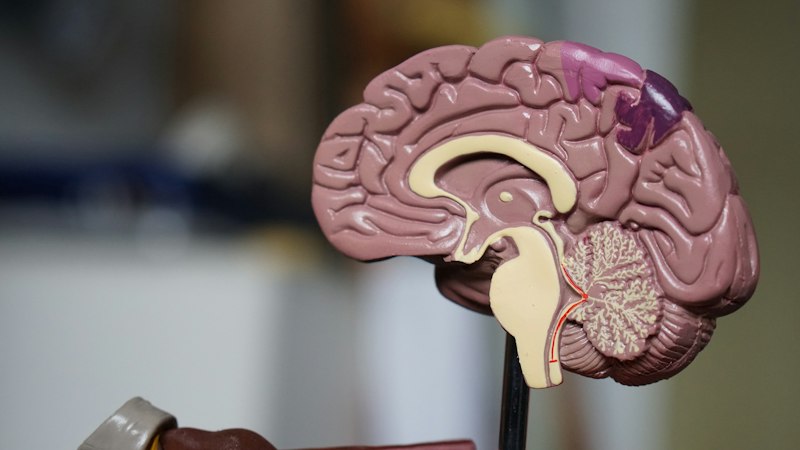
Introduction to Dysdiadochokinesia and Dyseidetic Dyslexia
Dysdiadochokinesia (DDK) and dyseidetic dyslexia (DD) represent two distinct but important facets of neurological dysfunction, impacting motor coordination and linguistic processing, respectively. While they arise from different neurobiological pathways, both conditions illustrate how complex, sequential processing—whether motor or cognitive—can be disrupted, leading to significant functional impairment. This detailed entry explores the etiology, clinical presentation, diagnostic procedures, and therapeutic management strategies for both DDK, a disorder characterized by the inability to perform rapid alternating movements, and DD, a specific subtype of learning disability impacting visual word recognition.
The study of these disorders is crucial for understanding the integrated nature of the central nervous system. Dysdiadochokinesia is primarily associated with cerebellar damage, affecting the brain’s ability to time and sequence muscle movements accurately. Conversely, dyseidetic dyslexia involves a fundamental breakdown in the visual-orthographic processing route, which is essential for quickly recognizing words as whole units, often referred to as “sight words.” Though their symptoms appear disparate, both conditions highlight deficits in rapid information sequencing and recall—motor sequencing in DDK and visual-linguistic sequencing in DD.
It is imperative for clinicians and educators to differentiate between these disorders for effective intervention. A misdiagnosis or failure to recognize the co-occurrence of such neurological challenges can severely impede an individual’s development and quality of life. This article aims to provide a comprehensive overview, utilizing the most current understanding of these conditions to facilitate accurate identification and specialized treatment planning, ensuring that individuals receive targeted support tailored to their specific deficits.
Understanding Dysdiadochokinesia (DDK): Definition and Context
Dysdiadochokinesia, derived from Greek roots meaning “difficulty following rapid succession of movements,” is a clinical sign indicative of impaired coordination. It specifically refers to the inability to execute rapid, alternating movements smoothly and accurately. This deficit is a hallmark symptom of ataxia, a generalized term for a lack of muscle coordination, and is almost always associated with damage or dysfunction within the cerebellum or its connected pathways. The cerebellum, often described as the brain’s primary coordinator, plays a critical role in motor learning, balance, posture, and, most relevantly to DDK, the timing and sequencing of voluntary movements.
In a healthy individual, performing rapid alternating movements—such as quickly tapping the fingers, rapidly pronating and supinating the forearms, or alternating foot taps—requires precise timing and inhibition between opposing muscle groups (agonists and antagonists). When cerebellar function is compromised, this finely tuned coordination breaks down. The resulting movement is often slow, irregular, clumsy, and characterized by a breakdown in rhythm and amplitude. The individual may struggle to maintain a consistent speed or range of motion, and the movement often appears disjointed rather than fluid.
DDK is not considered a primary disease entity itself, but rather a valuable clinical sign that points toward an underlying neurological pathology. Its presence strongly suggests a lesion in the ipsilateral cerebellar hemisphere, meaning the deficit will be observed on the same side of the body as the affected cerebellar structure. Understanding DDK is essential for neurological assessment, as its demonstration helps localize the source of coordination difficulties, guiding further diagnostic investigation into conditions such as multiple sclerosis, stroke, or cerebellar degeneration.
Clinical Manifestations and Symptoms of DDK
The symptoms of Dysdiadochokinesia manifest primarily through specific tasks designed to test the speed and regularity of antagonistic muscle actions. When testing for DDK, the examiner looks for three critical features in the patient’s performance: slowness of movement, inaccuracy in range and direction, and a pronounced irregularity in the rhythm of alternation. These deficits often extend beyond simple testing tasks, affecting complex daily activities that require precise timing and sequencing.
Common clinical examinations involve observing the patient attempting a series of rapid alternating movements, including:
- Rapid Alternating Hand Movements: Asking the patient to quickly tap the palm of one hand against the back of the other, then flip the hand over and repeat the action, performing rapid pronation and supination. Individuals with DDK will struggle to maintain the rhythm and may look hesitant or fumble the transition.
- Finger Tapping: Rapidly tapping the index finger against the thumb. The movement becomes disorganized, often involving extraneous movements or a progressive decrease in the speed or force of the tap.
- Foot Tapping: Asking the patient to rapidly tap their foot against the floor or a surface. The affected limb demonstrates significant difficulty maintaining the cadence, resulting in uneven, sloppy movements.
Beyond these specific tests, DDK can contribute to broader motor impairments. Individuals may experience difficulty in activities requiring rapid motor sequencing, such as playing a musical instrument, accurately typing, or executing precise athletic movements. Furthermore, the underlying cerebellar dysfunction that causes DDK can also lead to other signs of ataxia, including gait instability, dysmetria (inability to judge distance or range of movement), and intention tremor, all compounding the overall motor disability experienced by the individual.
Etiology and Pathophysiology of DDK
The underlying cause of Dysdiadochokinesia is directly tied to pathology within the neural circuits responsible for coordinating movement timing, primarily involving the cerebellum. The cerebellum acts as a comparator, taking information about the intended movement from the motor cortex and comparing it with sensory feedback regarding the actual movement position (proprioception). It then issues corrective signals to ensure smooth, coordinated execution. Damage to this structure impairs the brain’s capacity to rapidly adjust motor commands, leading to the characteristic irregularity seen in DDK.
While the exact cause varies widely among patients, DDK is often the result of acquired neurological damage. Common etiologies include cerebellar stroke (ischemic or hemorrhagic events affecting cerebellar blood supply), multiple sclerosis (MS), which causes demyelination in the cerebellar pathways, and mass lesions such as tumors or abscesses that compress or destroy cerebellar tissue. In these cases, the destruction of Purkinje cells or deep cerebellar nuclei disrupts the output signals necessary for synchronized muscle action.
Furthermore, DDK can be a symptom of various neurodegenerative or hereditary disorders. Conditions like Friedreich’s ataxia or other spinocerebellar ataxias involve progressive degeneration of the cerebellum and spinal cord pathways, inevitably leading to worsening dysdiadochokinesia and general ataxia over time. Toxic exposure, particularly chronic alcohol abuse or exposure to certain heavy metals, can also induce cerebellar damage, manifesting as DDK.
Understanding the pathophysiology confirms that DDK reflects a failure in the rapid switching mechanism required to activate and deactivate antagonistic muscle groups. The cerebellar role involves predicting the necessary muscle force and timing for the next phase of movement. When this predictive function fails, the individual overshoots or undershoots the target position, and the transition between movements becomes jerky and delayed, hence the loss of rhythm and speed observed during alternating tasks.
Understanding Dyseidetic Dyslexia (DD): Definition and Characteristics
Dyseidetic Dyslexia (DD), also known as visual, orthographic, or surface dyslexia, is a specific subtype of developmental reading disorder characterized by a primary deficit in whole-word recognition. Unlike individuals with dysphonetic (phonological) dyslexia, who struggle primarily with sounding out words and phoneme-grapheme correspondence, individuals with dyseidetic dyslexia have a significant impairment in establishing an efficient visual-orthographic lexicon—the internal dictionary of words that can be recognized instantly on sight.
The core challenge in DD lies in the failure to rapidly and accurately map the visual appearance of a word (its orthography) to its meaning and pronunciation. This process, known as orthographic mapping, allows proficient readers to process most common words automatically. For the dyseidetic reader, every word, regardless of how frequently encountered, tends to be processed as if it were novel. They often rely heavily on the phonological route (sounding out the word), even for words they should know instantly. This reliance makes reading slow, laborious, and highly inefficient.
A key characteristic of DD is the particular difficulty with irregular words. English contains many words that defy standard phonetic rules (e.g., "yacht," "said," "one"). Since these words cannot be reliably decoded phonetically, they must be learned visually and stored as sight words. The dyseidetic reader struggles profoundly with these exceptions, often misreading them by attempting to apply phonetic rules that do not apply, leading to errors that preserve the sound pattern but not the visual form.
Clinical Manifestations and Symptoms of DD
The symptoms of dyseidetic dyslexia are centered around poor visual memory for word forms and difficulty with rapid word identification. The primary clinical manifestations include slow reading speed, high rates of substitution errors, and severe spelling difficulties, particularly with words that require visual recall.
In reading, the dyseidetic reader is often described as "word-by-word" rather than reading in phrases. Their slow pace is necessitated by the constant need to laboriously decode or sound out words, even common function words. Specific reading errors often include:
- Misreading Irregular Words: Reading "people" as "pee-oh-ple" or "know" as "kuh-now."
- Confusing Visually Similar Words: Struggling to distinguish between words with similar outlines but different internal structures (e.g., "where" and "were," or "them" and "then").
- Difficulty with Homophones: A poor visual memory makes it hard to distinguish between homophones that have different spellings (e.g., "to," "too," and "two") when writing.
The writing and spelling challenges associated with DD are often more pronounced than the reading deficits. Because the visual form of words is not securely stored, spelling relies heavily on phonetic attempts, leading to bizarre or non-standard spellings that are phonetically plausible but visually incorrect (e.g., spelling "business" as "bizniss"). They may struggle significantly with capitalization, punctuation, and the overall visual organization of written text, further demonstrating a deficit in visual linguistic sequencing and recall.
While individuals with DD often possess strong phonological awareness and excellent auditory discrimination skills—meaning they can sound out novel words effectively—their reliance on this slow route severely limits reading fluency and comprehension, especially in timed or demanding academic settings.
Diagnostic Procedures for DDK and DD
Diagnosis for Dysdiadochokinesia and Dyseidetic Dyslexia requires distinct, specialized assessments, reflecting the neurological and cognitive differences between the two conditions. Both diagnoses rely on a combination of clinical observation and standardized testing (Raz, 2017).
The diagnosis of Dysdiadochokinesia (DDK) is primarily clinical and neurological. It is established through a thorough physical examination focused on assessing motor coordination and cerebellar function. Key diagnostic tests involve the rapid alternating movements mentioned previously, such as the finger-to-nose test (where the patient alternates touching their nose and the examiner’s finger) and the heel-to-shin test (where the patient runs their heel down the opposite shin). In DDK, the performance will be uneven, jerky, and lack the necessary speed and smoothness. If DDK is confirmed, further neuroimaging, typically MRI, is essential to localize the underlying structural damage in the cerebellum or associated pathways (Raz, 2017).
In contrast, the diagnosis of Dyseidetic Dyslexia (DD) relies on a comprehensive psychoeducational evaluation. The assessment must confirm a significant discrepancy between general intellectual ability and specific reading/spelling achievements. The diagnostic battery must include specialized tests that differentiate between phonological processing deficits and visual-orthographic deficits. Specific components include:
- Reading Comprehension and Fluency Tests: To establish the severity of the reading disability.
- Decoding and Phonemic Awareness Tests: To confirm that the individual possesses relatively strong phonological skills, ruling out dysphonetic dyslexia as the primary deficit.
- Non-word Reading Tests: Used to confirm the ability to sound out words (often strong in DD).
- Sight Word and Irregular Word Recognition Tests: Crucial for diagnosing DD, as performance here will be significantly impaired, demonstrating the failure of the orthographic mapping system (Raz, 2017).
Through this rigorous differential diagnosis, clinicians can accurately attribute the specific learning challenge to the visual-orthographic route rather than a generalized auditory or phonological deficit, which is essential for determining appropriate educational intervention.
Therapeutic Interventions for Dysdiadochokinesia
The treatment for Dysdiadochokinesia is primarily rehabilitative, focusing on symptom management, improving coordination, and maximizing functional independence, as the underlying cerebellar damage itself is often irreversible. A multidisciplinary approach involving several types of therapy is typically employed (Raz, 2017).
Physical Therapy (PT) plays a central role. PT programs are designed to address the ataxia, balance deficits, and poor timing associated with DDK. Treatment emphasizes specific exercises aimed at improving proprioception, stabilizing the core, and practicing controlled, rhythmic movements. Exercises may include balance training, gait training using visual or auditory cues to establish rhythm, and targeted practice of complex motor sequences to help the brain compensate for the cerebellar deficit by utilizing alternative neural pathways.
Occupational Therapy (OT) focuses on adapting daily activities and improving fine motor coordination necessary for functional tasks. OT interventions help individuals manage the difficulties DDK poses to activities of daily living (ADLs), such as dressing, eating, and writing. Therapists might use specialized tools or adaptive techniques to compensate for poor hand-eye coordination and sequencing difficulties, helping the individual perform necessary rapid movements with greater control.
In some cases, Speech Therapy may be necessary if the cerebellar dysfunction also affects the muscles required for articulation, leading to dysarthria (slurred speech). Medications, such as Baclofen, may be prescribed. While Baclofen is primarily used as a muscle relaxant to treat spasticity, it can sometimes help manage related symptoms of motor control disruption, although treatment for DDK remains largely non-pharmacological and focused on intensive rehabilitation (Raz, 2017).
Educational and Clinical Management of Dyseidetic Dyslexia
Treatment for Dyseidetic Dyslexia centers entirely on targeted educational interventions designed to address the visual-orthographic processing gap. Standard phonics instruction, while crucial for many dyslexics, is insufficient for DD; intervention must specifically focus on building and strengthening the sight word vocabulary and visual memory for words (Raz, 2017).
Specialized instruction must incorporate techniques that force the integration of visual, auditory, and kinesthetic information to establish robust orthographic mapping. Methods that emphasize the visual characteristics of words, such as using color-coding, tracing words, or flashcard drills focusing on rapid presentation and recall of irregular spellings, are highly effective. The goal is to move the student away from slow, letter-by-letter decoding and toward instantaneous recognition of the whole word form.
Accommodations in the classroom are vital for managing the secondary effects of slow reading fluency. Since comprehension may be intact despite poor fluency, students benefit greatly from tools that bypass the visual decoding bottleneck. These accommodations include providing extra time on tests, allowing the use of text-to-speech software, and providing audiobooks for complex required reading. These strategies ensure that the student can access the content and demonstrate knowledge without being penalized for their slow processing speed.
While DD is a learning disability, attention deficits (ADHD) often co-occur. If stimulants are prescribed, they are intended to help manage symptoms of inattention or hyperactivity, thereby improving the student’s focus and ability to engage in the intensive, repetitive instructional techniques required to build orthographic memory. The primary intervention, however, remains specialized, research-based educational tutoring (Raz, 2017).
Conclusion
Dysdiadochokinesia (DDK) and dyseidetic dyslexia (DD) are distinct neurological disorders that underscore the specialized nature of brain function. DDK represents a failure in the cerebellar systems responsible for accurate, rapid motor sequencing, leading to coordination deficits. DD, conversely, reflects a specific failure in the visual-orthographic processing route essential for fluent reading and accurate spelling.
Although their manifestations are different—one affecting physical movement and the other affecting linguistic ability—both conditions necessitate specialized diagnostic evaluation and targeted therapeutic approaches. Effective management of DDK relies on intensive physical and occupational therapy to compensate for cerebellar damage, while successful intervention for DD requires specialized educational methods focused on building visual word recognition skills.
By recognizing the unique neurological underpinnings and clinical profiles of DDK and DD, clinicians and educators can ensure that affected individuals receive the precise support needed to mitigate their specific challenges, promoting functional improvement and academic success.