Adaptive Eating: Empowering Independence Through Design
Scientifically Reviewed · Dr. Marwa Abd-Alazim · October 14, 2026
Review Criteria & Clinical Standards
This content undergoes rigorous scientific peer-review and medical editorial standards at Arab Psychology Network to ensure clinical accuracy, validity, and compliance with evidence-based guidelines from leading psychological and healthcare authorities (APA / WHO).
Introduction: The Core Definition of Eating Aids
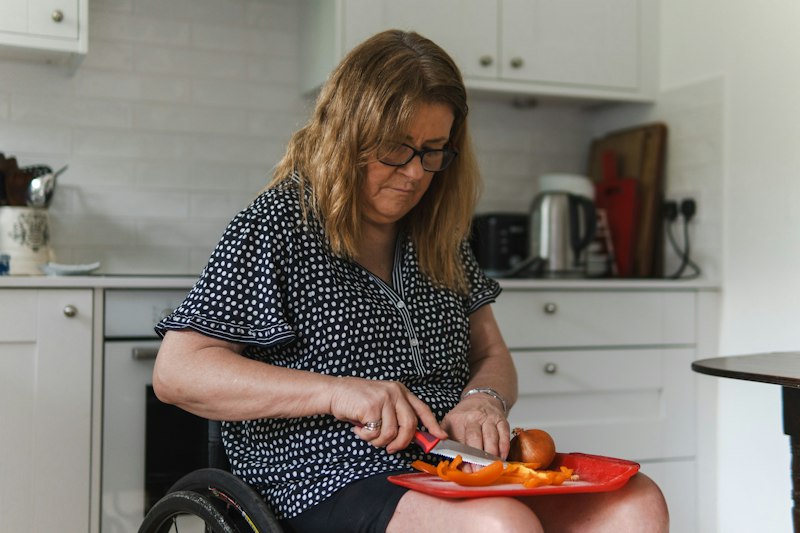
Eating aids, also broadly known as assistive devices, are specialized tools and adaptive equipment meticulously designed to empower individuals facing physical and/or cognitive impairments to consume food and beverages with greater independence and dignity. At its fundamental level, an eating aid serves as an intermediary, bridging the gap between an individual’s impaired capabilities and the complex demands of the eating process. This encompasses a wide spectrum of tools, ranging from deceptively simple modifications to conventional cutlery to highly sophisticated, specialized devices that address specific neurological or motor challenges. The primary objective is not merely to provide sustenance, but to restore a degree of autonomy and enhance the overall experience of mealtime, which is often a significant social and psychological component of daily life.
The act of eating is far more intricate than it might appear on the surface, requiring a synchronous orchestration of numerous motor skills and cognitive processes. This includes fine motor control for gripping utensils, gross motor coordination for lifting and bringing food to the mouth, sensory processing for taste and texture, and cognitive functions such as sequencing, attention, and problem-solving. For individuals afflicted with conditions such as stroke, Parkinson’s disease, dementia, or cerebral palsy, these essential capabilities can be severely compromised. Such impairments can transform a routine activity into a formidable challenge, leading to frustration, dependence, inadequate dietary intake, and a diminished quality of life. Eating aids are therefore crucial tools in rehabilitation and long-term care, mitigating these challenges and promoting better health outcomes.
The core principle underpinning the design and application of assistive devices for eating is to compensate for lost or impaired functions, thereby enabling the individual to perform tasks that would otherwise be impossible or extremely difficult. This could involve modifying the physical properties of utensils to make them easier to grip, altering their shape to accommodate limited range of motion, or securing them to prevent spills. Beyond the immediate physical benefits, these aids often have profound psychological impacts, fostering self-reliance, reducing feelings of helplessness, and enhancing social participation by allowing individuals to partake in communal meals. The development and deployment of eating aids represent a significant advancement in promoting independence and well-being for vulnerable populations.
Historical Development of Assistive Technology for Eating
The concept of providing assistance for individuals with physical limitations in performing daily tasks is not new, tracing its roots back through centuries of human ingenuity. However, the systematic development and classification of eating aids as a distinct category of assistive technology gained significant momentum in the 20th century, particularly following major wars that resulted in large numbers of individuals with disabilities requiring rehabilitation. Early efforts were often rudimentary, involving modifications to standard household items. The focus was initially on basic survival and minimizing the burden of care, rather than on maximizing independence. As medical understanding of various conditions advanced, so too did the recognition of the importance of functional independence for overall well-being and recovery.
The mid-20th century saw the emergence of occupational therapy as a distinct profession, which significantly contributed to the systematic development and application of adaptive equipment. Occupational therapists, trained in analyzing human activity and function, began to conceptualize and design tools specifically tailored to address deficits in activities of daily living (ADLs), including eating. This period marked a shift from generic assistance to personalized solutions, driven by a deeper understanding of biomechanics, ergonomics, and the psychological impact of disability. Research into specific impairments, such as those caused by spinal cord injury or cerebral palsy, informed the creation of increasingly specialized and effective devices.
The late 20th and early 21st centuries have witnessed an acceleration in the innovation of assistive technology, fueled by advancements in materials science, electronics, and robotics. This has allowed for the creation of more lightweight, durable, and sophisticated eating aids. The emphasis has expanded beyond mere functionality to include aesthetics and user-friendliness, recognizing that acceptance and consistent use of these devices are critical for their effectiveness. Furthermore, the principles of universal design have influenced the development of some products, aiming to create items that are usable by the widest possible range of people, regardless of their abilities, thus reducing the stigma often associated with specialized equipment.
Types of Eating Aids and Their Design Principles
The diversity of eating aids reflects the varied nature of the challenges individuals face. One of the most common categories involves modifications to standard utensils. For instance, spoons, forks, and knives are often designed with enlarged or modified handles. These larger grips are easier to grasp for individuals with limited hand dexterity, weakness, or conditions like arthritis, which can make fine motor control painful or impossible. The handles might be padded, weighted to reduce tremor, or ergonomically shaped to fit the contour of a weakened or deformed hand, thereby improving control and reducing the effort required to hold them.
Another crucial innovation in utensil design includes angled utensils. These tools feature bends or angles in their handles or heads, allowing individuals with restricted range of motion in their wrists or elbows to bring food to their mouths without having to perform awkward or painful movements. For example, a spoon with a right-angle bend can be immensely helpful for someone who cannot supinate their forearm. Beyond utensils, adaptive plates and bowls play a significant role. These often feature high sides or compartments that assist in scooping food, preventing it from sliding off the plate, which is particularly beneficial for those with tremors or poor coordination. Some plates incorporate a suction cup base to prevent them from moving around on the table, offering a stable surface for individuals who may use only one hand or have uncontrolled movements.
For more specialized needs, particularly those related to dysphagia (difficulty swallowing), a range of highly specific devices exists. These may include textured spoons that stimulate oral motor reflexes, flow-controlled cups that regulate liquid intake to prevent aspiration, or even devices that assist with the chewing process for individuals with muscle weakness in the jaw. The design principles for these aids often integrate insights from speech-language pathology and biomechanics, focusing on safety and efficiency during the complex oral preparatory and pharyngeal phases of swallowing. The ultimate goal across all types of eating aids is to provide a customized solution that addresses the specific functional limitations of the individual, thereby promoting safe, independent, and enjoyable mealtimes.
Practical Applications and Real-World Scenarios
To illustrate the tangible benefits of eating aids, consider a common scenario involving an individual recovering from a stroke. A stroke can result in hemiparesis, leading to weakness or paralysis on one side of the body, often affecting the dominant hand and arm. This makes holding standard utensils, scooping food, and bringing it to the mouth an arduous, if not impossible, task. Without intervention, such an individual might become entirely dependent on caregivers for feeding, leading to feelings of helplessness and a loss of personal autonomy during meal times. This scenario underscores the critical need for adaptive solutions that can bridge the gap between their current physical capabilities and the demands of independent eating.
In this context, an occupational therapist would assess the individual’s specific deficits and recommend appropriate eating aids. For instance, if the individual struggles with gripping, a spoon with an enlarged, weighted handle would be introduced. The larger circumference provides a more substantial grip, requiring less fine motor control, while the added weight can help counteract tremors, allowing for a steadier hand movement. Simultaneously, an adaptive plate with high, curved edges would be provided. This design allows the individual to push food against the raised edge, effectively “scooping” it onto the utensil with less spillage and greater ease, even with one hand.
The “how-to” of applying these principles involves a sequential process. First, the individual sits at a stable table, ideally with non-slip matting. The adaptive plate is placed directly in front of them, secured by its suction cup base if applicable. The modified utensil is then gripped, utilizing its ergonomic design to maximize comfort and control. The individual is guided to use the high edge of the plate to gather food onto the utensil, minimizing frustration and promoting successful self-feeding. This step-by-step application not only facilitates the physical act of eating but also rebuilds confidence and reinforces a sense of independence, transforming a challenging activity into a manageable and even enjoyable experience, thereby improving overall quality of life.
Significance and Impact on Well-being
The importance of eating aids extends far beyond mere convenience; they play a pivotal role in maintaining and improving the physical and psychological well-being of individuals with eating difficulties. Fundamentally, these devices directly impact dietary intake. Studies have consistently shown that when individuals are provided with appropriate aids, their ability to consume adequate amounts of food increases significantly. For example, research on stroke survivors demonstrated that the use of a modified spoon with a broad handle led to increased food intake (Moraes et al., 2018). This enhanced intake is crucial for preventing malnutrition, which is a common and serious complication in many patient populations with physical and cognitive impairments.
Improved dietary intake naturally translates into better nutrition. Malnutrition can exacerbate existing medical conditions, impair immune function, delay recovery, and significantly reduce an individual’s energy levels and overall vitality. By ensuring that individuals can consume balanced meals, eating aids contribute directly to their physiological health. A study involving individuals with dementia, for instance, found that the use of adaptive plates with compartments effectively improved nutritional intake (Yamamoto et al., 2016). Similarly, research on children with cerebral palsy highlighted that adapted utensils resulted in improved nutrition (Kazakura et al., 2015), underscoring the broad applicability of these benefits across different age groups and conditions.
Perhaps one of the most profound impacts of eating aids is on an individual’s quality of life. The ability to eat independently fosters a sense of dignity, self-efficacy, and control over one’s daily life. It reduces reliance on caregivers, thereby enhancing personal privacy and autonomy. Furthermore, meal times are often social events, and independent eating allows for greater participation in these social interactions, mitigating feelings of isolation. A study on stroke patients revealed that the use of eating aids significantly improved their satisfaction with mealtime (Pereira et al., 2018). A systematic review focusing on dysphagia management further affirmed that assistive devices were associated with an improved quality of life (Zargham et al., 2019), solidifying the holistic benefits of these seemingly simple tools.
Therapeutic and Clinical Applications
In clinical settings, the application of eating aids is predominantly driven by professionals in occupational therapy, physical therapy, and speech-language pathology. These experts conduct comprehensive assessments to identify the specific nature and extent of an individual’s eating difficulties, considering factors such as muscle strength, joint mobility, coordination, presence of tremors, cognitive status, and swallowing safety. Based on this assessment, they recommend and train individuals in the proper use of appropriate assistive devices. This process often involves trial and error to find the most effective and comfortable solutions, emphasizing a personalized approach to rehabilitation.
Within rehabilitation programs, eating aids are integral components of restoring functional independence. For patients recovering from neurological injuries or progressive conditions, therapy often focuses on adapting tasks rather than solely restoring lost function. Eating aids enable individuals to engage in the crucial Activities of Daily Living (ADLs), which are fundamental to personal care and self-sufficiency. By mastering independent eating, patients gain confidence that often translates to other areas of rehabilitation, fostering a more positive outlook and greater engagement in their recovery journey. This pragmatic approach to rehabilitation recognizes that maximizing an individual’s current abilities is often the most direct path to improving their daily functioning.
Beyond acute rehabilitation, eating aids are also widely utilized in long-term care facilities, home health settings, and for individuals with chronic conditions. Here, they serve a vital role in maintaining the highest possible level of independence for as long as possible, preventing further decline in function and enhancing dignity. Caregivers are educated on the appropriate use and maintenance of these devices, ensuring consistent support. The integration of these aids into daily routines helps to prevent secondary complications such as aspiration in individuals with dysphagia, or malnutrition due to an inability to self-feed. Therefore, their clinical application is multifaceted, encompassing prevention, rehabilitation, and long-term supportive care.
Connections and Relations to Broader Psychological Concepts
Eating aids are best understood within the broader context of assistive technology, which encompasses any item, piece of equipment, or product system, whether acquired commercially, modified, or customized, that is used to increase, maintain, or improve functional capabilities of individuals with disabilities. This overarching field emphasizes user-centered design and aims to empower individuals to overcome environmental or personal barriers. The development and implementation of eating aids also strongly align with principles of universal design, which advocates for creating products and environments that are usable by all people, to the greatest extent possible, without the need for adaptation or specialized design. While many eating aids are specialized, the underlying philosophy often seeks to integrate accessibility into everyday items.
In terms of related psychological concepts, eating aids are intimately linked with Activities of Daily Living (ADLs), a fundamental concept in occupational therapy and rehabilitation psychology. ADLs refer to the basic self-care tasks that people need to perform independently to live a fulfilling life, including eating, bathing, dressing, toileting, and transferring. The ability to perform these tasks independently is a key indicator of functional status and directly impacts an individual’s sense of self-efficacy and personal control. When eating aids facilitate independent eating, they directly contribute to an individual’s mastery over a critical ADL, enhancing their perceived competence and reducing learned helplessness.
The broader category of psychology to which eating aids primarily belong is Rehabilitation Psychology. This subfield focuses on assisting individuals with disabilities and chronic health conditions to achieve optimal physical, psychological, and interpersonal functioning. It addresses the psychological impact of disability, promoting adjustment, coping strategies, and independence. Additionally, aspects of Human Factors and Ergonomics are highly relevant, as these disciplines focus on designing products and systems to optimize human well-being and overall system performance. The careful consideration of user interaction, comfort, and efficiency in the design of eating aids directly reflects principles from these fields, ensuring that the devices are not only functional but also practical and user-friendly for their intended population.
Challenges and Future Directions in Research
Despite the documented benefits of eating aids, several challenges persist in their widespread adoption and optimization. One significant hurdle is the lack of comprehensive research evaluating the effectiveness of different aids across diverse populations. While empirical studies highlight general benefits, there is a need for more nuanced research to determine which specific aids are most effective for particular conditions, severity levels, and cultural contexts. The variability in individual needs and the progression of certain conditions, such as dementia or Parkinson’s disease, mean that a one-size-fits-all approach is insufficient. Future research should focus on longitudinal studies that track user outcomes, satisfaction, and the long-term impact on quality of life, thereby providing more robust evidence for clinical recommendations.
Another challenge involves the practical aspects of implementation, including cost, accessibility, and potential stigma. High-tech or specialized assistive devices can be expensive, limiting access for individuals without adequate insurance or financial resources. Furthermore, a lack of awareness among healthcare providers and the public about the range of available eating aids can hinder their appropriate prescription and use. Psychologically, some individuals may resist using aids due to a perceived stigma associated with disability, preferring to struggle rather than draw attention to their limitations. Addressing these socio-economic and psychological barriers requires integrated efforts from policymakers, healthcare systems, and advocacy groups to ensure equitable access and promote acceptance.
Looking to the future, the field of assistive technology for eating is ripe for innovation. Advancements in materials science could lead to lighter, more durable, and more aesthetically pleasing designs that minimize the visual distinction from standard utensils. The integration of smart technologies, such as sensors to monitor food intake or provide biofeedback, could offer personalized support and data for both users and clinicians. Robotic eating aids, while currently specialized, hold promise for individuals with severe motor impairments, offering a sophisticated level of assistance. Ultimately, future research and development should continue to prioritize user-centered design, ensuring that eating aids are not only functionally effective but also promote dignity, comfort, and social inclusion, thereby truly enhancing the quality of life for all who need them.