Encephalization: How Evolution Built Our Complex Minds
Scientifically Reviewed · Dr. Marwa Abd-Alazim · September 7, 2026
Review Criteria & Clinical Standards
This content undergoes rigorous scientific peer-review and medical editorial standards at Arab Psychology Network to ensure clinical accuracy, validity, and compliance with evidence-based guidelines from leading psychological and healthcare authorities (APA / WHO).
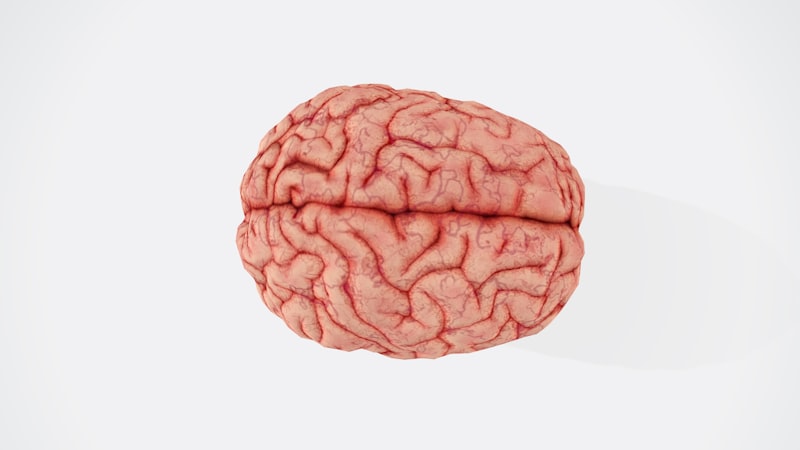
ENCEPHALIZATION: Definition and Core Principles
The concept of encephalization defines the evolutionary process characterized by the transfer of sophisticated cognitive functions from phylogenetically older, more primitive brain areas to the expansive, highly developed cerebral centers, predominantly the neocortex. This phenomenon represents a fundamental mechanism driving the increase in complexity and flexibility of behavior across mammalian, and especially primate, evolution. Originally, vital survival functions were primarily mediated by structures such as the brainstem and cerebellum; however, as species evolved, the demands of complex environments necessitated greater computational capacity. Encephalization documents this neurological shift, where higher-order processing—including abstraction, planning, language, and self-awareness—become increasingly localized and elaborated within the cerebrum, particularly the association areas of the cortex. This evolutionary trajectory is intrinsically linked to the overall expansion of brain size relative to body size, a metric crucial for understanding the emergence of human intelligence.
This definition underscores a crucial distinction between simple brain growth and true encephalization. While many species experience an increase in overall brain mass, encephalization specifically refers to the *disproportionate* expansion of those regions associated with advanced cognition, often at a rate exceeding what would be expected based purely on scaling the body size. The process is not merely additive; it involves complex reorganization, leading to enhanced connectivity and specialization within the cerebral hemispheres. This neurobiological reorganization allows for greater integration of sensory input and motor output, facilitating complex decision-making and adaptive behavioral responses. Understanding encephalization requires examining both the quantitative measures of brain size and the qualitative changes in brain structure and connectivity that underpin cognitive advancement.
The study of encephalization provides critical insights into the phylogeny of intelligence, suggesting that the pressure for advanced computation is a significant selective force. The outcome of this process is evident across various taxa, but it is most profoundly observed within the hominin lineage, where rapid increases in cranial capacity coincided directly with major cultural and technological milestones. Therefore, encephalization is not simply a historical curiosity but a measurable biological index reflecting the increasing dominance of cortical control over subcortical functions, ultimately dictating a species’ capacity for adaptation and learning in dynamic ecological niches.
The Encephalization Quotient (EQ) and Measurement
To quantify the extent of encephalization across different species, researchers developed the Encephalization Quotient (EQ). Proposed notably by Harry J. Jerison in the 1970s, the EQ is a standardized ratio that compares the actual brain mass of a species to the expected brain mass for an animal of the same body size, based on established allometric scaling principles derived from typical non-encephalized mammals (e.g., certain insectivores). The relationship between brain size and body size is generally represented by a power law function, often expressed as $E = k \cdot S^p$, where $E$ is brain mass, $S$ is body mass, $k$ is a constant, and $p$ (the scaling exponent) is typically around 0.66 to 0.75.
The calculation of the EQ standardizes brain size, allowing for meaningful cross-species comparisons that move beyond absolute size, which is heavily influenced by large body mass. An EQ of 1.0 indicates that a species’ brain size falls exactly on the expected regression line for its body size. Species exhibiting an EQ greater than 1.0 are considered more encephalized, meaning they possess a larger brain mass than predicted for their somatic architecture. For instance, cats typically have an EQ around 1.0, chimpanzees around 2.5, while modern Homo sapiens possess the highest EQ among mammals, typically ranging between 6.0 and 8.0, depending on the baseline used. This high value signifies that the human brain is six to eight times larger than the average brain of a mammal sharing the same body weight.
While the EQ provides a powerful and widely utilized comparative tool, its limitations must be acknowledged. The calculation relies heavily on accurate measurement of body mass, which can vary significantly within a species or be difficult to estimate reliably for extinct hominins. Furthermore, the EQ treats the brain as a monolithic structure, overlooking crucial internal differences in neuronal density, cortical folding (gyrification), and the proportional distribution of gray matter (processing centers) versus white matter (connectivity tracts). Despite these caveats, the EQ remains the foundational metric for quantifying the degree of evolutionary investment in nervous tissue development beyond baseline metabolic requirements.
Evolutionary Drivers of Increased Encephalization
The energy cost of maintaining a large, complex brain is immense; in humans, the brain consumes roughly 20% of the body’s total metabolic energy despite constituting only 2% of the body mass. Such a massive energy commitment suggests that the advantages conferred by increased encephalization must provide significant selective benefits to outweigh this metabolic burden. Several interconnected evolutionary drivers are hypothesized to have fueled the expansion of the cerebrum, particularly within the primate and hominin lineages.
One prominent theory is the Social Brain Hypothesis (also known as the Machiavellian Intelligence Hypothesis). This perspective posits that the primary driver of neocortical expansion was the increasing complexity of social life. As group sizes grew, individuals needed enhanced cognitive capacities to manage intricate social dynamics, track alliances, predict the behavior of others (Theory of Mind), engage in tactical deception, and maintain hierarchical structures. This relentless pressure to navigate complex interpersonal relationships demanded superior computational power, leading to the selective advantage of larger association cortices. The ability to cooperate and compete effectively within a large group necessitates sophisticated memory, planning, and communication skills, all of which are mediated by the expanded cerebral centers.
Furthermore, ecological and dietary factors played critical roles. The Expensive Tissue Hypothesis suggests that the energetic cost of large brains was offset by a reduction in the size and metabolic load of other expensive tissues, primarily the gut, facilitated by a shift to a higher-quality, energy-dense diet. The consumption of meat and marrow, coupled with the innovation of cooking (which increased the caloric digestibility of plant matter), provided the necessary surplus energy to fuel rapid brain growth. Coupled with dietary changes, environmental instability and the need for technological innovation—such as tool manufacture, fire control, and resource extraction—favored individuals capable of complex problem-solving, planning, and the cultural transmission of acquired knowledge. Thus, encephalization likely resulted from a synergistic feedback loop involving social complexity, dietary adaptation, and technological mastery.
Neuroanatomical Correlates of Cortical Expansion
The increase in overall brain size associated with encephalization is not uniform; rather, it is characterized by disproportionate growth in specific functional areas. The most striking neuroanatomical correlate is the massive expansion of the neocortex, the six-layered structure responsible for higher sensory processing, motor command, and conscious thought. In humans, the neocortex accounts for approximately 80% of total brain volume, a percentage significantly higher than in less encephalized mammals. Within the neocortex itself, the greatest relative expansion is observed in the frontal and parietal lobes, particularly the prefrontal cortex (PFC).
The PFC, situated at the anterior of the frontal lobe, is the neurological substrate for executive functions—the complex processes required for goal-directed behavior, including working memory, inhibitory control, cognitive flexibility, abstract reasoning, and planning. The dramatic enlargement and increased complexity of the PFC are considered hallmarks of human encephalization. This expansion involves not only an increase in volume but also an exponential increase in the number of interneuronal connections (synapses) and the length and complexity of dendritic arborization, allowing for vastly more intricate information processing networks.
Beyond gross volume, encephalization involves fundamental changes in cellular architecture. While earlier theories suggested that larger brains simply had proportionally larger neurons, subsequent research indicates that highly encephalized species, particularly primates, exhibit increased neuronal density in certain cortical areas compared to non-primate mammals. Moreover, there is an altered ratio of glial cells (which provide support and modulation) to neurons, suggesting improved metabolic support and information processing efficiency. Finally, increased encephalization is correlated with greater gyrification—the folding of the cortical surface—which maximizes surface area within a confined cranial space, enabling a larger volume of cortical tissue without requiring an equivalently larger skull.
Cognitive and Behavioral Consequences
The structural changes driven by encephalization yield profound behavioral and cognitive consequences, providing the selective advantages necessary to maintain such metabolically expensive neural tissue. The primary outcome is a substantial increase in behavioral flexibility and the capacity for abstraction, allowing highly encephalized species to solve novel problems without relying solely on instinctual or learned, rigid responses.
Key cognitive consequences include:
- Enhanced Working Memory and Executive Control: The expanded prefrontal cortex facilitates the maintenance and manipulation of information over short periods, crucial for complex planning and decision-making that involves multiple steps or delayed gratification.
- Theory of Mind (ToM): The ability to attribute mental states—beliefs, desires, intentions—to oneself and others. This complex social skill is directly linked to the expansion of areas like the temporoparietal junction and is fundamental to advanced social cooperation, empathy, and communication.
- Symbolic Thought and Language: Encephalization provided the necessary neurological platform for the emergence of complex, generative language. The development of specialized cortical areas (Broca’s and Wernicke’s areas) allowed for the intricate sequencing of sounds, grammar formation, and the creation of symbolic systems that underpin human culture.
- Cultural Transmission and Accumulation: The ability to learn complex skills and knowledge non-genetically and transmit them across generations allows for cumulative culture. This means that successive generations do not have to rediscover solutions but can build upon the accumulated knowledge base, dramatically accelerating technological and social evolution.
Behaviorally, encephalization manifests as complex tool use, sophisticated hunting strategies requiring cooperation, and the capacity for large-scale environmental modification. The shift toward a larger brain granted hominins greater predictive power regarding seasonal changes, prey movements, and resource availability. This increased cognitive foresight contributed significantly to the ecological dominance achieved by Homo sapiens.
Encephalization in Hominin Evolution
The story of encephalization is most dramatically illustrated within the hominin lineage, which saw a tripartite increase in average brain size over the last three million years. This rapid expansion contrasts sharply with the relatively static brain sizes observed in other primate groups over similar periods. The trajectory highlights key evolutionary transitions tied directly to cognitive advances.
The evolutionary steps include:
- Early Hominins (Australopithecus): Brain sizes (around 400–550 cc) were comparable to modern chimpanzees, suggesting a body size-appropriate brain mass. While bipedalism was established, the degree of encephalization remained modest.
- Early Homo (H. habilis and H. erectus): A significant and rapid jump occurred with Homo habilis (550–680 cc), often associated with the first systematic use of Oldowan stone tools. Homo erectus saw further substantial growth (up to 800–1200 cc), correlating with migration out of Africa, the control of fire, and the production of more sophisticated Acheulean tools. This period represents the most rapid phase of brain expansion relative to body size increase.
- Archaic and Modern Homo sapiens: Brain size peaked with Neanderthals and early modern humans (averaging 1200–1500 cc). This final phase is linked to the explosion of symbolic behavior, complex language, art, and the highly specialized technologies characterizing the Upper Paleolithic period.
Interestingly, while brain size peaked around 300,000 years ago, there has been a slight decrease in the average human brain size over the past 20,000 years, a phenomenon often attributed to changes in human body size or possibly to increased efficiency and connectivity within the neural architecture. Regardless of this minor recession, the overall trajectory confirms that the massive investment in cerebral expansion was the defining evolutionary strategy of the Homo genus, driving our ecological success and cognitive uniqueness.
Limitations and Nuances of the Encephalization Model
While the encephalization quotient and the concept of cortical expansion provide a robust framework for evolutionary psychology, reliance solely on brain size metrics has several inherent limitations. Critics argue that focusing too heavily on gross volume overlooks the critical importance of internal organization and cellular efficiency, leading to potential misinterpretations of cognitive capacity.
One major limitation concerns the variability in neuronal density. For example, some bird species, despite having dramatically smaller absolute brain sizes than primates, possess exceptionally high neuronal densities in their pallium (the functional equivalent of the cortex), granting them remarkably complex cognitive abilities (such as tool use and problem-solving) that challenge the predictions based purely on EQ. This suggests that the packing of neurons and the efficiency of synaptic connections may be more crucial determinants of intelligence than sheer volume alone.
Furthermore, differences in the ratio of gray matter to white matter complicate simple volume measurements. Gray matter houses the neuronal cell bodies and synapses responsible for computation, while white matter consists of the myelinated axons that facilitate communication between regions. A larger proportion of white matter may indicate greater connectivity, but an increase in gray matter might indicate greater computational capacity. These structural nuances are lost when relying solely on the EQ. Therefore, modern studies of encephalization increasingly integrate advanced neuroimaging techniques—such as volumetric analysis of specific cortical regions and diffusion tensor imaging (DTI) to map white matter tracts—to provide a more nuanced understanding of how organizational complexity contributes to cognitive gains beyond just size. True encephalization, therefore, must be recognized as a complex interplay between volume, density, connectivity, and structural specialization.