Ethology: Decoding the Roots of Animal Behavior
Scientifically Reviewed · Dr. Marwa Abd-Alazim · October 15, 2026
Review Criteria & Clinical Standards
This content undergoes rigorous scientific peer-review and medical editorial standards at Arab Psychology Network to ensure clinical accuracy, validity, and compliance with evidence-based guidelines from leading psychological and healthcare authorities (APA / WHO).
The Core Definition of Ethology
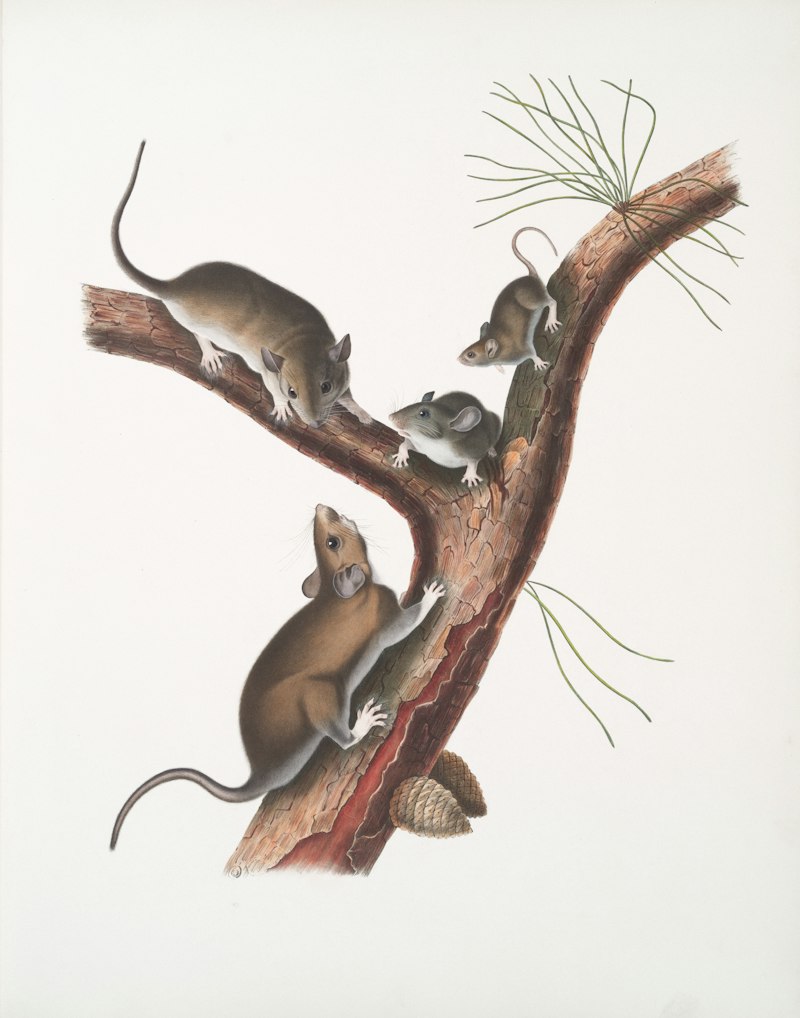
Ethology is formally defined as the scientific and objective study of animal behavior, typically under natural environmental conditions. This field integrates the rigors of biological science with observational techniques to understand the complex actions, reactions, and interactions of non-human species. Unlike earlier forms of behavioral study, ethology emphasizes the necessity of studying organisms in their native habitats, recognizing that complex behaviors such as hunting, migration, and mating rituals are often distorted or inaccessible when animals are confined to laboratory settings. It serves as a crucial bridge between biology and psychology, seeking to answer not just “how” animals behave, but critically, “why” they do so from an evolutionary perspective.
The scope of ethological inquiry is vast, encompassing a wide spectrum of behavioral phenomena. Key areas of investigation include intricate methods of communication—ranging from chemical signals and visual displays to elaborate vocalizations—social structures within groups, patterns of aggression and territoriality, and the complex mechanics of reproduction and parental care. A fundamental principle guiding ethological research is the application of Tinbergen’s Four Questions, developed by the Nobel laureate Nikolaas Tinbergen. These questions seek comprehensive explanations for behavior across four distinct categories: causation (mechanism), development (ontogeny), function (adaptation), and evolution (phylogeny). By addressing these four levels of analysis, ethologists can construct a holistic understanding of how a behavior is expressed, how it develops throughout an animal’s life, how it contributes to survival, and its historical origins within the species.
The core mechanistic idea underpinning ethology is that behavior is a biological trait, just like morphology or physiology, and is therefore subject to the pressures of natural selection. This means that behaviors that enhance survival and reproductive success are more likely to be passed down through generations. Consequently, ethologists spend significant effort dissecting the interplay between instinct (innate, genetically programmed behaviors) and learning (acquired or modified behaviors based on environmental experience). Understanding this dynamic interaction is essential for explaining phenomena like species-specific mating dances, the intricate construction of nests, or the fixed routes of migratory birds, all of which represent highly adaptive behavioral solutions to ecological challenges faced over evolutionary timescales.
Historical Foundations and Key Figures
While the systematic observation of animals has roots tracing back to Aristotle, modern ethology crystallized into a distinct scientific discipline primarily during the mid-20th century. The foundation of the field is irrevocably linked to three European zoologists who shared the 1973 Nobel Prize in Physiology or Medicine for their groundbreaking discoveries concerning the organization and elicitation of individual and social behavior patterns: Konrad Lorenz (Austrian), Nikolaas Tinbergen (Dutch), and Karl von Frisch (Austrian). Their work marked a crucial divergence from the dominant psychological model of the time—comparative psychology, which often relied heavily on laboratory experiments and focused on generalized learning principles applicable across species, frequently using rats or pigeons in artificial settings.
Konrad Lorenz is perhaps best known for his influential work on the concept of imprinting, particularly in geese and ducks. Lorenz demonstrated that in certain species, there exists a critical period shortly after birth during which the young animal forms an irreversible attachment to the first moving object it encounters, which is usually the mother. This research dramatically highlighted the existence of innate, highly specific psychological mechanisms that require specific environmental input during a narrow developmental window to be properly expressed. Lorenz’s detailed descriptive studies provided early frameworks for understanding patterns of aggression and bonding, often drawing controversial parallels between animal and human behavior, pushing the boundaries of what was considered acceptable psychological inquiry at the time.
Nikolaas Tinbergen, considered the great methodologist of the group, emphasized rigorous experimentation within the natural environment. His most famous studies involved the survival value of camouflage in prey species and the mechanisms that elicit specific behavioral sequences, such as the aggressive response of the male stickleback fish to a simple red underbelly shape, a classic example of a sign stimulus. Tinbergen’s insistence on a multi-layered analytical approach led to the formulation of his aforementioned Four Questions, which remain the essential conceptual framework for virtually all ethological research today. The work of these pioneers established that complex behaviors were not simply random outcomes of conditioning but were instead organized, predictable, and had evolved specific structures just like any other biological trait.
Fundamental Mechanisms: Fixed Action Patterns and Instinct
A cornerstone discovery of classical ethology is the concept of the Fixed Action Pattern (FAP). An FAP is defined as a sequence of unlearned, innate behaviors that is highly stereotyped and, once initiated, must be carried to completion, even if the original stimulus is removed. These behaviors are considered highly reliable survival mechanisms, often linked to crucial activities such as mating, predator defense, or feeding. The FAP is typically triggered by a specific external cue known as a Sign Stimulus, or Releaser, which acts like a key turning on a complex, pre-programmed behavioral lock. This mechanism illustrates the powerful role of instinctual programming in an animal’s behavioral repertoire, minimizing the need for complex decision-making in vital situations.
A classic illustration of an FAP is the egg-rolling behavior exhibited by the Greylag goose, famously studied by Lorenz and Tinbergen. If an egg rolls outside the nest, the goose will automatically initiate a series of movements to roll the egg back, using its bill. This rolling motion is the FAP. Remarkably, if the egg is removed partway through the sequence, the goose will continue the full rolling motion until it reaches the point where the egg should have been deposited back into the nest. This demonstration highlights the “fixed” and automated nature of the behavior, proving that the central nervous system controls the entire sequence rather than relying on constant sensory feedback from the object.
The concept of instinct, as understood in ethology, refers to complex, species-typical behaviors that appear fully formed and functional the first time they are performed, without prior learning or experience. While instinctual behaviors are often rigid, ethologists recognize that their expression can be modulated by the environment. For instance, while the basic framework for a bird’s song might be innate, the specific dialect or complexity may require exposure to the songs of adult conspecifics during a sensitive period. This realization moved the field beyond a rigid nature-versus-nurture dichotomy toward a more integrated understanding of gene-environment interactions, where genetic programming sets the boundaries, and learning fine-tunes the behavior for local ecological conditions.
Methodology and Research Techniques
Ethological methodology is fundamentally observational, prioritizing the collection of detailed and unbiased data on behavior as it occurs naturally. The starting point for most ethological studies is the creation of an Ethogram, which is a comprehensive, formalized catalog or inventory of all the species-specific behaviors observed within a study population. The Ethogram details the frequency, duration, context, and function of every behavior, providing a standardized baseline against which subsequent experimental manipulations or natural variation can be compared. This rigorous descriptive phase ensures that researchers are analyzing the behavior as the animal performs it, rather than imposing human interpretations or assumptions onto the observed actions.
Traditional ethological research relied heavily on direct, prolonged observation, often involving researchers spending months or years in the field to habituate animals to their presence and ensure accurate recording. However, the field has undergone a significant technological revolution, incorporating sophisticated tools that allow for previously impossible levels of data collection. For example, the use of miniaturized telemetry devices, including GPS tracking tags, now allows researchers to monitor the precise movements, migration patterns, and habitat utilization of animals across vast geographical areas and long time periods. This has been instrumental in conservation biology, helping to define critical corridors and foraging grounds for endangered species.
Furthermore, technological advancements have broadened the sensory modalities studied by ethologists. Bioacoustics utilizes highly sensitive recording equipment and sophisticated analytical software to study auditory communication, revealing complex language structures in marine mammals, birds, and insects. Similarly, thermal imaging and specialized video recording equipment allow for the capture and analysis of behavioral displays that occur too quickly for the human eye, or those that utilize signals in the non-visible spectrum, such as ultraviolet communication in birds or chemical signaling via pheromones. These technological integrations allow ethology to maintain its commitment to natural observation while achieving quantitative and statistically robust results.
A Practical Example: Imprinting and Critical Periods
To illustrate the powerful combination of innate programming and environmental timing central to ethology, the phenomenon of imprinting provides a clear and relatable example. Imprinting is a rapid form of learning that occurs during a very limited, sensitive period of development. This concept, championed by Konrad Lorenz, demonstrates how a seemingly simple interaction can establish a lifelong, irreversible behavioral template. The most common example involves precocial birds, such as geese, which are mobile almost immediately after hatching.
The practical scenario unfolds shortly after hatching. The goslings possess an innate, unlearned tendency to follow the first large, moving object they see, usually their mother. This following behavior is essential for survival, ensuring the young remain close to the protective parent. However, the exact object they follow is learned during a specific, short “critical period,” which may last only a few hours or a day. If, during this critical period, the goslings are exposed instead to a human, a dog, or even an inanimate object like a large blue box that moves, they will form an irreversible bond with that object. Lorenz famously used himself as the object of imprinting, resulting in the goslings ignoring their biological mother and following him exclusively.
The “How-To” application of this ethological principle demonstrates several key steps. First, the innate mechanism (the drive to follow) is pre-programmed. Second, the environmental input (the identity of the object) must occur during the narrowly defined critical period. Third, the resulting bond is fixed; attempts to subsequently introduce the biological mother after the critical period has closed are typically unsuccessful, showing the powerful constraint of developmental timing. Finally, the long-term impact of this early learning is significant, extending even to the animal’s sexual development, as imprinted individuals may attempt to court the species or object they imprinted on later in life, illustrating the pervasive influence of early ethological experiences.
Significance, Impact, and Modern Applications
The significance of ethology lies in its foundational contribution to understanding behavior not as a detached psychological output but as an integrated component of an organism’s biology. By demonstrating that behaviors have evolutionary histories and adaptive functions, ethology successfully repositioned behavioral science firmly within the realm of evolutionary biology. This perspective provided the necessary framework for the emergence of modern disciplines such as Evolutionary Psychology and Sociobiology, which apply ethological principles to human and animal social systems, respectively. Ethology’s dedication to naturalistic observation also introduced methodologies that improved the reliability and ecological validity of behavioral studies across all biological sciences.
Today, the applications of ethology are widespread and crucial, particularly in fields concerning animal welfare and conservation. In animal welfare science, ethological knowledge is essential for understanding the natural behavioral needs of domesticated or captive animals. For instance, knowing the natural foraging, social, and exploratory behaviors of livestock or zoo animals allows experts to design environments (enrichment) that minimize stress and abnormal behaviors (stereotypies). This application ensures that captive environments are ethically and psychologically sustainable, moving beyond simple physical sustenance to address complex mental well-being.
Furthermore, ethology is indispensable in conservation biology. By studying the natural behavior of endangered species—including their migration routes, communication strategies, resource acquisition techniques, and reproductive behaviors—researchers can identify critical bottlenecks and threats. For example, understanding how noise pollution from human development disrupts the intricate mating calls of frogs or how habitat fragmentation interferes with innate dispersal behaviors is vital for designing effective management and recovery plans. Ethology provides the necessary behavioral context to interpret ecological data, ensuring conservation efforts are biologically and behaviorally relevant.
Connections to Broader Psychology and Biology
Ethology operates at the nexus of several major scientific disciplines, most prominently within the broader categories of Behavioral Biology and Comparative Psychology. While Comparative Psychology focuses on comparing psychological processes (like learning and perception) across different species, often using laboratory settings, ethology emphasizes the ecological context and evolutionary significance of behavior. The historical tension between these two fields—often characterized as the “nature versus nurture” debate—has largely resolved into a unified approach recognizing the indispensable role of both innate mechanisms and experiential learning. Modern behavioral scientists often integrate the rigorous experimental control of comparative psychology with the ecological validity demanded by ethology.
The conceptual foundation of ethology paved the way for the development of Sociobiology, pioneered notably by E.O. Wilson, which specifically examines the biological basis of social behavior, often using genetic models to explain phenomena such as altruism, cooperation, and social hierarchies. Ethology also provides critical input to Evolutionary Psychology, a field that seeks to understand human mental and behavioral traits as adaptations shaped by natural selection in the ancestral environment. Concepts derived from the study of animal behavior, such as critical periods, territoriality, and display behaviors, offer useful comparative frameworks for analyzing complex human social interactions and developmental stages.
Finally, ethology maintains strong ties to neurobiology and endocrinology. Advances in these fields allow ethologists to investigate the physiological and neural mechanisms underlying observed behaviors, moving beyond simple observation to understand the internal causation. For example, research might link specific hormonal fluctuations (endocrinology) to seasonal changes in aggression or mating displays, or identify the neural circuits (neurobiology) responsible for initiating a Fixed Action Pattern. This interdisciplinary approach ensures that ethology remains a vibrant and essential component of modern life science, constantly integrating detailed field observation with mechanistic laboratory analysis.