Neuroevolution: How Ancient Instincts Shape Your Modern Mind
Scientifically Reviewed · Dr. Marwa Abd-Alazim · October 1, 2026
Review Criteria & Clinical Standards
This content undergoes rigorous scientific peer-review and medical editorial standards at Arab Psychology Network to ensure clinical accuracy, validity, and compliance with evidence-based guidelines from leading psychological and healthcare authorities (APA / WHO).

Evolution of the Brain: A Comprehensive Definition
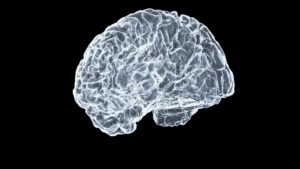
The evolution of the brain is defined as the multi-millennial, cumulative process through which the nervous systems of living organisms, particularly vertebrates and primates, have undergone structural and functional transformations to reach higher levels of complexity. Spanning hundreds of millions of years, this biological odyssey has transitioned life from the rudimentary neural networks of ancient multicellular organisms to the highly sophisticated, folded neocortex found in modern humans. At its core, this evolution is not merely a linear increase in mass or volume, but a strategic reorganization of neural pathways and the emergence of specialized regions that facilitate increasingly complex cognitive, emotional, and behavioral outputs. This progression has allowed species to move beyond simple stimulus-response behaviors toward the capacity for internal representation, abstract reasoning, and the construction of complex cultural systems.
The primary engine driving the evolution of the brain is natural selection, which favors neural architectures that provide a distinct survival or reproductive advantage within a specific ecological niche. Over geological timescales, environmental pressures—such as the need to navigate three-dimensional spaces, identify social hierarchies, or escape increasingly efficient predators—have selected for organisms with more efficient neural processing. This selection process has led to the development of centralized ganglia and eventually the brain, which acts as a master regulator of homeostatic and cognitive functions. This involves a delicate balance between the metabolic costs of maintaining a large, energy-hungry brain and the adaptive benefits of superior information processing, memory, and behavioral flexibility.
Understanding the nuances of brain evolution is essential for modern psychology, as it provides a biological and historical framework for interpreting human behavior. By recognizing that the human mind is a product of ancestral adaptations, researchers can better understand the “mismatch” between our evolved instincts and the demands of contemporary society. Each layer of our neural architecture—from the autonomic regulators of the brainstem to the executive centers of the prefrontal cortex—represents a solution to an environmental challenge faced by our ancestors. Consequently, the brain is viewed not as a static, finished product, but as a dynamic organ shaped by a continuous interplay between genetic heritage and environmental interactions, demonstrating an unparalleled capacity for learning and adaptation across generations.
Mechanisms of Neural Progression and Structural Specialization
The progression of the brain from simple to complex is fueled by a combination of genetic mutations, chromosomal duplications, and intense environmental selection. In the early stages of life, simple organisms relied on diffuse nerve nets; however, the transition toward bilateral symmetry necessitated the centralization of neural tissue, a process known as cephalization. This allowed for the concentration of sensory organs at the front of the organism, leading to the development of a rudimentary brain that could integrate sensory input more effectively. Over eons, specific neural traits that enhanced an organism’s ability to forage, mate, and avoid danger were preserved, leading to the gradual expansion of the cerebrum and the refinement of sensory-motor pathways.
A critical aspect of this evolutionary journey is the disproportionate expansion of certain brain regions, a phenomenon often measured by the encephalization quotient (EQ). While absolute brain size is important, the ratio of brain mass to body mass provides deeper insights into cognitive potential. In mammals, and specifically in the primate lineage, the neocortex underwent a massive expansion, characterized by increased folding, or gyrification, which allowed for a greater surface area of gray matter to fit within the constraints of the skull. This expansion was not uniform; rather, it involved the specialization of distinct cortical areas for vision, audition, and somatosensory processing, enabling a more granular and integrated perception of the external world.
Furthermore, the evolution of the brain is characterized by the principle of “proper mass,” which suggests that the size of a brain region is proportional to the complexity of the function it performs. For instance, species that rely heavily on olfactory cues possess enlarged olfactory bulbs, while those requiring complex motor coordination, like humans, possess a highly developed cerebellum. This specialization has led to the emergence of neural plasticity, the brain’s ability to reorganize itself in response to experience. This adaptability is itself an evolved trait, providing a mechanism for organisms to fine-tune their neural circuits during their own lifetime, thereby bridging the gap between slow genetic evolution and the rapid changes of a dynamic environment.
The Ancestral Foundation: The “Reptilian” Brain and Survival
The most ancient layers of the human brain are often colloquially referred to as the “reptilian brain,” a concept rooted in Paul MacLean’s triune brain theory. While modern neurobiology emphasizes the integrated nature of the brain rather than strict compartmentalization, this framework remains a powerful tool for understanding the primordial structures that govern our most basic survival instincts. This foundational neural architecture, which appeared approximately 500 million years ago, consists primarily of the brainstem and the cerebellum. These structures are responsible for maintaining the vital autonomic functions—such as heart rate, respiration, and body temperature—that are necessary for life, operating largely beneath the level of conscious awareness.
Within this ancient complex, the medulla oblongata serves as a critical junction, regulating involuntary actions that keep the organism alive during sleep or periods of extreme stress. The cerebellum, located at the posterior of the brain, provides the essential motor control and coordination required for locomotion and balance. In early vertebrates, these structures were sufficient to manage territoriality, hunting, and mating rituals. The hypothalamus also plays a central role here, acting as the brain’s primary homeostatic regulator. By managing hunger, thirst, and circadian rhythms, the hypothalamus ensures that the organism’s internal environment remains stable, regardless of the fluctuations in the external world.
The persistence of the reptilian brain in modern humans underscores its evolutionary success. These structures provide the rapid, reflexive responses necessary for immediate survival, such as the startle reflex or the instinct to pull one’s hand away from a flame. This “bottom-up” influence means that our most basic physiological states can profoundly affect our higher-level thoughts and emotions. Without the robust functioning of these ancient regions, the more advanced cognitive processes of the “mammalian” and “human” brains would lack the physiological stability required to operate. Thus, the reptilian brain serves as the essential bedrock upon which all subsequent evolutionary innovations were constructed.
The Rise of Sociality: The “Mammalian” Brain and the Limbic System
The next major epoch in neural evolution occurred approximately 200 million years ago with the emergence of the “mammalian brain.” This stage was marked by a significant shift in behavioral complexity, moving beyond the rigid, instinctive patterns of reptiles toward more flexible, learned behaviors. The hallmark of this period was the development and expansion of the limbic system, a complex set of structures situated between the brainstem and the cortex. This system introduced the capacity for emotion, long-term memory, and complex social bonding, which were essential for the survival of species that began to live in groups and invest heavily in the care of their offspring.
Key structures within the mammalian brain include the amygdala, which is central to the processing of fear and the detection of threats, and the hippocampus, which is vital for the formation of new memories and spatial navigation. The emergence of the thalamus as a sophisticated relay station allowed for more efficient processing of sensory information, directing signals to the appropriate cortical areas for higher-level analysis. This period also saw the expansion of the basal ganglia, which refined motor control and enabled the learning of habits and procedural skills. These innovations allowed mammals to engage in play, form emotional attachments, and develop the nuanced social hierarchies that characterize many mammalian species.
The development of the mammalian brain profoundly altered the adaptive landscape by introducing motivation and social reward. The capacity for parental care, facilitated by the limbic system, ensured the survival of more vulnerable offspring, allowing for longer developmental periods and, consequently, more time for learning. This emotional architecture also provided the basis for empathy and cooperation, traits that would eventually become central to the human experience. By integrating emotional valence with sensory experience, the mammalian brain allowed organisms to not just react to the world, but to value certain outcomes over others, laying the psychological groundwork for complex decision-making and social intelligence.
The Zenith of Cognition: The “Human” Brain and the Prefrontal Cortex
The most recent and transformative phase of brain evolution resulted in the “human brain,” which reached its modern anatomical form roughly 200,000 years ago. While it shares many structures with other primates, the human brain is distinguished by the unprecedented expansion of the neocortex, specifically the prefrontal cortex (PFC). This region, located directly behind the forehead, serves as the “executive” center of the brain, orchestrating complex cognitive processes that are unique to our species. The expansion of the PFC allowed for the emergence of abstract thought, symbolic communication, and the ability to imagine future scenarios, fundamentally separating human cognition from the more stimulus-bound intelligence of other animals.
The prefrontal cortex is the seat of executive functions, which include working memory, inhibitory control, and cognitive flexibility. These abilities allow humans to engage in high-level decision-making, weighing multiple variables and potential outcomes before taking action. It is also the primary site for problem-solving and creative innovation, enabling the development of tools, technology, and complex social systems. Furthermore, the PFC is essential for self-awareness and the construction of a personal narrative, allowing individuals to reflect on their own thoughts and behaviors. This capacity for introspection is a cornerstone of human psychology, facilitating personal growth and the regulation of social conduct.
Crucially, the human brain is also defined by its specialized areas for language, such as Broca’s and Wernicke’s areas, which allow for the transmission of complex information across generations. The integration of the PFC with the limbic system provides humans with the unique ability to regulate their emotions through conscious effort, a process known as cognitive reappraisal. This allows us to suppress immediate impulses in favor of long-term goals and social harmony. The synergy between these advanced cortical regions and the more ancient emotional centers has enabled the creation of art, philosophy, and science, making the human brain the most complex biological structure known to exist.
Integrated Evolution in Practice: A Real-World Scenario
To understand how these evolutionary layers function as a cohesive whole, one can observe a driver’s reaction to a sudden emergency, such as a pedestrian stepping into the road. This situation triggers a hierarchical response that demonstrates the evolution of the brain in action. The interaction begins at the most primitive level and cascades through the mammalian and human layers, showing that while these systems evolved at different times, they are now inextricably linked in a single, integrated functional unit.
- The Primordial Reflex: The moment the visual stimulus of the pedestrian hits the retina, the signal is sent to the brainstem. The “reptilian” brain triggers an immediate, reflexive action. Before the driver is even consciously aware of the danger, the cerebellum and medulla coordinate the physical act of slamming on the brakes. This rapid-fire response is a survival mechanism that prioritizes speed over accuracy, bypassing the slower cortical processing to prevent an immediate collision.
- The Emotional Surge: Simultaneously, the “mammalian” brain activates. The amygdala registers the high-stakes threat and triggers a massive release of adrenaline via the endocrine system. The driver experiences a surge of fear, a racing heart, and a state of hyper-arousal. This fight-or-flight response ensures that the brain is fully energized and focused on the threat, while the hippocampus begins to encode the event with high emotional salience to ensure it is remembered vividly for future avoidance of similar dangers.
- The Cognitive Evaluation: Once the car has stopped and the immediate danger has passed, the “human” brain takes control. The prefrontal cortex begins to process the event rationally. The driver might think, “I need to check if they are okay,” or “I should have been driving slower.” This involves executive function, emotional regulation to calm the adrenaline surge, and the planning of subsequent actions. The driver uses abstract reasoning to evaluate the moral and legal implications of the event, demonstrating the uniquely human capacity for reflection and complex social responsibility.
This integrated response highlights that evolution does not replace old systems; it builds upon them. The “lower” centers provide the speed necessary for survival, while the “higher” centers provide the nuance and foresight necessary for complex living. In the modern world, many of our psychological struggles arise from the occasional conflict between these layers—such as when the mammalian brain’s anxiety overrides the human brain’s rational planning. Understanding this evolutionary hierarchy is therefore vital for both personal insight and clinical intervention.
Clinical and Societal Implications of Brain Evolution
The study of the evolution of the brain has profound implications for clinical psychology and psychiatry. Many mental health conditions can be viewed as evolutionary “mismatches” or the dysregulation of ancient neural circuits. For example, anxiety disorders often involve an overactive amygdala (mammalian brain) that the prefrontal cortex (human brain) is unable to effectively inhibit. By understanding the evolutionary purpose of these systems, therapists can help patients recognize that their symptoms are often “survival mechanisms” operating in an inappropriate context. This perspective can reduce the stigma of mental illness and inform the development of therapies that strengthen the top-down control of the prefrontal cortex.
In the realm of marketing and consumer behavior, evolutionary insights are used to understand the primal drives that influence decision-making. Advertisers often target the “mammalian” brain by appealing to social status, parental instincts, or emotional belonging, knowing that these drives are deeply rooted and often bypass the more rational “human” brain. By understanding that human choices are frequently driven by ancient survival and reproductive motives, researchers can more accurately predict market trends and consumer responses. This field, known as neuromarketing, demonstrates the practical power of applying evolutionary biology to modern economic and social interactions.
Furthermore, in the field of education, an evolutionary perspective helps in designing curricula that align with how the brain naturally learns. Because our brains evolved in social and physical environments, we learn most effectively through observation, imitation, and hands-on experience rather than purely abstract instruction. Recognizing the importance of social learning and the role of emotion in memory allows educators to create more engaging and effective learning environments. Ultimately, acknowledging our evolutionary heritage allows us to build societies, legal systems, and educational institutions that are better suited to the biological realities of the human mind.
Interdisciplinary Connections and the Future of Evolutionary Inquiry
The evolution of the brain is a foundational concept that bridges multiple scientific disciplines, including evolutionary psychology, biology, and anthropology. Evolutionary psychology, in particular, relies on the premise that the human mind is a collection of “evolved cognitive modules” designed to solve specific problems faced by our ancestors, such as mate selection, predator avoidance, and social cooperation. This field provides a functional explanation for why we think and feel the way we do, linking the physical structures of the brain to the manifest behaviors of the individual.
In the field of cognitive neuroscience, advanced neuroimaging techniques like fMRI and PET scans allow researchers to see the evolutionary layers of the brain in action. By comparing human brain activity with that of other primates, scientists can identify the specific neural pathways that make us unique. This research is closely tied to the study of neural plasticity, which examines how the brain’s evolved capacity for change allows it to adapt to modern technologies, such as the internet and artificial intelligence. These interdisciplinary efforts are revealing that the brain’s evolution is an ongoing process, shaped by the very cultures and technologies that our brains have created.
Finally, the study of brain evolution informs comparative psychology and developmental psychology, providing a framework for understanding the similarities between species and the stages of human development. The principle that “ontogeny recapitulates phylogeny”—though simplified—suggests that the development of a child’s brain mirror some aspects of the species’ evolutionary journey, from basic motor control to complex social reasoning. As we move into the future, the integration of genetics, neuroscience, and evolutionary theory will continue to provide a holistic view of the human condition, helping us to navigate the challenges of the modern world with a deeper understanding of our biological past.