Executive Function: Master Your Brain for Peak Performance
Scientifically Reviewed · Dr. Marwa Abd-Alazim · October 10, 2026
Review Criteria & Clinical Standards
This content undergoes rigorous scientific peer-review and medical editorial standards at Arab Psychology Network to ensure clinical accuracy, validity, and compliance with evidence-based guidelines from leading psychological and healthcare authorities (APA / WHO).
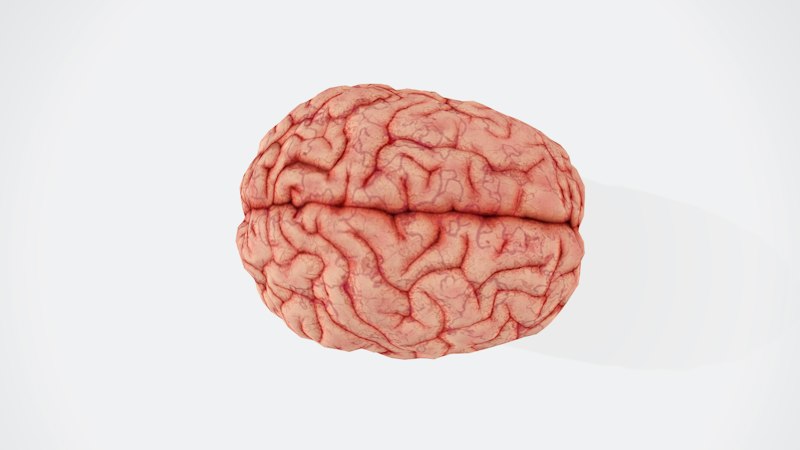
Executive Function: A Review of its Developmental and Neurobiological Foundations
Abstract
Executive function (EF) is a cognitive process that enables individuals to plan, regulate, and organize behavior to achieve goals. EF is often described as a higher order cognitive process, and is closely related to other cognitive domains such as working memory, attention, and inhibition. Developmental research has demonstrated that EF is a complex and multifaceted construct, with different components emerging at different stages of development. Neurobiological research has identified regions and networks associated with EF, including the prefrontal cortex, basal ganglia, anterior cingulate, and hippocampus. This review provides an overview of the developmental and neurobiological foundations of EF, and discusses the implications of these findings for understanding the development of cognitive skills in typical and atypical populations.
Introduction
Executive function (EF) is a cognitive process that enables individuals to plan, regulate, and organize behavior to achieve goals. EF is often referred to as a higher order cognitive process, and is closely related to other cognitive domains such as working memory, attention, and inhibition (Blair & Diamond, 2008). Developmental research has identified a number of different components of EF, each of which emerges at different stages of development. Neurobiological research has identified regions and networks associated with EF, including the prefrontal cortex, basal ganglia, anterior cingulate, and hippocampus. This review provides an overview of the developmental and neurobiological foundations of EF, and discusses the implications of these findings for understanding the development of cognitive skills in typical and atypical populations.
Developmental Foundations of Executive Function
The development of EF is a complex and multifaceted process. Several different components of EF have been identified, each of which emerges at different stages of development. The earliest components, including working memory and inhibitory control, emerge in the preschool years, while more complex components, such as cognitive flexibility and planning, emerge in the school-age years (Diamond, 2013).
Working memory is the ability to hold and manipulate information in mind, often referred to as “mental workspace” (Baddeley, 1992). Working memory is a critical component of EF, as it allows individuals to keep track of goals, tasks, and relevant information. Working memory is closely related to attention, and is important for the successful completion of tasks that require sustained focus and concentration. Working memory develops rapidly in the preschool years, and is relatively mature by the time children enter school (Gathercole & Alloway, 2008).
Inhibitory control is the ability to resist inappropriate or impulsive responses, and to regulate behavior in order to achieve a goal. Inhibitory control is closely related to self-regulation, and is important for controlling impulses and regulating behavior in social contexts (Rothbart & Posner, 2005). Inhibitory control develops gradually in the preschool years, and continues to mature throughout the school-age years (Zelazo, Carlson, & Kesek, 2008).
Cognitive flexibility is the ability to switch between different tasks or strategies in order to solve problems. Cognitive flexibility is important for adapting to changing situations, and for problem-solving in complex environments (Miyake, Friedman, Emerson, Witzki, & Howerter, 2000). Cognitive flexibility is more complex than the other components of EF, and does not emerge until late in the preschool years (Diamond, 2013).
Planning is the ability to organize behavior in order to achieve a goal. Planning involves the ability to anticipate consequences, sequence behaviors, and modify strategies when needed (Hommel, 2004). Planning is the most complex component of EF, and does not emerge until late in the school-age years (Diamond, 2013).
Neurobiological Foundations of Executive Function
Neurobiological research has identified a number of brain regions and networks that are associated with EF. The prefrontal cortex is a region of the brain associated with higher order cognitive processes, such as planning, decision-making, and cognitive flexibility (Koechlin & Jubault, 2006). The basal ganglia are a set of interconnected structures in the brain associated with motor control, reward processing, and executive control (Haber & Calzavara, 2009). The anterior cingulate is a region of the brain associated with attention, inhibitory control, and emotion regulation (Bush, Luu, & Posner, 2000). The hippocampus is a region of the brain associated with memory and learning (Eichenbaum & Cohen, 2001).
These brain regions and networks are associated with a variety of cognitive processes, including attention, working memory, inhibitory control, cognitive flexibility, and planning. Neurobiological research has demonstrated that these processes are highly interconnected, and involve complex interactions between different brain regions and networks (Chatham & Badre, 2017).
Conclusion
Executive function is a complex and multifaceted cognitive process that enables individuals to plan, regulate, and organize behavior to achieve goals. Developmental research has identified a number of different components of EF, each of which emerges at different stages of development. Neurobiological research has identified regions and networks associated with EF, including the prefrontal cortex, basal ganglia, anterior cingulate, and hippocampus. This review has highlighted the developmental and neurobiological foundations of EF, and discussed the implications of these findings for understanding the development of cognitive skills in typical and atypical populations.
References
Baddeley, A.D. (1992). Working memory. Science, 255(5044), 556-559.
Blair, C., & Diamond, A. (2008). Biological processes in prevention and intervention: The promotion of self-regulation as a means of preventing school failure. Development and Psychopathology, 20(3), 899-911.
Bush, G., Luu, P., & Posner, M.I. (2000). Cognitive and emotional influences in anterior cingulate cortex. Trends in Cognitive Sciences, 4(6), 215-222.
Chatham, C.H., & Badre, D. (2017). Prefrontal networks for executive control: A review of their functional organization and development. Neuroscience & Biobehavioral Reviews, 79, 256-267.
Diamond, A. (2013). Executive functions. Annual Review of Psychology, 64, 135-168.
Eichenbaum, H., & Cohen, N.J. (2001). From conditioning to conscious recollection: Memory systems of the brain. Oxford, UK: Oxford University Press.
Gathercole, S.E., & Alloway, T.P. (2008). Working memory and learning: A practical guide for teachers. London, UK: Sage.
Haber, S.N., & Calzavara, R. (2009). The basal ganglia: A vertebrate solution to the selection problem? Neuroscience & Biobehavioral Reviews, 33(7), 1213-1231.
Hommel, B. (2004). Event files: Feature bindings in and across perception and action. Trends in Cognitive Sciences, 8(10), 494-500.
Koechlin, E., & Jubault, T. (2006). Broca’s area and the hierarchical organization of human behavior. Neuron, 50(6), 963-974.
Miyake, A., Friedman, N.P., Emerson, M.J., Witzki, A.H., & Howerter, A. (2000). The unity and diversity of executive functions and their contributions to complex “frontal lobe” tasks: A latent variable analysis. Cognitive Psychology, 41(1), 49-100.
Rothbart, M.K., & Posner, M.I. (2005). Developing mechanisms of self-regulation. Development and Psychopathology, 17(3), 703-722.
Zelazo, P.D., Carlson, S.M., & Kesek, A. (2008). Executive function. In W. Damon & R. Lerner (Eds.), Handbook of child psychology (5th ed., Vol. 3, pp. 787-818). New York, NY: Wiley.