Language Acquisition: Nature’s Secret Growth Blueprint
Scientifically Reviewed · Dr. Marwa Abd-Alazim · October 10, 2026
Review Criteria & Clinical Standards
This content undergoes rigorous scientific peer-review and medical editorial standards at Arab Psychology Network to ensure clinical accuracy, validity, and compliance with evidence-based guidelines from leading psychological and healthcare authorities (APA / WHO).

The Core Definition
The Maturation Hypothesis in psychology and linguistics posits that the acquisition of language development is a largely biologically predetermined process, unfolding according to a genetically programmed timetable. This perspective suggests that human language abilities emerge primarily as a result of intrinsic neurological maturation, rather than being solely dependent on environmental input or explicit instruction. It conceptualizes language acquisition as an innate capacity, much like walking or puberty, where the brain is pre-wired with specific structures and mechanisms that are primed to acquire language once certain developmental stages are reached.
At its core, the hypothesis emphasizes that the fundamental mechanisms for language are not acquired skills through learning alone, but rather an inherent part of human biological endowment. This means that as the brain grows and its neural networks become more complex and specialized, so too do the individual’s linguistic capabilities. While environmental exposure is certainly necessary to trigger and shape these innate capacities—determining which specific language is learned, for instance—the underlying architecture for language acquisition is believed to be largely independent of varied environmental stimuli. This foundational idea helps to explain the remarkable consistency and speed with which children across diverse cultures acquire complex linguistic systems, even under varying conditions of input quality and quantity.
Fundamental Principles of Maturational Accounts
Central to the Maturation Hypothesis is the concept of a biological timetable. Proponents argue that the human brain is genetically predisposed to develop language-specific areas and functions at particular stages of growth. This unfolding is often likened to other species-specific developmental milestones, where a sequence of events occurs more or less uniformly across individuals, irrespective of minor environmental differences. For example, just as a bird inherently develops the capacity for flight or a human infant learns to walk, the brain is thought to mature in a way that makes it receptive to, and capable of, processing and producing language at specific age ranges.
Another key principle involves the idea of a critical period or sensitive period for language acquisition. This suggests that there is an optimal window during which the brain is most receptive to learning language. If language exposure is limited or absent during this crucial developmental phase, the individual may struggle to achieve full native-like proficiency later in life. This notion is heavily supported by cases of feral children or individuals with severe language deprivation during early childhood. The hypothesis implies that specific neural pathways and cognitive structures responsible for language are highly plastic and adaptable during these early years, but become less so as neurological maturation progresses, leading to a decline in the ease and completeness of language acquisition.
Historical Context and Key Proponents
The philosophical roots of the Maturation Hypothesis can be traced back to nativist theories of mind, which argue for the existence of innate knowledge or faculties. In the realm of language, this perspective gained significant traction in the mid-20th century, largely as a response to behaviorist accounts that viewed language as a learned behavior acquired through imitation and reinforcement. A pivotal figure in this shift was Noam Chomsky, whose work on Universal Grammar (UG) profoundly influenced the field. Chomsky proposed that humans are born with an innate “Language Acquisition Device” (LAD) – a hypothetical module of the human mind containing a set of principles common to all natural languages. While Chomsky himself did not explicitly coin the term “Maturation Hypothesis,” his nativist framework provided the theoretical bedrock for the idea that language unfolds biologically.
Following Chomsky’s foundational work, researchers like Eric Lenneberg significantly contributed to the empirical basis of the maturationist perspective, particularly through his detailed work on the critical period hypothesis for language acquisition. In his influential 1967 book, “Biological Foundations of Language,” Lenneberg argued that language acquisition is a species-specific, biologically constrained ability, directly linked to brain development and lateralization. He presented evidence suggesting that the brain loses its plasticity for language learning after puberty, aligning with the idea that specific biological maturational processes underpin language acquisition. Subsequent research by scholars such as Elissa Newport and Lila Gleitman further investigated these maturational constraints, examining how the brain’s developmental trajectory influences the ability to learn language, particularly in comparison between children and adults, as highlighted in some of the foundational studies on the topic.
Neurological Underpinnings of Maturation
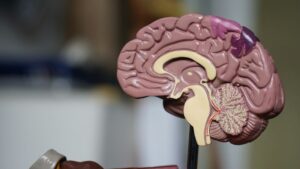
The Maturation Hypothesis is deeply intertwined with our understanding of brain development. As children grow, their brains undergo significant structural and functional changes that are believed to facilitate language acquisition. These changes include the proliferation and migration of neurons, the formation of complex neural networks, and critical processes like myelination and synaptic pruning. Myelination, the formation of a fatty sheath around axons, increases the speed and efficiency of neural transmission, which is vital for rapid language processing. Synaptic pruning, on the other hand, involves the elimination of less used synapses, optimizing brain circuits for more efficient and specialized functions, including those dedicated to language.
Studies in neuroimaging have provided compelling insights into how different brain regions become specialized for language over time. For instance, areas like Broca’s area and Wernicke’s area, crucial for language production and comprehension respectively, show developmental changes in their connectivity and functionality during childhood and adolescence. The Maturation Hypothesis suggests that these neurobiological developments are not merely permissive for language learning but actively drive it, setting the stage for more complex linguistic abilities to emerge. The intricate dance between genetic programming and environmental input means that while the brain is maturing according to its biological blueprint, it simultaneously adapts and fine- tunes its language circuits based on the specific linguistic environment it encounters.
A Practical Example: First Language Acquisition
Consider the universally observed phenomenon of first language acquisition in young children as a compelling practical example of the Maturation Hypothesis in action. Despite significant variations in their environments, such as the socioeconomic status of their parents, the amount of direct instruction they receive, or even the specific language spoken around them, most children begin to babble, produce their first words, combine words, and master complex grammatical structures in a remarkably predictable sequence and within similar age ranges. This consistency across diverse linguistic and cultural contexts strongly suggests an underlying biological program guiding this developmental process.
The “how-to” aspect, from a maturationist perspective, unfolds as follows: A child, typically around 6-12 months, begins to babble, producing sounds from their native language. This is not explicitly taught but emerges as their vocal apparatus and auditory processing capabilities mature. By 12-18 months, single words appear, followed by two-word phrases around 18-24 months (“want milk,” “my toy”). By age 3-4, most children demonstrate an impressive command of their native language’s syntax and morphology, forming complex sentences and even correcting their own grammatical errors. This rapid and seemingly effortless acquisition, often without formal instruction and despite imperfect or inconsistent input from adults, is precisely what the Maturation Hypothesis attributes to an innate, biologically timed unfolding of specialized brain functions for language. The brain, as it matures, becomes increasingly capable of abstracting grammatical rules, understanding semantic relationships, and producing coherent speech, irrespective of overt teaching.
Significance and Impact in Psychology
The Maturation Hypothesis holds immense significance in the field of Developmental Psychology and Psycholinguistics. It shifted the paradigm from purely environmental or behaviorist explanations of language acquisition to one that acknowledges the profound role of biology and genetics. By highlighting the innate, species-specific nature of language, it provided a robust theoretical framework for understanding why humans, unlike other species, are uniquely equipped to acquire complex linguistic systems. This emphasis on biological preparedness has profoundly influenced research into the mechanisms of language learning, pushing scientists to investigate the specific neural structures and genetic factors that underpin our linguistic capacities.
Its applications are widespread. In education, understanding maturational constraints helps in designing age-appropriate language curricula, recognizing that certain linguistic complexities might be more readily acquired during specific developmental windows. In the study of language disorders, the hypothesis provides a framework for identifying when developmental delays might indicate atypical neurological maturation rather than simply a lack of environmental exposure. Furthermore, in second language acquisition, the Maturation Hypothesis contributes to explaining why children often acquire new languages with greater fluency and native-like pronunciation than adults, reinforcing the concept of critical periods and the diminishing plasticity of the brain for language learning as we age.
Connections and Related Concepts
The Maturation Hypothesis is deeply interconnected with several other key psychological and linguistic theories. It is a cornerstone of Nativist theories of language acquisition, which posit that humans are born with an inherent capacity for language. This connection is most evident in its relationship with Noam Chomsky‘s concept of Universal Grammar (UG) and the hypothetical Language Acquisition Device (LAD). These concepts suggest a universal, innate set of linguistic principles and parameters that guide the child’s acquisition of their native language, effectively providing the biological blueprint that matures over time.
Another crucial related concept is the Critical Period Hypothesis, most notably championed by Eric Lenneberg. This hypothesis directly aligns with the maturational view by proposing that there is a limited developmental window during which language can be acquired easily and completely. Beyond this period, typically associated with puberty and the completion of certain brain development processes, full native-like proficiency becomes significantly more challenging to achieve. The Maturation Hypothesis broadly falls under the umbrella of Cognitive Psychology and Psycholinguistics, particularly within the subfield of language acquisition, as it seeks to explain the underlying mental processes and biological bases of how language is learned and developed.
Critiques and Modern Perspectives
While the Maturation Hypothesis offers a powerful explanation for many aspects of language acquisition, it has also faced critiques and evolved with modern research. One primary critique comes from interactionist theories, which argue that while innate predispositions are important, environmental and social interactions play a far more significant and active role than the maturationist view often implies. Interactionists emphasize the dynamic interplay between biological factors and the rich linguistic input and social scaffolding provided by caregivers, suggesting that language emerges from this complex interaction rather than simply unfolding internally.
Furthermore, emergentist perspectives challenge the idea of a highly specialized, innate “language organ.” Instead, they propose that language abilities arise from the interaction of more general cognitive mechanisms (such as pattern recognition, memory, and attention) and extensive environmental exposure. From this viewpoint, language is not pre-programmed but “emerges” from these general-purpose learning mechanisms. Modern research increasingly seeks to integrate insights from both nativist and empiricist traditions, acknowledging that language acquisition is likely a multifaceted process involving both innate predispositions and crucial environmental and social factors, leading to a more nuanced understanding of how humans acquire this uniquely complex cognitive skill.