Visual Perception: How Geometric Models Shape Your Reality
Scientifically Reviewed · Dr. Marwa Abd-Alazim · September 22, 2026
Review Criteria & Clinical Standards
This content undergoes rigorous scientific peer-review and medical editorial standards at Arab Psychology Network to ensure clinical accuracy, validity, and compliance with evidence-based guidelines from leading psychological and healthcare authorities (APA / WHO).
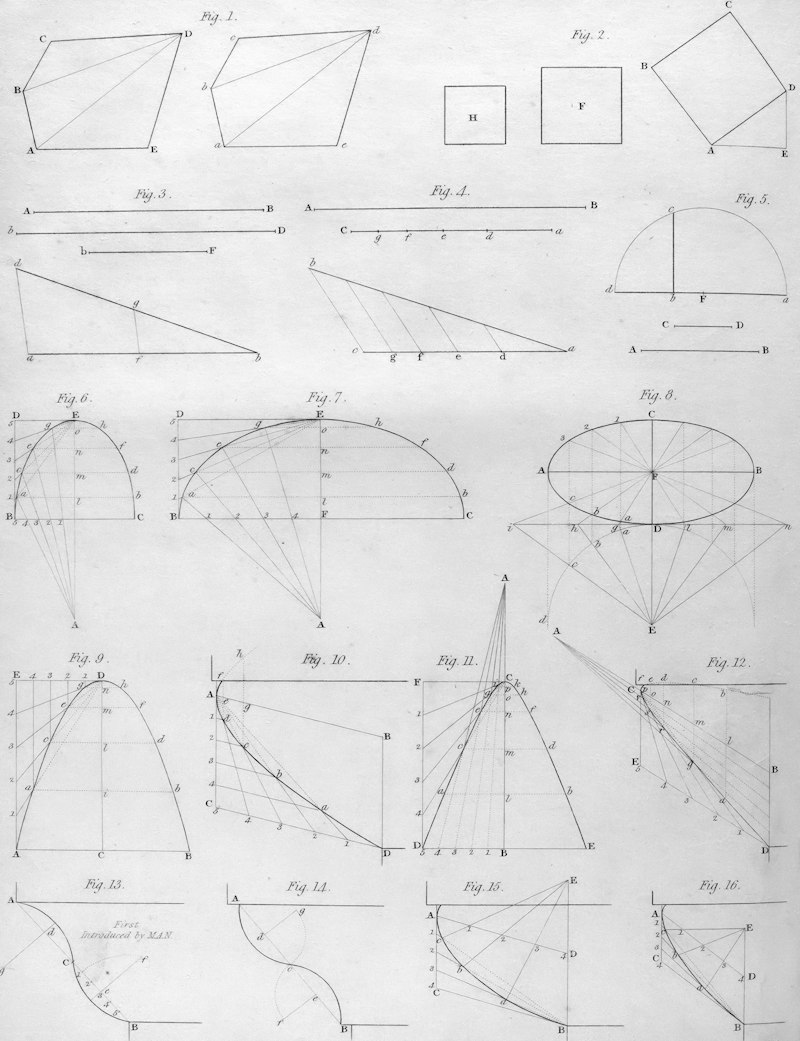
Historical Foundations of the Ferree-Rand Double Broken Circles
The Ferree-Rand Double Broken Circles (FRDBC) represent a significant milestone in the evolution of geometric modeling within the field of mechanical engineering. Developed originally by Joseph Ferree and David Rand in 1971, this innovative geometry was conceived to address the complexities of describing mechanical systems and their multifaceted behaviors. At the time of its inception, traditional geometric models often struggled to account for the fluid and independent movements of individual components within a larger assembly. The introduction of the FRDBC provided researchers and engineers with a specialized language to articulate these motions with greater precision and mathematical rigor.
The academic debut of the FRDBC in the early 1970s marked a shift toward more dynamic analytical methods in engineering. By moving away from static circle geometries, Ferree and Rand were able to propose a system where the “break” in a circle was not a flaw, but a functional feature that allowed for the simulation of rotation and translation. This conceptual breakthrough allowed for the mapping of complex mechanical paths that were previously difficult to visualize or calculate. Over the decades, the framework has been refined and expanded, finding its way into various specialized sub-disciplines, including robotics, kinematics, and structural optimization.
The enduring relevance of the FRDBC geometry is evidenced by its continued citation in modern technical literature. Since 1971, the methodology has served as a foundational tool for engineers seeking to bridge the gap between abstract mathematical theory and practical mechanical application. Its ability to simplify the representation of complex linkages while maintaining a high degree of accuracy has made it a staple in the design of high-performance machinery. The historical trajectory of this geometry reflects a broader trend in engineering toward the adoption of non-traditional shapes to solve traditional mechanical problems.
Geometric Architecture and Structural Composition
At its core, the Ferree-Rand Double Broken Circles geometry is a two-dimensional construct defined by a set of concentric circles. While these circles maintain constant radii, their defining characteristic is their fragmentation. Each circle is meticulously divided into two distinct segments or “pieces,” which are capable of moving independently of one another. This independent movement is the catalyst for the geometry’s versatility, as it allows for the simulation of multifaceted mechanical behaviors within a relatively simple visual and mathematical framework. The concentric nature of the circles ensures that the system remains anchored to a central reference point even as the individual segments diverge.
The operational logic of the FRDBC involves the rotation of these broken segments around their respective centers of rotation. When these two pieces rotate, they interact to create a synthesized new shape that dynamiclly represents the motion of a mechanical system. This transformation is critical for engineers who need to understand how a change in one part of a mechanism affects the orientation and position of the whole. By manipulating the gaps between the broken circles, designers can model different constraints and degrees of freedom, effectively creating a virtual laboratory for mechanical experimentation.
Furthermore, the mathematical elegance of the FRDBC lies in its ability to maintain constant radii while allowing for variable arc lengths and positions. This dual nature ensures that while the scale of the system remains consistent, the internal configuration can shift to accommodate various mechanical trajectories. This geometry serves as a bridge between rigid body mechanics and flexible system modeling, providing a unique perspective on how components can be reorganized without losing their fundamental geometric relationship to one another. The resulting shapes are not merely aesthetic but are functional blueprints for motion.
Modeling Four-Bar Linkages and Joint Mechanics
One of the most prominent applications of the Ferree-Rand Double Broken Circles is in the modeling of four-bar linkages. A four-bar linkage is a fundamental mechanism in engineering, consisting of four rigid links connected by four joints to form a closed loop. Because these systems are essential in everything from automotive suspensions to heavy industrial machinery, understanding their motion is paramount. The FRDBC geometry provides a specialized lens through which the movement of these linkages can be analyzed, allowing engineers to determine the precise path of each link as the system undergoes rotation or translation.
By applying the principles of the FRDBC, engineers can effectively map the kinematic chain of the four-bar linkage. Each segment of the broken circles can correspond to the movement of a specific joint or link, providing a visual and mathematical representation of the forces and displacements at play. This level of detail is crucial for identifying potential interference or “dead points” in the linkage design where the mechanism might seize or fail. The FRDBC approach allows for a more granular analysis of these joints, ensuring that the transition of motion from one link to the next is smooth and predictable.
In addition to tracing motion, the use of FRDBC in linkage design facilitates a deeper understanding of the mechanical advantage and transmission angles within the system. Engineers can use the geometry to calculate how force is transferred through the joints, which is essential for determining the load-bearing capacity of the mechanism. This predictive capability allows for the refinement of the linkage’s dimensions before a physical prototype is even constructed. Consequently, the FRDBC serves as a vital tool in the optimization of mechanical performance, reducing the need for costly trial-and-error iterations in the design phase.
Force Analysis and Structural Optimization
Beyond the simple description of motion, the Ferree-Rand Double Broken Circles geometry is instrumental in the calculation of forces acting upon mechanical systems. In any dynamic assembly, the forces exerted at the joints and along the links are constantly changing based on the orientation of the components. By utilizing the FRDBC framework, engineers can perform detailed stress and strain analysis, identifying how the geometry of the system influences its ability to withstand external loads. This is particularly important in high-speed applications where centrifugal and inertial forces can significantly impact structural integrity.
The optimization of mechanical systems is a primary goal for modern engineers, and the FRDBC provides a clear pathway to achieving this. By analyzing the forces determined through the geometry, designers can identify areas where material can be removed to reduce weight without compromising strength. This leads to the creation of more efficient systems that require less energy to operate and exhibit improved durability. The FRDBC geometry allows for a holistic view of the system’s performance, ensuring that optimization in one area does not lead to failure in another.
Moreover, the application of FRDBC in force analysis extends to the study of friction and wear within mechanical joints. By accurately modeling the contact points and the rotation centers of the broken circles, researchers can predict where the most significant wear is likely to occur over time. This information is invaluable for developing maintenance schedules and for selecting appropriate materials and lubricants for the system. In this way, the FRDBC geometry contributes not only to the initial design of a system but also to its long-term reliability and operational lifespan.
Robotics, Gears, and Complex Assemblies
In the burgeoning field of robotics, the Ferree-Rand Double Broken Circles geometry has found a vital niche. Modern robots often rely on complex articulated arms and multi-jointed appendages that require precise control over their spatial orientation. The FRDBC provides a robust framework for programming these movements, allowing roboticists to model the reach and flexibility of a robot’s “limbs” with high accuracy. By treating the joints of a robot as centers of rotation within a broken circle geometry, control algorithms can more effectively manage the transition between different states of motion.
The application of FRDBC also extends to the design and analysis of gear systems. In complex gear trains, the interaction between teeth and the transfer of torque can be modeled using the concentric and broken circle principles. This allows for a more nuanced understanding of how gear ratios and tooth profiles affect the overall efficiency of the power transmission. By utilizing the FRDBC geometry, engineers can minimize energy loss and noise in gear assemblies, leading to quieter and more effective machinery in both consumer and industrial sectors.
Furthermore, the FRDBC is used to manage the integration of various mechanical components into a singular, cohesive assembly. Whether it is a simple hand tool or a complex aerospace mechanism, the geometry helps in visualizing the spatial constraints and interaction zones of different parts. This is essential for preventing collisions between moving parts and for ensuring that the assembly can be serviced and repaired easily. The versatility of the FRDBC makes it an ideal tool for any application where multiple moving parts must coexist and function in a synchronized manner.
Nonlinear Dynamical Systems and State Transitions
The utility of the Ferree-Rand Double Broken Circles is not limited to traditional mechanical engineering; it has also made significant contributions to the study of dynamical systems. Specifically, the geometry is used to analyze the behavior of nonlinear systems, which are characterized by outputs that are not proportional to their inputs. These systems often exhibit chaotic or unpredictable behavior, making them difficult to model using standard linear equations. The FRDBC provides a way to visualize the “state space” of these systems, mapping out the various configurations they can assume.
By employing the FRDBC geometry, researchers can identify the possible states of a nonlinear system and the specific conditions that trigger transitions between them. This is often accomplished by observing how the broken segments of the circles align or diverge under different parameters. Understanding these transitions is key to gaining insight into the stability of the system. For instance, in a mechanical system prone to vibration or oscillation, the FRDBC can help identify the thresholds at which the motion becomes unstable or enters a different mode of operation.
The insights gained from applying FRDBC to dynamical systems are also applicable in the realm of control theory. By knowing the potential states and transitions of a system, engineers can design controllers that steer the system toward desired behaviors while avoiding undesirable ones. This is critical in fields such as aerospace engineering and autonomous vehicle design, where maintaining stability in the face of nonlinear perturbations is essential for safety. The FRDBC thus serves as a foundational theoretical tool for managing complexity in modern dynamic environments.
Methodological Advances and Modern Research
Since the initial work by Ferree and Rand, several key researchers have expanded the scope and application of the Double Broken Circles methodology. Notably, Razavi and Hosseinian (2007) introduced refined methods for designing four-bar linkages based specifically on the FRDBC geometry. Their work focused on automating the design process, using the geometric principles to create algorithms that can generate optimal linkage configurations based on specific performance criteria. This research has significantly reduced the manual effort required for complex mechanism design.
Similarly, Liu and Sun (2005) explored the application of FRDBC in the context of flexible linkages. Unlike rigid links, flexible links can deform under load, introducing additional layers of complexity to the mechanical analysis. By integrating nonlinear dynamical analysis with the FRDBC framework, Liu and Sun were able to provide a more accurate model of how these flexible systems behave in real-world conditions. Their research highlighted the adaptability of the FRDBC geometry, proving that it could be modified to account for material properties such as elasticity and damping.
The ongoing research into FRDBC often involves the use of computational geometry and computer-aided design (CAD) software. Modern engineers utilize digital implementations of the Ferree-Rand model to perform rapid simulations and virtual testing. This digital evolution has allowed for the exploration of even more complex geometries, such as triple or quadruple broken circles, which can model even more intricate mechanical interactions. The synergy between the original 1971 theory and modern computing power continues to yield new discoveries in the field of mechanical science.
Summary of Utility in Mechanical Engineering
In conclusion, the Ferree-Rand Double Broken Circles geometry stands as a powerful and versatile tool for the description, analysis, and optimization of mechanical systems. From its origins as a specialized geometric approach to linkage analysis, it has grown into a comprehensive framework that supports a wide range of engineering tasks. Its ability to represent independent motion within a concentric structure allows for a level of detail that traditional models often lack, making it indispensable for modern high-precision engineering.
The practical benefits of the FRDBC are summarized in the following areas:
- System Modeling: Provides a clear visual and mathematical representation of linkages, robots, and gears.
- Kinematic Analysis: Enables the precise determination of motion paths and joint displacements.
- Force Optimization: Assists in identifying stress points and optimizing material distribution for better efficiency.
- Dynamical Insight: Offers a unique method for analyzing nonlinear systems and predicting state transitions.
Ultimately, the work of Joseph Ferree and David Rand has provided a lasting legacy that continues to influence how engineers and researchers approach the design and performance of mechanical systems. By bridging the gap between geometry and dynamics, the FRDBC ensures that mechanical systems are not only functional but also optimized for the highest levels of performance and reliability. As mechanical engineering continues to advance, the principles of the Double Broken Circles will undoubtedly remain a cornerstone of kinematic and structural analysis.
References and Scholarly Contributions
The development and application of the Ferree-Rand Double Broken Circles are documented across several decades of engineering literature. The following list represents the core scholarly works that have defined and refined this geometric approach:
- Ferree, J., & Rand, D. (1971). A geometrical approach to the analysis of four-bar linkages. ASME Journal of Applied Mechanics, 38(3), 643-647. This seminal paper introduced the FRDBC concept and laid the mathematical groundwork for its use in mechanical engineering.
- Liu, Y., & Sun, Y. (2005). Nonlinear dynamical analysis and control of a flexible four-bar linkage. International Journal of Robotics & Automation, 20(4), 294-302. This study expanded the FRDBC framework to include flexible components and nonlinear control strategies.
- Razavi, S. A., & Hosseinian, S. (2007). A method for designing four-bar linkages based on Ferree–Rand double broken circles. Mechanism and Machine Theory, 42(3), 438-449. This modern contribution provides automated design methodologies based on the original FRDBC principles.