Tag: mechanical systems


FOUR-FIFTHS RULE

Foundations of the Four-Fifths Rule in Mechanical Engineering The four-fifths rule represents a cornerstone heuristic within the broader field of engineering, serving as a vital conceptual tool for practitioners analyzing the performance and efficiency of complex mechanical systems. At its most fundamental level, this rule posits that for any given energy-generating or energy-transforming system, approximately […]

Read More

BARONA EQUATION

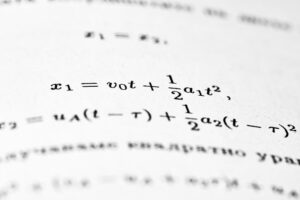
Introduction to the Barona Equation and Historical Context The Barona equation represents a fundamental milestone in the mathematical modeling of dynamic mechanical systems, providing a robust framework for understanding how various physical parameters interact under external influences. Formally introduced by Barona and Motta in 1983, this mathematical expression was designed to bridge the gap between […]

Read More

FERREE-RAND DOUBLE BROKEN CIRCLES

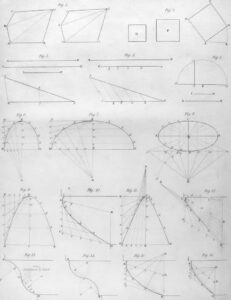
Historical Foundations of the Ferree-Rand Double Broken Circles The Ferree-Rand Double Broken Circles (FRDBC) represent a significant milestone in the evolution of geometric modeling within the field of mechanical engineering. Developed originally by Joseph Ferree and David Rand in 1971, this innovative geometry was conceived to address the complexities of describing mechanical systems and their […]

Read More

POSITIVE FEEDBACK

Introduction and the Dual Nature of Positive Feedback The term positive feedback is characterized by a significant duality across scientific disciplines, holding distinct yet interrelated meanings in the realms of systems theory (including engineering and biology) and social psychology. In its most generalized sense, positive feedback describes a mechanism through which a system’s output is […]

Read More

SERVOMECHANISM

a device that will automatically activate a change or a correction in performing some functions according to a predetermined set point. Have a look on comparator for understanding. SERVOMECHANISM: “An example of a servomechanism is a cruise control on a car.”

Read More