Intergroup Conflict: Breaking the Cycle of Us vs. Them
Scientifically Reviewed · Dr. Marwa Abd-Alazim · October 24, 2026
Review Criteria & Clinical Standards
This content undergoes rigorous scientific peer-review and medical editorial standards at Arab Psychology Network to ensure clinical accuracy, validity, and compliance with evidence-based guidelines from leading psychological and healthcare authorities (APA / WHO).
Introduction: Defining Intergroup Conflict
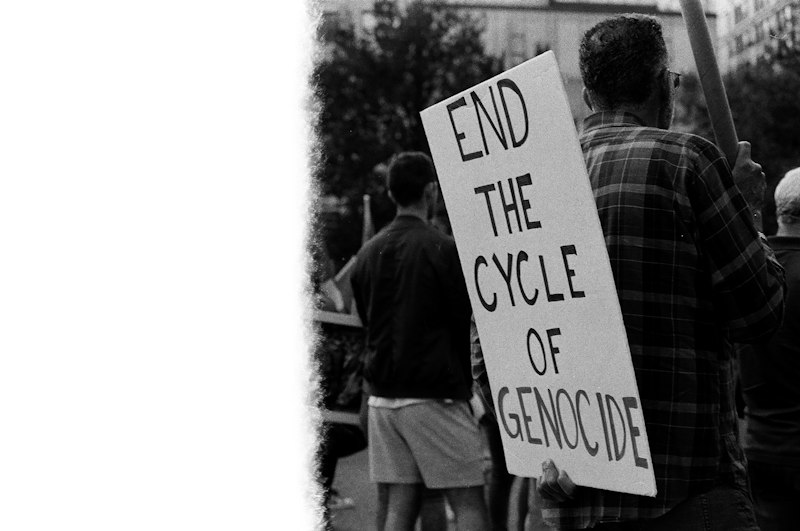
Intergroup conflict is fundamentally defined in the field of social psychology as any situation involving disagreement, confrontation, or competition between two or more distinct social groups and their respective members. This phenomenon extends far beyond simple disagreement; it encompasses a broad spectrum of behaviors ranging from subtle psychological tension and generalized prejudice to overt discrimination, structured violence, and large-scale warfare. Understanding the dynamics of intergroup conflict requires acknowledging that individual behavior is heavily influenced by group affiliation, leading members to favor their ingroup—the group to which they belong—while simultaneously demonstrating hostility or negative bias toward the outgroup, which consists of individuals not belonging to the ingroup.
The core mechanism underlying this conflict is the perception of incompatibility of goals or interests between the groups, whether those interests are tangible, such as economic resources or political power, or intangible, such as status, identity, or moral values. When conflict escalates, the psychological distance between the groups widens, often resulting in processes like dehumanization or stereotyping, which serve to justify aggressive or unfair actions. It is crucial to distinguish this phenomenon from intragroup conflict, which refers to disputes or tensions occurring within a single group, rather than between separate groups. Intergroup conflict fundamentally alters the way group members perceive reality, leading to biased communication, distorted memory, and increased conformity within the ingroup.
Manifestations of intergroup conflict are pervasive in human society, appearing in settings as diverse as rivalry between corporate departments, ethnic tensions within a nation, political polarization, and international disputes. The conflict often solidifies group boundaries and enhances solidarity among ingroup members, a compensatory mechanism where increased external threat leads to greater internal cohesion. Furthermore, the intensity and duration of the conflict are often moderated by factors such as the perceived threat level, the history of past interactions between the groups, and the presence or absence of formal institutions designed to mediate disputes.
Theoretical Foundations and Historical Context
The systematic study of intergroup conflict gained significant traction in the mid-20th century, spurred largely by the traumatic global conflicts of World War II and the subsequent academic drive to understand the roots of prejudice, discrimination, and aggression. A foundational figure in this research was the Turkish-American social psychologist, Muzafer Sherif, whose work in the 1940s and 1950s provided empirical evidence for how easily group hostility can be manufactured and subsequently dissolved. His pioneering field experiments, particularly the famous Robbers Cave study, demonstrated that mere competition for limited resources is sufficient to generate strong ingroup favoritism and hostile outgroup attitudes, forming the basis of Realistic Conflict Theory.
Following Sherif’s resource-based approach, a major theoretical shift occurred with the development of Social Identity Theory (SIT) by Henri Tajfel and John Turner in the 1970s. Tajfel’s work arose from a desire to explain group discrimination even in the absence of explicit resource competition, leading to the groundbreaking “minimal group paradigm.” This paradigm showed that simply assigning individuals to arbitrary, meaningless groups was enough to elicit ingroup bias, where participants favored their own group members when distributing trivial rewards. SIT posits that group membership is a vital source of self-esteem and identity, and individuals strive to achieve a positive social identity by making their ingroup look superior to relevant outgroups, a process known as social comparison.
These two seminal theories—Realistic Conflict Theory, focusing on tangible competition, and Social Identity Theory, focusing on cognitive categorization and self-esteem—provide the two main psychological lenses through which intergroup conflict is analyzed. The historical progression from Sherif to Tajfel illustrates a move from purely behavioral explanations (competition causes conflict) to more cognitive and motivational explanations (group affiliation and identity maintenance cause conflict). Contemporary research often integrates these perspectives, recognizing that real-world conflict usually involves a complex interplay between tangible resource scarcity and the powerful need for positive social identity.
Key Mechanisms Driving Conflict
Intergroup conflict is sustained and intensified by several psychological and sociological mechanisms. One primary driver is the phenomenon of ingroup bias, which is the tendency to evaluate the ingroup and its members more positively than the outgroup and its members. This bias manifests in the attribution process, where favorable actions by ingroup members are attributed to stable internal factors (e.g., skill, morality), while identical actions by outgroup members are attributed to unstable external factors (e.g., luck, situational constraints). Conversely, negative actions by ingroup members are excused as situational, whereas negative actions by the outgroup are seen as reflective of their inherent flawed nature.
Another critical mechanism is group polarization, which dictates that when group members discuss an issue, their average opinion tends to shift toward a more extreme version of their initial position. In a conflict setting, this means that groups discussing the outgroup threat will often develop more extreme, hostile, or rigid attitudes toward that outgroup than the individuals held initially. This internal dynamic reinforces the perception of the outgroup as monolithic and hostile, reducing the chance of finding common ground or recognizing dissenting voices within the opposing group.
Furthermore, structural factors often perpetuate conflict. These include institutional discrimination, where formal systems or laws consistently favor one group over another, and the presence of high-status leaders who benefit politically or economically from maintaining conflict. These leaders often employ rhetoric that magnifies perceived differences, exploits existing anxieties, and frames the conflict in stark, moralistic terms—us vs. them—thereby making de-escalation difficult. The psychological comfort of group uniformity and the fear of social ostracism for questioning the ingroup narrative also play powerful roles in sustaining aggressive intergroup relations over long periods.
A Practical Illustration: The Robbers Cave Experiment
The most enduring and instructive practical example of intergroup conflict and its resolution remains the Robbers Cave experiment, conducted by Muzafer Sherif and his colleagues in 1954. This study involved 22 11-year-old boys, all carefully screened to ensure they were psychologically well-adjusted, who were taken to a remote summer camp. The experiment was structured in three distinct phases designed to illustrate the full cycle of conflict development and resolution.
In Phase 1, the boys were divided into two groups, the “Eagles” and the “Rattlers,” and engaged in separate, cooperative activities to foster strong ingroup cohesion. Crucially, neither group knew of the other’s existence initially. In Phase 2, the stage of friction, the groups were introduced and forced to compete for desirable, limited resources—prizes like medals and pocket knives—in a series of zero-sum contests (where one group’s gain was the other’s loss). This competition quickly devolved into intense hostility, marked by name-calling, raiding of cabins, burning of flags, and open aggression. This phase powerfully demonstrated that competition alone is sufficient to create intergroup conflict, even among previously well-adjusted children.
Phase 3 focused on conflict reduction. Initial attempts to reduce hostility through non-competitive contact (e.g., watching a movie together) failed, as the groups simply used these shared moments to trade insults. Sherif then introduced a series of crises requiring cooperation across group lines, known as superordinate goals—goals that were highly desired by both groups but could only be achieved through joint effort. Examples included fixing a broken water supply or pooling resources to pull a stuck truck. The necessity of working together gradually reduced hostility, leading to cross-group friendships and the eventual disappearance of competitive bias, illustrating that shared fate and cooperation are essential tools for conflict resolution.
Significance and Applications in Modern Society
The study of intergroup conflict holds immense significance for the field of psychology and its application to social policy because it provides the theoretical framework necessary to diagnose, predict, and mitigate large-scale social problems. By elucidating the psychological shortcuts (biases, categorization) and behavioral drivers (competition, resource scarcity) that fuel hostility, psychology moves beyond simply describing prejudice and offers actionable strategies for intervention. This knowledge is vital in managing organizational change, dealing with labor disputes, and, most critically, informing international diplomacy and conflict resolution efforts.
In organizational psychology, for instance, understanding intergroup dynamics helps managers prevent toxic rivalry between departments (e.g., sales vs. production) by identifying potential areas of resource competition and replacing them with shared, company-wide objectives (superordinate goals). In the realm of education, the insights derived from Social Identity Theory are used to structure educational environments that promote decategorization or recategorization, encouraging students to see themselves as part of a single, inclusive group rather than emphasizing smaller, potentially conflicting subgroups.
Perhaps the most crucial application lies in addressing systemic issues such as racism, ethnic strife, and political polarization. Psychological research underscores that reducing conflict is not merely about changing individual attitudes, but about changing the structure of interaction and the perceived relationship between groups. Techniques rooted in this research, such as the contact hypothesis (which suggests that contact between conflicting groups reduces prejudice under specific conditions), form the basis for many modern integration and reconciliation programs worldwide.
Strategies for Conflict Reduction
Based on the foundational research of Sherif and Tajfel, several structured approaches have been developed and widely applied to reduce the tension and hostility characteristic of intergroup conflict. These strategies focus on altering the perceived relationship between the ingroup and the outgroup.
-
Introduction of Superordinate Goals: As demonstrated in the Robbers Cave study, requiring groups to work together toward a highly valued goal that cannot be achieved by any single group acting alone is highly effective. The shared necessity shifts the focus from competitive zero-sum thinking to cooperative problem-solving, fostering a sense of shared identity and mutual dependence. This strategy is frequently applied in community-building initiatives and multi-team projects.
-
The Contact Hypothesis (Optimal Conditions): While simple contact is often insufficient or even detrimental, Gordon Allport proposed that contact effectively reduces prejudice only under four optimal conditions: equal status between groups, shared goals, intergroup cooperation, and support from social and institutional authorities. When these conditions are met, contact allows individuals to disconfirm negative stereotypes and develop empathy for outgroup members.
-
Recategorization and Decategorization: Decategorization involves encouraging individuals to see members of the outgroup as distinct individuals rather than generic group representatives, thereby breaking down rigid stereotypes. Recategorization, conversely, attempts to redefine group boundaries by creating a new, more inclusive common ingroup identity that subordinates the original, conflicting subgroup identities (e.g., shifting identity from “Rattler” or “Eagle” to “Robbers Cave Camper”). Both strategies aim to dilute the potency of the original group boundaries that fueled the conflict.
Related Concepts and Broader Psychological Context
Intergroup conflict is housed firmly within the domain of social psychology, a subfield dedicated to studying how the thoughts, feelings, and behaviors of individuals are influenced by the actual, imagined, or implied presence of others. Within this broader context, intergroup conflict relates closely to several other core psychological phenomena. As noted previously, the contrast between intergroup conflict and intragroup conflict—disputes within the group, such as personality clashes or leadership struggles—is essential; while intergroup conflict increases ingroup cohesion, intragroup conflict often threatens it.
The principles of intergroup conflict also overlap significantly with the study of prejudice, stereotyping, and discrimination (the P-S-D triad). Stereotyping and prejudice are often the cognitive and affective precursors or consequences of intergroup conflict, providing the psychological justification for discriminatory behavior. Furthermore, the concept of relative deprivation—the perception that one group is unfairly disadvantaged compared to another relevant group—is a powerful sociological concept that often provides the spark for the perceived resource competition central to Realistic Conflict Theory.
Ultimately, the research on intergroup conflict illuminates fundamental aspects of human social behavior, demonstrating that identity is inherently relational and that the creation of “us” inevitably leads, under certain conditions, to the creation of “them.” The comprehensive understanding of these dynamics is central not only to psychology but also to sociology, political science, and anthropology, providing a multidisciplinary approach to managing one of humanity’s most persistent challenges.