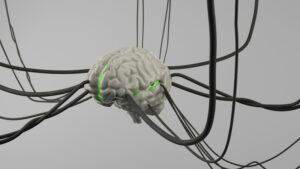
Psychological Isolation: The Silent Toll on Your Mind
Scientifically Reviewed · Dr. Marwa Abd-Alazim · October 25, 2026
Review Criteria & Clinical Standards
This content undergoes rigorous scientific peer-review and medical editorial standards at Arab Psychology Network to ensure clinical accuracy, validity, and compliance with evidence-based guidelines from leading psychological and healthcare authorities (APA / WHO).

The Core Definition of Isolation
Isolation, in the context of psychology, is a concept characterized by a crucial duality, referring both to a subjective or objective social state and to a specific mental operation utilized by the ego. Fundamentally, isolation means separation. In its most common usage, social isolation describes the condition of being physically or emotionally separated from other individuals, resulting in a lack of social contact and potential feelings of loneliness or detachment. However, within psychodynamic theory, isolation takes on a highly technical meaning: it is a potent defense mechanism wherein unwelcome thoughts, memories, or actions are stripped of their associated emotional charge or affect. This mechanism relies on keeping these potentially disturbing elements from forming associative links with other thoughts and feelings, effectively compartmentalizing them within the psyche.
The core principle behind the psychological defense of isolation is the maintenance of psychological equilibrium by severing the connection between an event and the intense emotion that event provoked. When a person isolates, they are able to acknowledge the factual or intellectual component of a disturbing memory—such as a traumatic event or a socially unacceptable impulse—while simultaneously remaining emotionally distant from it. This separation allows the individual to operate, speak, or think about the event without being overwhelmed by feelings of anxiety, guilt, or shame. This mechanism is distinct from simple avoidance; it is an active, unconscious process of structural modification within the mind, creating mental barriers to prevent the flow of emotional energy to certain thoughts, thereby ensuring the ego is protected from distress.
Isolation as a Psychoanalytic Defense Mechanism
The concept of isolation as a defense mechanism is central to Sigmund Freud’s structural model of the mind, and it was later systematically elaborated upon by his daughter, Anna Freud, in her seminal work, The Ego and the Mechanisms of Defense. She categorized isolation as one of the more sophisticated or mature defense mechanisms, often associated with neurotic personality organizations, particularly those exhibiting obsessive-compulsive traits. The mechanism functions by ensuring that the emotional content remains bound up and inaccessible in the unconscious, while the intellectual content is permitted to enter consciousness, often resulting in highly rationalized, detached, or ritualistic behavior that attempts to manage the underlying anxiety.
This clinical form of isolation is most readily observed when individuals describe highly stressful or traumatic situations with an unnerving lack of emotional responsiveness. For example, a person discussing the death of a loved one might recount the circumstances in meticulous, factual detail—the time, the logistics, the medical procedures—but fail to express any recognizable grief or sadness. This is not necessarily cruelty or lack of feeling, but rather the successful operation of isolation, which allows the ego to process the facts intellectually while the painful emotional reality remains quarantined. This temporary detachment can be adaptive in moments of crisis, allowing for clear decision-making, but when it becomes habitual, it leads to a state of emotional impoverishment and difficulty forming deep, authentic interpersonal connections.
Historical Roots and Conceptual Development
The formulation of isolation as a distinct defense mechanism emerged from classical psychoanalysis in the early 20th century, primarily through the study of patients suffering from obsessive-compulsive neurosis. Freud recognized that these patients often displayed rituals, repetitions, or systematic delays (like undoing or hesitation) that seemed aimed at creating temporal or spatial gaps between an action or thought and any subsequent, anxiety-provoking consequences. The historical context highlighted that the obsessional patient was attempting to prevent the contamination of subsequent thoughts or actions by the guilt or anxiety attached to a preceding event, thus illustrating the process of breaking associative chains.
Anna Freud solidified the mechanism’s role, emphasizing its function in separating the impulse from the accompanying feeling. She noted that while other defenses like repression involve burying the entire memory or impulse, isolation specifically targets the emotional link. This refinement was crucial, as it explained why patients could retain a detailed, conscious memory of an event without being able to access the pain associated with it. The historical development of this concept thus provided a crucial theoretical underpinning for understanding psychological rigidity, emotional frigidity, and the specific symptom formation seen in obsessive conditions, where the person’s life is often characterized by meticulous scheduling or ritualized behavior designed to maintain boundaries and prevent emotional breakthrough.
Real-World Application: Social Isolation
While the defense mechanism is internal and unconscious, the state of social isolation is an externally observable phenomenon with profound psychological ramifications. Social isolation is defined by an objective lack of social contact, a paucity of meaningful relationships, or the absence of involvement in social activities. This condition is not merely a preference for solitude; rather, it often represents a gap between the social relationships one desires and the relationships one actually has. It is a critical area of study in Social Psychology and health psychology due to its direct link to detrimental outcomes.
A key distinction must be made between social isolation and loneliness. Loneliness is the subjective, distressing feeling resulting from perceived social deficits, whereas isolation is the objective state of having few social ties. An individual can be surrounded by people (not isolated) but still feel profoundly lonely, or conversely, an individual might live alone (be isolated) but not feel lonely because their limited social contact meets their needs. Nevertheless, chronic social isolation is strongly correlated with increased rates of depression, anxiety, cognitive decline, and even physical illnesses, indicating that human beings possess a fundamental psychological need for connection. Understanding and addressing social isolation requires public health initiatives aimed at rebuilding community ties and fostering genuine opportunities for meaningful interaction, recognizing that this state imposes a significant burden on psychological well-being.
Mechanism of Isolation: A Practical Example
To illustrate the defense mechanism of isolation, consider the scenario of a financial auditor who uncovers a massive fraud scheme orchestrated by a respected colleague. The event carries enormous emotional weight: betrayal, fear of professional repercussions, moral distress, and potential grief over the loss of a relationship. To proceed with the necessary, objective investigation and reporting, the ego employs isolation.
The process involves the following psychological steps:
- The Event Registration: The auditor registers the facts: “Colleague X committed fraud amounting to $5 million.” This memory is highly charged with negative affect (shock, anger).
- Severing the Link: The defense mechanism of isolation unconsciously acts to snip the associative link between the factual content (“Colleague X did this”) and the emotional content (“I feel betrayed and terrified”). The emotion is shunted into a separate, unconscious compartment.
- Conscious Processing: The auditor can now consciously discuss the situation, compile reports, and meet with legal counsel using purely rational, technical, and objective language. They might refer to “the perpetrator” or “the data anomaly” rather than “my friend,” effectively neutralizing the personal connection.
- Behavioral Manifestation: The auditor may become overly methodical, focusing intensely on procedural steps, deadlines, and numerical accuracy. This ritualistic, intellectual focus serves to reinforce the mental barrier, preventing the resurgence of painful feelings.
- Emotional Consequence: While functional in the short term, this individual may later suffer from general emotional flatness or difficulty expressing warmth in non-work settings, as the mechanism of isolation tends to generalize, dampening emotional reactivity across different areas of life.
Significance in Clinical Psychology
The concept of isolation is profoundly significant in clinical psychology and psychotherapy, as it helps clinicians understand the architecture of the neurotic mind and the origins of certain symptomatic behaviors. Recognizing when a patient is using isolation is critical, as the goal of much long-term psychodynamic therapy is not merely to remove symptoms, but to integrate the previously separated emotional content back into the patient’s conscious experience. When isolation is pathologically rigid, the individual cannot connect their inner world to their external reality, leading to a profound sense of meaninglessness or detachment, often requiring years of careful therapeutic work.
Furthermore, understanding isolation highlights the defensive function of obsessive-compulsive symptoms. The rituals (checking, counting, ordering) often associated with Obsessive-Compulsive Disorder (OCD) can be interpreted as attempts to isolate and “undo” the anxiety or guilt linked to an unconscious aggressive or sexual impulse. Clinically, the therapist must proceed gently, as confronting the isolated emotion too rapidly can lead to overwhelming anxiety or a temporary psychotic break. The goal is to slowly allow the patient to recognize the connection between the intellectual knowledge of an event and the intense emotional pain that they have successfully, but exhaustingly, kept at bay for years, thereby enabling true emotional processing and integration.
Connections to Related Psychological Concepts
Isolation is closely related to, but distinct from, several other key defense mechanisms. It shares a boundary with **Repression**, but while repression buries the entire memory or impulse deep into the unconscious, isolation leaves the intellectual component conscious while burying only the emotional charge. It is also often paired with **Undoing**, where the individual attempts to symbolically negate a previous unacceptable action or thought through a ritual or counter-action. For example, the isolated thought of wanting to harm someone might be followed by the undoing of meticulously cleaning one’s hands.
Additionally, isolation is seen as a more mature defense than **Splitting**, a mechanism characteristic of Borderline Personality Disorder and early development, which separates the world into all-good and all-bad objects. While both involve separation, isolation is the separation of thought from affect within the self, whereas splitting is the separation of external objects or internal representations, often discussed within the framework of Object Relations Theory. The ability to use isolation generally suggests a higher level of ego organization than defenses reliant on massive distortion of reality, such as denial or splitting, positioning it as a key concept in understanding the continuum of defensive functioning.
Broader Context and Classification
The study of isolation straddles several major subfields of psychology. The psychoanalytic defense mechanism aspect is classified squarely within **Psychodynamic Theory** and **Clinical Psychology**, forming a foundational element for understanding psychopathology, especially anxiety disorders and personality disorders. It provides a framework for interpreting why certain individuals appear emotionally distant or overly rational in the face of emotional provocation. This perspective views isolation as a structural feature of the personality, developed in response to early life conflicts and internal pressures.
Conversely, the study of social isolation falls under the umbrella of Social Psychology, **Health Psychology**, and **Developmental Psychology**. These fields examine isolation not as an internal defense, but as an environmental or relational state. Research in these areas focuses heavily on measurable factors such as network size, frequency of interaction, and the objective impact of solitude on neurobiology and immune function. Ultimately, the concept of isolation demonstrates the multifaceted nature of human psychological experience, encompassing everything from unconscious mental gymnastics designed to manage internal conflict to the critical external relationships necessary for survival and flourishing.