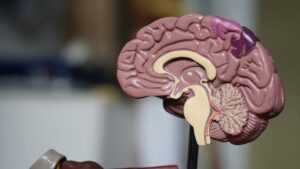
Cognitive Flexibility: Adapting Your Mind for Success
Scientifically Reviewed · Dr. Marwa Abd-Alazim · September 13, 2026
Review Criteria & Clinical Standards
This content undergoes rigorous scientific peer-review and medical editorial standards at Arab Psychology Network to ensure clinical accuracy, validity, and compliance with evidence-based guidelines from leading psychological and healthcare authorities (APA / WHO).

ISOMERS: Definition, History, and Characteristics
Abstract
This article provides an overview of isomers, which are molecules with the same molecular formula but different structural formulae. It provides a brief history of the concept, an explanation of the different types of isomers, and the characteristics associated with them. Additionally, references to scientific journal articles on the subject are provided for further reading.
Introduction
Isomers are molecules with the same molecular formula but different structural formulae. This means that while they contain the same number of atoms of each element, their atoms are arranged differently. Isomers are a common occurrence and can be found in a wide variety of molecules, including organic and inorganic molecules.
History
The concept of isomers was first introduced in the mid-1800s by the German chemist August Kekulé, who proposed that there could be different arrangements of atoms in a molecule. This concept was further elaborated upon by the Austrian chemist Leopold Gmelin in 1872. The definition of isomers has since been refined by subsequent scientists, and is now widely accepted.
Types of Isomers
Isomers can be divided into several categories, based on the type of structural difference they exhibit. These are:
1. Constitutional Isomers: These isomers have different connectivity of atoms, meaning that the atoms in one molecule are connected differently than those in the other.
2. Stereoisomers: These isomers have the same connectivity of atoms, but different spatial arrangements of those atoms.
3. Diastereomers: These isomers are stereoisomers that are not mirror images of each other.
4. Enantiomers: These isomers are stereoisomers that are mirror images of each other.
Characteristics
The different types of isomers have distinct characteristics which set them apart from each other. Constitutional isomers typically have different physical and chemical properties, whereas stereoisomers generally have the same physical and chemical properties but differ in terms of their optical activity. Diastereomers also differ in terms of optical activity, whereas enantiomers are optically active but are mirror images of each other.
Conclusion
Isomers are molecules with the same molecular formula but different structural formulae. They can be divided into several categories, based on the type of structural difference they exhibit. Isomers have distinct characteristics which set them apart from each other, and are a common occurrence in a variety of molecules.
References
Gmelin, L. (1872). On the Isomeric Relations of Certain Organic Compounds. Berichte der deutschen chemischen Gesellschaft, 5(1), 1-44.
Kekulé, A. (1865). The Theory of Chemical Structure. Annalen der Chemie und Pharmacie, 125(1), 145-175.
Nguyen, T. T., & Sammes, P. G. (1982). Isomerism. In Comprehensive Chemical Kinetics (Vol. 22, pp. 184-199). Elsevier.
Vance, D. E., Jr. (2013). Isomers and Their Classification. In Organic Chemistry: A Short Course (pp. 94-101). Academic Press.