William James: Architect of the American Mind
Scientifically Reviewed · Dr. Marwa Abd-Alazim · September 13, 2026
Review Criteria & Clinical Standards
This content undergoes rigorous scientific peer-review and medical editorial standards at Arab Psychology Network to ensure clinical accuracy, validity, and compliance with evidence-based guidelines from leading psychological and healthcare authorities (APA / WHO).
JAMES, WILLIAM: Overview and Legacy
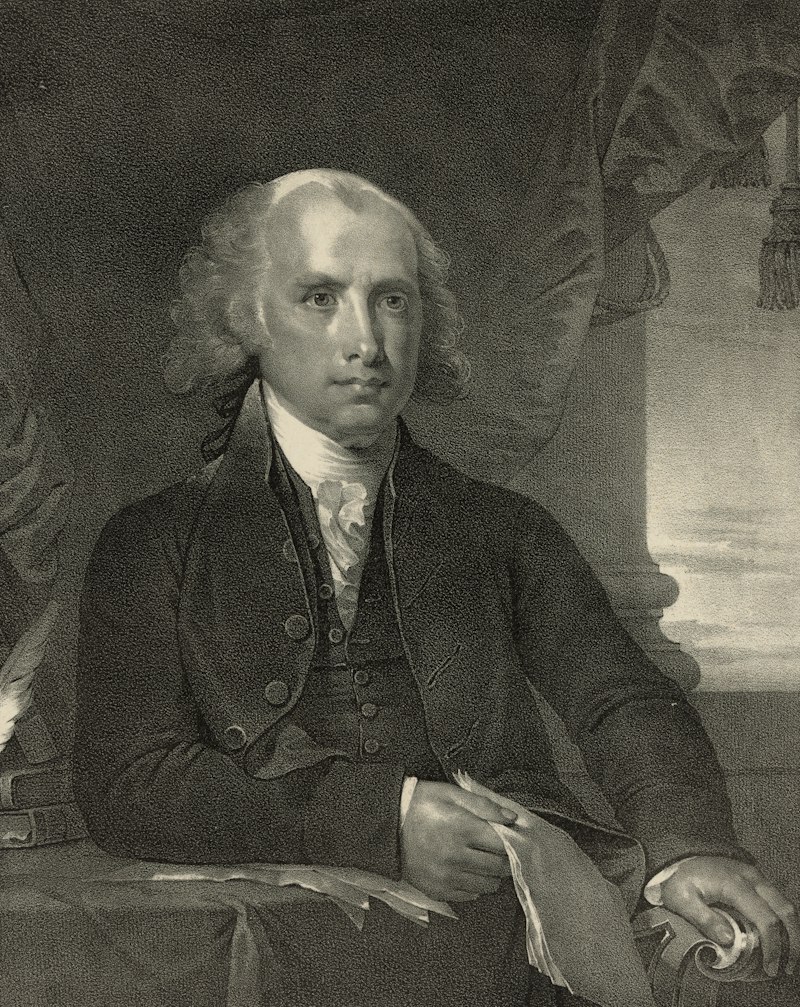
William James (1842-1910) stands as the towering figure who catalyzed the transition of psychology from a branch of philosophy into a rigorous, empirical science in the United States. Widely celebrated as the greatest American psychologist and one of the foremost philosophers of his time, James’s influence transcends disciplinary boundaries. His intellectual output provided foundational concepts for functional psychology, established pragmatism as a definitive American philosophical tradition, and profoundly shaped the study of religion and consciousness. James successfully synthesized the emerging physiological sciences of the late nineteenth century with deep humanistic inquiry, resulting in a body of work characterized by its literary elegance, insightful observation, and profound respect for the complexity of human experience. He introduced methodologies and concepts that remain central to the field, making him an indispensable figure in the history of ideas.
The core of James’s psychological legacy lies in his pioneering contribution to the school of thought known as functionalism. Unlike his European contemporaries, who focused on the structural elements of consciousness (what the mind is made of), James centered his inquiry on the utility and purpose of mental processes (what the mind is for). Functionalism emphasizes the adaptive role of consciousness and behavior, viewing mental life as a mechanism that enables an organism to successfully adjust to its environment. This perspective shifted the focus of psychological research from introspection and elemental analysis to the study of whole organisms in action, paving the way for later developments in evolutionary and cognitive psychology.
Beyond psychology, James revolutionized philosophy through his systematic articulation and popularization of pragmatism. He defined pragmatism not as a set of doctrines, but as a method for settling metaphysical disputes by tracing the practical consequences of conflicting conceptions. If an idea or belief yields tangible, beneficial results in experience, it possesses ‘cash value’ and can be considered true in that context. This utilitarian view of truth directly challenged traditional rationalist and empiricist assumptions, injecting a dynamic, action-oriented criterion into philosophical discourse. James’s commitment to examining ideas based on their practical efficacy underscores his overarching concern with the interaction between human thought and the lived world.
Early Life and Intellectual Development
Born in New York City into an intellectually stimulating and privileged family, William James was exposed to a cosmopolitan lifestyle early on, traveling extensively through Europe during his formative years. His father, Henry James Sr., was a prominent and unconventional Swedenborgian theologian, and his younger brother, Henry James, became one of the greatest novelists in the English language. This intense family environment fostered a deep appreciation for culture, literature, and intellectual debate, but also contributed to William’s lifelong struggle to define his own vocation. He experimented with painting and chemistry before ultimately enrolling at Harvard University’s Lawrence Scientific School in 1861, marking the beginning of his formal scientific training, which culminated in his earning an M.D. from Harvard Medical School in 1869, though he rarely practiced medicine.
The decade following his medical degree was marked by significant personal turmoil, including recurring bouts of depression, existential crises, and profound philosophical uncertainty regarding the issue of determinism versus free will. James wrestled intensely with the implications of the mechanistic worldview offered by the burgeoning physiological sciences, fearing that if all actions were predetermined, moral responsibility and genuine agency were illusory. This personal struggle, documented in his private journals, profoundly influenced his later psychological theories, particularly his emphasis on the role of belief and volition in shaping reality. His eventual breakthrough came when he resolved, through a voluntary act of belief, to accept the possibility of free will, a resolution that informed his pragmatic approach to belief systems later in life.
Despite his initial training in anatomy and physiology, James’s appointment to the Harvard faculty in 1872 signaled a gradual, yet decisive, shift toward the study of the mind. By 1875, he began teaching his first course on the relationship between physiology and psychology, and established what is often credited as the first psychological teaching laboratory in America, predating Wilhelm Wundt’s official laboratory in Leipzig. This institutional commitment cemented James’s role as the pioneer of the new scientific psychology in the United States, providing him with the platform to synthesize anatomical knowledge, philosophical inquiry, and introspective data into a coherent psychological system that would eventually define the field.
The Principles of Psychology (1890)
James’s magnum opus, The Principles of Psychology, published in two massive volumes totaling nearly 1,400 pages, is perhaps the most significant single text in the history of American psychology. The project, which took James over a decade to complete—a period he famously referred to as “the tedious years”—was intended to be a textbook, but evolved into a comprehensive, highly detailed synthesis of all known psychological knowledge, interwoven with his original theoretical insights. The book is lauded not only for its scientific rigor but also for its exceptional literary quality, making it accessible and compelling to both specialists and the general public, a rare feat for a scientific treatise of this magnitude.
The Principles immediately challenged the prevailing psychological structuralism imported from Europe. James rejected the notion that the mind could be neatly broken down into fundamental sensory and affective elements, arguing instead that consciousness is a continuous, holistic process. Key chapters introduced revolutionary concepts such as the Stream of Consciousness, the tripartite empirical Self, and a detailed analysis of emotion, habit, and will. By emphasizing the biological underpinnings of mental life and integrating evolutionary thought, James grounded psychological processes firmly within the adaptive framework of the organism, establishing the foundation of functionalism as a distinct psychological school.
Acknowledging the daunting size of the original text, James quickly produced an abridged version in 1892, titled Psychology: Briefer Course (or the “Jimmy” to the original’s “James”). This shorter version became the dominant standard textbook for introductory psychology courses across the United States for the next four decades, ensuring that James’s perspective—focused on the adaptive function of the mind and the empirical study of experience—shaped the education of generations of American students. The book’s lasting influence lies in its successful articulation of psychology as a discipline that must simultaneously address physiological mechanisms, subjective experience, and the functional role of the mind in adapting to the environment.
Functionalism: A New Approach to the Mind
James’s functionalism represented a decisive break from the introspection-heavy, element-focused structuralism championed by Wundt and Titchener. Functionalism focuses on the fundamental question: What is the purpose or function of mental processes? Rather than analyzing the contents of consciousness into primary sensations, functionalists examine how consciousness, perception, memory, and emotion serve to help the organism survive, adapt, and pursue goals in a complex world. This perspective was profoundly influenced by Darwinian evolutionary theory, viewing mental traits as adaptive characteristics that have been naturally selected for their utility in promoting adjustment to environmental demands.
A critical component of Jamesian functionalism is the analysis of habit. James argued that consciousness is a limited resource, and if every action required conscious deliberation, life would be paralyzing. Habits, defined as automatic, learned behaviors governed by the nervous system, serve the vital function of simplifying life and conserving conscious effort. By relegating routine tasks—such as walking, dressing, or writing—to the realm of habit, the mind is freed up to focus on novel, complex, or goal-directed problems. James stressed the ethical and psychological importance of forming good habits early in life, arguing that the architecture of one’s character is fundamentally built upon these automatic behavioral patterns.
Perhaps the most famous specific application of functional analysis is the James-Lange Theory of Emotion, developed independently but simultaneously with Danish physiologist Carl Lange. This theory reverses the common-sense understanding of emotion. Typically, one assumes that perception (e.g., seeing a bear) leads to the feeling of emotion (fear), which then triggers physiological arousal (running/trembling). James and Lange argued that the sequence is functional and inverted: the physiological response to the stimulus occurs first, and the subsequent perception of those bodily changes constitutes the emotional experience. As James famously stated, “We feel sorry because we cry, angry because we strike, afraid because we tremble.” This theory emphasizes the body’s adaptive response as functionally prior to the conscious feeling of emotion.
Pragmatism: Philosophy of Consequences
William James played the primary role in disseminating and popularizing pragmatism, transforming it from a niche philosophical concept (initially proposed by Charles Sanders Peirce) into a major movement. James defined pragmatism primarily as a method, a tool for clarifying ideas and resolving disputes by focusing solely on the practical difference that an idea makes in experience. If a theory or belief has no discernible, practical consequences, James argued, it is meaningless or merely an abstract verbal distinction. The pragmatic method demands that we perpetually look toward the future and consider the effects of our beliefs.
According to James, truth is not a static, eternal property of an idea, but rather a dynamic process. An idea is considered ‘true’ insofar as it is expedient, useful, and works well in practice to guide our actions and predict outcomes. James famously noted that truth “happens to an idea.” This functional definition of truth meant that truth is not absolute but is relative to human experience and the success of the idea in navigating the world. This approach challenged traditional epistemologies which sought truth in correspondence (matching reality) or coherence (logical consistency) alone, emphasizing instead the role of successful action.
The pragmatic philosophy allowed James to bridge the gap between scientific inquiry and humanistic concerns, particularly regarding religion and morality. In his influential lecture, “The Will to Believe,” James argued that in situations where evidence is insufficient to prove or disprove a hypothesis—especially regarding moral or religious questions—but where the choice is genuine, momentous, and forced, the individual has a right to believe based on the beneficial consequences that belief might yield. This stance was controversial, but it highlighted James’s overarching commitment to the practical utility of belief systems, asserting that beliefs are functional tools that help individuals live, thrive, and act morally, rather than merely reflecting metaphysical certainties.
The Varieties of Religious Experience
Published in 1902, The Varieties of Religious Experience: A Study in Human Nature originated from James’s prestigious Gifford Lectures on Natural Religion delivered at the University of Edinburgh. This book remains a cornerstone of the psychology of religion and is celebrated for its empirical and phenomenological approach to spirituality. Rather than engaging in theological debate about the objective truth of various religious doctrines, James focused exclusively on the psychological reality and functional consequences of personal religious experience.
James employed a comparative methodology, collecting and analyzing a vast array of personal testimonies, diary entries, conversion narratives, and accounts of mystical states from diverse historical and contemporary sources. He categorized these experiences, differentiating between the “religion of healthy-mindedness” (characterized by optimism, positive outlook, and a tendency to overlook evil) and the “religion of the sick soul” (marked by a profound awareness of suffering, evil, and the fundamental brokenness of the world). James concluded that the deepest spiritual insights often arise from the ‘sick soul’ perspective, where individuals overcome despair through profound religious conversion.
Ultimately, James asserted that while the specific theological doctrines derived from religious experiences might be culturally contingent, the experiences themselves—feelings of unity, peace, clarity, or presence—are psychologically real and impactful. He argued that the true value of religion lies in its psychological utility: its ability to provide meaning, sustain hope, and motivate moral action, particularly in individuals who feel otherwise lost or incomplete. This work legitimized the scientific study of subjective spiritual states, emphasizing that the positive functional outcomes of religious belief are sufficient grounds for their psychological validity, even if their transcendental origins remain scientifically unverified.
The Self and the Stream of Consciousness
The concept of the Stream of Consciousness is arguably James’s most famous and enduring contribution to psychology. He vehemently rejected the prevalent “brick and mortar” psychology of his era, which treated consciousness as a collection of discrete, static ideas or sensations. Instead, James argued that consciousness is like a river or a stream: it is continuous (never broken), personal (always belonging to a specific individual), constantly changing (never the same state twice), selective (always attending to some elements while ignoring others), and functional (aimed toward goals). This perspective provided the first comprehensive account of consciousness as a dynamic, flowing process.
In analyzing the individual personality, James developed a crucial distinction between the two aspects of the Self. The first is the Me, or the empirical Self—the object of introspection, or the self that is known. The Me is further divided into three components: the Material Self (one’s body, clothing, and possessions), the Social Self (the recognition one receives from others; James suggested a person has as many social selves as there are groups of people who recognize him), and the Spiritual Self (one’s inner, subjective being, including one’s moral sense, personality traits, and consciousness itself). The second aspect is the I, or the pure ego—the subject of introspection, the knower, which remains the constant point of reference behind all experience.
The selectivity inherent in the stream of consciousness is intrinsically linked to the function of attention and will. Since the environment bombards the senses with overwhelming stimuli, the mind must selectively choose which elements to focus on; consciousness is always directed toward objects relevant to the organism’s goals and survival. James defined the act of willing as the sustained, effortful maintenance of attention upon a difficult or undesirable idea, enabling one to act based on that idea despite distracting pressures. This emphasis on active selection and goal-directed behavior reinforced his functionalist viewpoint that the primary purpose of consciousness is to facilitate adaptation and effective action.
Impact and Influence on Modern Psychology
William James’s immediate influence was felt most strongly in the establishment of the American psychological tradition. His work inspired the Chicago School of functionalism, led by thinkers like John Dewey and James Rowland Angell, who formalized the functionalist approach into a coherent academic movement. Although functionalism was later challenged by the rise of behaviorism, which dismissed the study of consciousness entirely, James’s core commitment to studying the adaptive function of behavior and mental processes ultimately laid the groundwork for modern evolutionary psychology and the later cognitive revolution. His insistence that psychological phenomena must be understood in their environmental and biological context is a permanent part of the discipline.
Philosophically, James secured pragmatism as America’s most distinctive contribution to global thought. His philosophical legacy extended far beyond academia, influencing educational theory (through Dewey), legal theory (through Oliver Wendell Holmes Jr.), and political thought. By prioritizing practical consequences and utility over abstract metaphysical systems, James provided a framework that was uniquely suited to the dynamic and technologically oriented American temperament, encouraging an experimental, open-ended approach to intellectual and social problems. His willingness to integrate subjective experience into philosophical inquiry legitimized areas of thought previously dismissed as merely personal or religious.
In conclusion, William James remains a singular figure whose impact continues to resonate across multiple fields. His psychological insights into the self, habit, and emotion are still taught as fundamental concepts, and his functionalist perspective provides a crucial bridge between classical psychological inquiry and contemporary evolutionary and cognitive models. He successfully argued for a psychology that was both scientific and deeply human, forever setting the standard for the comprehensive study of the mind, the body, and their interaction with the environment.
References
-
Broughton, J. M. (2002). William James and the challenge of modernity. Lanham, MD: Lexington Books.
-
Goodwin, C. J. (2008). A history of modern psychology. Hoboken, NJ: Wiley.
-
Rorty, R. (1999). The philosophical lexicon. Princeton, NJ: Princeton University Press.
-
Sternberg, R. J. (2003). The psychology of intelligence. Cambridge, UK: Cambridge University Press.
-
Wright, J. (2002). William James: In the maelstrom of American modernism. New York, NY: Houghton Mifflin.