Datura Stramonium: Altered States and Cognitive Risk
Scientifically Reviewed · Dr. Marwa Abd-Alazim · September 13, 2026
Review Criteria & Clinical Standards
This content undergoes rigorous scientific peer-review and medical editorial standards at Arab Psychology Network to ensure clinical accuracy, validity, and compliance with evidence-based guidelines from leading psychological and healthcare authorities (APA / WHO).
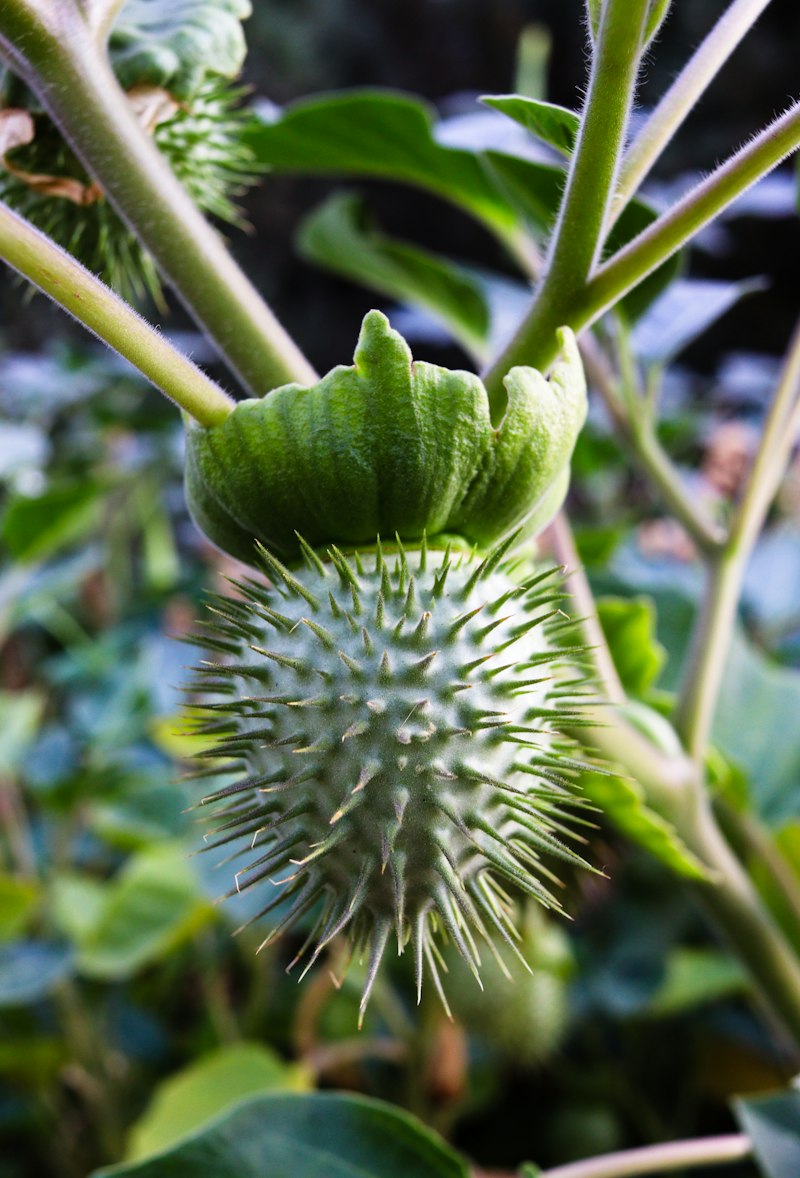
Jimsonweed (Datura stramonium) is a widely-distributed plant in the Solanaceae family, native to North and South America, and is now found in almost every part of the world. It is an annual or biennial herb, reaching a height of up to two meters, and is easily recognized by its large white or purple trumpet-shaped flowers. The plant contains several toxic alkaloids, including atropine, scopolamine, and hyoscyamine, which can cause hallucinations or even death if ingested in large amounts.
Jimsonweed has a long history of use in folk medicine and in religious and spiritual practices. It is believed to have been used by Native Americans for spiritual purposes, such as divination and healing. It is also known to have been used in European witchcraft, as well as by Chinese and Hindu healers. In more recent times, it has been used as a recreational hallucinogen, although its use is not recommended due to its high toxicity.
The plant is characterized by its large, white or purple trumpet-shaped flowers and its pungent, rank odor. The leaves are large and coarsely toothed, and the fruit is a spiny capsule containing many small black or brown seeds. The plant is also noted for its rapid growth, and can quickly form dense colonies in disturbed areas.
Jimsonweed is a highly toxic plant, and ingestion can cause a variety of symptoms, including hallucinations, disorientation, dry mouth, dilated pupils, and delirium. Ingestion of large amounts can lead to coma or even death. For this reason, it is important to avoid ingesting any part of the plant.
In conclusion, Jimsonweed is a widely-distributed plant with a long history of use in folk medicine and spiritual practices. Its toxicity makes ingestion of any part of the plant dangerous and potentially life-threatening.
References
Buchanan, K. A., & Gruenwald, J. (2020). Datura stramonium. In J. Gruenwald, P. J. Hess, B. M. Meinhold, & R. S. Rivkin (Eds.), PDR for Herbal Medicines (4th ed., pp. 589-590). Montvale, NJ: Thomson Reuters.
Coupland, K., & Dawson, A. H. (2005). Plants of the world: An illustrated encyclopedia of vascular plants. Portland, OR: Timber Press.
Lai, S., & Chen, W. (2018). Jimsonweed poisoning: A review. Clinical Toxicology, 56(6), 474-478. doi:10.1080/15563650.2018.1435678
Schultes, R. E. (1970). Hallucinogenic plants: A golden guide. New York, NY: Golden Press.