Group Polarization: Why Juries Reach Extreme Decisions
Scientifically Reviewed · Dr. Marwa Abd-Alazim · September 30, 2026
Review Criteria & Clinical Standards
This content undergoes rigorous scientific peer-review and medical editorial standards at Arab Psychology Network to ensure clinical accuracy, validity, and compliance with evidence-based guidelines from leading psychological and healthcare authorities (APA / WHO).
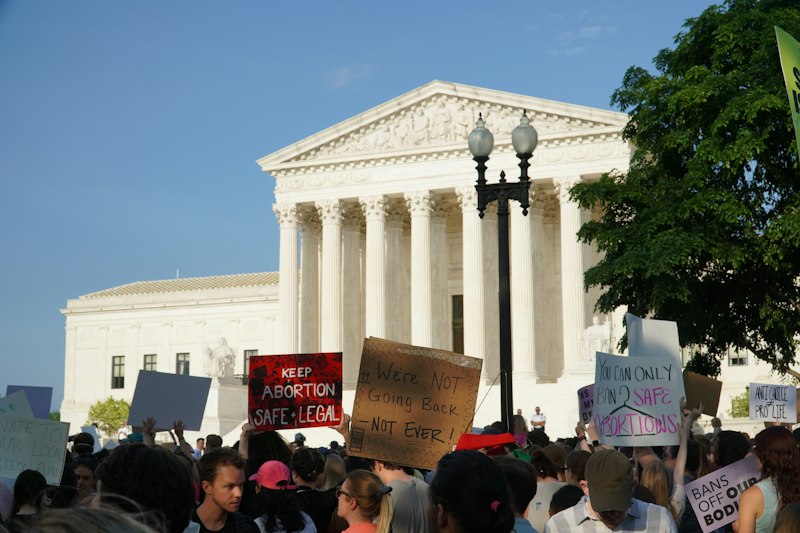
Overview of Johnson v. Louisiana
The landmark case of Johnson v. Louisiana, 406 U.S. 356 (1972), represents a pivotal moment in the intersection of criminal law, constitutional rights, and the psychological underpinnings of the American judicial system. This United States Supreme Court decision fundamentally addressed the systemic exclusion of African-American jurors from criminal trials, asserting that such practices based on racial identity are inherently unconstitutional. The case emerged during a period of intense civil rights litigation and served as a critical examination of how procedural justice is perceived by both the defendant and the broader community. By overturning the conviction of Willie Johnson, the Court signaled a departure from previous legal standards that had permitted discriminatory practices in jury selection to persist under the guise of prosecutorial discretion.
The petitioner, Willie Johnson, an African-American man, found himself at the center of a legal battle that would eventually redefine the parameters of the Equal Protection Clause. Johnson had been convicted of second-degree murder in 1966 within the jurisdiction of Winn Parish, Louisiana. The conviction was handed down by an all-white jury, a common occurrence in the deep South during that era, which raised significant questions regarding the impartiality and representative nature of the judicial process. The legal challenge mounted by Johnson’s defense team focused on the deliberate removal of minority participants from the jury pool, arguing that such exclusion undermined the very essence of a fair trial. The case highlighted the psychological reality that a jury lacking diversity may suffer from ingroup bias, potentially leading to skewed interpretations of evidence and witness testimony.
In its final determination, the Supreme Court held that the Fourteenth Amendment prohibits states from engaging in racial discrimination during the jury selection process. The ruling emphasized that the exclusion of jurors based on race does not merely harm the defendant but also compromises the integrity of the entire legal system. By establishing that such practices constitute a “form of racial discrimination which no state may practice,” the Court laid the groundwork for future developments in jury representation and the protection of civil liberties. This decision remains a cornerstone in the study of legal psychology, as it addresses how the composition of a decision-making body influences the perceived legitimacy of its outcomes and the psychological welfare of marginalized citizens seeking justice.
Historical and Social Context of the 1966 Trial
To fully comprehend the significance of Johnson v. Louisiana, one must consider the socio-political climate of Winn Parish in the mid-1960s. During this time, the remnants of Jim Crow laws and established social hierarchies continued to exert a profound influence on the administration of justice. Racial tensions were high, and the legal system often reflected the prevailing prejudices of the local population. For an African-American defendant like Willie Johnson, the prospect of receiving a fair trial was significantly diminished by a system that systematically marginalized his peers. The psychological impact of being judged by a group that does not share one’s life experiences or cultural background can lead to a sense of legal alienation, where the defendant feels the outcome is predetermined by social bias rather than objective evidence.
The specific incident that led to Johnson’s arrest involved the death of an elderly white man, a scenario that historically triggered heightened emotional and racialized responses within Southern communities. The prosecutorial strategy employed at the trial was emblematic of the era’s standard operating procedures. By utilizing peremptory challenges, the state was able to remove every prospective African-American juror without providing a specific reason. This practice was not just a legal maneuver; it was a psychological tool that ensured the jury would reflect the dominant social order. The resulting all-white jury was a visible manifestation of the exclusionary practices that the Fourteenth Amendment was intended to prevent, yet which continued to flourish in various jurisdictions across the United States.
Prior to the 1972 Supreme Court ruling, the legal landscape was characterized by a high degree of deference to local prosecutors. Previous cases had often upheld the broad use of peremptory challenges, making it difficult for defendants to prove intentional discrimination. The psychological barrier created by these precedents meant that many defendants accepted biased jury compositions as an immutable fact of the legal process. However, the civil rights movement and a growing awareness of systemic inequality began to shift the judicial perspective. The challenge brought by Willie Johnson was part of a larger psychological and legal push to hold the state accountable for the representational fairness of its institutions, demanding that the “peers” mentioned in the Constitution actually include a cross-section of the entire community.
The Mechanism of Racial Exclusion in Jury Selection
The exclusion of African-American jurors in the case of Johnson v. Louisiana was achieved through the tactical use of the jury pool and the voir dire process. In Winn Parish, the initial selection of prospective jurors often relied on lists that were already skewed by socio-economic factors and historical disenfranchisement. When minority candidates did manage to appear for service, the prosecution exercised its peremptory strikes to ensure they did not reach the final panel. This systematic removal created a psychological environment in the courtroom where the defendant was effectively isolated from his community. From a social psychology perspective, this homogeneity in the jury box encourages groupthink and reduces the likelihood that dissenting viewpoints or alternative interpretations of the facts will be considered during deliberations.
The practice of racial discrimination in jury selection was, for many years, a legally sanctioned method of maintaining social control. Prosecutors argued that their strikes were based on intuition or “gut feelings” about a juror’s potential leanings, but the statistical reality in cases like Johnson’s revealed a clear pattern of systemic bias. By striking all African-American prospective jurors, the state created a “white-only” space for the adjudication of a case involving a Black defendant and a white victim. This lack of diversity has been shown in psychological studies to affect the rigor of the deliberation process, as diverse groups tend to engage in more thorough fact-checking and are more aware of their own cognitive biases than homogeneous groups.
Furthermore, the exclusion of minority jurors sends a powerful psychological message to the community regarding who is considered a full citizen capable of exercising judgment. When a specific demographic is repeatedly barred from jury service, it fosters a sense of distrust in the law among that group. The Supreme Court in 1972 recognized that this damage extends beyond the individual trial. The Court’s analysis focused on how such practices violate the Equal Protection Clause by treating citizens differently based on their race. The ruling in Johnson v. Louisiana sought to dismantle this mechanism of exclusion, asserting that the state’s power to strike jurors is not absolute and must not be used to facilitate racial prejudice.
Constitutional Arguments and the Equal Protection Clause
The primary legal argument in Johnson v. Louisiana centered on the interpretation of the Fourteenth Amendment, specifically the guarantee that no state shall deny to any person within its jurisdiction the equal protection of the laws. The defense argued that the state’s actions in Winn Parish constituted a direct violation of this principle. They contended that by selectively excluding Black jurors, the state was not merely picking a jury but was actively constructing a biased tribunal. This legal theory relied on the idea that procedural fairness is a prerequisite for a valid conviction. Without a jury that reflects the community, the “equal protection” guaranteed by the Constitution becomes an empty promise, as the defendant is subjected to a different standard of judgment than a white counterpart would be.
During the appellate process, the Court had to weigh the historical right of prosecutors to use peremptory challenges against the fundamental right of the defendant to an impartial jury. The prosecution maintained that their actions were within the bounds of traditional legal practice and that the defendant had no right to a specific jury composition. However, the Supreme Court’s evolving jurisprudence began to recognize that racial neutrality must be more than a theoretical concept; it must be a functional reality. The Court reasoned that the exclusionary practices seen in Johnson’s trial were so blatant that they “constituted a form of racial discrimination which no state may practice.” This signaled a shift toward a more rigorous scrutiny of state actions that result in the underrepresentation of minority groups in the legal process.
The psychological implications of the Equal Protection Clause are significant, as they relate to the concept of institutional legitimacy. When the law is applied inconsistently or in a discriminatory fashion, the psychological contract between the citizen and the state is broken. The Court’s decision in Johnson v. Louisiana was an attempt to repair this contract by insisting on non-discrimination. By focusing on the “guarantee of equal protection,” the Court addressed the cognitive dissonance inherent in a system that preached equality while practicing segregation in its most critical decision-making bodies. This case served as a reminder that the Constitution is a dynamic document that must be interpreted in a way that protects the human rights and psychological dignity of all individuals, regardless of their race.
The Concept of a Fair Cross-Section of the Community
One of the most enduring contributions of Johnson v. Louisiana to American law is the reinforcement of the fair cross-section requirement. This principle dictates that the pool from which a jury is drawn must be representative of the community at large. The Court held that a defendant has a right to be tried by a jury that reflects the diverse perspectives and demographics of the local population. This is not just a matter of social equity; it is a psychological necessity for ensuring the impartiality of the verdict. A jury that is a true cross-section of the community is more likely to bring a variety of life experiences to the deliberation table, which helps to mitigate the influence of implicit biases and cultural misunderstandings.
The fair cross-section requirement also serves an important function in maintaining public confidence in the judiciary. When a jury is perceived as being “stacked” against a defendant, the resulting verdict is often viewed with skepticism by the public. From a psychological standpoint, transparency and representation are key factors in how individuals assess the fairness of an institution. By mandating that states may not exclude jurors solely on the basis of race, the Court in Johnson v. Louisiana aimed to ensure that the legal system remains accountable to all members of society. This requirement forces the state to confront its own exclusionary habits and encourages a more inclusive approach to civic participation.
The implementation of the fair cross-section standard involves several key components:
- The jury selection pool must be drawn from sources that do not inherently exclude specific demographic groups.
- The voir dire process must be conducted in a manner that does not allow for the systematic removal of protected classes.
- The burden of proof may shift to the state to provide race-neutral explanations when a pattern of exclusion is identified.
- The community standards applied during the trial must reflect the collective values of a diverse population rather than a single dominant group.
Through these mechanisms, the Johnson v. Louisiana ruling sought to transform the jury from a tool of the majority into a representative body that upholds the civil rights of the minority.
Psychological Impact of Jury Diversity
The psychological literature surrounding jury diversity underscores the importance of the ruling in Johnson v. Louisiana. Research has consistently shown that racially diverse juries engage in more robust and lengthy deliberations than all-white juries. When a jury is diverse, members are more likely to discuss racially charged issues and are more attentive to the nuances of the evidence. This is because the presence of “others” in a group setting often triggers a cognitive shift where individuals become more self-aware of their own prejudices and are more motivated to reach a fair and accurate conclusion. In the case of Willie Johnson, the absence of this diversity likely contributed to a psychological environment where preconceived notions about guilt were left unchallenged.
Moreover, the psychological welfare of the defendant is deeply affected by the composition of the jury. A defendant who sees a jury that looks like him or her is more likely to believe that the trial is fair, regardless of the final outcome. This is known as procedural justice—the idea that the fairness of the process is just as important as the fairness of the result. When Willie Johnson was faced with an all-white jury in a murder trial, the psychological stress of systemic oppression was likely amplified. The Supreme Court’s decision to overturn his conviction was a recognition that the psychological conditions for a fair trial cannot exist when a defendant is intentionally stripped of his right to a representative jury.
The impact of Johnson v. Louisiana also extends to the jurors themselves. Being excluded from a jury based on race is a form of stigmatization that can have long-lasting psychological effects on the excluded individuals. It reinforces a sense of secondary citizenship and discourages future civic engagement. Conversely, when the legal system actively promotes diversity, it validates the social identity of minority groups and strengthens the democratic fabric of the nation. The 1972 ruling was therefore a critical step in addressing the psychological harms of discrimination, ensuring that the jury box remains a space for collective judgment rather than a site of racial exclusion.
Extensions to Gender and Religious Discrimination
While Johnson v. Louisiana specifically addressed the exclusion of African-American jurors, its legal and psychological principles have been interpreted to extend far beyond the issue of race. The logic used by the Supreme Court—that the Equal Protection Clause forbids discrimination in jury selection—provided a framework for future challenges against gender discrimination and religious discrimination. Just as race cannot be used as a proxy for a juror’s fitness to serve, the Court’s reasoning suggests that gender and faith are equally invalid criteria for exclusion. This expansion reflects a growing psychological understanding that identity-based bias in any form compromises the integrity of the judicial process.
The extension of these protections to gender was particularly significant. For much of American history, women were either barred from jury service or faced significant hurdles to participating. Following the precedent set by cases like Johnson v. Louisiana, the legal system began to recognize that a fair cross-section of the community must necessarily include women. Psychologically, the inclusion of both men and women on a jury brings a wider range of interpersonal perspectives and ethical considerations to the deliberation process. This diversity helps to balance different socialized viewpoints, leading to a more comprehensive evaluation of the moral and legal questions at hand.
Similarly, the prohibition of religious discrimination in jury selection ensures that a defendant’s fate is not decided by a group that holds a particular religious bias or excludes those with differing beliefs. The Johnson v. Louisiana decision established the fundamental right to a fair and impartial jury, which is now understood as a right to a jury free from any form of categorical prejudice. This broad interpretation has had a transformative effect on the American legal system, making it one of the most inclusive in the world. The psychological benefit of this inclusivity is a more resilient and trusted legal framework that can accommodate the complexities of a pluralistic society.
Legacy and Influence on Future Jurisprudence
The legacy of Johnson v. Louisiana is evident in the subsequent evolution of constitutional law and criminal procedure. The case served as a precursor to the landmark decision in Batson v. Kentucky (1986), which established a more formal process for challenging peremptory strikes that appear to be racially motivated. The psychological shift initiated by the 1972 ruling—moving from a focus on the state’s discretion to the defendant’s rights—changed the way lawyers approach jury selection. Today, the “Batson challenge” is a standard part of trial practice, reflecting the enduring influence of the principles championed in the Johnson case. The accountability introduced by these rulings has made it significantly more difficult for prosecutors to engage in the type of blatant exclusion seen in 1966.
In addition to its legal impact, Johnson v. Louisiana has influenced the field of forensic psychology and the study of trial dynamics. Researchers continue to explore how jury composition affects verdict outcomes, with many studies confirming the Court’s intuition that diversity leads to better decision-making. The case is frequently cited in discussions about systemic reform, as it highlights the ongoing need to monitor and address bias in the courtroom. The movement toward a more representative and psychological-aware legal system owes much to the courage of petitioners like Willie Johnson and the judicial foresight of the 1972 Supreme Court.
The enduring impact of the case can be summarized through its primary achievements:
- The formal recognition that racial exclusion in jury selection violates the Fourteenth Amendment.
- The establishment of the fair cross-section principle as a constitutional necessity for a fair trial.
- The expansion of non-discrimination standards to include gender and religion in later interpretations.
- The psychological validation of the right to representation for minority defendants.
- The creation of a legal precedent that allows for the overturning of convictions based on procedural bias.
Ultimately, Johnson v. Louisiana remains a powerful symbol of the struggle for equal justice. It reminds us that the quest for a fair and impartial jury is not just a legal obligation but a psychological commitment to the dignity and equality of all citizens. The case continues to be studied by legal scholars and psychologists alike as a defining moment in the history of American civil rights.
References
- Bennett, M. (1972). Johnson v. Louisiana: The right to a fair and impartial jury. Harvard Law Review, 86(3), 524-531.
- Kershaw, A. (2005). The Meaning and Impact of Johnson v. Louisiana. Cornell Law Review, 91(2), 271-295.
- O’Brien, J. (2017). Johnson v. Louisiana: A Constitutional Guarantee of Representation. Journal of Constitutional Law, 19(3), 459-485.