Gestalt Psychology: Seeing Shapes That Aren’t There
Scientifically Reviewed · Dr. Marwa Abd-Alazim · September 2, 2026
Review Criteria & Clinical Standards
This content undergoes rigorous scientific peer-review and medical editorial standards at Arab Psychology Network to ensure clinical accuracy, validity, and compliance with evidence-based guidelines from leading psychological and healthcare authorities (APA / WHO).
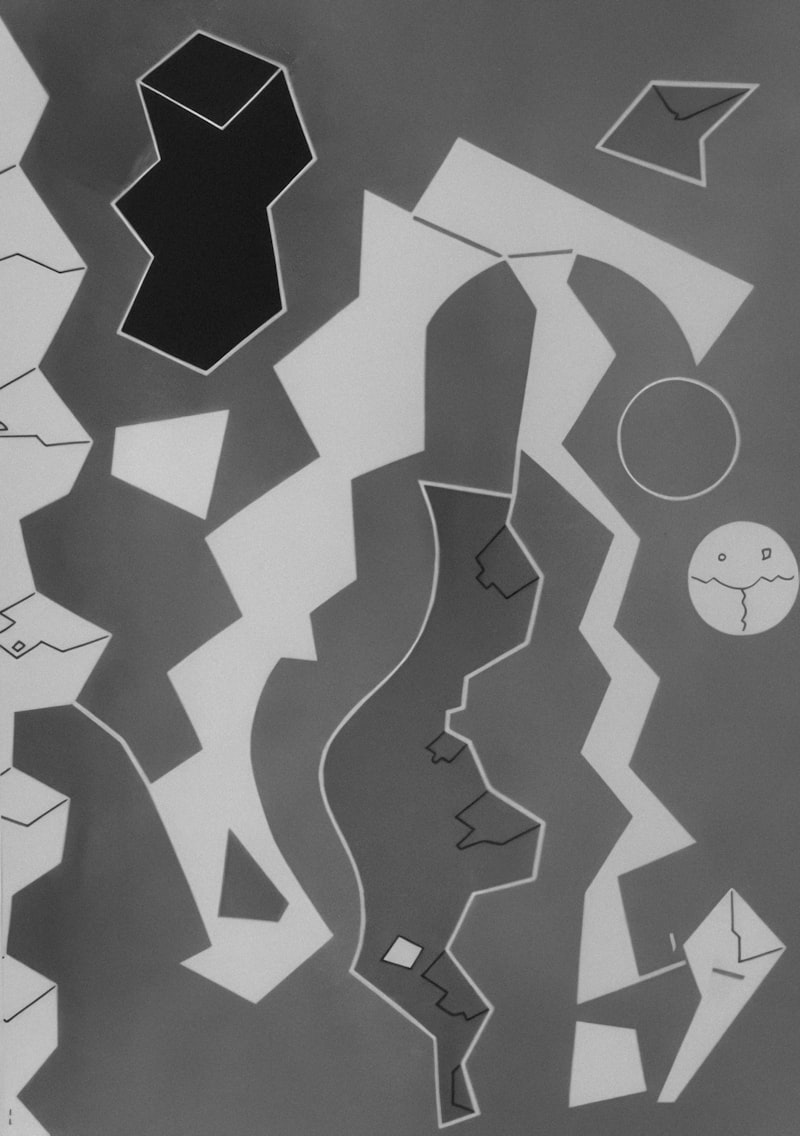
The Kanizsa Figure is a foundational concept in the study of visual perception, specifically concerning the phenomenon of illusory or subjective contours. A Kanizsa Figure is defined as an optical illusion that induces the perception of distinct, clearly defined boundaries and shapes where no physical luminance differences or lines exist in the stimulus itself. These illusory contours define a shape that appears perceptually complete and, crucially, seems to possess a higher degree of brightness or whiteness compared to the surrounding background, a phenomenon often termed anomalous brightness enhancement. This powerful perceptual effect demonstrates the constructive nature of the human visual system, highlighting how the brain actively interprets and organizes fragmented visual information to achieve structural coherence and completeness, rather than passively receiving raw sensory input.
The existence of such robust illusory percepts challenges purely bottom-up models of vision, suggesting that higher-level cognitive processes and inherent organizational principles are immediately engaged during the initial stages of visual processing. The shapes perceived, though defined only by the arrangement of the inducing elements—often called “pacmen” or inducers—are compellingly real to the observer. The study of the Kanizsa Figure provides critical insights into how the visual system interpolates missing information, a necessary function for navigating complex, partially obscured environments in the real world. This interpolation mechanism is not merely an intellectual deduction but a fundamental, automatic function of the visual cortex, confirming the role of context in shaping our perceived reality.
Definition and Core Characteristics
The Kanizsa Figure, named after the Italian psychologist Gaetano Kanizsa, who systematically documented and popularized these effects in the 1950s and 1970s, stands as a prime illustration of the Gestalt principles of perceptual organization. The core characteristic is the appearance of illusory contours, which are perceived edges that are not physically present in the stimulus input. These contours must be distinguished from common edge detection, as they arise solely from the spatial relationships and orientations of the inducing elements. For instance, the precise placement of gaps or angles in the inducing figures dictates the shape, size, and clarity of the resulting illusory object, suggesting a highly sensitive dependence on spatial geometry. The perceived figure is not only bounded by these non-existent lines but also appears to lie in front of the inducing figures, demonstrating an automatic assignment of depth and occlusion.
A secondary, but equally important, characteristic is the perceived brightness enhancement within the area enclosed by the illusory contours. The illusory shape, such as a triangle or square, often appears significantly brighter, whiter, or more saturated than the background on which the inducing figures rest, even though the actual luminance of the perceived figure and the background are identical. This phenomenon, known as anomalous contrast or subjective brightness, underscores the non-linear relationship between physical light input and perceptual output. The brightness increase is a direct consequence of the visual system attempting to “fill in” the surface bounded by the interpolated edges, treating the illusory shape as a distinct, occluding surface layer. This filling-in process is a critical mechanism studied extensively in visual neuroscience, linking contour formation directly to surface perception.
The compelling nature of the Kanizsa Figure lies in the immediacy and stability of the illusion. Unlike some ambiguous figures that alternate between interpretations, the illusory shape in a Kanizsa display is typically stable and robust across changes in viewing distance and duration. Furthermore, the illusion is not easily suppressed by conscious effort, confirming that the processing leading to the illusory percept occurs early in the visual pathway, likely before extensive cognitive input can modify the resulting image. The figure thus serves as a powerful experimental tool for isolating the neural mechanisms responsible for boundary assignment, surface integration, and the fundamental perceptual drive toward closure and good continuation.
The Canonical Example: The Kanizsa Triangle
The most famous and widely cited example is the Kanizsa Triangle. This specific configuration is induced by three black circles, often referred to as “pacmen,” which are strategically positioned in the apexes of an imaginary triangle. Each of these black circles has a precise 60-degree wedge removed from its structure. The critical spatial arrangement is such that these removed wedges are oriented inward, and their edges align perfectly with the sides of the illusory triangle. The visual system automatically interprets the gaps in the three inducing circles as evidence of a white, superimposed triangle occluding the black circles. This interpolation creates the sharp, white triangular shape that appears to float above the inducing elements, even though the entire area defined by the white triangle has the exact same physical luminance as the surrounding background.
The careful geometry of the inducing elements is paramount to the success of the illusion. If the angles of the removed wedges are altered, or if the orientation of the pacmen is rotated so that the gaps no longer align to form continuous lines, the clarity and intensity of the illusory triangle diminish rapidly or disappear entirely. This strict reliance on precise alignment emphasizes that the visual system utilizes specific local cues—the termination points, corners, and edges of the inducing elements—to extrapolate the global boundary. The perceived sharpness of the illusory triangle’s edges rivals that of physically drawn lines, providing compelling evidence that the visual machinery dedicated to real edge detection is recruited in the creation of these subjective contours.
The Kanizsa Triangle beautifully encapsulates the concepts of amodal completion and figure-ground segregation. The white triangle is immediately segregated from the background and perceived as the figure, while the black circles are perceived as partially occluded objects lying behind the superior, white shape. This segregation is accompanied by the characteristic brightness enhancement, making the perceived white triangle seem significantly brighter than the white background plane. This effect is crucial because it demonstrates that the visual system does not simply draw a line, but rather constructs a complete, volumetric surface that adheres to the rules of depth perception and light interaction, suggesting a powerful mechanism designed to resolve ambiguities in natural scenes where objects often overlap.
Historical Context and Gestalt Theory
While similar phenomena had been noted earlier, Gaetano Kanizsa’s systematic documentation cemented the importance of these figures within psychological research. His work, particularly in the 1950s and 1970s, provided the compelling visual evidence necessary to support and revitalize the principles laid down by the early 20th-century Gestalt psychologists. The Gestalt school emphasized that “the whole is greater than the sum of its parts,” arguing that perception is driven by inherent organizational tendencies rather than simply by the accumulation of elemental sensory data. The Kanizsa Figure serves as a perfect illustration of several key Gestalt laws, notably the Law of Closure and the Law of Good Continuation.
The Law of Closure dictates that the visual system tends to perceive complete, closed figures even when parts of the contour are missing. In the Kanizsa Triangle, the gaps in the pacmen are closed by the interpolated illusory lines, forming a stable, complete triangle. Similarly, the Law of Good Continuation suggests that elements that appear to form a continuous line or shape are perceived as belonging together. The aligned edges of the 60-degree wedges provide the necessary cues for the visual system to extend these implicit lines, creating the continuous boundary of the illusory shape. Kanizsa figures thus provided concrete, quantitative evidence that these laws are not merely descriptive concepts but represent active, demonstrable mechanisms within the visual processing hierarchy.
Prior to Kanizsa, researchers often focused on simple retinal stimuli. Kanizsa’s work shifted the focus toward the cognitive and constructive aspects of vision, proving that meaningful perception often relies on generating information that is not physically present in the input signal. This emphasis on subjective, constructed reality paved the way for modern neurophysiological investigations into how the brain actively resolves conflicting or incomplete information. The historical significance of the Kanizsa Figure lies in its ability to bridge theoretical Gestalt psychology with empirical, neuroscientific research, making it a pivotal benchmark illusion in the fields of perception and cognitive science.
Mechanisms of Illusory Contour Perception
The question of how the visual system generates illusory contours has been a central focus of perception research, leading to various models encompassing both low-level sensory processing and higher-level cognitive interpretation. Early explanations often leaned heavily on cognitive inferencing—the idea that the brain “guesses” that an occluding object must be present to explain the missing segments of the inducing figures. However, neurophysiological evidence strongly suggests that the formation of these contours is a relatively automatic process occurring early in the visual pathway, well before conscious cognitive judgment.
A crucial piece of evidence comes from studies of the visual cortex, particularly in areas like V2 (the secondary visual cortex). Research using single-cell recordings in primates has demonstrated that neurons in V2 respond specifically to illusory contours generated by Kanizsa figures, just as they would respond to physically present lines or edges. Crucially, V1 neurons (the primary visual cortex), which typically process basic orientation and edges, show little to no specific response to the illusory lines themselves. This suggests that the interpolation of the contour occurs between V1 and V2, where orientation signals from the inducing edges are integrated to create the perceived boundary. This process involves non-classical receptive field mechanisms, where the response of a neuron is modulated by stimuli presented outside its immediate receptive field, facilitating the linkage of spatially distant features.
Current models often propose a two-stage mechanism. The first stage involves the local processing of the terminators (the sharp corners or endpoints of the pacmen) in V1. These signals are then fed forward to V2, which acts as an integration hub. V2 neurons, sensitive to complex spatial arrangements, then fire selectively when the local cues align in a way that implies a continuous boundary, effectively drawing the illusory line. This neural activity in V2 provides the physiological substrate for the subjective experience of the contour. This mechanism is thought to be highly adaptive, allowing organisms to maintain stable perception of objects partially hidden by foliage or other occluders, providing an evolutionary advantage by ensuring object constancy.
Brightness Enhancement and Anomalous Contrast
One of the most perplexing aspects of the Kanizsa Figure is the anomalous brightness enhancement—the perceived difference in luminance between the illusory figure and the physically identical background. This suggests that the visual system is not only drawing a boundary but is also filling in the enclosed surface with a heightened sense of luminance. This phenomenon is distinct from standard simultaneous contrast effects, where a gray patch appears brighter against a dark background, because in the Kanizsa illusion, the background and the illusory figure share the same physical photometric value.
The leading hypothesis for anomalous contrast involves the concept of surface segregation and boundary ownership. Once the illusory contour is formed (likely in V2), the visual system assigns “ownership” of this boundary to the newly constructed occluding surface (the white triangle). This ownership designation triggers a mechanism to fill the enclosed region. This filling-in process, often modeled computationally as a diffusion process across the visual field, operates differently depending on whether the region is bounded by real or illusory contours. In the case of the Kanizsa Figure, the visual system interprets the region as belonging to an object that is closer and occluding, which somehow triggers an over-compensation in the perceived lightness, resulting in the subjective increase in brightness.
Furthermore, research suggests that the brightness enhancement is inherently linked to the clarity of the contour. If the inducing elements are arranged poorly, resulting in a weak or ambiguous contour, the perceived brightness increase is significantly reduced. This strong correlation supports the idea that the contour formation process must precede and drive the surface filling mechanism. The illusory brightness highlights the fundamental challenge of perception: the visual system must estimate the reflectance properties of surfaces (how white or black they are) independently of the actual illumination. The Kanizsa illusion demonstrates that the system sometimes makes systematic “errors” based on context and boundary interpretation, leading to powerful subjective experiences that deviate from objective reality.
Neural Correlates and Visual Processing
Modern neuroscientific techniques, including functional magnetic resonance imaging (fMRI) and electroencephalography (EEG), have provided robust evidence pinpointing the neural substrates involved in perceiving Kanizsa figures. As mentioned, the V2 cortex is centrally involved in the contour formation itself, showing heightened activity when subjects view Kanizsa displays compared to control displays where the inducers are misaligned and no contour is perceived. However, the processing extends beyond V2, involving a complex network of visual areas.
Activity related to the illusory contour has also been observed in V3 and V4, areas known for processing more complex features, shapes, and color constancy. V4, in particular, is implicated in complex shape recognition and surface perception, suggesting that the integration of the illusory boundary into a coherent, recognizable shape occurs in these higher visual areas. The brightness enhancement aspect is also linked to activity in V4 and potentially areas of the parietal lobe, reflecting the integration of contour, depth, and surface qualities into a final, coherent percept.
The time course of neural activity reveals that the perception of the illusory contour is remarkably fast. EEG studies show distinct components of event-related potentials (ERPs) corresponding to the Kanizsa illusion appearing within 100 to 150 milliseconds after stimulus presentation. This rapid processing speed reinforces the conclusion that the interpolation is an automatic, mandatory process of the early visual system, rather than a slow, deliberative cognitive function. The study of these neural correlates confirms that the brain treats the illusory figures with the same computational effort and recognition resources reserved for physically present objects, underscoring the power of predictive coding in visual processing.
Variations and Applications of Kanizsa Figures
While the triangle is the classic configuration, Kanizsa figures can be adapted to induce the perception of virtually any shape—squares, circles, pentagons, or even complex three-dimensional objects—by adjusting the placement and termination points of the inducing elements. A common variation involves using lines or grids instead of solid pacmen, where gaps in the grid lines create the perception of a white, occluding bar (often called the Ehrenstein illusion, which shares conceptual similarities but utilizes simpler radial line termination cues).
Another important variation is the use of color or shading. If the inducing elements are colored (e.g., blue pacmen), the illusory figure often takes on a slight hue contrast, though the brightness enhancement remains the most dominant subjective effect. Furthermore, the illusion can be adapted to study motion perception; for example, inducing elements can be moved to create the perception of an illusory boundary moving across the visual field, allowing researchers to study how the visual system processes dynamic contour information.
The applications of Kanizsa figures extend beyond fundamental research. They are used clinically to assess visual processing deficits in patients with certain neurological conditions, as the ability to perceive these figures relies on intact mechanisms of contour integration and V2 functionality. In computer vision, the principles derived from Kanizsa figures inform algorithms designed for boundary completion and image segmentation, helping machines interpret incomplete or noisy visual data by mimicking the brain’s ability to fill in gaps based on context and geometric expectation. Thus, the Kanizsa Figure remains a vital tool for understanding the constructive, predictive nature of human vision.
Critique and Alternative Explanations
Despite the strong consensus regarding the involvement of V2 and Gestalt principles, the exact computational mechanism underlying the anomalous brightness enhancement remains a subject of ongoing debate and alternative theorizing. While the standard explanation centers on boundary ownership and surface filling, some researchers propose models that emphasize local inhibitory processes rather than global integration. For instance, theories based on lateral inhibition suggest that the perceived brightness is caused by the strong dark contrast of the inducing elements (the black pacmen) inhibiting the activity in nearby retinal areas, but not in the area enclosed by the illusory contour, leading to a relative increase in perceived luminance within the enclosed region.
A significant theoretical challenge is distinguishing between truly low-level, automatic processing and rapid, yet essential, cognitive inference. While V2 activity is rapid, some argue that the integration requires minimal interpretive input—the visual system must infer occlusion to justify the missing parts of the pacmen. If the arrangement is perceived merely as three separate, incomplete circles, the illusion fails. Therefore, the inference of a closer, occluding object is arguably necessary for the V2 neurons to fire correctly, suggesting a tightly interwoven feedback loop between basic contour detection and interpretive organizational principles.
The robustness of the Kanizsa figure, however, consistently favors explanations rooted in automatic, pre-attentive processing. The primary alternative explanations often focus on refining the specific mathematical or neural algorithms that govern the interpolation process, rather than rejecting the fundamental conclusion that the visual system actively constructs reality based on cues of closure and continuity. The Kanizsa Figure continues to serve as a critical test case for any comprehensive theory of visual consciousness and perception, demanding that models account for the system’s capacity to create stable, subjectively real percepts from incomplete physical stimuli.
- The Kanizsa Figure demonstrates the constructive nature of perception.
- Illusory contours are generated primarily in the V2 visual cortex.
- The illusion relies heavily on the Gestalt principles of Closure and Good Continuation.
- Anomalous brightness enhancement is a key characteristic, indicating surface filling.
- The precise geometry of the inducing elements, such as the 60-degree wedge in the triangle, is essential for the illusion’s clarity.