Youth Socialization: Decoding the Secret Lives of Kids
Scientifically Reviewed · Dr. Marwa Abd-Alazim · September 14, 2026
Review Criteria & Clinical Standards
This content undergoes rigorous scientific peer-review and medical editorial standards at Arab Psychology Network to ensure clinical accuracy, validity, and compliance with evidence-based guidelines from leading psychological and healthcare authorities (APA / WHO).
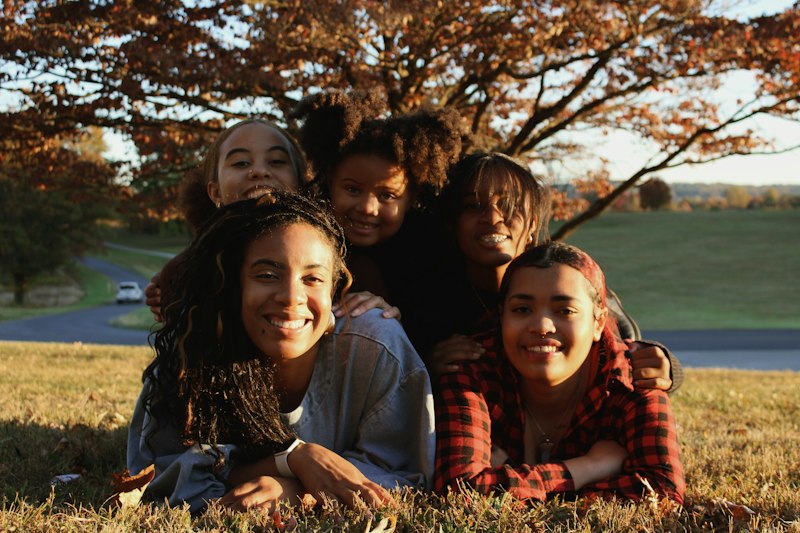
Kids’ Culture: A Definitional Framework
Kids’ culture is a term used to formally describe the complex matrix of cultural practices, shared values, collective beliefs, and established norms that are generated by, for, and among children and adolescents. It is fundamentally recognized as a distinct cultural entity, operating with a relative degree of autonomy from the dominant adult culture. This separation is crucial, as kids’ culture possesses unique characteristics, internal logic, and specific practices that reflect the immediate social environment, developmental stage, and experiential world of its participants. Unlike the culture transmitted vertically from one generation of adults to the next (e.g., family traditions), kids’ culture is predominantly created and transmitted horizontally within peer groups, emphasizing immediate relevance, shared experience, and collective identity markers. It serves as a vital psychological and sociological mechanism through which young individuals interpret the world, negotiate social relationships, and establish personal and collective identities during critical developmental phases of life.
The defining elements of kids’ culture stem from its rootedness in age-appropriate interests, shared developmental milestones, and the intense formation of peer bonds. While it interacts continuously with the adult world, it is characterized by the active borrowing, modification, and occasional subversion of adult cultural elements—such as language, fashion, media, and technology—which are recontextualized to fit the specific needs and perspectives of the youth. For example, popular media produced by adults is frequently adopted and transformed through fan cultures, playground games, and unique vernacular, thereby becoming authentic elements of kids’ culture. This transformative process highlights the agency of children, positioning them not merely as passive recipients of socialization but as active cultural producers capable of sophisticated interpretation and innovation. A robust understanding of this cultural interplay necessitates acknowledging the dynamic nature of childhood itself, recognizing that kids’ culture is constantly evolving in response to changing social, technological, and economic landscapes that impact youth experience.
Kids’ culture manifests in tangible forms, including specific language usage (slang and jargon), preferred forms of play (both organized games and complex imaginative scenarios), specialized folklore (rhymes, jokes, and local legends), and the consumption and creation of particular types of media (music, social media trends, and gaming culture). These manifestations collectively provide a framework for mutual understanding and belonging among peers. Furthermore, kids’ culture operates as a form of social scaffolding, offering children safe, relatively private spaces to experiment with roles, test social boundaries, and develop critical social competencies, such as negotiation, empathy, and conflict resolution, often outside the direct structuring influence and surveillance of adult institutions like schools or families. This cultural space is essential for practicing the complex skills required for successful integration into broader society later in life.
Historical Context and Early Conceptualizations
The systematic scholarly investigation into the concept of children having a distinct and autonomous culture is a relatively modern development, gaining significant academic traction during the middle to late 20th century. Historically, sociological and psychological frameworks often viewed childhood primarily through a developmental lens focused on deficits—what children lacked compared to adults—or treated children strictly as subjects of passive socialization, absorbing culture unilaterally from parents and educators. However, early anthropological work, particularly in the documentation of folklore and play, provided foundational evidence by highlighting the continuity and resilience of children’s games, songs, and rhymes across generations and diverse geographical locations, suggesting an internal system of cultural transmission largely independent of formal adult instruction.
A critical epistemological shift occurred in the 1970s when researchers began to formally conceptualize kids’ culture as a legitimate subculture with its own shared infrastructure and internal logic. Scholars such as William Corsaro were instrumental in utilizing detailed ethnographic methods to study children’s interactions in natural settings, such as playgrounds and classrooms. This research provided empirical evidence demonstrating that children actively construct their own sophisticated social order, often adhering to intricate rules, hierarchies, and interactional norms that are frequently invisible or opaque to adult observers. This perspective fundamentally challenged the traditional developmental paradigm that viewed children merely as incomplete adults, promoting instead the view that childhood is a socially structured period with inherent value and significant cultural production capabilities. Consequently, the research focus shifted dramatically from studying how adults transmit culture to children to studying how children actively create and transmit culture among themselves.
The 1980s and 1990s marked the period of widespread acceptance of kids’ culture as an essential field of study across developmental psychology, sociology, and education. This era saw the realization that a comprehensive understanding of children’s unique cultural worlds was necessary for effective intervention, innovative educational practices, and informed public policy-making. There was an increased emphasis on identifying the specific developmental needs fulfilled by peer culture, particularly concerning the formation of autonomy and mechanisms for identity expression. The late 1990s further broadened the focus to include the importance of creativity and self-expression, recognizing that cultural activities—such as generating narratives, participating in complex role-playing, or creating digital content—are not just recreational but serve as central mechanisms for advanced cognitive and emotional development, aligning with socio-cultural theories regarding the mediation of thought through shared cultural tools.
The Role of Peer Groups and Socialization
The peer group functions as the essential incubator, laboratory, and transmission mechanism for kids’ culture. In contrast to the family environment, which primarily facilitates vertical culture transmission (the passage of values and traditions from parents to children), the peer group facilitates horizontal socialization. This horizontal transmission is defined by its immediacy, reciprocity, and the relative equality of status among participants, thereby enabling the rapid creation, refinement, and diffusion of cultural innovations, trends, and behavioral norms. Membership in a peer group provides critical opportunities for children to transition beyond the high dependence characterizing early childhood, fostering a sense of autonomy, competence, and belonging that is independent of the parental sphere. The cultural knowledge shared within these groups—which often includes specialized knowledge about social boundaries, acceptable risk-taking behaviors, and strategies for navigating institutional rules—is highly valued precisely because it is peer-generated and peer-validated, often operating in opposition to or parallel with adult expectations.
Within the structure of peer culture, complex processes of social negotiation, status achievement, and hierarchy establishment are continuously at play. Through these interactions, children learn to manage social dynamics, employ nuanced strategies for inclusion and exclusion, and develop sophisticated communicative competence, including the ability to interpret non-verbal cues and subtext. These processes are inherently cultural, relying on shared, often implicit, understandings of fairness, loyalty, and social competence. For instance, the intricate, often fluid rules governing a playground game, while potentially appearing frivolous to an adult, possess profound social and cultural meaning within the peer group. Adherence to these peer-enforced rules reinforces group cohesion and establishes legitimate membership, while violations trigger culturally prescribed sanctions, teaching children vital lessons about social accountability and the internal structure of their culture.
Peer socialization is also fundamentally important for the development of advanced moral reasoning and ethical frameworks. While early moral development is often framed by adult authority (as noted in Kohlberg’s early stages, focusing on obedience), kids’ culture provides a distinct and necessary context where morality is negotiated based on shared understanding, mutual respect, and reciprocal expectations among equals. Disputes over the fair distribution of resources, the adherence to game rules, and the enforcement of social contracts among peers necessitate the application of sophisticated ethical judgment that moves beyond simple compliance. This cultural environment allows children to practice perspective-taking, cultivate empathy, and develop moral structures grounded in the principles of justice and fairness derived from mutual cooperation, rather than unilateral deference to external authority figures.
Characteristics and Manifestations of Kids’ Culture
The manifestations of kids’ culture are expansive and multifaceted, covering material culture, specialized linguistic practices, and diverse expressive forms. Material culture often encompasses specific clothing styles, branded technological devices, or media artifacts that hold significant symbolic power within the peer group, functioning as badges of belonging, indicators of social status, or necessary tools for participation. However, arguably the most enduring and central characteristic is play, which serves as the primary cultural vehicle for meaning-making and social exploration. Play is not merely unstructured leisure; it is often highly structured, deeply meaningful, and ritualized activity where social roles are rehearsed, cultural norms are tested, and societal themes are explored. This includes everything from complex, collaborative imaginative play (e.g., creating elaborate fantasy narratives) to structured physical games with intricate, orally transmitted rules that remain constant over decades.
Linguistic manifestations are equally defining. Kids’ culture relies heavily on specialized language, including rapidly evolving slang, distinctive pronunciation patterns, and unique narrative styles (such as the structure of telling jokes or sharing secrets). This linguistic innovation serves a dual cultural function: first, it reinforces internal group solidarity by creating a shared code that efficiently communicates meaning while often excluding or confusing outsiders (especially adults); second, it allows children to express specific concepts, emotions, and social dynamics that may not be adequately captured by formal adult language. Furthermore, the robust body of folklore, including jokes, riddles, rumors, and urban legends specific to childhood, forms a resilient cultural archive, often passed down horizontally through generations of children, demonstrating remarkable thematic consistency despite intervening historical and technological changes. This folklore often addresses universal developmental themes of transgression, fear, mastery, and social control.
The consumption and creative appropriation of media are defining characteristics of modern kids’ culture. While media—ranging from television shows and streaming services to complex video games and social networking platforms—are typically produced by adults for commercial purposes, children rarely consume them passively. Instead, they integrate these media elements into their fundamental social interactions, transforming commercial products into potent cultural resources. For example, a character, storyline, or virtual item from a popular franchise might become the subject of intense social discussion, playground role-playing, or artistic fan production, where children creatively imbue the original text with new traits and narratives, effectively changing the original meaning to suit their cultural needs. This active appropriation underscores the powerful creative agency inherent in kids’ culture, demonstrating how the act of consumption is often a vital platform for cultural production and the formation of collective identity.
Theoretical Perspectives on Cultural Transmission
A deep understanding of kids’ culture is significantly enriched by applying socio-cultural theories that emphasize the crucial role of interaction and context in developmental processes. Lev Vygotsky’s socio-cultural theory is profoundly relevant, asserting that cognitive development is mediated by cultural tools, including specialized language and shared symbolic systems. For children, these essential tools are primarily acquired and refined not merely through didactic formal schooling, but more organically through intensive participation in the peer culture. Vygotsky’s concept of the Zone of Proximal Development (ZPD) is highly applicable to peer interactions, positing that a child can achieve a higher level of performance when collaborating with more knowledgeable or capable peers than they could achieve independently. In the context of kids’ culture, this collaborative learning occurs constantly, whether through mastering a complex gaming strategy, generating a shared narrative, or successfully navigating a difficult social conflict.
The work of Jean Piaget also provides a crucial theoretical lens, particularly his focus on how children transition from egocentric thought patterns to more sociocentric understanding through structured interaction. While Piaget’s primary focus was on individual cognitive stages, his detailed analysis of the progression of rules and the development of moral autonomy (moving from heteronomous morality, characterized by external rules, to autonomous morality, based on internal conviction) provides a robust framework for analyzing rule-based games, which are absolutely central to kids’ culture. When children negotiate the rules of a game among themselves, they are engaging in a cultural process that necessitates the decentralization of thought, mutual coordination, and genuine agreement, leading toward autonomous cultural creation rather than simple, passive adherence to imposed adult rules. This act of collective rule creation and enforcement is recognized as a powerful, developmentally significant cultural practice.
Sociologists, particularly those focused on the sociology of childhood, treat kids’ culture as a structural phenomenon, arguing that childhood itself is a social structure that influences behavior, rather than simply a biological stage. Scholars like Corsaro focus on the theoretical concept of “interpretive reproduction,” which argues that children simultaneously reproduce elements of the adult culture (through imitation, observation, and learning) while also collectively producing and transforming that culture through their own unique social interactions and interpretive frameworks. This theory effectively captures the dynamic, fluid nature of kids’ culture—it is neither a perfect, passive replica of adult life nor a hermetically sealed world, but rather a constantly negotiated, living space where broader societal themes and adult expectations are filtered, interpreted, and acted upon according to the specific developmental logic and immediate needs of the childhood population.
The Impact of Commercialization and Digital Media
The latter half of the 20th century and the early 21st century have been marked by a staggering increase in the commercialization of childhood, a trend which has profoundly restructured the landscape of kids’ culture. The global market now strategically targets children directly as consumers, producing immense quantities of products, media, and experiences designed specifically to be culturally resonant and desirable to peer groups. This commercial culture provides the essential raw materials for peer culture, influencing everything from shared interests and aspirational lifestyles to social hierarchies often determined by the ownership or specialized knowledge of specific brands and products. Critics argue that this heavy commercial saturation can potentially homogenize kids’ culture, making it less spontaneous, less reliant on local folklore, and more centrally dictated by powerful corporate interests, potentially limiting genuine creative expression and cultural diversity.
The rapid expansion of digital media and the internet has introduced perhaps the most significant structural and spatial change to kids’ culture in modern history. Digital platforms—including sophisticated online gaming environments, expansive social media networks, and video streaming services—have created entirely new, unbounded spaces for cultural production and peer interaction that transcend traditional physical proximity. As a result, kids’ culture is now often global in scope, transmitted instantaneously across vast geographic boundaries, allowing for the rapid spread of memes, micro-trends, and shared interests. This enhanced global connectivity facilitates the immediate formation of virtual peer groups and communities based on highly specialized niche interests, which significantly contributes to identity formation, often providing crucial social support that may not be available within a child’s immediate physical community.
However, the pervasive influence of digital media also introduces a complex new array of cultural and social challenges. The traditional distinction between public and private spheres becomes severely blurred in online spaces, forcing children to rapidly develop new forms of digital literacy and cultural competence to successfully navigate pressing issues such as cyberbullying, managing online privacy settings, and performing a coherent identity in highly curated digital environments. The culture created and maintained in these digital arenas—from the specific language and etiquette used in massively multiplayer online games to the ethics governing content creation and sharing—is a complex and rapidly evolving subset of kids’ culture, demanding continuous scholarly attention to fully understand its profound impact on socialization processes, psychological well-being, and the long-term continuity of youth culture.
Developmental Significance and Identity Formation
Participation in kids’ culture holds immense and indispensable developmental significance, acting as a crucial transitional bridge between the protective, enclosed world of the family and the expansive, often demanding world of adult society. It is the primary non-familial site where children test established boundaries, internalize necessary social roles, and crucially, forge an identity that is separate and autonomous from their familial identity. The shared norms, values, and rituals of the peer group provide a necessary and powerful sense of belonging, acceptance, and validation, particularly during the often turbulent phases of middle childhood and early adolescence. This vital cultural environment allows for the safe experimentation with different social roles and personas, which is a key requirement for developing a stable, integrated, and resilient sense of self later in life.
The cultural activities embedded within peer groups—such as complex collaborative storytelling, competitive and cooperative play, and the observance of shared rituals—directly facilitate the development of higher-order psychological processes. For instance, engaging in sophisticated imaginative play requires advanced symbolic thought, the ability to construct and maintain a shared narrative framework, and the capacity to maintain multiple perspectives simultaneously. These are essential cognitive skills that are fundamentally mediated and strengthened by the cultural context of peer interaction. Furthermore, the social and emotional intensity of peer relationships within kids’ culture helps children to refine their emotional regulation skills and develop complex social-emotional intelligence, as they learn to manage disappointment, celebrate collective success, and navigate instances of betrayal or conflict within a community composed entirely of equals.
Ultimately, active participation in and contribution to kids’ culture is indispensable for identity formation. By adhering to peer-generated norms, adopting specialized cultural markers (like specific musical tastes, digital aesthetics, or unique fashion), and achieving status within the peer hierarchy, young individuals solidify their understanding of who they are relative to others outside the family structure. This collectively validated identity then serves as a robust and necessary foundation for deeper individual identity exploration during later adolescence. The cultural products created and shared by children—whether it is a piece of art, a recorded digital video, or a set of rules for a newly invented game—are potent expressions of cultural agency that affirm their status as competent, active social actors, thereby validating their unique experiences and perspectives within the broader context of human cultural history.
Annotated References for Further Study
The following sources represent seminal works foundational to the interdisciplinary study of kids’ culture, covering crucial sociological, developmental psychological, and anthropological perspectives on the nature of childhood.
-
Corsaro, W. (1993). The sociology of childhood. Newbury Park, CA: Sage.
Corsaro’s work is recognized as foundational in the field, introducing the concept of interpretive reproduction and utilizing detailed ethnographic studies to analyze how children actively construct their own sophisticated social worlds and cultural practices. This text emphasizes the profound significance of peer interaction over adult-driven socialization and provides a comprehensive sociological framework for viewing children as capable cultural producers.
-
Kohlberg, L. (1981). The philosophy of moral development. San Francisco: Harper & Row.
While primarily focused on individual cognitive developmental stages, Kohlberg’s framework is crucial for understanding how the specific cultural context of peer groups challenges and advances children’s moral reasoning, particularly in the necessary progression from morality based solely on external adult authority toward autonomous morality based on reciprocal agreements established within the peer culture.
-
Newman, B. (1996). The development of culture. Chicago: University of Chicago Press.
This work explores the broader, underlying mechanisms of cultural transmission, persistence, and adaptation across the lifespan. It offers critical insights into how cultural patterns emerge, evolve, and change across various developmental stages, providing a theoretical bridge connecting individual psychological development with collective cultural structures and institutions.
-
Vygotsky, L. (1978). Mind in society: The development of higher psychological processes. Cambridge, MA: Harvard University Press.
Vygotsky’s socio-cultural theory is essential for modern developmental psychology, emphasizing how cultural tools—which are learned and shared extensively within peer environments—mediate higher-order cognitive development. His concepts regarding the social origins of thought and the crucial Zone of Proximal Development provide a powerful, enduring framework for analyzing collaborative learning and cultural creation within kids’ culture.
-
Weinberg, M. (1996). Kids’ culture: A handbook of information and resources. New York: Garland.
This handbook offers a broad, comprehensive overview of the field during its period of rapid expansion, compiling diverse resources and topics related to children’s cultural worlds. It provides vital context for the multidisciplinary nature of kids’ culture research, spanning areas such as media studies, folklore, educational psychology, and sociological theory.