Cognitive Illusion: Why Your Brain Loves Being Fooled
Scientifically Reviewed · Dr. Marwa Abd-Alazim · August 26, 2026
Review Criteria & Clinical Standards
This content undergoes rigorous scientific peer-review and medical editorial standards at Arab Psychology Network to ensure clinical accuracy, validity, and compliance with evidence-based guidelines from leading psychological and healthcare authorities (APA / WHO).
The term Magic encompasses a broad, bifurcated set of phenomena, historically rooted in attempts to manipulate reality through non-scientific means (ritual magic) and contemporaneously defined by the artistic performance of illusion (stage magic). Historically, ritual magic involved structured rituals, specific incantations, and complex spells recited or enacted by designated individuals attempting to influence or manipulate natural forces, supernatural entities, or the psychological states of others. This form of practice was integral to the cosmological and social fabric of most pre-scientific societies, serving as an explanatory framework for causality, illness, fortune, and misfortune. In contrast, modern performance magic focuses exclusively on tricking the human eye and manipulating cognitive biases to create the convincing perception that the laws of physics have been temporarily suspended, offering entertainment rather than spiritual efficacy.
The transition from a magical worldview to a scientific one fundamentally altered the perception and classification of ritualistic magic. While once considered a legitimate method of control over the environment, it is now almost universally classified within modern scientific discourse as a pseudoscience, or relegated to the realm of historical anthropology and religious studies. Understanding magic requires examining both its profound historical role as a precursor to both religion and science, and its current sophisticated application in the psychology of perception, where master illusionists capitalize on inherent limitations in human attention and memory.
The Historical and Anthropological Context of Ritual Magic
Ritual magic, often termed applied occultism or sorcery, functioned as an early system of technology and philosophy for societies lacking empirical scientific methods. These practices were fundamentally teleological, based on the belief that causation could be achieved through symbolic action or the invocation of specific powers. Anthropologists, notably Sir James Frazer in The Golden Bough, categorized these practices into two primary laws: the Law of Sympathy, which posits that things magically influence each other across a distance (like voodoo dolls), and the Law of Contagion, which holds that objects that have been in contact continue to exert influence after separation (like owning a lock of hair from a target). These rituals were not merely superstitions; they provided crucial psychological mechanisms for coping with uncertainty, disaster, and the unpredictable nature of agricultural cycles or warfare, establishing a perceived sense of control within chaotic environments. The efficacy of such magic was measured not by objective, measurable outcomes, but by the community’s belief structure and the confirmation bias inherent in interpreting results, where successful outcomes were attributed to the ritual and failures were attributed to improper execution or counter-magic.
The societal role of the practitioner—whether shaman, witch doctor, or magus—was central to the function of ritual magic. These individuals often underwent rigorous training, held specific esoteric knowledge, and occupied positions of considerable social power, bridging the gap between the mundane world and the spiritual realm. Their rituals were often highly formalized, involving specific times, locations, materials, and precise linguistic formulas (incantations), suggesting a highly structured, almost procedural approach to influencing reality. The belief system surrounding this magic was deeply integrated into mythologies, providing moral and ethical guidance as well as practical intervention. For example, healing rituals combined herbal medicine (proto-science) with invocations (magic), reflecting a holistic approach to causality that did not strictly differentiate between material and spiritual forces.
Furthermore, early forms of ritual magic often served pragmatic socio-political functions. Curses or hexes, for instance, could be used to enforce social conformity, discourage transgression, or punish perceived enemies, acting as an informal judicial system where direct physical evidence was unnecessary. The widespread belief in the power of these spells meant that the psychological impact of being targeted could often manifest real-world consequences, such as ostracism, psychosomatic illness, or fear-induced paralysis. This interplay between psychological belief and perceived supernatural action highlights the complex way in which ritual magic maintained societal order and explained phenomena ranging from personal illness to cosmic events before the widespread acceptance of naturalistic explanations.
Magic and the Dawn of Scientific Thought
The Enlightenment and the subsequent rise of empirical methodology marked the critical inflection point that shifted ritual magic from accepted practice to marginalized belief. The scientific method, emphasizing testable hypotheses, measurable results, and replicable experimentation, stood in direct opposition to the subjective, untestable nature of magical causation. Where magic posits personal, intentional forces (spirits, gods, or the will of the practitioner) as the source of change, science relies on impersonal, immutable laws of nature. This ideological collision led to the relegation of ritual practices to the category of superstition or, more formally, pseudoscience.
As philosophy progressed, the distinction between magic, religion, and science became clearer. Frazer famously proposed a sequence of human intellectual development: first, the age of Magic (belief in manipulable forces); second, the age of Religion (propitiation of powerful entities); and finally, the age of Science (discovery of natural laws). While this linear model is often debated by contemporary anthropologists, it underscores the historical role magic played as an early, flawed attempt at mastering the environment through causal principles, however flawed those principles may have been in reality. The failure of magic to consistently produce predictable, objective results under controlled conditions ultimately led to its replacement by systems that demonstrated verifiable explanatory power.
Despite its formal dismissal by the scientific community, the tenets of ritual magic continue to persist within various esoteric traditions, neo-pagan religions, and certain cultural enclaves. Modern practitioners often redefine magic not as a manipulation of physics, but as a deep psychological exercise—a method of focusing intention, visualizing goals, or achieving altered states of consciousness that facilitate personal change. This reinterpretation attempts to reconcile the ancient practices with modern psychological understanding, viewing spells and incantations as sophisticated tools for self-hypnosis or cognitive reprogramming rather than literal attempts to cause rain or levitate objects. Nevertheless, any practice claiming supernatural efficacy outside the bounds of established physical laws is critically scrutinized and typically dismissed by mainstream science, confirming its contemporary status as outside the domain of verifiable knowledge.
The Psychological Mechanisms of Belief in Supernatural Magic
The endurance of belief in supernatural magic, even in highly technologically advanced societies, is a compelling topic in cognitive psychology. Humans possess a natural tendency toward agent detection—the predisposition to assume that ambiguous stimuli (e.g., rustling leaves, unusual noises) are caused by intentional agents (e.g., predators, spirits) rather than random events. This evolutionary bias, while useful for survival, fuels the magical worldview, encouraging the attribution of complex, negative, or unexplained events to curses, divine displeasure, or intentional magical interference. When faced with high uncertainty or lack of control (e.g., severe illness, financial disaster), magical thinking provides a structured framework for understanding and potentially influencing the outcome, thereby reducing existential anxiety.
Confirmation bias plays a crucial role in sustaining these beliefs. Individuals seeking magical solutions will inherently focus on instances where the ritual appeared successful (e.g., receiving a minor benefit after casting a luck spell) while dismissing or rationalizing the overwhelming number of instances where the ritual failed or where the outcome could be attributed to natural causes. This selective attention reinforces the perceived efficacy of the magical system. Furthermore, the illusion of control—the tendency for individuals to overestimate their ability to control events that are objectively random—is powerfully engaged by magical rituals. Performing an elaborate spell or wearing a protective amulet provides a subjective feeling of agency that is psychologically comforting, regardless of the objective lack of external influence.
Social and cultural transmission also solidify magical beliefs. In societies where magic is integrated into the cultural narrative, individuals are exposed to these concepts from an early age, making them feel natural and intuitive. The shared nature of the belief provides social cohesion and validation, making it extremely difficult for individuals to critically assess the practices. The language used in incantations and the symbolism inherent in rituals often tap into deep psychological archetypes, creating a powerful emotional resonance that transcends rational analysis. Ultimately, while ritual magic fails the objective standards of science, it successfully meets fundamental human psychological needs for explanation, control, and meaning within a complex and often frightening world.
Performance Magic: Illusion, Deception, and Cognitive Science
In stark contrast to ritual magic, Performance Magic, or stage magic, is a highly refined art form based entirely on the manipulation of human perception and cognitive processes. Its objective is not to deceive the cosmos, but to intentionally deceive the audience into believing they have witnessed an impossibility, a temporary suspension of natural law, using entirely physical means. This form of magic relies heavily on principles derived from psychology, engineering, and theatrical presentation. The core mechanism is misdirection, which is not merely distracting the audience but strategically managing their attention through verbal cues, gaze direction, movement, and timing (known as pacing).
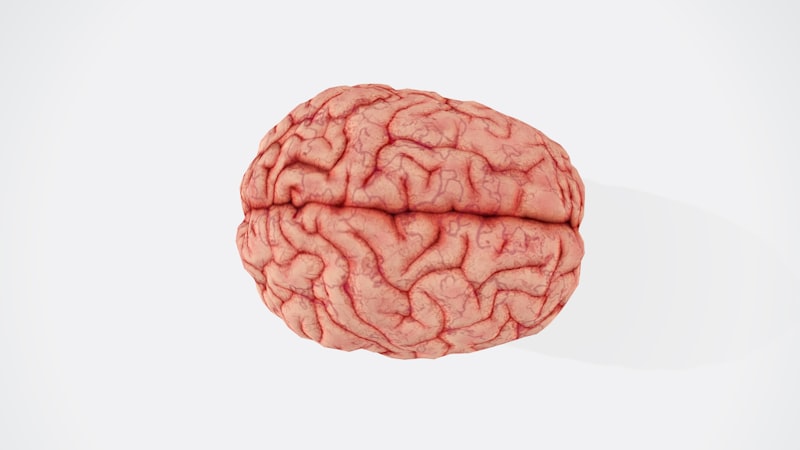
Performance magic exploits known limitations of the human brain, particularly regarding attention and memory. The brain is incapable of processing all sensory data simultaneously; thus, it prioritizes information. Master magicians exploit this by forcing the audience to focus consciously on one element (the presentation or the patter) while the critical, deceptive action (the secret move or the switch) occurs subtly in the periphery or during a moment of cognitive overload. This utilization of inattentional blindness—the failure to notice a fully visible object because attention is engaged elsewhere—is the foundation of most close-up magic, or sleight of hand.
Beyond the simple sleight, the performance is structured theatrically to heighten the sense of mystery. The magician establishes a narrative and controls the framework of expectation. By setting up the premise that an action is impossible, the subsequent reveal becomes far more impactful. This process involves the strategic layering of deception, where the audience is often misled about the exact moment or location of the secret action. Furthermore, the field of mentalism, a subgenre of performance magic, relies almost exclusively on applied psychology, utilizing suggestion, cold reading, muscle reading, and carefully concealed technical devices to simulate mind reading or precognition, proving that the greatest illusions are often cognitive rather than purely physical.
Key Techniques and Psychological Principles in Stagecraft
The successful execution of performance magic relies on the seamless integration of various technical and psychological principles. One fundamental technique is Sleight of Hand, which involves highly developed manual dexterity that allows the performer to execute actions faster than the eye can consciously register or to disguise movements as natural gestures. However, dexterity alone is insufficient; the movement must also be psychologically masked through misdirection. For example, a magician might make eye contact with a spectator while performing a difficult pass, drawing the spectator’s attention away from their hands.
Another crucial principle is Forcing. In tricks involving choices (e.g., selecting a card or a number), forcing ensures that the spectator chooses the specific item the magician needs for the effect to work, while maintaining the powerful illusion of a free choice. This can be achieved through psychological prompting, mathematical necessity, or subtle physical manipulation. The power of forcing lies in the fact that the spectator becomes a participant in their own deception, making the eventual reveal feel even more impossible because they believe they controlled the input.
In large-scale illusions, Subtlety and Engineering take precedence. Illusions involving vanishing acts or reappearance (such as the classic “sawing a woman in half”) rely on sophisticated mechanical apparatus, mirrors, lighting, and stage blocking to conceal the true mechanisms. Psychologically, these illusions rely on the audience making common-sense assumptions about geometry and physics that the illusionist intentionally violates. The element of risk, often conveyed through dramatic presentation and patter, heightens the emotional response, causing spectators to overlook basic logistical possibilities in favor of the fantastic explanation provided by the performer.
Notable Figures and the Evolution of Modern Performance Magic
The history of modern performance magic is marked by figures who elevated the craft from simple street tricks to sophisticated theatrical art. The 19th century saw the rise of large-scale illusions and the refinement of close-up parlor magic. However, perhaps no figure is more universally recognized than Harry Houdini (born Erik Weisz). Houdini mastered the art of escapism, transforming simple lock-picking and restraint challenges into dramatic, death-defying feats of endurance and skill. His genius lay not just in his technical ability to escape from handcuffs, straitjackets, and submerged boxes, but in his profound understanding of publicity, risk management, and narrative tension. He ensured that the audience knew the dangers were real, thereby maximizing the impact of his success.
Beyond his stage work, Houdini played a crucial role in demystifying the supernatural aspect of magic. In his later career, he dedicated significant effort to exposing fraudulent spiritualists and mediums who claimed genuine supernatural powers, arguing that such claims were unethical deceptions preying on the grieving public. He meticulously demonstrated that the feats performed by these spiritualists—such as floating objects or producing voices—were merely parlor tricks masked under the guise of occult power, reinforcing the modern distinction between performance (honest deception) and supposed supernatural efficacy (fraudulent deception).
The lineage of modern magic continues through figures like Dai Vernon, who revolutionized sleight of hand in the 20th century, and contemporary illusionists like David Copperfield, who focused on integrating technological grandeur and narrative spectacle into their presentations. The evolution shows a consistent trend: as scientific understanding increases, performance magic must become more psychologically sophisticated and theatrically elaborate to maintain the illusion of impossibility against a more skeptical, educated audience. Today’s magicians are, in essence, applied cognitive psychologists who use theatrical means to explore the fascinating limits of the human mind.
Magic in Contemporary Culture and Pseudoscience
The status of ritual magic remains firmly within the category of pseudoscience in mainstream academic discourse. This categorization reflects the lack of empirical evidence supporting claims of supernatural causation and the reliance on anecdotal evidence, non-falsifiable hypotheses, and confirmation bias. While scholars respect the anthropological and historical significance of these practices, they are excluded from the domains of psychology, physics, and medicine when claims of objective efficacy are made. This boundary is critical for maintaining the integrity of scientific inquiry and preventing the exploitation of the public by those claiming genuine magical powers.
Conversely, performance magic holds an esteemed and integrated place in contemporary culture. It is recognized as a legitimate art form, blending theatrical performance, historical knowledge, technical skill, and applied psychological insight. Modern performance magic is a celebration of human ingenuity and a direct commentary on the fallibility of human perception. It functions as a safe, controlled environment where audiences can willingly suspend disbelief and experience the uncanny, temporarily escaping the rational constraints of the modern world. The enduring popularity of magic shows, films, and literature dedicated to illusion underscores a fundamental human desire for wonder and the momentary experience of the impossible.
In conclusion, the concept of magic has undergone a profound transformation. What began as a universal explanatory framework for controlling the uncontrollable has evolved into a highly specialized form of entertainment rooted in cognitive science. While ritual magic is now viewed primarily through historical and psychological lenses as a system of belief, performance magic flourishes as an art form that intentionally and ethically harnesses the very psychological biases that once gave power to its supernatural counterpart. The continuous fascination with both forms of magic speaks volumes about the human need to seek meaning, exert control, and be astonished by the limits of what we believe we can see and know.