Neuroanatomy: Mapping the Brain’s Hidden Architecture
Scientifically Reviewed · Dr. Marwa Abd-Alazim · October 10, 2026
Review Criteria & Clinical Standards
This content undergoes rigorous scientific peer-review and medical editorial standards at Arab Psychology Network to ensure clinical accuracy, validity, and compliance with evidence-based guidelines from leading psychological and healthcare authorities (APA / WHO).
The Marginal Sulcus: A Core Definition
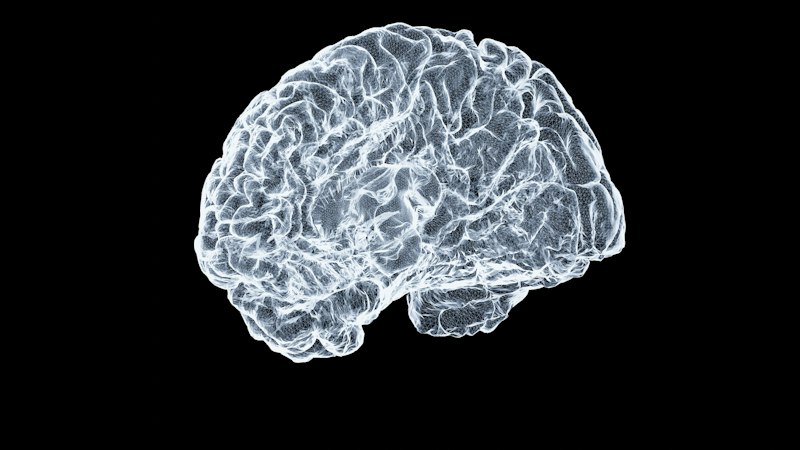
The marginal sulcus refers to a set of prominent, deep grooves or infoldings found within the human cerebral cortex, serving as crucial anatomical landmarks. These sulci are instrumental in delineating the boundaries between the major lobes of the brain, specifically the frontal, parietal, and temporal lobes. Their distinct morphology and consistent location make them invaluable for understanding the complex topography of the brain’s surface, which is characterized by an intricate pattern of gyri (ridges) and sulci (grooves) that significantly increase the cortical surface area, thereby enhancing cognitive capacity.
At its fundamental level, the marginal sulcus represents a key anatomical division that physically separates distinct functional regions of the brain. The brain’s surface is not smooth but highly convoluted, a feature known as gyrification. This complex folding pattern is not random; rather, it follows a genetically determined blueprint that ensures specific sulci and gyri are present in consistent locations across individuals, albeit with some variability. The marginal sulcus, in particular, is often described in relation to the cingulate sulcus, of which it is considered a terminal part, extending superiorly to indent the superior medial border of the cerebral hemisphere. This deep indentation is a critical reference point for neuroscientists and clinicians alike, providing a reliable marker for navigating the complex three-dimensional structure of the brain.
The primary mechanism behind the significance of the marginal sulcus lies in its role as an anatomical partition that indirectly reflects underlying functional specialization. While the sulcus itself is a structural feature, its presence marks regions where different cortical functions converge or diverge. Understanding its precise location allows researchers to map brain functions more accurately and helps clinicians identify areas affected by neurological disorders. This concept underscores the intricate relationship between brain structure and function, where macroscopic anatomical features like the marginal sulcus provide macroscopic clues about the microscopic organization and functional roles of adjacent cortical areas, making it a cornerstone in the field of neuroanatomy.
Detailed Anatomy and Location
The marginal sulci are intricately positioned within the superior, middle, and inferior frontal gyri, the superior and inferior parietal lobules, and the superior and middle temporal gyri. Their exact morphology often presents as an L-shaped configuration, tracing along the periphery of the brain’s medial surface. This particular arrangement highlights their role in defining the boundaries between the major cortical lobes, thereby facilitating a clear distinction between the areas primarily associated with executive function (frontal), sensory processing (parietal), and auditory and memory functions (temporal). The depth and consistency of these sulci are remarkable, allowing for their reliable identification in both macroscopic dissection and advanced neuroimaging techniques.
Anatomically, the marginal sulci are typically subdivided into two principal components: an anterior division and a posterior division. The anterior division is characteristically shorter and is situated predominantly within the frontal lobe. This segment plays a role in demarcating the posterior extent of certain prefrontal regions. In contrast, the posterior division is considerably longer and extends across both the parietal lobe and, at times, into the superior aspects of the temporal lobe. This longer division is particularly significant in defining the superior limit of the parietal-temporal junction, a region critical for multisensory integration and language processing. The precise trajectory and extent of these divisions can exhibit individual variability, yet their general pattern remains consistent, affirming their utility as anatomical landmarks.
Understanding the exact course and relationship of the marginal sulci to surrounding gyri is paramount for detailed brain mapping. For instance, its proximity to the central sulcus and postcentral gyrus makes it an indirect reference point for locating the primary motor and somatosensory cortices on the medial surface. This intricate anatomical knowledge is not merely academic; it forms the foundation for targeted neurological interventions and precise functional localization studies. The depth of these sulci also creates complex folding patterns that can sometimes mask underlying cortical areas from surface inspection, necessitating advanced imaging to fully appreciate the three-dimensional architecture they help define.
Historical Perspective on Brain Mapping
The study of brain anatomy, including the identification and mapping of sulci like the marginal sulcus, has a rich history rooted in the foundational work of early anatomists and neurologists. Pioneers such as Andreas Vesalius in the 16th century laid the groundwork by meticulously dissecting and illustrating the human brain, though his descriptions were largely macroscopic and lacked the fine detail we now possess. The systematic identification of specific sulci and gyri, however, gained significant momentum in the 19th century with figures like Paul Broca and Carl Wernicke, whose groundbreaking work linked specific brain regions to language functions. While they primarily focused on larger, more easily identifiable sulci like the Sylvian and central fissures, their methodology established the importance of cortical landmarks for understanding functional localization.
The precise delineation of sulcal patterns, including the marginal sulcus, became increasingly refined with advancements in neuroanatomical staining techniques and post-mortem dissection during the late 19th and early 20th centuries. Researchers like Korbinian Brodmann, who developed a cytoarchitectural map of the brain based on cellular organization, indirectly relied on stable anatomical landmarks such as major sulci to orient their microscopic analyses. Though the marginal sulcus might not be directly attributed to a single “discoverer” in the way a specific disease or theory might be, its recognition as a distinct and consistent feature of the cerebral hemisphere evolved as neuroanatomy progressed from gross observation to detailed mapping. The understanding of its role in defining lobe boundaries solidified as the field moved towards a more comprehensive and systematic classification of cortical topography.
In the modern era, the advent of sophisticated neuroimaging technologies, particularly magnetic resonance imaging (MRI) in the late 20th century, revolutionized the study of sulcal anatomy. These non-invasive techniques allowed for the detailed visualization of the marginal sulcus and other cortical folds in living individuals, providing unprecedented opportunities to study individual variability, developmental trajectories, and pathological alterations. This technological leap enabled a deeper understanding of how these anatomical features relate to cognitive processes and neurological conditions, moving beyond mere anatomical identification to functional implications. Thus, while the marginal sulcus was observed by early anatomists, its full significance and precise mapping truly blossomed with the tools of contemporary neuroscience.
Functional Significance and Neural Networks
Beyond its role as a mere anatomical boundary, recent research has underscored the profound functional significance of the marginal sulcus in the overall organization and operation of the brain. Studies utilizing advanced neuroimaging techniques, such as functional MRI (fMRI) and diffusion tensor imaging (DTI), have revealed that the sulci, including the marginal sulcus, are not passive grooves but often serve as critical conduits and organizational hubs for neural communication. They frequently mark regions where long-range white matter tracts converge or diverge, forming essential pathways for functional connectivity between disparate cortical areas. This means that the marginal sulcus can be seen as an indicator of underlying neural networks that link the frontal, parietal, and temporal lobes, facilitating the complex interplay of information required for higher-order cognition.
Furthermore, emerging evidence suggests a direct association between the morphology and integrity of the marginal sulcus and various cognitive processes. Research has shown correlations between sulcal patterns in areas adjacent to the marginal sulcus and performance in tasks related to memory, attention, and executive function. For instance, variations in the depth or length of the marginal sulcus might reflect differences in the underlying cortical development or organization, which in turn could influence the efficiency of information processing in related neural circuits. This indicates that the marginal sulcus is not just a static landmark but a dynamic feature whose characteristics can provide insights into an individual’s cognitive profile and potential vulnerabilities to cognitive decline.
The marginal sulcus’s involvement in shaping functional networks stems from its position at the intersection of major cortical territories. The pathways for communication it helps to define are crucial for integrating sensory inputs with motor outputs, for linking memory retrieval with decision-making, and for coordinating various aspects of complex behaviors. Disruptions to these pathways, which might be indicated by atypical sulcal development or damage, can have widespread effects on brain function. Therefore, understanding the marginal sulcus’s contribution to neural network organization provides a more holistic view of brain architecture, moving beyond isolated regions to appreciate the interconnected nature of brain function, where structural landmarks play a critical role in defining functional connectivity landscapes.
Clinical Relevance and Diagnostic Importance
The marginal sulci are of paramount importance in clinical neuroscience, serving as indispensable landmarks for the precise localization of neurological structures and pathologies. Their consistent anatomical position allows clinicians to accurately identify the location of functionally critical areas, such as the primary motor cortex and the primary sensory cortex, particularly on the medial surface of the brain. These cortical regions are responsible for voluntary movement control and the reception of sensory information from the body, respectively. Any damage or dysfunction in these areas can lead to severe motor deficits or sensory disturbances, making their precise identification crucial for diagnosis and treatment planning.
Moreover, the marginal sulci play a vital role in differentiating between the frontal, parietal, and temporal lobes. This demarcation is frequently critical in the diagnostic process for various neurological conditions. For instance, in cases of stroke, tumor, or traumatic brain injury, the ability to rapidly and accurately pinpoint the affected lobe based on anatomical landmarks like the marginal sulcus helps clinicians determine the likely functional deficits and guides the appropriate medical or surgical intervention. For example, a lesion anterior to the marginal sulcus would suggest frontal lobe involvement, potentially impacting executive functions, whereas a lesion posterior to it might indicate parietal lobe damage affecting spatial awareness or somatosensation.
In neurosurgical planning, the precise identification of the marginal sulcus is absolutely essential. Surgeons rely on these anatomical markers to navigate the complex landscape of the cerebral cortex, especially during procedures such as tumor resections or epilepsy surgery where preserving adjacent eloquent (functionally critical) areas is paramount. By understanding the relationship of the marginal sulcus to surrounding functionally defined regions, neurosurgeons can plan their approaches to minimize damage to vital brain tissue, thereby optimizing patient outcomes and reducing post-operative complications. The marginal sulcus thus acts as a crucial guidepost, enabling highly precise and safe surgical interventions within the delicate environment of the brain.
A Practical Scenario: Navigating Brain Surgery
Imagine a neurosurgical team preparing for a delicate operation to remove a small, benign tumor located deep within a patient’s brain, near the junction of the frontal and parietal lobes. The tumor’s proximity to the primary motor cortex, which controls voluntary movements, makes the procedure particularly challenging. The goal is to resect the tumor completely while preserving the patient’s motor function. In this high-stakes scenario, accurate anatomical localization is not just helpful, it is absolutely critical for a successful outcome and preventing permanent neurological deficits.
Before the surgery, the neurosurgeon meticulously reviews the patient’s advanced brain imaging, including high-resolution MRI scans. On these scans, the marginal sulcus stands out as a distinct and reliable landmark on the medial surface of the hemisphere. The surgical team uses this specific sulcus as a primary reference point to orient themselves within the complex three-dimensional anatomy of the brain. They know that the marginal sulcus provides a clear demarcation, helping them to accurately estimate the position of the supplementary motor area and other critical motor control regions that lie immediately adjacent to and often just anterior to its superior termination. This precise identification allows them to plan the safest trajectory to access the tumor, avoiding damage to these vital areas.
During the actual surgical procedure, guided by neuronavigation systems that project the MRI images onto the patient’s brain in real-time, the neurosurgeon can visually confirm the location of the marginal sulcus. This confirmation serves as a continuous anatomical compass, enabling them to confidently differentiate between the frontal and parietal territories and understand their exact position relative to the tumor. By precisely localizing the marginal sulcus, the team can verify their approach, ensuring they are operating in the correct anatomical corridor and minimizing the risk of inadvertently damaging eloquent cortex. This practical application vividly illustrates how an understanding of specific anatomical features like the marginal sulcus is directly translated into tangible clinical benefits, safeguarding neurological function during intricate surgical interventions.
Broader Impact and Interconnected Concepts
The concept of the marginal sulcus and its anatomical significance extends far beyond mere structural identification; it profoundly impacts our understanding of cerebral organization and function, positioning it within the broader framework of neuroscience. Its role in delineating major cortical lobes is fundamental to brain mapping efforts, both in research and clinical settings. By providing a consistent landmark, the marginal sulcus contributes to the standardization of anatomical descriptions, allowing researchers worldwide to communicate and compare findings more effectively when discussing specific brain regions. This consistency is vital for developing comprehensive models of brain function and dysfunction, underpinning advancements in fields ranging from cognitive psychology to clinical neurology.
The marginal sulcus is intimately related to several other key psychological terms and theories, particularly those concerning functional localization and brain connectivity. Its presence helps contextualize the functions attributed to the frontal lobe (e.g., executive function, decision-making), the parietal lobe (e.g., spatial awareness, somatosensation), and the temporal lobe (e.g., auditory processing, memory). Moreover, its involvement in shaping white matter pathways means it is relevant to theories of neural networks and large-scale brain dynamics, which posit that complex cognitive functions arise from the integrated activity of widely distributed brain regions rather than isolated modules. Understanding the marginal sulcus thus contributes to a holistic view of the brain as an interconnected system.
This anatomical landmark broadly falls under the subfield of neuroanatomy, a core discipline within neuroscience that focuses on the structural organization of the nervous system. However, its implications stretch into cognitive neuroscience, as researchers investigate how sulcal patterns relate to cognitive abilities, and into clinical neuroscience, where it aids in diagnosis and surgical planning. Furthermore, its developmental trajectory is of interest in developmental psychology and developmental neuroscience, as variations in sulcal formation can be linked to developmental disorders. The marginal sulcus, therefore, serves as a nexus connecting fundamental brain structure to a vast array of psychological and neurological phenomena, highlighting its multifaceted importance in understanding the human mind and its disorders.
Conclusion
The marginal sulcus stands as a significant anatomical feature within the human cerebral cortex, serving as a deep and consistent groove that delineates the critical boundaries between the frontal, parietal, and temporal lobes. Its L-shaped configuration and division into anterior and posterior segments contribute to its reliable identification across individuals, making it an indispensable landmark in neuroanatomy. This fundamental understanding of its structure is foundational for all subsequent investigations into brain function and dysfunction.
Beyond its structural role, the marginal sulcus holds substantial functional and clinical relevance. It is increasingly recognized for its contribution to defining the pathways of functional connectivity within the brain, acting as an organizer for neural networks that underpin complex cognitive processes such as memory and executive function. Clinically, its precise localization is paramount for identifying critical neurological structures like the primary motor and sensory cortices, aiding in the diagnosis of conditions such as stroke, and guiding neurosurgical procedures with enhanced precision and safety.
Ultimately, the study of the marginal sulcus encapsulates the intricate relationship between brain structure and function. It provides a concrete example of how macroscopic anatomical features are integral to understanding the microscopic organization and dynamic interactions of neural circuits. As research continues to unravel the complexities of brain morphology and connectivity, the marginal sulcus will undoubtedly remain a key reference point, bridging basic anatomical knowledge with advanced insights into cognition, behavior, and the myriad conditions affecting the human brain. Its multifaceted importance underscores its enduring significance in the fields of neuroscience and psychology.