Micropsia: Why Your Brain Shrinks Your World
Scientifically Reviewed · Dr. Marwa Abd-Alazim · October 5, 2026
Review Criteria & Clinical Standards
This content undergoes rigorous scientific peer-review and medical editorial standards at Arab Psychology Network to ensure clinical accuracy, validity, and compliance with evidence-based guidelines from leading psychological and healthcare authorities (APA / WHO).
The Core Definition of Micropsia
Micropsia is a distinct and often perplexing visual perceptual disorder characterized by the perception that objects appear smaller than their actual size. This condition is not an optical illusion in the traditional sense, but rather a neurological phenomenon where the brain misinterprets or distorts the size of visual input. The extent of this size distortion can vary significantly among individuals, ranging from a subtle alteration that is merely distracting to a profound reduction where objects seem to shrink to a fraction of their true dimensions, severely impacting daily functioning and quality of life. This phenomenon fundamentally challenges an individual’s understanding of their environment, transforming familiar surroundings into an unfamiliar landscape where proportions are askew and spatial relationships are disrupted.
At its fundamental level, the key idea behind micropsia’s mechanism is thought to involve alterations in the cortical magnification factor (CMF). The CMF represents the amount of cortical surface area in the brain’s visual cortex that is dedicated to processing a given area of the visual field. Essentially, it dictates how much “brain space” is allocated to interpreting the size and detail of objects we perceive. When this factor is disrupted or reduced, the brain essentially processes visual information as if the incoming image were smaller, leading to the subjective experience of seeing objects diminished in size. This complex interplay between the physical input of light and the brain’s interpretation highlights the sophisticated and often vulnerable nature of our visual system, where even slight neurological imbalances can lead to profound perceptual distortions.
The experience of micropsia extends beyond mere size reduction; it can also profoundly affect an individual’s perception of depth and the spatial relationships between objects. For instance, a person with micropsia might not only see a car as miniature but also misjudge its distance, making navigation and interaction with the environment incredibly challenging. This intricate distortion suggests that the underlying neurological disruption impacts not just the scaling of individual objects, but also the broader spatial mapping functions of the brain. The brain struggles to integrate disparate visual cues into a coherent, proportional representation of the world, leading to a fragmented and often disorienting visual experience. Understanding these multifaceted perceptual changes is crucial for both diagnosis and for developing strategies to help individuals cope with the significant challenges micropsia presents.
Historical Understanding and Early Observations
While the term “micropsia” as a distinct medical diagnosis with its current neurological understanding is a more recent development in the history of medicine and neurology, the phenomenon of distorted visual perception has likely been observed and documented in various forms for centuries. Early medical texts, often lacking the sophisticated neurological models available today, might have described such visual anomalies under broader categories of visual disturbances or symptoms associated with various illnesses. These anecdotal reports would have laid the groundwork for future scientific inquiry, even if the precise mechanisms remained elusive. The recognition of specific perceptual distortions, rather than general “seeing problems,” slowly emerged as medical understanding progressed from purely optical explanations to more complex theories involving brain function.
The more formal study and classification of visual perceptual disorders began to gain momentum with the advent of modern cognitive psychology and neuropsychology in the 19th and 20th centuries. As researchers delved deeper into the brain’s architecture and its role in sensory processing, they started to link specific visual distortions to particular areas of brain damage or dysfunction. The concept of the cortical magnification factor (CMF), central to understanding micropsia, was developed much later, coinciding with advancements in neurophysiology and neuroimaging techniques that allowed for a more detailed mapping of the visual cortex. This scientific evolution transformed the understanding of micropsia from a mere symptom into a condition with identifiable neurological underpinnings, shifting the focus from subjective experience to objective neural mechanisms.
Although specific historical figures are not solely credited with the “discovery” of micropsia, its recognition and elucidation have been a cumulative effort within the fields of ophthalmology, neurology, and visual neuroscience. Researchers such as those studying the effects of brain lesions, epilepsy, or certain psychoactive substances began to systematically document and categorize the varied ways in which visual perception could be altered. These observations, combined with an increasing understanding of the brain’s visual pathways and the specialized functions of different cortical areas, gradually led to a more comprehensive framework for understanding conditions like micropsia, distinguishing it from other visual disturbances and paving the way for targeted research into its causes and potential treatments.
The Neurological Basis: Cortical Magnification Factor
The primary etiological factor implicated in micropsia is an alteration in the cortical magnification factor (CMF). This crucial neurophysiological concept describes the disproportionate representation of the visual field within the primary visual cortex (V1) and other visual processing areas of the brain. Essentially, the fovea, the central part of the retina responsible for sharp, detailed vision, occupies a much larger area of the visual cortex compared to its actual size on the retina. This “magnification” allows for the high acuity and detailed processing that characterizes central vision. Any disruption to this finely tuned system can lead to a misinterpretation of object size, making them appear smaller or, conversely, larger in the case of macropsia.
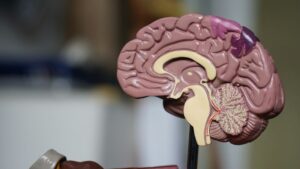
The control and modulation of the CMF are believed to involve intricate processes primarily within two key areas of the brain: the primary visual cortex (V1) and the posterior parietal cortex. The primary visual cortex is the initial cortical area responsible for processing basic visual information such as edges, colors, and motion. Its integrity is fundamental to forming a coherent visual image. The posterior parietal cortex, on the other hand, plays a critical role in spatial awareness, attention, and integrating sensory information to guide actions. It is involved in higher-order processing of visual information, including the perception of size, distance, and the spatial relationships between objects. Dysfunction in either of these areas, or in the complex neural pathways connecting them, can lead to a reduction in the CMF, thereby causing objects to be perceived as smaller than they actually are.
Damage or dysfunction in these critical brain regions can arise from a myriad of underlying conditions, highlighting the diverse etiologies of micropsia. Potential causes range from acute neurological events such as migraines, seizures (particularly those originating in the temporal or occipital lobes), and cerebrovascular accidents (strokes), to more chronic conditions like brain tumors, encephalitis, and certain autoimmune diseases affecting the central nervous system. Furthermore, micropsia can sometimes be a symptom of psychiatric conditions, drug intoxication, or even ocular conditions affecting the retina, though the latter often involves secondary effects on cortical processing. Understanding the specific neurological insult is paramount for accurate diagnosis and for guiding any potential treatment strategies, as managing the underlying cause often offers the best hope for alleviating the perceptual distortion.
Clinical Manifestation and Patient Experience
Patients afflicted with micropsia consistently report a singular, yet profoundly unsettling symptom: the visible world around them appears significantly diminished in size. This perceptual distortion is not merely a fleeting impression but a persistent alteration in how they experience reality. The impact of this phenomenon is pervasive, affecting all objects within their visual field, regardless of their intrinsic size or familiarity. From the minutiae of everyday existence, such as a pencil on a desk or a cup in hand, to the grand scale of the external world, encompassing towering buildings and fast-moving vehicles, everything is perceived as unnaturally small. This consistent misrepresentation of size creates a disorienting and often anxiety-inducing experience, compelling individuals to constantly question the veracity of their own sight.
The severity of this distortion varies widely among individuals, leading to a spectrum of functional impairments. In milder cases, the reduction in perceived size might be merely a curious anomaly, a source of mild distraction that can be consciously overridden or mentally adjusted for. However, for those experiencing severe micropsia, the world can shrink to such an extreme degree that objects appear only a fraction of their actual size, rendering them functionally unrecognizable or dangerously misjudged. This profound level of distortion can transform routine tasks into insurmountable challenges, making activities like reading, driving, cooking, or even navigating familiar environments fraught with difficulty and potential hazard. The constant struggle to reconcile perceived reality with known reality can lead to significant psychological distress, including frustration, isolation, and a sense of detachment from the world.
Beyond the fundamental alteration in object size, patients with micropsia frequently encounter additional difficulties in their visual perception, particularly concerning depth perception and the accurate assessment of size relationships between objects. This means that not only does an object appear smaller, but its perceived distance might also be skewed, making it challenging to grasp, reach for, or interact with. For example, a staircase might appear to have tiny, distant steps, making ascending or descending feel perilous. Similarly, judging the relative size of a car approaching in traffic compared to one’s own vehicle becomes an almost impossible task, directly impacting safety. These compounded perceptual deficits underscore the widespread impact of micropsia on visual processing, highlighting how a single distortion can cascade into a complex array of functional impairments that affect every aspect of an individual’s interaction with their environment.
Real-World Implications and Practical Examples
To truly grasp the debilitating nature of micropsia, one must consider its profound impact on daily life through a practical example. Imagine a person, let’s call her Sarah, who develops severe micropsia. Her once-familiar kitchen, a place of comfort and routine, transforms into a perplexing landscape of miniature objects. The coffee mug she reaches for appears no larger than a thimble, making it difficult to gauge its weight or capacity. The kitchen knife, essential for preparing meals, looks like a tiny toy, causing her to hesitate and second-guess her movements, fearing she might injure herself due to misjudgment of its actual size and sharpness. This pervasive sense of disproportion makes even the simplest culinary tasks arduous and potentially dangerous, eroding her independence and confidence in her own home.
The “how-to” of this psychological principle’s application in Sarah’s life unfolds step-by-step with every interaction. When Sarah attempts to pour water into her “thimble-sized” mug, her brain’s internal model of its volume is drastically incorrect. She might pour too little, thinking it’s full, or spill water because she misjudges the lip of the cup. Her visual perception provides her with an inaccurate scale, directly interfering with her motor planning and execution. Similarly, when driving, a car in the lane next to her might appear as a distant toy, leading her to misjudge its speed and proximity, making lane changes or turns incredibly risky. The brain’s processing of visual cues, usually instantaneous and accurate, is now compromised, leading to a constant disconnect between what is seen and what is real, forcing her to rely on other senses or conscious, effortful calculations to navigate her surroundings.
This constant battle against distorted reality creates immense psychological strain. Sarah’s world is fundamentally unreliable; she cannot trust her eyes, leading to anxiety, frustration, and a pervasive sense of helplessness. The once-automatic processes of spatial reasoning and object recognition become manual, taxing endeavors, draining her mental energy. Her ability to interact with others is also affected, as facial features might appear minuscule, making it difficult to read expressions or maintain eye contact comfortably. The functional impairment extends beyond mere inconvenience, touching upon her emotional well-being and social engagement, illustrating how a specific visual disorder can profoundly alter an individual’s entire life experience, emphasizing the critical importance of accurate visual perception for human functioning and interaction.
Significance in Psychological and Medical Fields
The study of micropsia holds significant importance for the field of psychology, particularly within the subfields of cognitive psychology and neuropsychology. It provides a unique window into the brain’s complex mechanisms of visual perception and spatial reasoning. By examining how the brain can misinterpret fundamental attributes like size and distance, researchers gain invaluable insights into the normal functioning of the cortical magnification factor (CMF) and the neural pathways responsible for maintaining a stable and coherent visual world. This understanding helps to delineate the specific brain regions and processes involved in constructing our visual reality, highlighting how disruptions at different points in this intricate network can lead to distinct perceptual anomalies. Micropsia, therefore, serves as a powerful model for exploring the plasticity and vulnerabilities of the human visual system.
In the broader medical context, the recognition and accurate diagnosis of micropsia are crucial because it often serves as a telltale symptom of underlying neurological or psychiatric conditions. While a rare disorder in itself, its presence can alert clinicians to potentially serious issues such as brain tumors, migraines, focal epilepsy, retinal disorders, or even certain drug intoxications. Thus, micropsia is not merely an isolated visual anomaly but a diagnostic clue that prompts further investigation into the patient’s neurological health. Its application extends to providing a deeper understanding of various brain disorders, helping to characterize their impact on higher-order visual processing, and guiding targeted diagnostic workups. For example, understanding that micropsia can be transient and associated with migraine auras helps differentiate it from more persistent forms linked to structural brain lesions, thereby influencing the urgency and type of medical intervention.
Furthermore, the challenges posed by micropsia in daily life underscore the importance of psychological support and rehabilitation strategies. The profound impact on an individual’s ability to navigate their environment, perform routine tasks, and maintain social interactions necessitates interventions that go beyond purely medical management. Therapists, particularly those specializing in cognitive behavioral therapy (CBT), play a vital role in helping patients adjust to their altered perception, develop coping mechanisms, and manage the associated psychological distress. The study of micropsia also contributes to our general understanding of how the brain adapts (or fails to adapt) to sensory deficits, informing broader strategies for managing other forms of visual impairment and neurological conditions that affect perception, thereby enhancing patient care across multiple disciplines.
Therapeutic Approaches and Management Strategies
Currently, there is no universally recognized cure for micropsia, primarily because it is a symptom arising from a diverse array of underlying causes, rather than a standalone disease with a singular etiology. Consequently, treatment strategies are predominantly focused on managing the symptoms and, critically, addressing any identifiable root cause. The initial approach often involves a thorough diagnostic workup to pinpoint the underlying neurological, ophthalmological, or psychiatric condition responsible for the perceptual distortion. For instance, if micropsia is triggered by a migraine, managing the migraine through prophylactic medications or acute treatments might alleviate the visual distortion. Similarly, if it is a side effect of medication, adjusting or discontinuing the offending drug could resolve the issue. The complexity of its origins necessitates a highly individualized and often multidisciplinary approach to patient care, involving neurologists, ophthalmologists, and psychiatrists.
Symptomatic management of micropsia often includes the use of various optical devices designed to compensate for the visual distortions. Corrective lenses, while typically used for refractive errors, might be prescribed in specific configurations to attempt to alter the incoming visual information in a way that counteracts the perceived size reduction. Prisms are another optical tool that can be employed; they work by shifting the visual field and can sometimes be utilized to manipulate how images are projected onto the retina, potentially offering some relief from the size distortion. Other specialized optical devices, tailored to an individual’s unique perceptual challenges, may also be explored. These interventions aim to provide external adjustments that can help the brain re-calibrate its visual processing, or at least offer a more coherent visual experience, thereby improving the patient’s functional abilities and reducing the disorienting effects of the disorder.
Beyond optical aids, pharmacological interventions and psychotherapies play a significant role in managing the broader impact of micropsia. In cases where the condition is associated with or exacerbated by psychiatric symptoms such as anxiety, depression, or psychosis, medications like antidepressants or antipsychotics may be prescribed to alleviate these co-occurring conditions, which can indirectly help in managing the patient’s overall distress and ability to cope. Furthermore, psychotherapies, particularly Cognitive Behavioral Therapy (CBT), are invaluable. CBT helps patients develop coping mechanisms, challenge distorted thought patterns related to their altered perception, and adjust to living with the disorder. Other psychotherapies may also focus on stress reduction, improving functional skills, and providing emotional support, all aimed at enhancing the patient’s quality of life and helping them navigate a world that often appears profoundly different from what they know it to be.
Related Visual Perceptual Disorders and Broader Categories
Micropsia does not exist in isolation within the realm of visual perceptual disorders; it is often discussed in relation to other conditions that affect how the brain interprets visual information. One of the most direct and frequently cited related concepts is macropsia, which is essentially the opposite phenomenon. While micropsia causes objects to appear smaller, macropsia leads to the perception of objects as disproportionately larger than their actual size. Both conditions fall under the umbrella of dysmetropsia, a general term for visual size distortions, and are thought to involve similar mechanisms related to alterations in the cortical magnification factor (CMF), albeit in opposing directions. The co-occurrence or oscillation between micropsia and macropsia can be particularly disorienting for individuals, further highlighting the delicate balance of the brain’s visual processing systems.
Another important connection is to Alice in Wonderland Syndrome (AIWS), a broader neurological condition characterized by a constellation of perceptual distortions, including not only micropsia and macropsia but also distortions of time, self-image (e.g., feeling one’s body parts are shrinking or growing), and other sensory modalities. AIWS is often associated with specific neurological conditions, such as migraines and epilepsy, and serves as a vivid illustration of how comprehensive and widespread perceptual alterations can be when the brain’s interpretive processes are disrupted. Understanding micropsia as a component of AIWS provides a richer context for its clinical presentation and potential underlying causes, linking it to a wider array of neurological phenomena where the brain’s internal model of reality becomes profoundly altered.
Micropsia, along with its related conditions, belongs to several broader categories within the scientific and medical disciplines. Primarily, it falls under the purview of Neurology, as its etiology is rooted in brain dysfunction, particularly affecting the primary visual cortex and posterior parietal cortex. It is also a significant topic within Neuropsychology, which studies the relationship between brain function and behavior, including perception. Furthermore, due to its impact on the visual system and the need for optical assessments, it is relevant to Ophthalmology. From a psychological perspective, it is a key area of study in Cognitive Psychology, specifically within the domain of visual perception, as it helps illuminate the mechanisms by which the brain constructs our visual experience. The multidisciplinary nature of micropsia underscores the intricate connections between various fields in understanding complex human conditions.