Microsleep: When Your Brain Briefly Shuts Down
Scientifically Reviewed · Dr. Marwa Abd-Alazim · September 20, 2026
Review Criteria & Clinical Standards
This content undergoes rigorous scientific peer-review and medical editorial standards at Arab Psychology Network to ensure clinical accuracy, validity, and compliance with evidence-based guidelines from leading psychological and healthcare authorities (APA / WHO).
MICROSLEEP
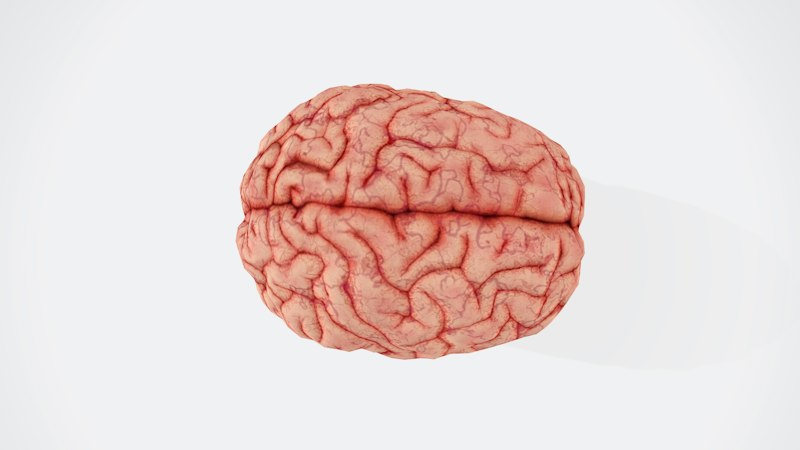
Microsleep represents an extremely brief, involuntary episode of sleep that occurs while an individual is apparently awake. Defined primarily by its short duration, typically ranging from a fraction of a second up to approximately thirty seconds, microsleep is a critical physiological manifestation of severe sleepiness or chronic sleep deprivation. These episodes are characterized by a sudden and temporary lapse in conscious awareness and responsiveness, during which the brain transitions momentarily into a sleep state, often equivalent to the earliest stages of Non-Rapid Eye Movement (NREM) sleep. Psychologically, microsleep poses a significant threat to safety and performance because the affected individual is usually unaware that the episode is occurring, or may only recognize the lapse retrospectively, mistaking it for a momentary distraction or zoning out. The concept is central to understanding the detrimental effects of insufficient sleep on vigilance and cognitive function, particularly in environments requiring sustained attention, such as driving or operating heavy machinery.
The occurrence of a microsleep episode is directly proportional to the accumulation of homeostatic sleep pressure, meaning the longer a person remains awake, the higher the probability and frequency of these involuntary lapses become. While commonly associated with severe fatigue, microsleep can also be triggered or exacerbated by monotonous environments, lack of sensory stimulation, or tasks requiring intense, prolonged concentration, even if the sleep deficit is relatively moderate. Understanding microsleep is essential not just for sleep science, but for fields such as occupational health, transportation safety, and military operations, as it provides a quantifiable marker of critical performance degradation resulting from biological need. The transition into microsleep is often abrupt, bypassing the typical subjective feelings of drowsiness, rendering it a uniquely dangerous phenomenon in high-stakes situations.
Furthermore, microsleep challenges the traditional dichotomy of being either fully awake or fully asleep. Modern neuroscience suggests that these lapses are evidence of localized sleep intrusion, where specific brain regions essential for maintaining attention and vigilance temporarily shut down, even while other areas remain active. This phenomenon highlights the brain’s compelling need to fulfill its sleep requirement, overriding conscious intent and behavioral measures to maintain wakefulness. The immediate consequence is a period of functional blindness and deafness to external stimuli, severely compromising the ability to process information, react appropriately, or maintain control over complex tasks.
Physiological Mechanisms and EEG Markers
The physiological underpinnings of microsleep are rooted in the dynamics of sleep regulation, particularly the interaction between the homeostatic drive (Process S) and the circadian rhythm (Process C). When Process S—the pressure to sleep—reaches a critical threshold due to prolonged wakefulness, the brain struggles to maintain sustained cortical arousal. Microsleep episodes manifest electrophysiologically as a sudden shift in the electroencephalogram (EEG) from the waking rhythm, characterized by alpha and beta waves, to patterns indicative of NREM Stage 1 sleep. Specifically, these episodes are marked by the appearance of slow-wave activity, including increased power in the theta (4–7 Hz) and delta (0.5–4 Hz) frequency bands, often lasting for 1 to 15 seconds before the return of waking rhythms.
Crucially, the EEG signature of microsleep confirms that the individual is not merely experiencing a lapse in attention but is genuinely entering a sleep state. Researchers often define a microsleep event objectively as the occurrence of three or more seconds of continuous theta or delta activity in the frontal and central EEG derivations, accompanied by slow eye movements, or following a period of eye closure. This shift represents a temporary failure of the ascending reticular activating system (ARAS) to maintain widespread cortical excitability. The brain stem nuclei responsible for promoting wakefulness, such as the norepinephrine-containing locus coeruleus and the histamine-containing tuberomammillary nucleus, temporarily decrease their firing rates, allowing sleep-promoting nuclei, like the ventrolateral preoptic nucleus (VLPO), to gain momentary dominance.
A more refined understanding involves the concept of local sleep, suggesting that microsleep might not involve the simultaneous cessation of activity across the entire cortex, but rather the localized intrusion of sleep-like activity in specific functional networks. Studies using intracranial recordings have shown that neurons in areas crucial for attention and executive function, such as the prefrontal cortex, can exhibit periods of ‘off’ states—where neural firing ceases—while other areas of the brain remain functionally awake. These localized lapses directly correlate with behavioral errors and performance degradation, suggesting that microsleep is the behavioral manifestation of these regional neuronal shutdowns. This explains why an individual might appear generally awake yet fail catastrophically on a specific, attention-demanding task—the relevant cognitive circuitry has momentarily entered sleep.
Causes and Etiology
The primary etiological factor driving the occurrence of microsleep is chronic sleep restriction or acute total sleep deprivation. The relationship is dose-dependent: the greater the cumulative sleep debt, the higher the frequency and duration of microsleep episodes. In laboratory settings, individuals subjected to continuous wakefulness beyond 17 to 19 hours begin to exhibit measurable increases in microsleep frequency, leading to significant performance impairment comparable to that of alcohol intoxication. Furthermore, chronic sleep restriction—for instance, sleeping only four to six hours per night over several days—leads to a cumulative sleep debt that progressively lowers the threshold for microsleep intrusion during subsequent periods of wakefulness.
Beyond simple deprivation, the interaction of the circadian rhythm plays a critical role. Microsleep frequency is significantly higher during the biological night, particularly during the “circadian nadir,” which typically occurs between 2:00 a.m. and 6:00 a.m., regardless of the total time spent awake. Even if an individual has secured adequate sleep, attempting to perform complex tasks during this low-point of the circadian cycle increases vulnerability to sleep intrusions. This vulnerability is highly relevant for shift workers and individuals traveling across time zones (jet lag), whose internal biological clocks are misaligned with their required wake schedule.
Environmental and task characteristics also serve as potent precipitating factors. Tasks that are highly monotonous, repetitive, or low in cognitive load tend to amplify the effects of underlying sleepiness. When the environment lacks novel stimuli, the brain’s wakefulness systems receive less excitatory input, making it easier for sleep pressure to overwhelm the maintenance of vigilance. Conversely, tasks that are highly complex and engaging can transiently suppress microsleep, but this suppression often leads to a more severe rebound of sleepiness once the task demands lessen. This interaction between endogenous sleep drive and exogenous environmental factors determines the precise timing and severity of microsleep occurrences.
Observable Manifestations and Behavioral Cues
Microsleep, though internally defined by EEG changes, manifests through distinct behavioral and physical cues that are often observable by trained researchers or external observers. The most recognizable behavioral sign is the rapid, involuntary drooping of the eyelids, often followed by complete eye closure, which can last for several seconds. When this closure exceeds a pre-defined threshold, typically 0.5 seconds to 5 seconds, it is often referred to as a PERCLOS (Percentage of Eyelid Closure over the Pupil) event, and serves as a highly reliable behavioral predictor of an impending or ongoing microsleep episode.
Other common physical manifestations include postural collapse or head nodding, where the muscle tone supporting the head and neck momentarily relaxes as the individual enters a brief sleep state. The head may drop rapidly, only to be jerked back up by a sudden, often startling muscle contraction upon the return to wakefulness—a phenomenon similar to the hypnic jerk experienced during sleep onset. Furthermore, during the microsleep episode itself, there is a marked cessation of activity, characterized by a blank stare, reduced facial expression, and a lack of motor response, such as dropping a pen or failing to maintain steering correction while driving.
Cognitive and behavioral performance cues are equally informative. During a microsleep, the ability to respond to external stimuli vanishes. If an individual is performing a reaction time task, the response time will become infinitely long, registering as a lapse or omission error. Upon exiting the microsleep, the individual often experiences a period of disorientation or amnesia regarding the preceding few seconds, sometimes known as a “lapse of time.” This post-microsleep disorientation is dangerous, especially if the individual is performing a continuous action, as the loss of continuity can lead to severe operational mistakes. Recognition of these subtle physical and performance cues is vital for developing effective fatigue monitoring systems in industrial and transportation settings.
Cognitive and Performance Impact
The cognitive impact of microsleep is profound, primarily affecting tasks requiring sustained vigilance, working memory, and rapid decision-making. The core performance decrement associated with these episodes is the creation of lapses in attention, which are moments when the individual fails entirely to process information or execute a required response. These lapses are not merely slow responses; they are omissions—a complete failure of the attentional system due to the momentary intrusion of sleep. This severely impairs the ability to monitor dynamic environments, leading to failures in detecting critical signals or changes in operational status.
In experimental paradigms, the effects of microsleep are most clearly documented using the Psychomotor Vigilance Task (PVT). The PVT requires subjects to respond rapidly to a visual stimulus appearing at random intervals. As sleep deprivation progresses, not only does the mean reaction time increase, but the distribution of reaction times becomes skewed, showing an increasing number of extremely slow responses and outright omission errors. These omission errors correlate almost perfectly with the EEG recordings of microsleep episodes, confirming that the behavioral lapse is a direct consequence of the brain transitioning into sleep.
Beyond simple reaction time, microsleep compromises complex executive functions. Working memory, which is essential for holding and manipulating information over short periods, is highly vulnerable to sleep intrusion. A brief lapse can cause the complete loss of crucial information being maintained in working memory buffers, necessitating a restart of the cognitive process or leading to error propagation. Furthermore, the ability to switch tasks efficiently or inhibit irrelevant responses is diminished, resulting in rigid, less flexible behavior immediately following a microsleep event. The cumulative effect of frequent microsleeps, even if short, is a dramatic reduction in cognitive throughput and reliability across virtually all domains of human performance.
Measurement and Detection Methods
Accurate measurement of microsleep is crucial for both clinical diagnosis and safety monitoring. The gold standard for objective detection remains Polysomnography (PSG) or specialized EEG monitoring. In laboratory settings, researchers use continuous EEG recordings, typically focusing on frontal and central leads, to identify the aforementioned spectral shifts (increased delta/theta power) that define the physiological onset of sleep. Behavioral measures, particularly performance on the PVT, provide a highly sensitive behavioral correlate, where omission errors serve as reliable indicators of microsleep occurrence.
In applied, real-world settings, however, continuous EEG is often impractical. Therefore, surrogate behavioral markers and physiological monitoring techniques have been developed. The most widely used behavioral measure is PERCLOS (Percentage of Eyelid Closure over the Pupil), which utilizes infrared cameras and image processing algorithms to continuously track the degree of eyelid closure. High PERCLOS values (e.g., exceeding 80% closure for a set duration) are strongly correlated with EEG-verified microsleep and are used extensively in commercial vehicle fatigue detection systems.
Other detection methods include physiological monitoring of autonomic functions, such as changes in heart rate variability (HRV) and electrodermal activity (EDA), which may precede or accompany sleep intrusions. Furthermore, sophisticated eye-tracking systems monitor gaze stability and pupil diameter. Pupillary hippus (fluctuations in pupil size) tends to decrease during periods of severe drowsiness, and gaze fixation often becomes erratic or unstable immediately prior to a microsleep event. These applied methods aim to provide timely, non-invasive warnings to individuals operating safety-critical equipment, allowing for intervention before a catastrophic lapse occurs.
Safety Implications and Real-World Risks
The most significant impact of microsleep lies in its catastrophic safety implications across various high-risk industries. Because microsleep episodes are involuntary, brief, and often accompanied by amnesia, they represent a moment of complete operational incapacitation. In the transportation sector, driver fatigue resulting in microsleep is a leading cause of severe accidents. A driver traveling at highway speeds (e.g., 60 mph) will cover the length of a football field during a four-second microsleep episode, during which time they are unable to perceive, react, or steer.
The dangers are equally pronounced in aviation, maritime operations, and industrial control environments. Air traffic controllers, pilots, long-haul truck drivers, and nuclear power plant operators all work within systems where a momentary lapse of attention due to microsleep can lead to fatal errors. Incidents attributed to fatigue often involve a critical failure to respond to an alarm, a deviation from a prescribed path, or an incorrect manipulation of controls during the brief period of sleep intrusion. The risk is compounded by the fact that individuals prone to microsleep often attempt to fight their drowsiness, leading to increased physiological strain and ultimately, a more forceful and unpredictable sleep intrusion.
Furthermore, the risk extends beyond acute accidents to chronic performance degradation in professional settings. Surgeons, medical residents, and first responders working extended shifts face increased chances of making procedural errors, diagnostic mistakes, or exhibiting poor communication due to intermittent microsleep. The imperative to manage and mitigate microsleep risk thus forms a cornerstone of modern safety regulation and risk management protocols in any profession demanding continuous, high-level cognitive performance.
Prevention and Management Strategies
Effective management and prevention of microsleep primarily revolve around addressing the underlying cause: inadequate sleep and high sleep pressure. The fundamental strategy is ensuring optimal sleep hygiene and securing sufficient consolidated nighttime sleep, generally seven to nine hours for adults. This foundational approach reduces the homeostatic drive that precipitates involuntary sleep lapses during subsequent wakefulness.
For situations where immediate sleep is impossible, several countermeasure strategies can be employed. Strategic napping is highly effective, as even short naps (10–30 minutes) can significantly reduce sleep pressure and temporarily decrease microsleep frequency and intensity. The timing of these naps is critical, often needing to occur before or during periods of known vulnerability, such as the circadian nadir or the end of a long shift. Controlled exposure to bright light therapy is also utilized, especially by shift workers, to help stabilize the circadian rhythm and bolster the brain’s ability to maintain alertness during scheduled work periods.
In operational environments, management strategies focus on structural and technological interventions. Structural interventions include mandatory rest breaks, workload rotation, and scheduling designed to avoid excessive continuous work hours. Technological interventions involve the use of fatigue monitoring systems that rely on PERCLOS or eye-tracking to provide real-time alerts to the individual or a supervising entity when signs of microsleep vulnerability are detected. Finally, chemical countermeasures, such as controlled and strategic consumption of caffeine, can provide temporary relief by blocking adenosine receptors, thereby reducing the sensation of sleepiness, although these methods do not eliminate the underlying sleep debt and must be used judiciously.