Neural Constructivism: How Your Brain Architects Reality
Scientifically Reviewed · Dr. Marwa Abd-Alazim · September 20, 2026
Review Criteria & Clinical Standards
This content undergoes rigorous scientific peer-review and medical editorial standards at Arab Psychology Network to ensure clinical accuracy, validity, and compliance with evidence-based guidelines from leading psychological and healthcare authorities (APA / WHO).
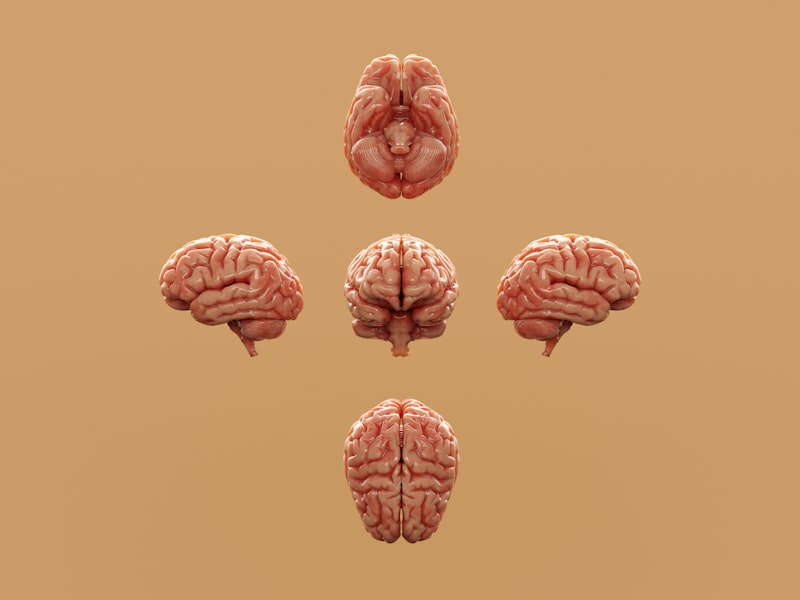
NEURAL CONSTRUCTIVISM
Neural constructivism is a seminal theoretical framework within cognitive neuroscience dedicated to elucidating the intricate processes through which the brain actively generates and refines mental representations of the external environment. This framework is crucial for understanding the dynamic interaction between biological mechanisms and environmental input, positioning the brain not as a passive recipient of data, but as an active constructor of reality. This comprehensive review examines the origins, core tenets, and profound influence of neural constructivism on the modern understanding of cognitive functions, including learning, retrieval, and complex decision-making processes. Furthermore, it explores the synergistic relationship between this psychological theory and advancements in artificial intelligence (AI), specifically through the development and refinement of artificial neural networks, ultimately discussing the expansive implications for future empirical and theoretical endeavors in the field.
Conceptual Foundation and Core Principles
Neural constructivism is fundamentally rooted in the premise that the brain’s internal structure and functional connectivity are continually being shaped by experience, resulting in a constantly evolving internal representation that guides behavior. Unlike purely nativist perspectives, which emphasize innate structures, or strict empiricist views, which emphasize passive data absorption, constructivism posits an active, recursive interaction: the environment informs the neural architecture, and the neural architecture subsequently interprets and acts upon the environment. This ongoing process of construction involves complex synaptic modifications, network reorganization, and selective pruning, ensuring that the resulting mental models are both adaptive and contextually relevant. The entire edifice of cognition—ranging from simple perception to abstract reasoning—is thus viewed as an emergent property of these constructive neural processes.
The core principle centers on the concept of an internal representation, which is not merely a mirror image of the world but a usable, subjective, and highly compressed model built from the integration of diverse sensory inputs and pre-existing knowledge structures. When an individual interacts with or observes a scene, the brain processes the incoming information, integrating it with prior predictive coding and experiential memories to form a coherent mental representation. This representation is immediately utilitarian; it serves as the crucial basis for executive functions such as hypothesis testing, prediction generation regarding future events, and the selection of appropriate behavioral responses. This inherent link between representation formation and immediate action execution is what gives neural constructivism its unparalleled explanatory power across a vast range of cognitive domains.
This theoretical stance provides compelling explanations for various developmental phenomena, including the staged progression of learning and the remarkable robustness and efficiency of memory systems. By emphasizing the brain’s inherent capacity for self-organization and continuous adaptation, neural constructivism offers a robust framework for explaining how complex cognitive abilities, such as fluent language acquisition, sophisticated memory encoding and retrieval, and advanced problem-solving skills, are developed and refined over the entirety of the lifespan. The continuous feedback loop between constructed mental models and environmental feedback drives cognitive maturation and specialization, highlighting the deeply dynamic and malleable nature of the human nervous system.
Historical Context and Theoretical Antecedents
While the term neural constructivism is a relatively modern invention within cognitive neuroscience, its theoretical lineage draws heavily from foundational concepts established in classic cognitive science, developmental psychology, and early computational neuroscience. Key intellectual antecedents include the seminal work of developmental psychologists like Jean Piaget, who profoundly emphasized the active role of the child in constructing knowledge through interaction with the environment, and early computational models that sought to understand the functional architecture of the brain. However, the modern formulation of neural constructivism gained significant traction with the rise of parallel distributed processing (PDP) models, popularized by researchers such as McClelland and Rumelhart, which demonstrated how complex knowledge could be stored and processed across extensive networks of interconnected units rather than being confined to discrete symbolic locations.
A pivotal and defining association exists between neural constructivism and the historical and ongoing development of Artificial Neural Networks (ANNs). ANNs, which are sophisticated computational programs designed to mimic the operational behavior of biological neural circuits, provide concrete, testable mathematical models for evaluating and refining constructive principles. The success of modern ANNs in computationally demanding tasks such as high-accuracy pattern recognition, natural language processing, and complex data classification hinges precisely on their ability to construct abstract internal feature representations through rigorous, iterative learning processes—a direct and powerful parallel to the representational processes posited by neural constructivism in biological systems.
The relationship between the biological theory and the computational model is fundamentally symbiotic: neural constructivism provides the essential biological and psychological blueprint (addressing the “what” and “why” of representation formation), while ANNs offer the necessary mathematical and engineering tools (addressing the “how”) to robustly model and rigorously test these complex network interactions. The underlying conceptual unity is the focus on adaptive connectivity, plasticity, and distributed representation. In both biological and artificial networks, knowledge is not narrowly localized but broadly distributed across the network structure, constantly being adjusted based on incoming sensory or data feedback, thereby powerfully reinforcing the central tenet that the internal structure is actively and constructively built through continuous interaction.
Mechanisms of Representation Formation
The formation of stable, yet flexible, mental representations under the neural constructivist model relies critically on highly specific neurological mechanisms, chief among them being synaptic plasticity. Learning, within this conceptual framework, is functionally synonymous with the durable modification of synaptic strengths, alongside the selective pruning or dynamic formation of new neural connections. When an environmental stimulus is saliently encountered, the corresponding neural activity triggers precise, localized changes in the efficacy and connections between the participating neurons. Repeated or highly salient experiences rapidly solidify these connections, allowing the network to encode the detected pattern or concept efficiently. This intensive encoding process results in the eventual emergence of a stable, yet inherently flexible, internal representation that can be readily recalled and utilized.
Furthermore, the mechanism of construction invariably involves hierarchical processing, where initially low-level sensory inputs (e.g., specific visual lines, basic auditory tones, or simple tactile sensations) are progressively integrated into higher-level, more abstract concepts (e.g., recognition of faces, understanding complex linguistic meaning, or spatial mapping). This efficient hierarchical construction allows the brain to manage the enormous complexity of the external world with maximal efficiency and minimal cognitive load. For example, within the visual system, neurons in early cortical areas are responsible for constructing representations of basic features, while neurons in later, more associative areas construct complex object recognition representations based on the dynamic integration of these foundational lower-level features. The inherent efficiency of this constructive, layered process ensures rapid, contextual, and accurate perception and interpretation of the environment.
The concept of Sparse Distributed Memory (SDM), initially proposed by researchers like Pentti Kanerva, also aligns seamlessly with core constructivist principles. SDM posits that memories are stored sparsely across a wide, non-localized distribution of neural units, a mechanism designed to maximize storage capacity while simultaneously ensuring robustness against local damage. When a retrieval cue is presented, the system does not simply read a fixed file but actively reconstructs the memory by activating the necessary distributed components based on the cue and context. This fundamentally reconstructive nature of memory, rather than a passive, precise readout, underscores the critical and active role of the neural system in generating and utilizing internal models both during the initial encoding phase and during subsequent attempts at retrieval.
Influence on Learning, Memory, and Decision Making
Neural constructivism has profoundly reshaped the understanding of fundamental cognitive processes, offering highly dynamic and adaptive explanations that surpass older, static models of information processing. In the critical realm of learning, the framework fundamentally emphasizes that knowledge acquisition is not a passive reception of data but an intensely active, ongoing process of assimilation and accommodation. New information must be robustly integrated into existing representational structures, sometimes necessitating the complete restructuring or substantial reorganization of the existing neural network itself. This view compellingly explains why active engagement, varied multimodal interaction, and continuous feedback are absolutely critical for achieving deep, robust learning and long-term knowledge retention across educational and professional settings.
Regarding memory formation and retrieval, constructivism posits that memories are not immutable, fixed files stored away in distinct locations, but rather are active, dynamic reconstructions that are inherently subject to modification and contextual influence upon every act of retrieval. Every instance of remembering is, to a significant extent, an act of construction, deeply influenced by the current context, affective state, and prevailing goals of the individual. This perspective provides a powerful, nuanced explanation for the well-documented malleability of human memory and the neurological mechanisms underlying phenomena like confabulation or false memory, where the brain constructs a coherent, plausible narrative even when specific retrieved elements are factually inaccurate, based on optimizing the coherence of the most plausible internal model.
In the domain of sophisticated decision making, the constructed mental representation of the environment dictates the perceived spectrum of available options, the predicted outcomes for each choice, and the assessed risk profile. Decisions are continuously optimized based on the brain’s internally constructed model of reality, which is constantly being updated through internal and external feedback mechanisms. This principle is fundamental to Reinforcement Learning (RL) theory. RL approaches, such as those discussed by Barto and others, provide formal mathematical tools for modeling precisely how learning agents (whether biological organisms or artificial systems) construct value representations of states and actions through iterative trial and error, thereby enabling them to make the most advantageous decisions possible based on their dynamically constructed internal map of potential rewards and associated penalties.
Applications in Artificial Neural Networks (ANNs) and AI
The practical utility and profound explanatory power of neural constructivism are perhaps most vividly demonstrated in the rapid, ongoing advancement of Artificial Neural Networks (ANNs), particularly within the burgeoning domain of deep learning. Deep ANNs, characterized by multiple interconnected hidden layers, successfully construct increasingly abstract, hierarchical representations of complex input data—such as identifying hierarchical features in images or complex grammatical structures in natural language—effectively mirroring the hierarchical constructive processes reliably observed in the mammalian cerebral cortex. The training process itself is a highly engineered and formalized form of constructivism, where the network iteratively adjusts millions of weights to minimize a defined error function, thereby constructing a functional internal model capable of accurate prediction, classification, or generation.
The development of advanced algorithmic techniques like Deep Reinforcement Learning (DRL), as extensively detailed in contemporary neuroscience and AI literature, serves as an exceptionally powerful testament to the constructivist paradigm. DRL systems learn optimal behavior policies directly from sparse environmental interaction and feedback, constructing highly complex state-value functions and policy representations without explicit initial programming. This impressive capability to autonomously build detailed internal representations of complex dynamic environments—whether demonstrated in simulated strategic games, robotic control tasks, or autonomous vehicle systems—directly and empirically validates the core constructivist hypothesis that learning agents construct their knowledge structures and ultimately their reality through continuous interaction and feedback loops.
Furthermore, the profound theoretical insights derived from studying neural constructivism have been instrumental in significantly improving the structural robustness, transferability, and interpretability of modern AI systems. Understanding that internal representations are constructed, distributed, and inherently adaptive allows computational engineers to deliberately design network architectures that generalize far better to novel, unseen situations and varied environments. Concepts such as transfer learning, where representations learned in one source domain are efficiently reused and fine-tuned for application in a distinct target domain, rely explicitly on the premise that the constructed knowledge structure possesses a necessary degree of modularity and reusability, closely reflecting the elegance and efficiency found in biological constructive processes.
Conclusion and Future Research Directions
Neural constructivism stands today as a vital, unifying, and indispensable framework in cognitive neuroscience, offering a comprehensive and profoundly dynamic explanation for how the brain effectively mediates the complex interaction between its internal architecture and the external reality it perceives. By emphasizing the actively adaptive, self-organizing, and fundamentally constructive nature of the brain, this framework has provided critical, actionable insights into processes ranging from basic perception and memory encoding to complex planning, decision-making, and sophisticated problem-solving. Its pervasive influence is evident not only in theoretical psychology and neuroscience but also in the tangible, practical advancements seen across the fields of artificial intelligence and machine learning.
Future research directions stemming from the neural constructivist model are vast, multifaceted, and exceptionally promising. One crucial area involves the rigorous neurobiological investigation of the precise molecular and cellular mechanisms governing the speed and efficiency of representational restructuring—exploring how epigenetic factors, neuromodulation, and rapid forms of plasticity facilitate the swift construction of new mental models in response to sudden, significant environmental shifts. Additionally, the integration of constructivist principles with advanced, high-resolution neuroimaging techniques, such such as fMRI and EEG, will allow researchers to map the real-time formation, maintenance, and utilization of these internal representations within the living human brain with unprecedented spatial and temporal resolution.
Ultimately, neural constructivism compels researchers to view the brain not as a static processor, but as a highly sophisticated, self-regulating, and self-organizing system whose primary, evolutionarily refined function is to continuously construct the most useful, predictive, and resilient model of the world possible. Continued exploration and validation of this powerful framework promise to further unravel the deepest complexities of human cognition, offering pathways not only for understanding typical brain function but also for developing more targeted and effective therapeutic interventions for a variety of cognitive and developmental disorders where the fundamental constructive process may be measurably impaired or inefficient.