The Moon Illusion: Why Your Brain Deceives You
Scientifically Reviewed · Dr. Marwa Abd-Alazim · August 22, 2026
Review Criteria & Clinical Standards
This content undergoes rigorous scientific peer-review and medical editorial standards at Arab Psychology Network to ensure clinical accuracy, validity, and compliance with evidence-based guidelines from leading psychological and healthcare authorities (APA / WHO).
The Core Definition
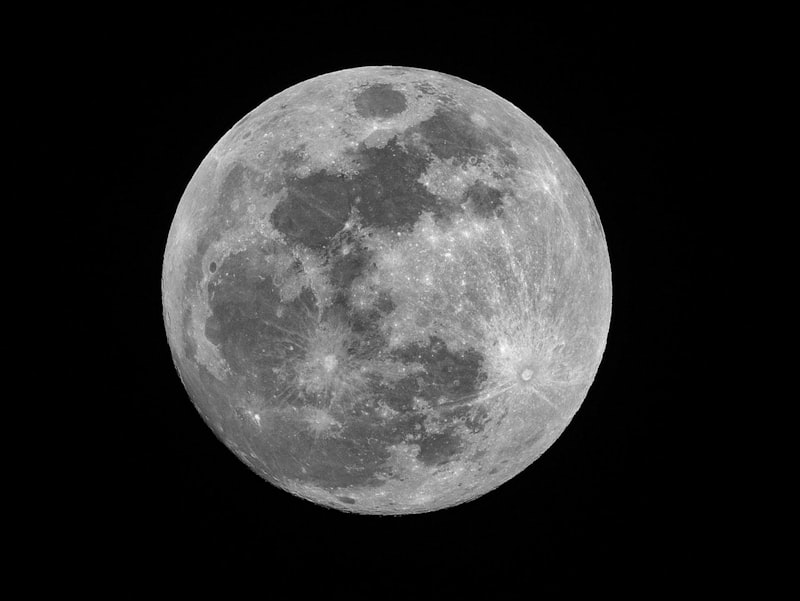
The Moon Illusion is one of the most compelling and widely recognized perceptual phenomena in the field of Sensation and Perception. It refers to the striking visual paradox where the Moon appears significantly larger when it is viewed near the horizon, especially when framed by terrestrial objects such as trees or buildings, compared to when it is observed high in the sky, at its zenith. This is a purely psychological and neurological effect; the fundamental mechanism relies entirely on how the human brain interprets visual input, not on any actual physical change in the Moon itself or its distance from the observer. The key idea underpinning the Moon Illusion is the failure or distortion of perceptual mechanisms designed to maintain size constancy, leading the viewer to experience a profound discrepancy in perceived size despite the measurable physical reality remaining constant.
Despite centuries of observation, the illusion remains consistently powerful, often making the horizon Moon appear 30% to 50% larger than the zenith Moon. The physical truth, however, is that the Moon’s objective angular size—the angle subtended by the Moon at the observer’s eye—changes very little, or sometimes even slightly decreases, when near the horizon due to the slightly greater distance caused by the observer standing on the Earth’s surface. This objective constancy, juxtaposed with the dramatic subjective experience of varying size, confirms the illusory nature of the event. Understanding this phenomenon forces us to recognize that what we see is not a direct recording of reality but an active, often interpretive, construction formulated by the visual processing centers of the brain.
Historical Roots and Early Explanations
The Moon Illusion is not a modern discovery; its observation and attempted explanation stretch back to antiquity. Early records indicate that thinkers such as Aristotle in the 4th century BCE were aware of the phenomenon. Later, in the 2nd century CE, the Greco-Egyptian astronomer and mathematician Ptolemy proposed one of the first formal theories. Ptolemy suggested that the apparent magnification was caused by the atmosphere, believing the thick layer of air near the horizon acted like a lens, optically magnifying the Moon. This atmospheric refraction theory persisted for many centuries, largely because it provided a simple, physical explanation for a visual event.
However, the atmospheric theory was definitively refuted in the 11th century by the Arab scholar Ibn al-Haytham (Alhazen), who argued convincingly that the illusion was perceptual rather than optical. Alhazen noted that if the magnification were purely atmospheric, an observer viewing the Moon through a pinhole or a narrow tube—thus eliminating the surrounding context—should still observe the magnification, which was not the case. His work shifted the focus from physics to psychology, establishing that the illusion must be dependent on the relationship between the Moon and its surroundings, or perhaps on the viewer’s judgment of distance. This intellectual shift paved the way for modern cognitive psychology theories that dominate the discussion today.
The Angular Size Measurement
A crucial component in studying the Moon Illusion involves the rigorous measurement of the Moon’s angular size. Angular size is defined by the visual angle that an object subtends at the eye. For the Moon, this angle is consistently about 0.5 degrees, regardless of its elevation above the horizon. Scientists employ instruments such as theodolites or precise photographic measurements to confirm that the physical image projected onto the retina does not significantly change size. In fact, due to the Earth being spherical, the Moon is slightly farther away when viewed on the horizon (by about one Earth radius compared to viewing it at the zenith), meaning its angular size should technically be marginally smaller when low in the sky, completely contradicting the perceived large size.
The disparity between the subjective perception and the objective measurement highlights the core mystery of the illusion. When subjects are asked to estimate the size of the horizon Moon versus the zenith Moon, they consistently report the horizon Moon to be larger. However, when subjects are asked to use instruments, like adjustable comparison circles projected onto the sky, to match the size of the Moon, the results typically confirm the illusion’s strength. This reliance on objective measurement is necessary to separate the powerful subjective experience from external reality, confirming that the brain is actively scaling the image based on misinterpreted contextual cues.
Primary Explanatory Theories: The Apparent Distance Hypothesis
The most widely accepted psychological explanation for the Moon Illusion is the Apparent Distance Theory, often traced back to the detailed work of psychologists like Kaufman and Rock in the 1960s. This theory posits that the illusion arises from the brain’s attempt to apply the principle of size constancy, but with faulty depth information. The sky is not perceived as a perfect hemisphere; instead, the brain perceives the celestial vault as being flattened—closer at the zenith and farther away toward the horizon. This perception is influenced by the wealth of terrestrial objects (trees, buildings, distant terrain) that fill the visual field near the horizon, providing numerous depth cues that suggest great distance. Conversely, the high sky lacks these cues, making it appear closer.
According to the Apparent Distance Theory, if two objects subtend the same visual angle (i.e., cast the same size image on the retina), the one judged to be farther away must, in reality, be physically larger. Since the Moon maintains the same retinal image size but is judged by the brain to be much farther away when near the horizon (due to the rich depth cues), the perceptual system scales it up to maintain constancy. The resulting experience is a dramatically magnified Moon. This scaling mechanism, while usually effective for judging the size of objects on the ground, fails spectacularly when applied to objects far outside our usual depth perception range, illustrating a critical limitation in our perceptual machinery.
Real-World Manifestation: A Practical Example
A simple, yet powerful, way to demonstrate and appreciate the Moon Illusion occurs during an evening commute or a walk in an open field just after sunset. Imagine standing in a suburban neighborhood and observing the full Moon rising. As it first appears, hugging the skyline just above the rooftops, it looks enormous—a colossal, orange disk dominating the view. This is the illusion at its peak, heavily influenced by the presence of houses, power lines, and distant hills that provide the necessary depth cues for the Apparent Distance Theory to take effect.
To test the illusion, the observer can perform a simple experiment known as the “bend-over trick.”
- Observation Setup: Carefully observe the large, horizon Moon and fix its perceived size and context in memory.
- Disrupting Context: Bend over and look at the Moon between your legs, or look at it using a small, rolled-up tube or telescope (even a toilet paper roll can work).
- The Result: When viewed upside down or through the tube, the Moon will instantly appear to shrink to its true, smaller size. By inverting the visual field or eliminating the contextual cues of the horizon and terrain, the brain is deprived of the depth information that triggers the scaling mechanism. This instantaneous “shrinkage” provides compelling evidence that the illusion is not optical, but purely a result of perception and contextual processing.
Psychological Significance and Research Impact
The Moon Illusion holds immense significance within experimental psychology because it serves as a powerful, naturally occurring demonstration that the brain does not passively record the environment. Instead, it actively engages in hypothesis testing and construction based on learned rules about distance and size. The illusion highlights the critical role of contextual information and depth cues in the process of cognition and perception. It demonstrates that size perception is inextricably linked to perceived distance, even when the object (the Moon) is far beyond the realm where size constancy typically operates.
Research into the Moon Illusion continues to inform various applied fields. In areas like human factors engineering and visual design, understanding how the brain misinterprets size and distance based on surrounding cues is vital. Furthermore, the illusion is frequently used in educational settings to teach students about the limitations of direct perception and the complex, inferential nature of the visual system. It underscores the fact that subjective experience can dramatically diverge from measurable physical reality, prompting deeper inquiry into the neural mechanisms responsible for depth judgment and visual scaling.
Connections and Relations to Other Perceptual Phenomena
The Moon Illusion is not an isolated curiosity; it is closely related to several other geometric-optical illusions that involve errors in judging size or distance based on surrounding context. Most notably, it shares conceptual ground with the Ponzo illusion, where two identical lines placed over converging lines (like railroad tracks) appear to be different sizes. In the Ponzo illusion, the converging lines provide a strong depth cue, suggesting that the top line is farther away, causing the brain to scale it up, much like the horizon context scales up the Moon.
Another related concept is the Müller-Lyer illusion, which involves line segments appearing longer or shorter depending on the orientation of attached arrowheads. While structurally different, these illusions all fall under the umbrella of visual size constancy errors, demonstrating systematic ways in which our perceptual hypotheses about the environment lead to reliable misinterpretations. Ultimately, the study of the Moon Illusion belongs firmly within the domains of Experimental Psychology, particularly the subfields of Sensation and Perception and Cognitive Psychology, as it perfectly illustrates the top-down processing required for constructing a stable and meaningful visual world.