Motion Aftereffect: Why Your Brain Sees False Reality
Scientifically Reviewed · Dr. Marwa Abd-Alazim · October 11, 2026
Review Criteria & Clinical Standards
This content undergoes rigorous scientific peer-review and medical editorial standards at Arab Psychology Network to ensure clinical accuracy, validity, and compliance with evidence-based guidelines from leading psychological and healthcare authorities (APA / WHO).
Understanding the Motion Aftereffect
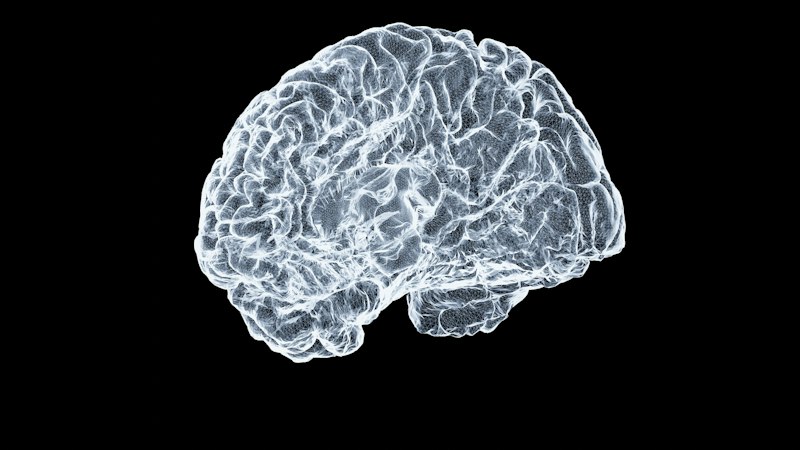
The Motion Aftereffect (MAE), often referred to as the waterfall illusion, is a compelling visual phenomenon wherein the prolonged observation of movement in a particular direction leads to the subsequent perception of illusory motion in the opposite direction when viewing a stationary object or scene. This is a powerful demonstration of how our brain actively constructs our visual reality, rather than passively receiving sensory input. It reveals the dynamic and adaptive nature of the visual system, particularly its specialized mechanisms for processing visual motion. The core idea underpinning MAE is that the neural circuits responsible for detecting motion become fatigued or adapted after sustained stimulation, leading to a temporary imbalance in the activity of opponent motion-sensitive neurons.
At its most fundamental level, the MAE is a consequence of neuronal adaptation within the brain’s motion-processing pathways. When we fixate on a moving stimulus for an extended period, the neurons tuned to that specific direction of motion become less responsive, or “fatigued.” Upon the removal of the moving stimulus and the presentation of a static one, the unadapted neurons, which are sensitive to motion in the opposite direction, exhibit a relatively higher baseline firing rate compared to the adapted neurons. This imbalance creates a perceived net motion in the direction opposite to the original adapting stimulus, even though no actual movement is occurring in the visual field. This adaptive mechanism is critical for maintaining sensitivity to motion changes in a dynamic environment, allowing the visual system to recalibrate itself constantly.
The subjective experience of MAE can be quite vivid, ranging from a subtle drift to a pronounced, compelling flow. Its characteristics, such as duration and intensity, are influenced by various factors including the speed, contrast, and duration of the adapting stimulus. Furthermore, the MAE is not merely a retinal phenomenon; extensive research has demonstrated its cortical origins, implicating higher-level visual processing areas in its generation. This makes MAE a valuable tool for researchers investigating the neural underpinnings of motion perception and the brain’s remarkable capacity for adaptation and plasticity.
Historical Roots and Early Discoveries
While the systematic study of the Motion Aftereffect gained prominence in the early 20th century, observations of this illusion date back much further. The Greek philosopher Aristotle is credited with one of the earliest descriptions, noting that after watching a river flow, stationary rocks appeared to move upstream. Later, in 1820, Czech physiologist Jan Evangelista Purkinje documented a similar phenomenon after observing a cavalry parade. However, it was the Belgian physicist Joseph Plateau who provided the first detailed scientific account in 1840, describing what is now known as the Plateau’s spiral aftereffect, a specific form of MAE induced by viewing a rotating spiral.
The first systematic and influential study in the field of psychology was conducted by the German psychologist Max Wertheimer in 1912. Wertheimer, a foundational figure in Gestalt psychology, was deeply interested in the principles governing visual organization and perception. In his seminal work, “Experimentelle Studien über das Sehen von Bewegung” (Experimental studies on the seeing of motion), he described an experiment where observers viewed a disc with a black stripe rotating continuously. After the disc was abruptly stopped, participants consistently reported perceiving the stripe as still moving in the same direction, albeit illusorily. This precise observation provided a crucial, quantifiable demonstration of the MAE, moving its understanding beyond anecdotal reports to systematic experimental inquiry.
Wertheimer’s work laid the groundwork for subsequent generations of researchers to explore the mechanisms underlying this fascinating illusion. His findings sparked intense interest in the adaptive properties of the visual system and the neural processes involved in motion detection. The early 20th century, particularly the era following Wertheimer’s publication, saw a burgeoning of research into various aspects of visual aftereffects, with the MAE standing out as a particularly robust and informative phenomenon for probing the intricacies of sensory adaptation and neuronal processing.
The Neurophysiological Mechanisms
The Motion Aftereffect is profoundly rooted in the neurophysiological architecture of the visual cortex, particularly within areas specialized for processing visual motion. The prevailing explanation for MAE centers on the opponent process theory, which posits that motion in opposite directions is encoded by opposing neural channels. For instance, there are specialized neurons that respond optimally to upward motion and others to downward motion, or leftward versus rightward motion. When exposed to prolonged motion in one direction, the neurons responsible for detecting that specific direction become fatigued or adapt, leading to a temporary reduction in their firing rate and sensitivity.
This neuronal adaptation creates an imbalance in the activity of these opponent channels. Upon cessation of the adapting motion and viewing of a stationary stimulus, the unadapted neurons (tuned to the opposite direction) exhibit a relatively stronger baseline activity compared to the fatigued neurons. The brain interprets this imbalanced activity as motion in the direction opposite to the original stimulus. This mechanism is thought to occur primarily in the middle temporal visual area, commonly referred to as the V5/MT complex, which is a key region in the primate brain extensively involved in processing motion cues. Studies using fMRI have consistently shown increased activity in this region during the perception of MAE, supporting its critical role.
Further neuroimaging techniques, such as EEG and MEG, have provided insights into the temporal dynamics of MAE, revealing the precise timing of neural events associated with its generation. These studies indicate that the illusory motion is not merely a passive consequence of fatigue but involves active cortical reorganization and interpretation. The MAE serves as a powerful paradigm for investigating the complex interplay between sensory input, neuronal processing, and subjective perception, offering a window into how the brain constructs a coherent representation of a moving world.
Experimental Paradigms and Key Characteristics
Over the decades, researchers have developed sophisticated experimental paradigms to reliably induce and study the Motion Aftereffect, allowing for precise quantification of its properties. One of the most common and effective methods involves the use of dynamic random dot kinematograms (DRDKs). In this technique, a large number of small, randomly positioned dots are displayed on a screen and moved coherently in a specific direction. After a period of sustained viewing (the adaptation phase), the dots are either stopped or removed, and observers are asked to report any perceived motion in a stationary test stimulus. The robust nature of MAE makes DRDKs an ideal tool for manipulating parameters such as motion coherence, speed, and direction, thus allowing for detailed investigations into how these factors influence the strength and duration of the aftereffect.
Beyond DRDKs, other classic stimuli have been employed to induce MAE, each offering unique insights. The rotating spiral, for instance, evokes an impression of outward or inward motion during adaptation, leading to an illusory inward or outward motion when viewing a static pattern. The waterfall illusion, another iconic example, involves prolonged viewing of a waterfall, which subsequently makes stationary objects like rocks appear to move upwards. Researchers have also explored MAE using multiple moving objects, studying how the brain integrates or segregates motion signals from different parts of the visual field. These varied methods have illuminated important characteristics of MAE, including its direction specificity (the aftereffect is always opposite to the adapting motion), its speed specificity (faster adapting motion often leads to a stronger aftereffect), and its spatial specificity (the aftereffect typically occurs in the adapted region of the visual field).
Furthermore, studies have explored advanced characteristics such as interocular transfer, where adaptation presented to one eye can induce an MAE when the test stimulus is viewed by the other eye. This phenomenon provides strong evidence that the MAE is primarily a cortical effect, occurring after visual information from both eyes has converged in the brain. The duration of the MAE can vary from a few seconds to over a minute, depending on the intensity and duration of the adapting stimulus, and also on individual differences in visual processing. These experimental findings collectively underscore the complexity and adaptability of the human visual system, particularly its sophisticated mechanisms for parsing and interpreting dynamic visual information.
A Classic Everyday Example: The Waterfall Illusion
The waterfall illusion stands as perhaps the most widely recognized and relatable practical example of the Motion Aftereffect, offering a vivid demonstration of this perceptual phenomenon in our everyday experience. Imagine standing at the base of a powerful waterfall, watching the cascades of water relentlessly plunge downwards. The continuous, unidirectional flow of water serves as the adapting stimulus, engaging and fatiguing the motion-sensitive neurons in your visual cortex that are tuned to downward motion. This prolonged exposure to the constant downward movement is crucial for the illusion to manifest effectively.
After observing the waterfall intently for a minute or two, shift your gaze suddenly to the stationary rocks or trees adjacent to the waterfall, or even to a patch of still water at its base. What you will likely perceive is an illusory upward motion in these stationary elements. The rocks will appear to drift slowly upwards, or the trees might seem to sway slightly against their natural static state. This compelling, albeit fleeting, sensation of upward movement is the MAE in action. The fatigued neurons that were processing downward motion are temporarily suppressed, allowing the unadapted neurons that typically respond to upward motion to exert a stronger relative signal, thus leading to the perception of motion in the opposite direction.
This “how-to” experience illustrates the core principles of MAE beautifully. The strong, consistent motion of the waterfall provides the necessary adaptation, leading to an imbalance in the opponent process theory for motion. The stationary elements then become the test stimulus, revealing the aftereffect. Other similar everyday examples might include looking out of a moving train window at the passing scenery for an extended period, and then glancing at the stationary train interior, which might appear to drift in the opposite direction. These common occurrences highlight that MAE is not just a laboratory curiosity but an integral part of how our brains constantly adjust to and interpret the dynamic world around us, demonstrating the constant, active computation involved in visual perception.
Theoretical Significance for Visual Perception
The Motion Aftereffect holds profound theoretical significance for the field of Sensation and Perception, serving as a cornerstone phenomenon for understanding how the brain processes visual motion. Its robust and predictable nature has made it an invaluable tool for researchers seeking to unravel the neural mechanisms underlying motion detection, discrimination, and integration. By studying MAE, scientists have gained critical insights into the existence of specialized motion detectors in the visual system, the principles of neuronal adaptation, and the fundamental role of opponent process theory in sensory encoding. It demonstrates that our perception of motion is not merely a direct readout of sensory input but rather an active construction influenced by prior experience and the adaptive state of our neural circuits.
Moreover, the MAE has been instrumental in localizing motion processing to specific areas of the brain, particularly the V5/MT complex in the visual cortex. Research utilizing neuroimaging techniques like fMRI and EEG has consistently shown heightened activity in these areas during the perception of the illusory motion, thus providing compelling evidence for their involvement. This has contributed significantly to our understanding of the hierarchical organization of the visual system and the functional specialization of different cortical regions. The study of MAE continues to inform models of visual processing, helping to refine our understanding of how complex motion signals are encoded, interpreted, and integrated into a coherent perceptual experience.
Beyond motion perception itself, MAE provides a compelling model for understanding broader principles of perceptual adaptation and neural plasticity. The fact that the visual system can recalibrate itself in response to sustained stimulation highlights its dynamic nature and capacity for continuous adjustment. This adaptive capability is essential for maintaining stable perception in a constantly changing world and for allowing our sensory systems to remain sensitive to relative changes in stimuli, rather than absolute values. Thus, MAE is not just about motion; it’s a window into the fundamental adaptive mechanisms that govern all sensory processing, making it a cornerstone concept in experimental psychophysics and cognitive neuroscience.
Practical Applications and Clinical Relevance
The insights gleaned from the study of the Motion Aftereffect extend beyond theoretical understanding, finding practical applications in various domains, from clinical diagnostics to the development of visual technologies. In clinical settings, understanding MAE can aid in the assessment of visual processing deficits. For instance, individuals with certain neurological conditions or brain injuries affecting the V5/MT complex or other motion-sensitive areas may exhibit altered MAE responses, such as a reduced duration or magnitude of the aftereffect. This can serve as a non-invasive behavioral marker, helping clinicians pinpoint areas of dysfunction or monitor the progression of neurological disorders that impact motion perception.
In the realm of research, MAE serves as a valuable experimental tool for probing the fundamental principles of visual system function. Researchers utilize MAE to explore questions related to attention, consciousness, and multisensory integration. For example, studies might investigate how attention to the adapting stimulus influences the strength of the subsequent aftereffect, or how MAE interacts with other sensory modalities. Furthermore, the principles derived from MAE research contribute to the design and optimization of visual displays, virtual reality environments, and other technologies where the faithful and comfortable rendering of motion is paramount. Understanding how the brain adapts to and interprets motion can help reduce visual fatigue or motion sickness in users of such technologies.
Beyond clinical and technological applications, the MAE also contributes to our broader understanding of human factors and user experience. In fields like marketing and advertising, subtle motion cues can influence how products or advertisements are perceived, and understanding perceptual adaptation, as exemplified by MAE, can inform strategies for visual communication. Educators and designers of learning materials can also benefit from these insights, creating more engaging and perceptually effective visual content. Thus, the MAE, while seemingly a simple illusion, offers a gateway to profound understanding with implications spanning basic science, clinical practice, and everyday technological innovation.
Connections to Broader Psychological Concepts
The Motion Aftereffect is not an isolated phenomenon but is deeply interconnected with several broader concepts within Cognitive psychology and neuroscience, providing a rich context for understanding the complexities of human perception. It is a prime example of perceptual adaptation, a fundamental process by which our sensory systems adjust their sensitivity or responsiveness to sustained or repeated stimulation. This adaptive capacity is crucial for maintaining optimal function in a dynamic environment, allowing us to remain sensitive to changes rather than being overwhelmed by constant sensory input. MAE specifically illustrates motion adaptation, but similar principles govern adaptation in other sensory modalities, such as color (e.g., the color aftereffect) or orientation (e.g., the tilt aftereffect).
Furthermore, MAE is a compelling demonstration of the opponent process theory, a general principle that explains how many sensory systems encode information through opposing pairs of channels. While famously applied to color vision (red-green, blue-yellow), the MAE showcases its application to motion (e.g., upward-downward, leftward-rightward). This theory suggests that the brain processes sensory information by comparing the activity of these opposing channels, and an imbalance in this activity leads to a particular perception. The fatigue of one channel due to prolonged stimulation, as seen in MAE, tips the balance towards its opponent, leading to the illusory perception. This overarching principle highlights a common organizational strategy within the nervous system for efficient and robust sensory coding.
Finally, the MAE belongs to the broader category of Sensation and Perception within psychology, and more specifically, it falls under the domain of visual perception and Neuroscience. Its study contributes significantly to our understanding of neural plasticity, the brain’s ability to reorganize itself by forming new neural connections throughout life. The temporary changes in neuronal responsiveness that underpin MAE are a micro-level example of this remarkable plasticity. By investigating phenomena like MAE, researchers can develop more comprehensive models of how sensory experience shapes neural activity and, consequently, our subjective reality, thereby bridging the gap between the physical stimulus and the psychological experience.