Motor Control: Mapping the Mind’s Motion
Scientifically Reviewed · Dr. Marwa Abd-Alazim · August 24, 2026
Review Criteria & Clinical Standards
This content undergoes rigorous scientific peer-review and medical editorial standards at Arab Psychology Network to ensure clinical accuracy, validity, and compliance with evidence-based guidelines from leading psychological and healthcare authorities (APA / WHO).
Defining Motor Behavior and the Homunculus Concept
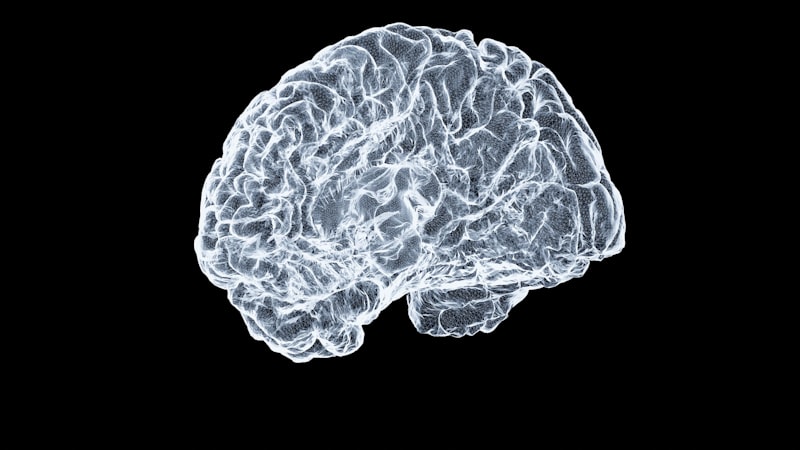
The study of motor behavior encompasses the intricate processes by which the central nervous system generates coordinated, purposeful movement. Historically, the direct neurological link between specific cranial regions and voluntary action remained partially obscured until the mid-twentieth century. We now understand that motor behavior is fundamentally organized and executed by the motor cortex, a specialized region of the frontal lobe. This understanding is crucial, as the complexity of the motor tasks performed dictates the amount of cortical real estate dedicated to their control, reflecting an economy of neural resources focused on functional necessity rather than mere physical size.
The visualization of this cortical allocation is captured in one of the most enduring and iconic concepts in neuroscience: the Motor-Function Homunculus. This term, derived from the Latin word meaning ‘little man,’ represents a topographical map of the human body projected onto the primary motor cortex. It serves as a powerful metaphor demonstrating how the neural architecture of movement control is spatially organized. The development and empirical verification of this map are inextricably linked to the groundbreaking work of the Canadian neurosurgeon Wilder Penfield (1891–1976) and his colleagues.
Penfield’s pioneering electrophysiological mapping techniques confirmed that specific, localized areas of the cortex control corresponding body parts. This revelation firmly established the principle of somatotopic organization within the primary motor cortex. The Homunculus is not anatomically accurate in terms of physical size; rather, it is a distorted figure where the size of the body part—such as the massive hands or lips—is directly proportional to the density of neural innervation required for fine motor control and the execution of complex, nuanced tasks like speech, manipulation, or facial expression.
The Historical Context: Wilder Penfield and Cortical Mapping
The empirical foundation for the Motor Homunculus was established through the necessity of treating severe epilepsy. Working primarily at the Montreal Neurological Institute, Penfield developed the now-famous ‘Montreal procedure,’ which involved stimulating the exposed brains of conscious patients using small electrical currents before removing damaged or epileptic tissue. This unique methodology allowed Penfield to precisely map functional areas, ensuring that critical centers for movement, sensation, and language were preserved during surgery. This technique, though invasive, provided unprecedented real-time data on human cortical function that was unattainable through animal studies or post-mortem examination.
By systematically applying electrical stimuli across the precentral gyrus—the anatomical location of the primary motor cortex—Penfield observed that stimulation of a specific cortical point consistently elicited a predictable, involuntary movement in a contralateral body part. For instance, stimulating a lateral point might cause a twitch in the patient’s thumb, while stimulating a superior, medial point would move the toes. This meticulous charting confirmed a fixed, orderly relationship between the geography of the motor cortex and the musculature of the body, moving sequentially from the toes at the superior midline to the tongue and jaw at the lateral extreme.
Penfield’s contributions were revolutionary because they moved the understanding of motor control beyond theoretical models and provided tangible, empirical evidence of its spatial arrangement. The resulting map, visualized as the Homunculus, immediately illustrated the disproportionate allocation of neural resources. The recognition that motor behavior is tightly controlled by these mapped cranial regions provided the first comprehensive understanding of how the brain translates thought into action, emphasizing that the motor cortex is fundamentally organized around the execution requirements of highly complex tasks rather than simply the mass of the muscles being controlled.
Anatomy and Function of the Primary Motor Cortex (M1)
The Primary Motor Cortex (M1) is situated in the precentral gyrus of the frontal lobe, immediately anterior to the central sulcus which separates it from the somatosensory cortex. M1 acts as the primary executive center for voluntary movement, serving as the final point of integration within the cortex before commands are dispatched to the musculature. Its main function is the initiation and coordination of complex, fractionated movements, particularly those involving the distal extremities, such as the fine control required for tool use or writing. Damage to M1 typically results in immediate and severe contralateral paralysis, known as hemiplegia, underscoring its critical role in motor output.
The efferent signals responsible for carrying these motor commands travel primarily via the Corticospinal Tract, often referred to as the Pyramidal Tract due to its trajectory through the medullary pyramids. Axons originating from the large pyramidal neurons (Betz cells) within M1 descend through the internal capsule and brainstem. Critically, the vast majority (around 90%) of these fibers cross the midline—a phenomenon known as decussation—in the caudal medulla. This decussation explains the fundamental principle that the left primary motor cortex controls movement on the right side of the body, and vice versa. These fibers then terminate directly or indirectly onto alpha and gamma motor neurons in the spinal cord, which in turn innervate the skeletal muscles.
While M1 is the final execution point, it does not operate in isolation. It receives extensive preparatory and modulatory input from multiple areas, including the adjacent premotor cortex (PMA), the supplementary motor area (SMA), and somatosensory feedback from the posterior parietal cortex (PPC) and the thalamus. This complex network ensures that M1 commands are not simply raw outputs but are finely tuned instructions based on sensory context, desired goals, and previously learned sequences. The integrity of M1 is therefore dependent on robust communication with these associated motor and sensory regions, integrating environmental awareness with the intention to move.
The Somatotopic Map: Visualizing the Homunculus
The Motor Homunculus is a striking visual representation of the somatotopic map, illustrating the precise arrangement of the body’s musculature along the length of the primary motor cortex. If one were to follow the cortical surface from the medial aspect (the area tucked into the longitudinal fissure) across the lateral surface, the represented body parts appear in a specific, inverted sequence. Beginning medially and superiorly are the toes, feet, and legs. As the map moves ventrally and laterally along the precentral gyrus, the representation shifts sequentially through the trunk, arms, hands, neck, and finally the face, jaw, and tongue at the most lateral and inferior extent.
The most salient feature of the Homunculus is its profound distortion. Unlike a true anatomical rendering, the size of the represented body part is dramatically exaggerated or minimized based not on physical dimensions but on the functional demands placed upon it. The sheer scale of the cortical area dedicated to the hands, fingers, lips, and tongue dominates the map, illustrating the high degree of dexterity and fine-tuning required for actions such as speech articulation, tactile exploration, and complex manipulation. Conversely, large muscle groups involved in posture and locomotion, such as those of the back and trunk, occupy relatively minor segments of the cortical landscape.
This topographical arrangement, while continuous, reveals the brain’s priority system for motor control. The most heavily innervated areas, which require the most precise and fractionated control, consume the largest neural territory. Key examples of over-representation include:
- The Hands and Fingers: Essential for grasping, tool use, and writing, demanding maximal cortical space for highly differentiated movement.
- The Face and Lips: Crucial for complex verbal communication, eating, and expressive social signaling.
- The Tongue and Larynx: Necessary for the rapid and coordinated muscle movements required for speech articulation and swallowing.
The orderly, yet distorted, progression across the M1 surface is what gives the Homunculus its memorable and instructive form, serving as a constant reminder that neural organization is driven by behavioral utility.
Distortion and Proportionality: Interpreting the Map
The phenomenon of cortical magnification is central to interpreting the distorted appearance of the Motor Homunculus. Cortical magnification refers to the disproportionately large area of the motor cortex dedicated to body parts that possess a high density of motor units and require highly fractionated control. This allocation reflects the complexity of the neural circuitry needed to execute fine movements. For instance, the hand’s representation may cover an area many times larger than that dedicated to the entire back, despite the back containing vastly more muscle mass. This difference arises because the control of the hand involves dozens of independent muscles requiring precise, individual activation patterns for skilled actions like playing a musical instrument or performing surgery.
Conversely, areas that only require coarse, synergistic movements—such as the large, postural muscles of the trunk or proximal limbs—are represented by relatively small cortical areas. These movements are often gross and generalized, requiring less differentiated neural control. The contrast between the expansive cortical area for the lips, crucial for the rapid, subtle changes required during speech, versus the minimal space for the thigh musculature, highlights the brain’s emphasis on functional dexterity over sheer muscle volume. This functional organization ensures that the most complex and behaviorally critical tasks are afforded the greatest capacity for precise neural command generation.
Furthermore, the functional proportionality illustrated by the Homunculus relates directly to the concept of motor field size. Body parts with small motor fields (meaning a single motor neuron innervates only a few muscle fibers, leading to high precision) require larger cortical representation. Conversely, body parts with large motor fields (where a single motor neuron innervates many fibers, leading to low precision) require smaller cortical representation. The Homunculus thus visually encodes the neural investment required for fractionated movement—the ability to move individual parts of a limb independently, a hallmark of primate dexterity and a key element of human motor capability.
Beyond M1: The Extended Motor Network
While the Primary Motor Cortex (M1) and its Homunculus map are crucial for the final execution of voluntary movements, motor behavior is orchestrated by a much broader network of cortical and subcortical structures. The prefrontal areas immediately anterior to M1, specifically the Premotor Area (PMA) and the Supplementary Motor Area (SMA), play indispensable roles in planning, sequencing, and selecting appropriate motor programs prior to the execution phase within M1. These areas refine the intention to move into a concrete, temporal sequence of muscle commands.
The Supplementary Motor Area (SMA) is particularly associated with the internal generation of movement sequences and the coordination of bilateral movements. It is heavily involved when motor tasks are well-learned or when movements are initiated intrinsically, without reliance on immediate external sensory cues. Studies show that the SMA is highly active during mental rehearsal of complex sequences, suggesting its role in organizing and holding the blueprint for movement before it is handed off to M1. Damage to the SMA can impair the ability to initiate complex, multi-step movements, even though the ability to perform individual, simple movements remains intact.
The Premotor Area (PMA), situated more laterally, is specialized for movements that are guided by external sensory information, particularly visual and auditory cues. The PMA helps link environmental signals to the correct motor response, playing a vital role in spatial orientation and target selection. For example, reaching for an object requires the PMA to integrate visual input regarding the object’s location with the appropriate arm and hand trajectory. Both the PMA and SMA funnel their highly processed motor programs into M1, ensuring that the commands executed by the Homunculus are coherent, context-appropriate, and accurately sequenced, demonstrating that the complexity of human motor behavior requires a sophisticated hierarchy of control well beyond the final output map.
Clinical Significance and Modern Revisions of the Homunculus
The Motor Homunculus provides invaluable clinical insight, particularly in the diagnosis and prognosis of neurological disorders. Understanding the somatotopic organization allows clinicians to predict the functional deficits that will arise from focal lesions, such as those caused by a stroke or traumatic brain injury. A lesion affecting the lateral portion of the motor cortex, for instance, would predictably result in paralysis or severe weakness (hemiparesis) affecting the contralateral face, hand, and arm—the areas with the largest representation—while leaving the trunk and leg function relatively spared, aiding in rapid neurological localization.
While Penfield’s work established the fundamental topographical layout, subsequent research using advanced neuroimaging techniques (such as functional Magnetic Resonance Imaging, fMRI, and Transcranial Magnetic Stimulation, TMS) has refined the understanding of the motor map, particularly introducing the concept of cortical plasticity. The initial Homunculus suggested a fixed, immutable map; however, modern neuroscience has shown that the cortical representation is dynamic and highly adaptable. Repetitive practice of a skilled motor task can lead to an expansion of the corresponding cortical area, while injury or amputation can lead to a reorganization where adjacent body part representations encroach upon the now-silent cortical territory. This plasticity allows for recovery of function and adaptation following injury.
Furthermore, modern views suggest that the M1 map is not organized strictly by individual muscle groups, but rather by common movement categories or synergies, such as ‘grasping,’ ‘reaching,’ or ‘defensive posture.’ Instead of distinct, isolated body parts, there appears to be significant overlap and blurring of boundaries, reflecting the integrated nature of complex movements, where multiple muscle groups must fire in precise coordination. Thus, while the Motor-Function Homunculus remains a foundational model for understanding the spatial organization of the motor cortex, its modern interpretation acknowledges a dynamic, interconnected system capable of profound functional reorganization in response to experience and injury, maintaining the core principle that the cortical map is driven by the complexity of the tasks it is required to complete.