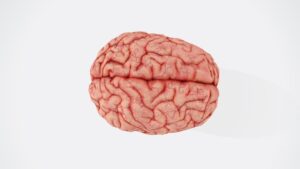
Tag: Motor Cortex


MOTOR CORTEX,

The Fundamental Role and Definition of the Motor Cortex The motor cortex represents one of the most vital regions of the human brain, serving as the primary command center for the generation and regulation of voluntary muscular activity. As a central component of the central nervous system, this region is not merely a passive transmitter […]

Read More

ROLANDIC CORTEX

Introduction to the Rolandic Cortex The Rolandic Cortex represents a vital and anatomically distinct region of the human brain, serving as a primary hub for the coordination of complex motor movements and the processing of various sensory inputs. Named after the Italian anatomist Luigi Rolando, this cortical area is situated within the frontal lobe and […]

Read More

PREMOTOR AREA

Introduction and Definition The Premotor Area (PMA) constitutes a critical region within the frontal lobe, forming an integral part of the motor cortex hierarchy. Functionally, it is primarily defined as an area deeply concerned with motor planning and the preparation of complex movements, serving as a vital bridge between high-level cognitive intent and the final […]

Read More

MOTOR SYSTEM

Defining the Motor System: Structure and Function The motor system constitutes the vast and intricate network spanning the central and peripheral nervous systems, designed specifically for the generation, control, and execution of movement. It is defined as the entire complex network of skeletal muscles, the dedicated neural connections linking these muscles, and the diverse structures […]

Read More

SENSORIMOTOR CORTEX

Introduction to the Sensorimotor Cortex The sensorimotor cortex represents a critical functional nexus within the cerebral cortex, unifying the processes of sensing external and internal stimuli with the generation of coordinated physical movement. This expansive cortical region is fundamentally concerned with both somatosensory and motor functions, acting as the primary hub for the interpretation of […]

Read More

AGRANULAR CORTEX

Defining the Agranular Cortex and Cytoarchitecture The concept of the agranular cortex represents a fundamental specialization within the mammalian neocortex, defined precisely by its deviation from the standard, six-layered laminar structure characteristic of most cortical regions. At its core, the agranular cortex is characterized by the conspicuous absence or severe reduction of the small, densely […]

Read More

MOTOR AREA

Introduction and Definition of the Motor Area The term Motor Area refers collectively to the regions of the cerebral cortex within the frontal lobe that are fundamentally responsible for the planning, initiation, sequencing, and execution of voluntary movements throughout the body. This critical neural architecture ensures that highly complex and coordinated actions, ranging from fine […]

Read More

SOMATOTOPIC ORGANIZATION

Introduction to Somatotopic Organization Somatotopic organization refers to the precise, ordered mapping of the body’s surface and musculature onto specific structures within the central nervous system, most notably the primary motor cortex (M1) and the primary somatosensory cortex (S1). This foundational principle dictates that distinct regions of the cortex are dedicated to controlling or receiving […]

Read More

MOTOR CORTEX

Introduction and Definition The motor cortex is a critical region of the central nervous system, specifically located within the frontal lobe of the cerebral cortex, and serves as the principal command center for the initiation and execution of voluntary movement. Functionally, it is not a monolithic structure but rather a highly interconnected network responsible for […]

Read More

MOTOR BEHAVIOR, MOTOR-FUNCTION HOMUNCULUS

Defining Motor Behavior and the Homunculus Concept The study of motor behavior encompasses the intricate processes by which the central nervous system generates coordinated, purposeful movement. Historically, the direct neurological link between specific cranial regions and voluntary action remained partially obscured until the mid-twentieth century. We now understand that motor behavior is fundamentally organized and […]

Read More

MOTOR THEORY OF THOUGHT

The motor theory of thought, a concept that gained significant traction in the early 20th century, particularly around the 1920s, represents a critical intersection between classical behaviorism and early neurophysiology. This theory fundamentally challenges the notion of thought as a purely abstract, non-physical phenomenon occurring solely within a centralized, non-motor cognitive space. Instead, the motor […]

Read More

POPULATION VECTOR

The Population Vector: Encoding Direction in the Motor Cortex The Core Definition of the Population Vector The population vector is a fundamental concept within computational neuroscience and motor control, serving as the primary mechanism utilized by the brain, particularly in the motor cortex, to dynamically encode and represent the direction of an intended or objective […]

Read More

BRODMANN’S AREA

Brodmann’s Areas: Mapping the Human Cortex The Core Definition of Brodmann’s Areas Brodmann’s Areas, often abbreviated as BAs, constitute a system of classification for regions of the cerebral cortex in the human and primate brain, distinguished primarily by their specific cellular structure, or cytoarchitecture. This system provides a standardized, universally recognized map that allows neuroscientists […]

Read More

BETZ CELL

Betz Cells: Giant Neurons of the Motor Cortex The Core Definition of Betz Cells The Betz cell, also known as the giant pyramidal cell, is a highly specialized type of neuron located exclusively within the fifth layer (Layer V, the internal pyramidal layer) of the primary Motor Cortex (M1) of the cerebral cortex. These cells […]

Read More

CORTICAL CENTER

Cortical Centers of the Human Brain The Core Definition and Mechanism The term Cortical Centers refers collectively to the specialized regions within the cerebral cortex, the outermost layer of the cerebrum, which serves as the principal seat of higher mental functions in humans. This complex, highly convoluted sheet of neural tissue is fundamentally responsible for […]

Read More

CUNEATE

The Cuneate Pattern in Neuropsychology: Motor Cortex Structure and Function The Core Definition The term Cuneate Pattern, as explored in specific contemporary neuroscience research, refers to a distinct and consistent structural arrangement of neurons within the cerebral cortex, specifically observed in regions associated with motor function. At its core, the Cuneate Pattern describes a configuration […]

Read More

MOTOR PATHWAY

Motor Pathway The Core Definition of the Motor Pathway The motor pathway constitutes an intricate and highly organized neural network within the central nervous system (CNS) that is fundamentally responsible for orchestrating and executing all forms of bodily movement. This sophisticated system translates conscious intentions and subconscious reflexes into coordinated muscle contractions, enabling a vast […]

Read More

OTOHEMINEURASTHENIA

Oto-Hemineurasthenia: An Encyclopedia Entry Introduction: Defining Oto-Hemineurasthenia Oto-Hemineurasthenia (OHO) is formally recognized as a rare neurological disorder, primarily characterized by the significant and often debilitating inability to move one side of the body, a condition medically termed hemiparesis. This neurological impairment can manifest as either a complete paralysis or a partial weakness, profoundly affecting an […]

Read More