Betz Cells: The Giant Architects of Human Movement
Scientifically Reviewed · Dr. Marwa Abd-Alazim · October 23, 2026
Review Criteria & Clinical Standards
This content undergoes rigorous scientific peer-review and medical editorial standards at Arab Psychology Network to ensure clinical accuracy, validity, and compliance with evidence-based guidelines from leading psychological and healthcare authorities (APA / WHO).
The Core Definition of Betz Cells
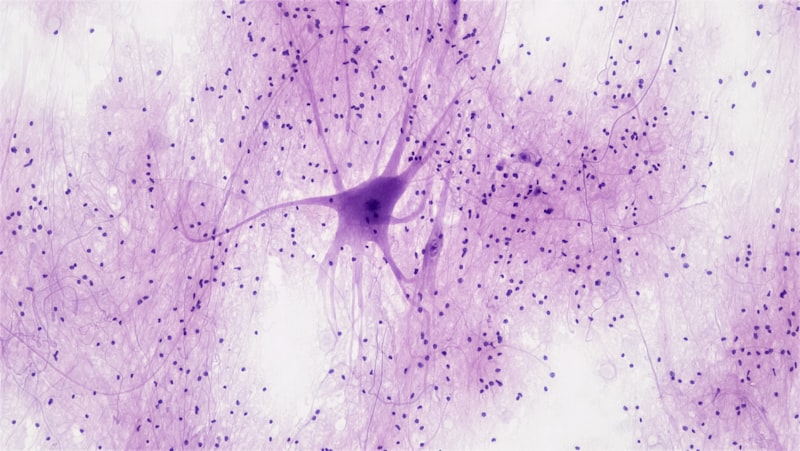
The Betz cell, also known as the giant pyramidal cell, is a highly specialized type of neuron located exclusively within the fifth layer (Layer V, the internal pyramidal layer) of the primary Motor Cortex (M1) of the cerebral cortex. These cells are remarkable for their sheer size, representing some of the largest neurons found anywhere in the entire central nervous system, with their cell bodies (somas) often exceeding 50 to 100 micrometers in diameter. Their defining functional characteristic is their role as key components of the descending motor pathway, initiating precise and powerful voluntary movements, particularly those involving the distal musculature of the limbs, such as the hands and feet.
The fundamental mechanism behind the function of Betz cells lies in their extensive axonal projections. These axons are exceptionally long, stretching from the cortex in the cerebrum down through the brainstem and into the spinal cord, where they synapse, either directly or indirectly, onto the lower motor neurons that ultimately innervate skeletal muscles. This direct, high-speed connection makes the Betz cell a critical element of the direct motor pathway, classifying them functionally as a specific subset of Upper Motor Neurons. The intensity and speed of the signals they transmit are vital for the dexterity and swift responsiveness required for complex human actions.
While all neurons in Layer V of the motor cortex are pyramidal cells and contribute to motor control, the Betz cells are distinguished by their gigantic size and their specific projection patterns. These neurons are predominantly concentrated in the region of the motor cortex that controls the muscles of the lower extremities and trunk, although they are present throughout the M1 area. Their importance is underscored by the fact that any disruption to their function or the integrity of their extensive axonal processes can lead to severe and debilitating motor deficits, demonstrating their irreplaceable role in maintaining motor command integrity and execution.
Historical Discovery and Context
The identification and naming of these giant cells are attributed to the renowned Russian anatomist and neuroscientist, Vladimir Betz (1834–1894). In 1874, Betz published his groundbreaking findings based on meticulous histological examination of the cerebral cortex, utilizing improved staining techniques that allowed him to visualize the cellular architecture with unprecedented clarity. He observed distinct clusters of exceptionally large, pyramidally shaped neurons within the fifth layer of what he identified as the motor region of the cortex. This discovery provided concrete anatomical evidence supporting the physiological understanding that specific areas of the brain were dedicated to controlling specific body movements.
The context of this discovery was crucial, coinciding with a period of intense interest in cerebral localization—the idea that specific mental and behavioral functions are localized in discrete brain areas. Prior to Betz’s work, the precise cellular origin of voluntary motor commands was still highly debated. His anatomical observations, coupled with contemporaneous experimental findings from researchers like Fritsch and Hitzig who demonstrated that electrical stimulation of certain cortical areas resulted in muscle contraction, solidified the link between the area containing these giant cells and the initiation of movement. The existence of such large cells, with axons clearly descending into the subcortical white matter, offered a compelling physical pathway for these motor commands.
Betz’s contribution was not merely identifying a cell type; it helped to refine the understanding of the somatotopic organization of the motor cortex, later famously mapped as the motor homunculus. His work provided the foundation for understanding the neuroanatomical basis of the motor system, clearly establishing the primary motor cortex as the definitive starting point for the descending motor pathways. This historical context illustrates how careful anatomical investigation can fundamentally shift and advance the understanding of complex physiological systems in psychology and neuroscience.
Anatomical Structure and Location
Betz cells are structurally defined as a subtype of Pyramidal Cells, so named because their somas exhibit a characteristic triangular or pyramidal shape. Located exclusively within Layer V of the primary motor cortex (Brodmann Area 4), they are strategically positioned to receive input from various cortical and subcortical regions and to project output over vast distances. A typical Betz cell possesses a broad base facing the white matter, and a prominent apical dendrite extending upward toward the cortical surface (Layer I), where it receives input from association cortices. Numerous basal dendrites radiate laterally, gathering input from neighboring cortical columns.
What truly sets the Betz cell apart is the massive size of its soma and the sheer diameter of its axon. This large diameter facilitates extremely rapid conduction velocity—a necessity for instantaneous motor control. The axon originates from the base of the cell body and immediately plunges into the deep white matter. These axons bundle together to form the crucial descending pathway known as the Corticospinal Tract, often referred to as the Pyramidal Tract. This vast projection system ensures that motor commands generated in the cortex can quickly reach the necessary motor nuclei in the brainstem and the spinal cord.
The concentration of Betz cells is not uniform across the Motor Cortex. While they are present throughout M1, they are most densely populated in the region corresponding to the representation of the lower limbs and trunk, though their presence is essential for all fine motor control. This specific anatomical arrangement—large size, pyramidal structure, and long, fast-conducting axons—makes the Betz cell perfectly engineered to serve as the command center for voluntary, skilled movements, integrating complex cortical planning into executable physical action.
Functional Role in Motor Control
The primary function of the Betz cell is the initiation and modulation of voluntary, skilled movements. As the principal efferent neurons of the primary motor cortex, they serve as the “final common path” from the cortex to the periphery. When an individual decides to perform a precise action, the activation sequence begins in the prefrontal and premotor cortices, but the execution command is largely relayed and amplified by the Betz cells. These cells fire an action potential that dictates the force, direction, and speed of the intended movement.
The majority of Betz cell axons cross over (decussate) in the medulla oblongata, forming the lateral Corticospinal Tract, which controls the muscles on the opposite side of the body. A smaller fraction forms the anterior corticospinal tract, which may remain ipsilateral or cross lower in the spinal cord. This crossover mechanism is why damage to the motor cortex on one side of the brain results in paralysis or weakness on the contralateral side of the body. Furthermore, Betz cells are highly involved in the complex process of motor learning and plasticity, as their synaptic connections are constantly being modified based on experience and practice, allowing for the refinement of motor skills.
As Upper Motor Neurons, Betz cells exert both excitatory and inhibitory control over the lower motor neurons (LMNs) located in the brainstem and spinal cord. While their primary role is to excite the LMNs to produce movement, they also play a crucial regulatory role, ensuring muscle tone is maintained and preventing excessive reflex activity. The loss of this regulatory control, often seen after stroke or injury involving the corticospinal tract, leads to the characteristic signs of upper motor neuron damage, such as spasticity and hyperreflexia, highlighting the dual nature of their functional influence.
A Practical Example: Voluntary Movement
To understand the critical role of Betz cells, consider the everyday scenario of threading a needle, an action that requires extraordinary precision, fine motor control, and coordination of distal muscles. This seemingly simple act involves a cascade of neural events, initiated and commanded by these giant pyramidal cells.
The process begins when the desire to thread the needle is formulated in the prefrontal cortex. This plan is then translated into a sequence of specific movement commands in the supplementary and premotor cortices. These areas feed detailed information regarding the necessary trajectory, grip strength, and timing to the primary Motor Cortex. It is here that the Betz cells, specifically those mapping to the finger and wrist muscles, become highly active, rapidly integrating all this information to formulate the final motor output command.
The following steps illustrate the “how-to” application of the Betz cell principle in this scenario:
-
Command Initiation: The activated Betz cells fire a rapid sequence of action potentials, reflecting the need for precise and quick muscle contraction (e.g., opposition of the thumb and forefinger). The large diameter of their axons ensures the signal travels with minimal delay.
-
Signal Transmission: The axons of the Betz cells travel down the Corticospinal Tract, crossing over in the medulla. For threading a needle with the right hand, the command originates in the left motor cortex and descends to the right side of the spinal cord.
-
Synaptic Relay: Upon reaching the cervical spinal cord, the Betz cell axons synapse onto lower motor neurons (LMNs). For fine movements, the Betz cell often synapses directly onto the LMN, providing maximal speed and control, rather than going through an interneuron intermediary.
-
Execution: The activated LMNs stimulate the corresponding muscles in the fingers and hand, resulting in the coordinated, delicate movements required to hold the thread steady, manipulate the needle, and successfully push the thread through the eye. If the Betz cells were damaged, this action would be impossible or severely impaired, demonstrating their exclusive role in skilled, voluntary distal movement.
Significance and Impact
The discovery and understanding of Betz cells represent a foundational pillar of modern neuroscience and clinical neurology. Their significance is paramount because they serve as the anatomical and physiological link between conscious intent (the “will” to move) and physical execution. The existence of these giant, dedicated command neurons confirms the hierarchical organization of the motor system and provides a clear target for studying the neural mechanisms underlying complex human behavior and skill acquisition.
In clinical applications, the knowledge of Betz cell function and pathway is indispensable. They are the primary targets in the study of motor system pathologies. For instance, in the field of rehabilitation following a stroke or traumatic brain injury, therapies are designed to promote neural plasticity, encouraging surviving neurons—including other pyramidal cells near the damaged Betz cell area—to take over lost function. The precise mapping of the Betz cell distribution allows neurosurgeons to carefully plan procedures to minimize damage to critical motor areas.
Furthermore, Betz cells are critically implicated in neurodegenerative diseases that affect motor control, most notably Amyotrophic Lateral Sclerosis (ALS). ALS involves the progressive degeneration of both upper and lower motor neurons. The death of Upper Motor Neurons, including Betz cells, contributes directly to the onset of spasticity and hyperreflexia characteristic of the disease’s early stages. Therefore, understanding the vulnerability and intrinsic properties of Betz cells is key to developing therapeutic interventions aimed at slowing or halting neurodegeneration in these devastating conditions.
Connections and Relations
Betz cells are intimately connected to several broader concepts and systems within psychology and neuroscience. They belong to the broader morphological category of Pyramidal Cells, which are the most common excitatory neurons in the cerebral cortex. While all pyramidal cells share the characteristic shape and utilize glutamate as their primary neurotransmitter, Betz cells are unique due to their size and the singular length of their axonal projection. They are also functionally grouped with all other neurons whose cell bodies reside in Layer V of the cortex, collectively known as corticofugal projection neurons, meaning they project away from the cortex.
Their most significant connection is to the Corticospinal Tract, the primary highway for voluntary motor commands. This tract is organized into the lateral tract (for distal limb control, heavily reliant on Betz cells) and the anterior tract (for proximal and axial muscle control). The coordinated function of the Betz cells is essential for the entire motor hierarchy, working in tandem with feedback loops from the cerebellum (for coordination and error correction) and the basal ganglia (for initiation and selection of movement). Damage to any part of this integrated system, particularly the Betz cell or its axon, disrupts the entire motor command structure.
Betz cells fall squarely within the subfield of Neuroscience, specifically neuroanatomy and motor physiology, which are integral branches of biological psychology. Their study contributes to the comprehensive understanding of the motor system, which ranges from motor learning and cognitive control (psychology) to the underlying cellular mechanisms of signal propagation (neuroscience). Ultimately, the Betz cell serves as a perfect biological model illustrating how complex psychological decisions—the intent to move—are translated into powerful, observable physiological events.