Motor Theory of Thought: Why Thinking Happens in Motion
Scientifically Reviewed · Dr. Marwa Abd-Alazim · August 22, 2026
Review Criteria & Clinical Standards
This content undergoes rigorous scientific peer-review and medical editorial standards at Arab Psychology Network to ensure clinical accuracy, validity, and compliance with evidence-based guidelines from leading psychological and healthcare authorities (APA / WHO).
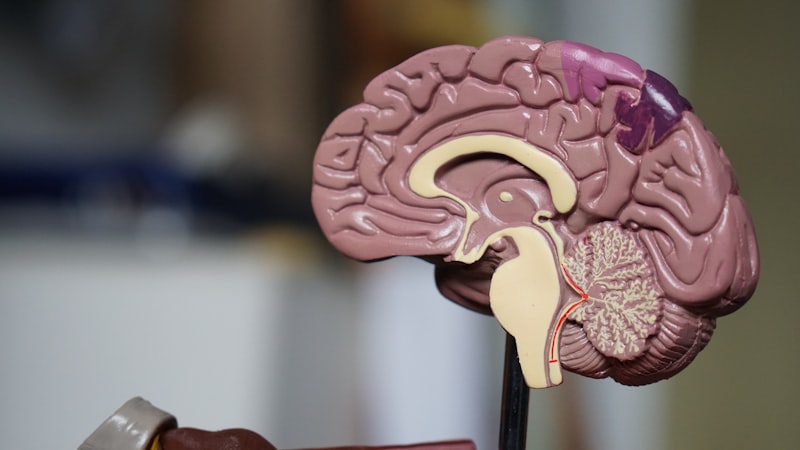
The motor theory of thought, a concept that gained significant traction in the early 20th century, particularly around the 1920s, represents a critical intersection between classical behaviorism and early neurophysiology. This theory fundamentally challenges the notion of thought as a purely abstract, non-physical phenomenon occurring solely within a centralized, non-motor cognitive space. Instead, the motor theory posits that thought processes are intrinsically linked to, and in fact derived from, the motor system itself. This perspective offered a mechanistic explanation for complex mental activity, aiming to reduce the seemingly elusive nature of cognition to observable, measurable physiological responses. It suggested that even the most intricate forms of human reasoning and internal dialogue are merely subtle, often undetectable, movements or tendencies toward movement. This framework was highly appealing during an era dominated by empirical psychology, which sought to eliminate introspection and focus exclusively on stimulus-response relationships. The theory’s primary mechanism relies heavily on the concept of conditioned reflex responses, viewing the entire cognitive architecture as a complex network of learned associations between sensory input and corresponding motor output, thereby bypassing the need for an independent, purely mental intermediary.
Central to the motor theory of thought is the assertion that the motor system’s responses are controlled entirely by the conditioned responses of the reflex links established between the motor cortex and the sensory area. This physiological interpretation views the neural pathways not as passive conduits, but as active learning structures where repeated pairing of sensory stimuli with motor reactions etches permanent, predictable reflex arcs. When a specific sensory experience recurs, the corresponding motor response—even if internally suppressed or minimal—is automatically triggered. The “thought” itself is thus identified with this incipient motor response. For instance, considering a movement, according to this theory, is not a separate mental process that precedes the action; rather, the consideration is itself the minimal, internalized motor preparation for that action. This radical peripheralist view contrasted sharply with traditional philosophical dualism and early forms of cognitive psychology that emphasized central processing, positioning the motor system as the foundational engine of intellectual activity, rather than merely the effector of commands generated elsewhere.
The historical context of the 1920s is vital for understanding the rapid popularity of this theory. Psychology was rapidly shifting away from Wundtian introspection and toward the rigorous methodology championed by figures like Ivan Pavlov and John B. Watson. The motor theory provided a perfect theoretical complement to classical behaviorism, offering a mechanism through which all complex human behavior, including seemingly internal thought, could be explained using simple principles of association and conditioning. If thought could be reduced to muscular activity—whether overt or covert—then it became objectively accessible to scientific study, eliminating the need for subjective reports about internal mental states. This drive for objectivity and physiological reductionism fueled research into phenomena like subvocal speech, which became the theory’s most famous empirical manifestation, suggesting that thinking aloud was simply a magnified version of the silent muscular activity occurring in the larynx during internal thought.
Historical Roots and Behaviorist Influence
The intellectual lineage of the motor theory traces back substantially to 19th-century ideomotor theories, which suggested that the mere idea or thought of an action tends to produce that action automatically, absent any conscious decision to move. However, the specific articulation of the “Motor Theory of Thought” in the early 20th century owes its greatest debt to the burgeoning field of behaviorism. Figures like John B. Watson, the founder of behaviorism, argued forcefully that thought was nothing more than implicit, habitual movements, primarily focusing on the musculature involved in speech. Watson famously stated that thinking was essentially talking to oneself with minimal movements of the vocal cords and laryngeal muscles. This perspective was revolutionary because it dismantled the traditional concept of an independent, non-physical mind, grounding all cognitive functions firmly within the realm of physical, observable, or at least measurable, bodily processes. The influence of Pavlov’s work on conditioned reflexes provided the necessary physiological mechanism: if simple reflexes could be conditioned, then complex chains of thought could be viewed as exceedingly complex, highly refined sequences of conditioned motor responses linked to myriad sensory cues.
The strict adherence of the motor theory to peripheral mechanisms—meaning mechanisms located outside the central nervous system (CNS) proper, such as muscles and sensory organs—placed it in direct philosophical opposition to later cognitive models that emphasized central processing centers. Behaviorists embraced this peripheralism because it simplified the explanatory structure. They argued that environmental stimuli (S) directly trigger bodily responses (R), and thought is merely the internalized residue of previous S-R pairings. The sensory area registers the external event, and through established conditioned reflex links, the motor cortex initiates a minimal, preparatory response. When we “think” about lifting a cup, the theory suggests that minute electrical activity occurs in the arm muscles, too small to cause overt movement but sufficient to constitute the thought itself. This focus on the periphery served a methodological purpose, keeping the focus external and objective, aligning perfectly with the core tenets of the behaviorist manifesto that sought to make psychology a natural science based entirely on prediction and control of behavior.
Furthermore, the behaviorist commitment to learning as the primary driver of all complex behavior dictated the structure of the motor theory. Thought was not considered innate or pre-programmed, but rather a learned skill—a highly specialized set of conditioned reflexes acquired through years of interaction with the environment and social training, particularly language acquisition. The process of learning to speak involves associating sensory inputs (sounds, visual cues) with motor outputs (vocalization). When this process is internalized, the external motor output is merely suppressed, but the underlying reflex arc remains active. Therefore, the complexity of human thought simply reflects the vast number and intricate organization of these learned reflex arcs connecting specific sensory inputs to specific motor potentials. This reductionist approach provided a powerful, albeit controversial, unified theory for explaining everything from simple perception to abstract problem-solving solely through physiological conditioning mechanisms.
The Role of Reflex Arcs and Conditioning
The physiological backbone of the motor theory rests upon the precise conceptualization of the reflex link between the sensory area and the motor cortex. In this model, the brain is not viewed as a centralized computational engine, but rather as a sophisticated switchboard that manages the flow of conditioned energy between input and output. A reflex arc, traditionally defined as the pathway followed by nerve impulses in a reflex action, is expanded here to include complex, learned associations. When a child learns the word “apple,” the sensory input (visual appearance of the apple, the sound of the word) becomes tightly associated with the motor output required to articulate the word or reach for the object. Over time, this repeated association strengthens the neural connection, transforming it into a conditioned reflex link that operates with increasing efficiency and automaticity. The motor theory posits that thought processes leverage these pre-existing, highly efficient conditioned links, allowing for rapid, internalized simulation of action or speech without the necessity of full-scale execution.
The concept of “conditioned responses” is paramount, moving beyond simple, innate reflexes (like the knee-jerk) to include highly specialized, learned responses. These conditioned responses are the functional units of thought. When an individual engages in silent problem-solving, they are, in essence, running a series of rapid, suppressed motor tests. For example, considering two possible solutions (A and B) to a mathematical problem involves the minimal activation of the motor programs associated with articulating Solution A and then articulating Solution B. The decision to select Solution A is simply the point where the motor program for A achieves threshold activation, effectively winning the internal competition of conditioned responses. This framework elegantly bypasses the need for abstract mental representations, suggesting that the representation of an object or concept is equivalent to the motor program required to interact with that object or articulate that concept. Thus, the fidelity of thought depends directly on the refinement and conditioning of these sensorimotor links.
Furthermore, the motor theory mandates a specific physiological relationship between the sensory area (often implied to be primary receiving areas like the somatosensory or auditory cortex) and the motor cortex (responsible for planning and executing voluntary movements). The conditioned links are envisioned as pathways traversing the association areas, honed by experience to instantly translate specific sensory patterns into incipient motor commands. The strength and reliability of these links determine the clarity and efficiency of thought. A poorly conditioned reflex link results in hesitant or confused thinking, while robust conditioning leads to rapid, automatic, and clear cognitive outcomes. The emphasis here is on the physical, measurable change in neural connectivity—the strengthening of synapses involved in the reflex arc—rather than on the development of abstract schemas or mental models, cementing the theory’s foundation in physiological determinism and observable learning principles.
Peripheralism vs. Centralism in Cognitive Models
The motor theory of thought is the quintessential example of a peripheralist explanation for cognition. Peripheralism argues that mental events are fundamentally reducible to events occurring in the sensory or motor organs, or the peripheral nerves connecting them, rather than requiring complex, dedicated mechanisms located deep within the central nervous system (CNS). This viewpoint stood in stark contrast to the emerging centralist theories of the mid-20th century, which posited that complex cognition necessitated sophisticated internal representations, memory storage systems, and computational algorithms residing primarily in the CNS, specifically in areas like the frontal and parietal lobes, independent of immediate motor execution. The peripheralist stance of the motor theory provided a simple, parsimonious explanation: why invoke an abstract “mind” or “internal processor” when all apparent thought can be accounted for by subtle muscular activity?
Centralist models criticized the motor theory primarily on the basis of its limited explanatory power regarding abstract thought and complex symbolic manipulation. Thinking about concepts like “infinity” or “justice” does not obviously translate into corresponding laryngeal movements or incipient arm movements. Centralists argued that while motor activity is certainly involved in implementing the results of thought, the process of forming the thought itself—the manipulation of symbols, the application of logic, the storage and retrieval of vast amounts of information—requires dedicated central mechanisms that operate regardless of immediate motor output. The motor theory countered this by suggesting that even abstract concepts are learned through verbal conditioning, meaning that thinking about “justice” is simply the covert repetition of the muscular patterns associated with the word “justice” and its related verbal definitions, demonstrating a relentless commitment to explaining all cognition through conditioned sensorimotor loops.
The philosophical implications of this debate are profound. Centralism naturally supports the development of information processing models, which later gave rise to modern cognitive psychology and artificial intelligence, treating the brain as a biological computer. Peripheralism, championed by the motor theory, sought to eliminate the “black box” of the central processor entirely, maintaining that the thinking mechanism is essentially distributed across the body’s interface with the environment. Challenges to the motor theory often involved empirical demonstrations of thought persisting even when peripheral motor output was completely blocked (e.g., through paralytic agents). While proponents sometimes argued that even minimal, undetectable neural efference constituted the thought, these challenges highlighted the major weakness of the peripheralist position: its inability to convincingly account for the speed, flexibility, and independence of complex human reasoning from immediate physical action, leading to its eventual decline in mainstream cognitive psychology in favor of centralist models, only to be partially revived later in the form of embodied cognition.
Manifestations: Subvocal Speech and Covert Movement
The primary empirical evidence utilized by early proponents of the motor theory centered around the phenomena of subvocal speech and other forms of covert movement. Subvocal speech refers to the minimal, silent contractions of the laryngeal and pharyngeal musculature that occur during internal verbal thought. Researchers in the 1920s and 1930s used highly sensitive instruments, such as electromyography (EMG), to detect these tiny electrical impulses in the throat muscles of subjects engaged in silent reading or complex mental arithmetic. The detection of this muscular activity was taken as direct proof that thought was indeed synonymous with minimal physical movement—the suppressed articulation of words. For the motor theorists, this was the smoking gun: if thinking activates the speech muscles, then thinking *is* the activation of the speech muscles.
Beyond vocalization, the theory extended to other forms of movement, suggesting that thinking about performing a physical task, such as playing a musical instrument or sketching a diagram, involved minimal, detectable motor discharge in the corresponding limbs. This concept of incipient movement, or covert motor preparation, provided a unified explanation for both verbal and non-verbal thought. When a subject silently rehearsed a complex dance move, the theory predicted and often claimed to measure minute EMG signals in the leg or arm muscles responsible for that move. This focus on measurable, physical correlates of thought allowed the motor theory to maintain its claim to scientific objectivity, contrasting sharply with theories that relied on unverifiable subjective mental states.
However, the interpretation of subvocal speech results became a point of contention. While EMG recordings confirmed that muscle activity often accompanied internal thought, critics argued that correlation does not equal causation. They suggested that subvocalization might be an *effect* or an *epiphenomenon* of thought, perhaps a learned habit assisting attention or memory, rather than being the fundamental mechanism of thought itself. Furthermore, studies showed that individuals could often successfully engage in complex thought processes even when these peripheral movements were artificially inhibited or if subjects were given tasks that demanded simultaneous, unrelated motor activity (e.g., repeating a meaningless phrase while solving a spatial puzzle). While the subvocalization evidence remains compelling as a correlation, its status as the necessary and sufficient condition for all thought processes was seriously undermined by later neurological evidence focusing on central control.
Criticisms and Empirical Challenges
The motor theory of thought faced substantial criticism, leading to its eventual displacement by centralist cognitive models. One of the most significant theoretical challenges came from researchers like Karl Lashley, who demonstrated that complex behavioral patterns, including learned habits and cognitive abilities, often survived extensive surgical lesions to the motor cortex and other purported locations of sensorimotor links. Lashley’s work on equipotentiality suggested that cognitive functions were distributed across vast areas of the cortex and were not strictly localized to specific reflex pathways, challenging the theory’s reliance on simple, fixed conditioned arcs between the sensory and motor areas. If thought relies entirely on specific reflex links, disrupting those links should entirely abolish the associated thought or skill, which often did not happen in empirical tests.
A second major empirical challenge involved the speed and efficiency of thought. Human thought processes can occur incredibly rapidly, often involving complex logical steps and abstract manipulations that seem impossible to execute through a continuous sequence of subtle muscular movements, particularly given the relatively slow conduction speed of peripheral nerves. Critics argued that if every step of a complex calculation required a corresponding motor output, however minimal, the process would be far slower than observed. Centralist models offered a more plausible explanation, suggesting that symbolic manipulation occurs rapidly within the CNS via neural networks, with motor output only initiated at the final stage of the cognitive process. Furthermore, the motor theory struggled to explain the phenomenon of motor planning and imagination, where complex actions can be rehearsed internally and judged for feasibility long before any actual execution or commitment to movement is made.
Perhaps the most definitive challenge came from studies involving pharmacological paralysis. Experiments using curare-like agents to temporarily paralyze all voluntary muscles, thereby completely eliminating the possibility of subvocal speech or covert movement, showed that subjects, while unable to move or speak, retained full cognitive function, memory, and the ability to solve complex problems. When the paralysis wore off, subjects could report the contents of their internal thought processes accurately. This empirical finding delivered a powerful blow to the peripheralist core of the motor theory: if thought can occur perfectly well without any corresponding motor system response, then thought cannot be defined as the motor response itself. While proponents attempted to argue that the thought was merely the central efferent command *to* the paralyzed muscles, the ability of thought to exist independently of peripheral feedback mechanisms severely weakened the theory’s original definition.
Modern Reinterpretations and Embodied Cognition
Although the strict, peripheralist definition of the motor theory of thought popular in the 1920s largely disappeared from mainstream psychology, its core insight—that thinking is inseparable from action and bodily engagement—experienced a powerful renaissance in the late 20th and early 21st centuries under the umbrella of embodied cognition. Embodied cognition is a central concept in contemporary cognitive science and neuroscience, arguing that cognitive processes are deeply dependent on the features of the physical body, including the motor system, perception, and environment. Unlike the classical motor theory, embodied cognition does not claim that thought *is* minimal muscular activity, but rather that cognitive representations are often modal, meaning they recruit sensory and motor systems during processing. For example, understanding a sentence about kicking a ball activates the motor areas responsible for leg movement, even if the movement is never executed.
A key finding that supports this modern view is the discovery of mirror neurons, which fire both when an individual performs an action and when the individual observes someone else performing the same action, or even when they hear sounds related to that action. This neural mechanism suggests a deep, integrated link between perception, action, and understanding. When we think about an action or understand a concept related to movement, our brains simulate that action using the same motor systems required for execution. This simulation mechanism provides a functional, centralist interpretation of the original motor theory’s claim: thought involves the motor system, not because the thought is the motor output, but because the motor system is essential for representing and understanding the world through potential action. The idea that thinking is a form of internal simulation of action owes a direct intellectual debt to the initial motor theory proponents.
Furthermore, contemporary research into language processing strongly supports the involvement of the motor cortex. Studies using transcranial magnetic stimulation (TMS) have shown that disrupting motor areas specific to the hand interferes with understanding sentences about grasping objects, while disrupting leg motor areas interferes with understanding sentences about kicking. This evidence indicates that the motor system is not merely the passive recipient of central commands but is actively recruited during cognitive processes, especially those involving conceptual representation. Thus, the rigid, peripheralist motor theory evolved into a more sophisticated, centralist-integrated view—the motor system provides the framework for conceptual understanding, transforming the initial, highly reductionist hypothesis into a cornerstone of contemporary theories regarding the fundamental link between mind, body, and action.
Clinical and Theoretical Implications
The motor theory, even in its outdated form, spurred important theoretical discussions regarding the nature of consciousness and the development of language. One significant implication relates to the acquisition of cognitive skills. If thought is indeed built upon conditioned motor reflexes, then learning methodologies should heavily emphasize active, physical engagement and repetition to build robust sensorimotor links. This aligns with educational practices that promote hands-on learning and kinesthetic training, suggesting that physical rehearsal (even internalized rehearsal) is crucial for developing intellectual fluency. Theoretically, this perspective offers a mechanistic explanation for why practice makes perfect, extending the concept of muscle memory not just to physical skills but to intellectual ones as well, viewing intellectual mastery as the perfection of complex, internalized motor patterns associated with problem-solving.
In clinical psychology and speech-language pathology, the motor theory indirectly contributed to understanding disorders where the link between thought and articulation is compromised. For example, early studies on stuttering sometimes focused on the disorganization of the laryngeal motor pattern, suggesting that the “thought” (the incipient motor plan) was struggling to transition into smooth, overt speech. While modern treatments are far more nuanced, the initial focus on the motor components of verbal thought provided a valuable starting point for analyzing language production failures. Furthermore, the theory’s emphasis on internalized speech processes highlighted the importance of silent self-talk (private speech) in cognitive development, particularly in childhood, where the transition from overt speech to internal thought is viewed as the gradual suppression of the motor component of language.
Finally, the legacy of the motor theory lies in its forcing of a critical re-evaluation of the mind-body problem within psychology. By proposing a radical reduction of thought to physical action, it set the stage for later neurological research that rigorously tested the physical basis of cognition. Although the theory itself proved too simplistic to account for the breadth of human intelligence, its historical role was essential in shifting psychological inquiry away from purely subjective mental states and toward objective, physiological correlates. It paved the way for modern cognitive neuroscience, which systematically maps cognitive functions onto specific brain regions and motor systems, thereby fulfilling the motor theory’s original goal: to provide a scientifically robust, physical explanation for the nature of human thought.