Network Memory: How Your Brain Maps Every Thought
Scientifically Reviewed · Dr. Marwa Abd-Alazim · September 18, 2026
Review Criteria & Clinical Standards
This content undergoes rigorous scientific peer-review and medical editorial standards at Arab Psychology Network to ensure clinical accuracy, validity, and compliance with evidence-based guidelines from leading psychological and healthcare authorities (APA / WHO).
NETWORK-MEMORY MODEL: A FRAMEWORK FOR KNOWLEDGE REPRESENTATION AND RETRIEVAL
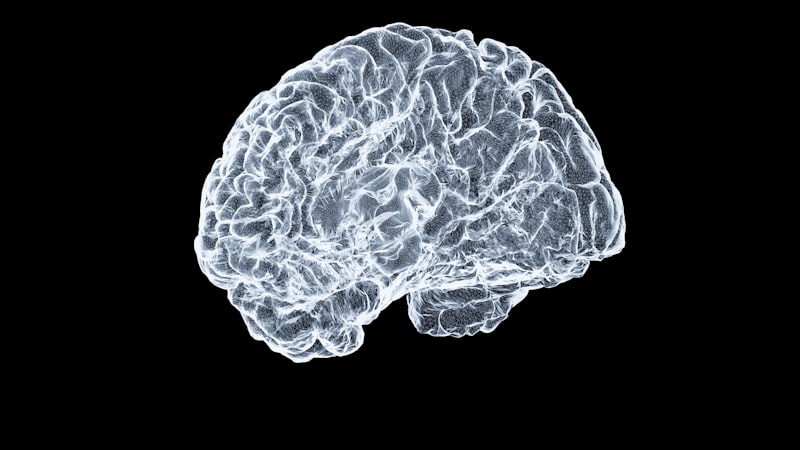
The Network-Memory Model (NMM) represents a contemporary and highly influential theoretical framework designed to elucidate the complex processes underlying the representation and retrieval of knowledge within human memory. Moving beyond traditional concepts of memory as a singular, localized storage unit, the NMM posits an architecture defined by a vast, interconnected network of specialized processing elements. This framework is specifically engineered to account for the inherently distributed and associative nature of memory traces, which are critical features evidenced across modern cognitive science and neuroscience research. Central to the NMM is the idea that each distinct memory item or piece of knowledge is represented by a node, and the relationships between these items are captured by the associations that link these nodes together. Furthermore, the model proposes a dynamic mechanism for encoding new information, fundamentally rooted in the established principles of associative learning, thereby providing a comprehensive explanation for how memories are formed, strengthened, and accessed.
The practical implications of the Network-Memory Model are substantial, offering new avenues for understanding and simulating the complexities of human cognition. Its structural assumptions align closely with findings from various scientific disciplines, including empirical evidence detailing neural organization in the brain, experimental results from behavioral studies on learning, and successful implementations in computational and artificial intelligence models. As such, the NMM serves not merely as a descriptive tool, but as a predictive framework that offers profound insights into how information is structured, how retrieval cues function to activate stored knowledge, and how the continuous process of learning modifies the fundamental architecture of memory itself. This introductory overview provides a detailed examination of the NMM’s architecture, its underlying mechanisms, and the multidisciplinary evidence that supports its validity as a leading theory of memory.
Keywords:
- Network-Memory Model
- Memory Representation
- Associative Learning
- Memory Retrieval
- Distributed Processing
Historical Context and the Shift to Distributed Memory
The modern understanding of memory has undergone a radical transformation since the mid-twentieth century. Historically, memory was often conceptualized through modular or stage-based models, most famously exemplified by the work of Atkinson and Shiffrin (1968), which proposed memory as a sequence of discrete storage locations, often analogized to a unified storehouse or file cabinet. This influential perspective distinguished between sensory memory, short-term memory, and long-term memory, implying a relatively linear flow of information processing. While these models provided foundational terminology for cognitive psychology, they eventually proved insufficient in explaining the flexibility, robustness, and speed with which humans access vast quantities of interconnected information. Specifically, the unitary storehouse view struggled to adequately account for phenomena like priming, interference effects, and the distributed damage observed in cases of amnesia, leading researchers like Baddeley (1986) and Tulving (2002) to advocate for more complex, multifaceted models.
The subsequent paradigm shift embraced the concept of distributed representation, recognizing that a single memory is rarely stored in one physical location or represented by a single conceptual entity. This realization led to the development of early associative network models, such as those proposed by Anderson (1983) and the revolutionary parallel distributed processing (PDP) models developed by McClelland and Rumelhart (1986). These models fundamentally changed the conversation by positing that knowledge is encoded across multiple interconnected units rather than being localized. The strength of a memory, therefore, rests not in the activation of a single unit, but in the pattern of activation across a wide expanse of the network. This distributed approach provides a powerful explanation for the inherent interconnectedness of human knowledge, where retrieving one piece of information often triggers the simultaneous activation of related concepts and experiences, confirming the associative nature of human cognition.
The Network-Memory Model builds directly upon this established tradition of distributed and associative theories, offering a refined and comprehensive framework that integrates psychological findings with computational principles. It addresses the limitations of earlier models by explicitly defining the architectural components necessary for the dynamic processes of encoding and retrieval. By foregrounding the role of interconnection and the modification of link strengths—rather than focusing solely on the existence of the memory item itself—the NMM provides a mechanism that can effectively simulate the continuous restructuring of the knowledge base that occurs throughout a lifetime of learning. It represents a mature synthesis of cognitive architecture principles, ensuring that the theoretical framework is capable of addressing the full complexity of human memory function.
Core Architecture of the Network-Memory Model
The fundamental structural component of the NMM is the network architecture, which is comprised of two primary elements: nodes and associations. Each node within the network serves as the representation of a distinct unit of memory, which can range widely in complexity. A node might represent a simple feature (e.g., the color red, the sound of a bell), a specific concept (e.g., bird, justice), a personal experience (an episodic memory), or a complex schema. Crucially, in this distributed framework, a complex memory item is typically not represented by a single node, but rather by a unique pattern of activation across many interconnected nodes. This structural redundancy makes the memory system highly robust and resistant to localized damage, a characteristic frequently observed in biological memory systems.
The connections between these nodes are termed associations, or links. These associations are not uniform; they possess varying levels of strength, often referred to as weights, which dictate the ease and speed with which activation can flow from one node to another. These link strengths are the physical manifestation of learned relationships. For instance, the nodes representing “dog” and “bark” would possess a very strong association due to frequent co-occurrence, meaning that activating the “dog” node would quickly and reliably spread activation to the “bark” node. Conversely, the link between “dog” and “quantum physics” would likely be weak or nonexistent. The modification of these link strengths through experience is the core mechanism by which the NMM explains learning and memory formation, making the entire network architecture highly plastic and dynamic.
A key architectural advantage of the NMM is its ability to handle both specific and generalized knowledge simultaneously. Semantic knowledge (facts and concepts) exists as stable, strong pathways between conceptual nodes, while episodic knowledge (specific events) relies on temporary, context-specific connections between multiple feature nodes. Because knowledge is distributed across the network, retrieval becomes a process of parallel search and activation spread, allowing the system to rapidly converge on related information. This inherent structure ensures that the system is not reliant upon a centralized index or retrieval mechanism, but rather allows the query itself (the activation of the cue node) to dynamically navigate the memory landscape until a stable pattern of activation, corresponding to the retrieved memory, is achieved.
The Mechanism of Associative Encoding and Retrieval
The dynamic functioning of the Network-Memory Model is governed by the principle of associative learning. This mechanism describes how new memories are encoded and how existing memories are subsequently retrieved. Encoding, in the context of the NMM, is not a simple storage process; it is the physical restructuring of the network through the adjustment of associative weights. When two or more nodes are activated simultaneously—for example, when an individual sees a new face (Node A) while hearing a new name (Node B)—the link between those nodes is strengthened. This follows the fundamental Hebbian principle: “Neurons that fire together, wire together.” Repeated or highly salient co-activation leads to permanently stronger associations, making future retrieval of one item contingent upon the activation of the other.
Memory retrieval in the NMM operates via spreading activation. When an external cue or internal thought activates a particular node (the cue node), this activation energy spreads outward along the associative links to connected nodes. The amount of activation transmitted is proportional to the strength of the association. Nodes that receive sufficient activation energy—meaning they are strongly connected to the cue and potentially other simultaneously active nodes—will reach a threshold and become fully “retrieved” or consciously accessible. This mechanism naturally explains phenomena such as priming, where exposure to a related item (e.g., the word “doctor”) lowers the retrieval threshold for a target item (e.g., the word “nurse”) because the initial cue already partially activates the shared network pathways.
Furthermore, the encoding mechanism within the NMM emphasizes the role of retrieval practice in strengthening memory. When a stored memory is successfully retrieved in response to a cue, the process of reactivation inherently strengthens the association between the cue and the retrieved item, as highlighted by cognitive research (Karpicke & Blunt, 2011). This active process of retrieval is far more effective for long-term memory consolidation than passive review, precisely because it forces the network to engage the specific pathways necessary for access. The NMM thus provides a structural explanation for why memory is optimized not just by exposure, but by the challenging act of recalling information, which actively reinforces the utilized associative links and solidifies the distributed representation within the network architecture.
Empirical Support from Diverse Fields
The validity and explanatory power of the Network-Memory Model are substantially reinforced by converging evidence drawn from neuroscience, cognitive science, and artificial intelligence, demonstrating its ability to bridge theoretical constructs with empirical observations.
Support from Neuroscience
Neuroscience research provides crucial anatomical and physiological support for the distributed nature of memory postulated by the NMM. Studies of brain activity confirm that memories are not stored in single, centralized locations but are instead encoded across widely distributed cortical and subcortical regions. For example, research by Squire (1991) and others established the distinction between declarative and nondeclarative memory systems, showing that different types of knowledge rely on distinct, yet interconnected, neural circuits. Furthermore, functional neuroimaging studies (e.g., Martin et al., 2003) have demonstrated that the retrieval of semantic knowledge, such as knowledge of objects or actions, activates a highly distributed network of areas specialized for feature processing, such as visual and motor cortices. This distribution of memory across specialized processing units mirrors the NMM’s concept of interconnected feature nodes.
Support from Cognitive Science
Cognitive science provides behavioral evidence supporting the associative and retrieval-driven aspects of the NMM. Experimental studies on associative learning, priming effects, and category recognition consistently show that the speed and accuracy of retrieval are highly dependent on the strength and density of related concepts. The finding that retrieval practice significantly enhances long-term retention (Karpicke & Blunt, 2011) is a direct behavioral confirmation of the NMM’s encoding mechanism: the act of successful retrieval strengthens the associative pathways used, thereby consolidating the memory trace within the network structure. Cognitive models based on network principles have successfully simulated human response times, error patterns, and interference effects far more accurately than linear stage models.
Support from Artificial Intelligence and Computational Modeling
Perhaps the most compelling conceptual support comes from the success of artificial intelligence and computational models utilizing network architectures. The development of Parallel Distributed Processing (PDP) models (McClelland & Rumelhart, 1986) and modern deep learning neural networks (Hinton & Shallice, 2018) demonstrates the computational efficiency and power of distributed representations. These connectionist systems, which rely on nodes, weighted connections, and spreading activation, successfully mimic complex human cognitive abilities, including generalization, pattern recognition, and robust memory recall even when input data is noisy or incomplete. The functional effectiveness of these artificial networks serves as a powerful validation of the underlying architectural assumptions inherent in the Network-Memory Model.
Implications for Cognitive Modeling and Research
The Network-Memory Model possesses significant implications for both theoretical understanding and practical application in cognitive research. By providing a clear, computationally viable framework, the NMM allows researchers to move beyond mere description of memory phenomena toward constructing testable, predictive models. The architecture provides a mechanism for modeling how different types of knowledge—semantic, episodic, and procedural—can coexist and interact within a single, integrated cognitive system. For instance, the model can simulate how episodic details fade over time while the underlying semantic structure strengthens, reflecting the transformation of specific experiences into generalized knowledge. This capability is vital for advancing the study of cognitive development and long-term learning.
Furthermore, the NMM offers a robust framework for investigating pathological conditions related to memory. Conditions such as amnesia, resulting from damage to specific brain regions, can be modeled as selective disruptions to connectivity or node functionality within the network. This allows researchers to hypothesize about which associative links or which specific sub-networks are compromised, rather than simply identifying a damaged ‘storage box.’ Similarly, the model has implications for understanding psychological disorders characterized by intrusive or repetitive memories, such as Post-Traumatic Stress Disorder (PTSD), where maladaptively strong or highly activated associations may cause inappropriate or exaggerated retrieval responses to benign cues. Understanding the structural dynamics of these associations is key to developing targeted cognitive interventions.
The influence of the NMM extends into the domain of educational psychology and instructional design. By emphasizing that memory is strengthened through associative reinforcement and active retrieval, the model provides a theoretical justification for pedagogical techniques such as spaced repetition, interleaving, and knowledge mapping. These techniques are effective precisely because they force the learner to engage and strengthen varied, distributed pathways within the knowledge network, making the encoded information more accessible and less prone to interference. Thus, the NMM serves as a foundational bridge, connecting abstract psychological theory with practical applications aimed at optimizing human learning and cognitive performance.
Conclusion
The Network-Memory Model (NMM) stands as a seminal theoretical framework that successfully addresses the complex challenges of understanding knowledge retrieval and representation in the human mind. Defined by an architecture of interconnected nodes and dynamic associative links, the NMM accurately captures the inherently distributed and associative nature of memory, a necessity ignored by earlier, unitary models. Its mechanism, rooted in associative learning and spreading activation, provides a powerful and elegant explanation for how new knowledge is encoded and how existing memories are accessed rapidly and robustly.
Supported by overwhelming evidence spanning neuroscience, which confirms distributed neural encoding; cognitive science, which demonstrates the power of retrieval practice; and artificial intelligence, which validates the computational efficiency of network architectures; the NMM offers a comprehensive and integrated view of human memory. Its implications are broad, providing critical tools for cognitive modeling, understanding memory pathology, and optimizing educational strategies. As research continues to uncover the intricate biological substrates of learning, the Network-Memory Model remains an indispensable guide for modeling the dynamic, plastic structure of the memory system.
References
- Atkinson, R. C., & Shiffrin, R. M. (1968). Human memory: A proposed system and its control processes. In K. W. Spence & J. T. Spence (Eds.), The psychology of learning and motivation: Advances in research and theory (Vol. 2, pp. 89–195). New York: Academic Press.
- Baddeley, A. (1986). Working memory. Oxford: Oxford University Press.
- Tulving, E. (2002). Episodic memory: From mind to brain. Annual Review of Psychology, 53(1), 1–25.
- Karpicke, J. D., & Blunt, J. R. (2011). Retrieval-based learning: Successful retrieval practice enhances subsequent learning. Current Directions in Psychological Science, 20(3), 217–222.
- Anderson, J. R. (1983). The architecture of cognition. Cambridge, MA: Harvard University Press.
- McClelland, J. L., & Rumelhart, D. E. (1986). Parallel distributed processing: Explorations in the microstructure of cognition (Vol. 2). Cambridge, MA: MIT Press.
- Martin, A. (2007). The representation of semantic knowledge in the brain. Annu. Rev. Psychol., 58, 25–45.
- Hinton, G. E., & Shallice, T. (2018). Memory networks. In B. A. Olshausen & H. S. Sejnowski (Eds.), The Oxford handbook of cognitive neuroscience (2nd ed., pp. 545–562). Oxford, UK: Oxford University Press.
- Squire, L. R. (1991). Declarative and nondeclarative memory: Multiple brain systems supporting learning and memory. Journal of Cognitive Neuroscience, 3(4), 232–243.
- Martin, A., Haxby, J. V., Lalonde, F. M., Wiggs, C. L., & Ungerleider, L. G. (2003). Discrete cortical regions associated with knowledge of color and knowledge of action. Science, 303(5661), 827–831.