Nodal Points: Mastering the Patterns of Human Influence
Scientifically Reviewed · Dr. Marwa Abd-Alazim · October 5, 2026
Review Criteria & Clinical Standards
This content undergoes rigorous scientific peer-review and medical editorial standards at Arab Psychology Network to ensure clinical accuracy, validity, and compliance with evidence-based guidelines from leading psychological and healthcare authorities (APA / WHO).

Introduction to the Nodal Point Concept
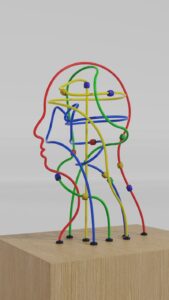
In the vast and intricate landscape of human psychology, understanding complex interactions and patterns often requires identifying specific points of significant influence or convergence. The concept of a nodal point, while originating in mathematics and physics to describe points of intersection or zero displacement, offers a powerful metaphorical framework for psychology. Within this discipline, a nodal point can be conceptualized as a critical juncture, a central organizing element, or a highly influential factor within an individual’s psychological system or a broader social dynamic. It represents a point where multiple psychological forces converge, where small changes can lead to disproportionately large effects, or where a foundational element dictates the structure and function of an entire psychological network.
The fundamental mechanism behind this conceptualization is the recognition that psychological phenomena are rarely isolated; instead, they are interconnected within complex systems. A nodal point helps to simplify this complexity by highlighting areas of high leverage. Identifying such a point allows researchers and practitioners to pinpoint core issues, understand causality more deeply, and predict potential trajectories of change. For instance, a deeply ingrained core belief might act as a nodal point, influencing a vast array of thoughts, emotions, and behaviors. Similarly, a key individual within a family system might serve as a nodal point, whose actions or beliefs significantly shape the entire family’s dynamics and equilibrium. This conceptual lens moves beyond linear causality to embrace a more holistic, systems-oriented view of psychological functioning.
Unlike some rigidly defined terms in psychology, the nodal point functions more as an analytical tool or a conceptual framework, drawing parallels from other scientific fields to enrich psychological understanding. Its utility lies in its capacity to illuminate how various elements—be they cognitive schemas, emotional responses, behavioral patterns, or social interactions—coalesce around certain pivotal structures or events. By focusing on these central points, psychologists can gain profound insights into the underlying architecture of mental health, developmental trajectories, and social influence, enabling more targeted and effective interventions.
Historical and Conceptual Development
While the specific term “nodal point” is not a traditional, universally accepted construct within classical psychological theories, the underlying idea of critical junctures, central organizing principles, or influential hubs has permeated various schools of thought throughout the history of psychology. Early psychoanalytic theories, for example, often focused on specific early childhood experiences or unconscious conflicts as foundational elements that shaped an individual’s entire personality and later life. These could be seen as developmental critical periods or pivotal events acting as nodal points, influencing subsequent psychological development.
In the mid-20th century, the rise of systems theory profoundly influenced fields like family therapy and social psychology. This perspective emphasized that components of a system are interconnected and interdependent, and that changes in one part affect the whole. Within this framework, a “nodal point” can be analogized to a subsystem or an individual whose role, behavior, or belief structure is disproportionately influential in maintaining the system’s equilibrium or driving its dysfunction. The concept emerged implicitly through the identification of “identified patients” in families, or central leaders in groups, whose positions represented significant leverage points within the broader social system.
More recently, with the advent of cognitive psychology and the understanding of the mind as an information-processing system, the idea of central cognitive structures has gained prominence. Concepts like schemas, core beliefs, or mental models serve as cognitive nodal points. These deeply ingrained cognitive frameworks act as central organizers, filtering incoming information, guiding interpretations, and influencing responses across a wide range of situations. The development of these conceptual tools, whether explicitly named “nodal points” or not, reflects a consistent human effort to identify the most potent leverage points within complex psychological phenomena.
Manifestations in Individual Psychology
Within the realm of individual psychology, a nodal point often takes the form of a deeply ingrained belief, a core emotional pattern, or a significant life experience that profoundly shapes an individual’s self-concept, worldview, and behavioral repertoire. Consider, for instance, a person who, early in life, experienced repeated failures despite earnest effort. This experience might crystallize into a core belief of “I am fundamentally incompetent” or “No matter how hard I try, I will fail.” This core belief acts as a powerful cognitive nodal point.
The “how-to” of this principle’s application is evident in how such a core belief influences subsequent psychological processes. When faced with a new challenge, this individual’s cognitive nodal point immediately filters their perception, leading them to interpret ambiguous cues as confirmation of their incompetence. They might anticipate failure, experience heightened anxiety, and consequently, engage in self-sabotaging behaviors or avoid opportunities altogether. This avoidance reinforces the original belief, creating a self-perpetuating cycle. The emotional pattern of hopelessness or resignation also becomes a constant companion, further solidifying the impact of this central belief. Addressing such a nodal point is often key to therapeutic change.
Another example could be a traumatic event in childhood, such as severe neglect or abandonment. This experience can become an emotional and relational nodal point, shaping an individual’s attachment style and their expectations of relationships throughout life. They might develop a pervasive fear of abandonment, leading to either extreme clinginess or extreme avoidance in adult relationships. The original trauma, as a nodal point, casts a long shadow, influencing their choice of partners, their ability to trust, and their capacity for emotional intimacy. Understanding and processing these foundational experiences are crucial steps in alleviating their long-term psychological impact.
Manifestations in Social and Systemic Psychology
Beyond individual psychology, the concept of a nodal point is profoundly useful in understanding group dynamics, family systems, and broader social structures. In a family system, a particular family member might serve as a nodal point, whose emotional state, communication style, or role within the family disproportionately influences the entire system. For example, a parent struggling with chronic illness might inadvertently become a nodal point around whom all family activities, emotional expressions, and decision-making processes revolve. Their illness, and the family’s adaptation to it, dictates the emotional climate and functional patterns of the entire household.
The “how-to” of this application involves tracing the ripple effects from this central element. The parent’s condition might lead other family members to adopt specific roles: one child might become an overachiever to compensate, another a rebel to seek attention, and the other parent might become overly protective or withdrawn. These roles, while seemingly independent, are all interconnected and influenced by the central nodal point of the illness and the family’s response to it. Changes in the health of the nodal individual, or in the family’s way of relating to that individual, would inevitably trigger adjustments throughout the entire system. Therapists working from a family systems therapy perspective often identify these nodal individuals or dynamics to facilitate systemic change.
In social psychology, a charismatic leader or a particularly influential opinion-maker can function as a nodal point within a group or community. Their beliefs, values, and actions can significantly shape the attitudes, behaviors, and norms of a large collective. For instance, in a social movement, the founder’s initial vision or a pivotal early event can become the nodal point that defines the movement’s trajectory, attracting followers, repelling detractors, and establishing its core identity. Even seemingly small interventions at such a nodal point, like a compelling speech or a well-placed piece of information, can trigger widespread shifts in group behavior or public opinion, demonstrating the concept’s powerful explanatory utility in understanding collective psychology.
Significance and Therapeutic Impact
The conceptualization of nodal points holds immense significance for the field of psychology, providing a powerful lens through which to comprehend the intricate web of human experience and behavior. By identifying these critical junctures or central organizing elements, psychologists can move beyond superficial symptoms to grasp the underlying structures that maintain psychological distress or promote well-being. This understanding is crucial for accurate diagnosis, as it allows practitioners to discern whether a presenting problem is merely a symptom or a direct manifestation of a deeper, more central issue. It highlights areas of high leverage, where therapeutic intervention can have the most profound and lasting impact, rather than just addressing surface-level manifestations.
In terms of practical application, the concept of nodal points heavily informs various therapeutic strategies. For instance, in Cognitive Behavioral Therapy (CBT), identifying and challenging core beliefs (cognitive nodal points) is a central tenet. Therapists work to help clients recognize how these foundational beliefs influence their automatic thoughts, emotions, and behaviors, and then collaboratively restructure them. Similarly, in psychodynamic therapies, uncovering and working through early relational patterns or unconscious conflicts (emotional or relational nodal points) is seen as essential for resolving long-standing psychological issues. By targeting these central points, therapy aims not just for symptom reduction, but for fundamental, systemic change in how an individual perceives themselves, others, and the world.
Furthermore, the utility of this concept extends beyond individual therapy. In organizational psychology, identifying nodal individuals or critical communication channels can optimize team performance or resolve workplace conflicts. In public health campaigns, understanding the cultural or social nodal points that influence health behaviors can lead to more effective interventions. The strategic focus on these pivotal elements allows for a more efficient allocation of resources and a greater likelihood of achieving desired outcomes, underscoring its broad applicability across the diverse subfields of psychology.
Connections to Other Psychological Theories
The conceptual framework of nodal points resonates strongly with several established psychological theories and terms, acting as an integrative concept that bridges various domains. It aligns closely with the idea of schemas in cognitive psychology, which are organized patterns of thought or behavior that organize categories of information and the relationships among them. These schemas act as mental nodal points, dictating how new information is perceived, processed, and stored, thereby shaping beliefs, attitudes, and expectations. Similarly, the concept of core beliefs, often explored in CBT, represents fundamental assumptions about oneself, others, and the world that serve as central organizing principles for an individual’s entire cognitive-emotional system.
In developmental psychology, the notion of critical periods or sensitive periods can be viewed as developmental nodal points. These are specific time windows during which an organism is particularly susceptible to certain environmental stimuli, and during which particular experiences have profound and lasting effects on development. Beyond these periods, the same experiences may have little or no effect. The concept also connects to attachment theory, where the early bond with a primary caregiver forms a relational nodal point, establishing a template for all future close relationships. This initial attachment style acts as a central organizing principle for how individuals relate to others, manage intimacy, and cope with separation throughout their lifespan.
Moreover, the nodal point concept finds strong parallels in systems theory and dynamic systems approaches to psychology. Here, a nodal point can be analogous to an “attractor” in a dynamic system, which represents a stable state or pattern towards which the system tends to evolve. It also relates to the idea of tipping points, where a small, incremental change in one part of a system can lead to a sudden, dramatic shift in the entire system’s state. The broader category to which the nodal point concept belongs is interdisciplinary, drawing insights from developmental psychology, cognitive psychology, social psychology, family systems therapy, and even computational approaches like network analysis, which explicitly maps and analyzes the connections and centralities within complex networks.
Challenges and Future Directions
Despite its conceptual utility, identifying and empirically measuring nodal points in the nuanced and often subjective landscape of human psychology presents significant challenges. Unlike in geometry where points of intersection are objectively verifiable, psychological nodal points are often latent, inferred, and subject to individual interpretation. The complexity of human behavior means that what appears to be a central organizing principle for one individual may be a peripheral factor for another. Furthermore, psychological systems are dynamic; a nodal point at one stage of development or in one context might lose its centrality in another, making longitudinal and context-sensitive research imperative.
Future directions in psychological research are likely to leverage advanced analytical methods to more robustly identify and characterize these crucial points. The burgeoning field of network analysis in psychology, for instance, offers promising tools to map the intricate connections between symptoms, thoughts, and behaviors. By identifying highly connected or central nodes within these psychological networks, researchers can gain empirical insight into what constitutes a “nodal point” for mental health conditions, personality traits, or social interactions. This quantitative approach can help move the concept from a purely metaphorical understanding to a more measurable and testable construct.
Moreover, integrating qualitative methods, such as in-depth interviews and narrative analysis, will remain crucial for capturing the subjective experience and meaning attached to these psychological nodal points. A combination of quantitative rigor and qualitative depth will be essential for developing a comprehensive understanding of how these critical junctures operate within individuals and systems. Ultimately, refining our ability to identify and intervene at these powerful points of leverage holds immense potential for advancing therapeutic effectiveness, fostering resilience, and promoting psychological well-being across diverse populations.