Open-Classroom Method: Transforming How Students Learn
Scientifically Reviewed · Dr. Marwa Abd-Alazim · October 5, 2026
Review Criteria & Clinical Standards
This content undergoes rigorous scientific peer-review and medical editorial standards at Arab Psychology Network to ensure clinical accuracy, validity, and compliance with evidence-based guidelines from leading psychological and healthcare authorities (APA / WHO).
The Core Definition of the Open-Classroom Method
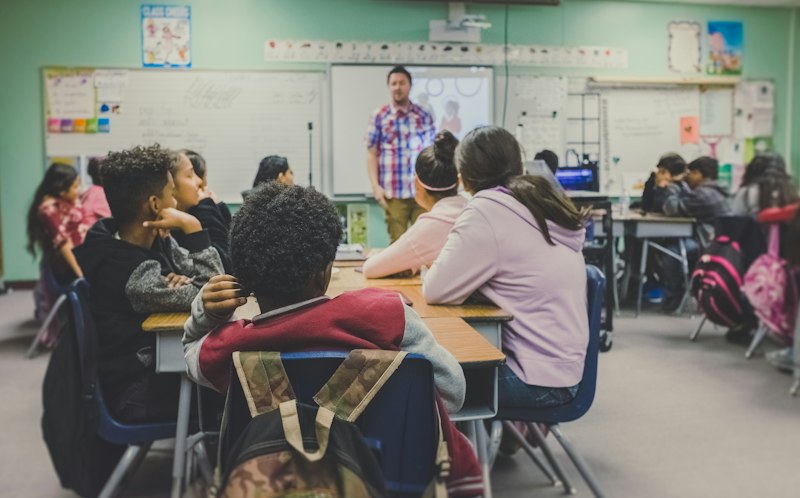
The Open-Classroom Method (OCM) is a comprehensive pedagogical approach that fundamentally redefines the traditional learning environment, moving away from rigid, teacher-centric models towards a more flexible, student-centered paradigm. At its heart, OCM champions an educational philosophy where learning is not confined to prescribed curricula or fixed seating arrangements, but rather emerges from a dynamic interplay of student curiosity, collaborative exploration, and diverse instructional strategies. This method fosters an environment where learners are empowered to take ownership of their educational journey, engaging with content through active participation, critical inquiry, and creative problem-solving, rather than passive reception of information.
The key idea underpinning the Open-Classroom Method is the belief that children are inherently curious and capable learners who thrive when given agency and a stimulating, supportive environment. It operates on the principle that learning is most effective when it is an active, experiential process, rather than a passive one. This involves the deliberate integration of various teaching strategies, such as project-based learning, inquiry-based activities, and interactive discourse, all designed to cultivate deeper understanding and the development of essential life skills. The classroom transforms into a vibrant hub where students can move freely, choose activities, and engage in meaningful interactions with peers and educators, reflecting a commitment to personalized and holistic development.
Beyond its structural and methodological distinctions, OCM embodies a profound shift in educational philosophy, aligning closely with principles of progressive education and student-centered learning. It prioritizes the development of the whole child, recognizing that academic achievement is inextricably linked to social-emotional growth, creative expression, and critical thinking abilities. By emphasizing collaboration over competition and intrinsic motivation over external rewards, OCM aims to cultivate lifelong learners who are adaptable, resilient, and well-equipped to navigate the complexities of the modern world. This approach encourages learners to construct their own knowledge through direct experience and reflection, fostering a deeper, more enduring grasp of concepts.
Historical Context and Origins
The conceptual roots of the Open-Classroom Method trace back primarily to the educational reforms and counter-cultural movements of the 1960s, a period marked by profound questioning of established institutions, including traditional schooling. A pivotal figure in its development was John Holt, an influential American educator and author. Holt, through his seminal works such as “How Children Fail” (1964) and “How Children Learn” (1967), articulated a powerful critique of conventional education, arguing that it stifled children’s natural curiosity and inherent desire to learn by imposing rigid structures, rote memorization, and an overemphasis on testing. His observations highlighted how traditional classrooms often induced fear, boredom, and a disengagement that hindered genuine understanding.
In response to these perceived shortcomings, Holt advocated for a radical reimagining of the classroom environment, proposing a model where learning spaces were designed to foster creativity, collaboration, and flexibility. He envisioned classrooms as dynamic ecosystems where children, much like in the real world, could explore, experiment, and learn from their mistakes without constant fear of judgment. This context gave rise to the Open-Classroom Method, which sought to dismantle the physical and pedagogical barriers of traditional schooling. It challenged the notion that a single teacher must impart knowledge to a silent, passive group of students, instead promoting a bustling, interactive space where students could pursue individual interests and collaborate on shared projects, all under the guidance of a facilitating educator.
The emergence of OCM also coincided with broader movements in educational psychology and philosophy that championed the importance of individual differences and the active construction of knowledge. Influenced by thinkers like Jean Piaget and Maria Montessori, educators began to see children not as empty vessels to be filled, but as active participants in their own learning process. The open-classroom movement gained traction as a practical manifestation of these progressive ideals, offering a tangible alternative to the factory model of education. While its widespread adoption saw fluctuations over the decades, its core tenets have significantly influenced subsequent educational reforms and continue to resonate with modern calls for personalized and engaging learning experiences.
Underlying Principles and Educational Philosophy
The Open-Classroom Method is deeply rooted in several profound educational and psychological philosophies, most notably constructivism, humanistic psychology, and the broader tenets of progressive education. From a constructivist perspective, OCM posits that learners actively build their understanding and knowledge of the world through experiencing and reflecting on those experiences, rather than passively receiving information. This means that instead of merely being told facts, students are provided with rich, authentic problems and opportunities to explore, question, and discover solutions for themselves, thereby constructing their own conceptual frameworks. The learning environment is designed to facilitate this active construction, encouraging experimentation and the integration of new information with existing knowledge.
Aligned with humanistic psychology, OCM places immense value on the individual’s inherent potential, self-direction, and holistic development. It recognizes that emotional well-being, social skills, and creative expression are just as crucial as academic achievement. The method fosters a climate of psychological safety, respect, and empathy, where students feel comfortable taking risks, expressing their ideas, and learning from mistakes without fear of punitive measures. The role of the teacher shifts from that of an authoritarian instructor to a supportive facilitator, mentor, and guide, who nurtures each student’s unique talents and helps them navigate their learning journey. This approach acknowledges that learners are motivated by intrinsic factors, such as curiosity and a desire for mastery, rather than solely by external rewards or punishments.
Furthermore, OCM embodies the core principles of progressive education, which advocates for an education that is relevant to students’ lives, encourages social responsibility, and integrates learning with real-world experiences. It critiques the isolated, abstract nature of traditional schooling, instead promoting an interdisciplinary, project-oriented curriculum that connects various subjects and skills. This philosophy champions democratic values within the classroom, where students have a voice in their learning choices and collaborate on group projects, developing essential social and civic competencies. The emphasis is on learning “how to learn” and “how to think,” rather than simply memorizing facts, preparing students not just for tests, but for active participation in society and lifelong intellectual growth.
Practical Implementation and Classroom Strategies
Implementing the Open-Classroom Method requires a significant departure from conventional classroom setups and pedagogical routines, emphasizing flexibility in both physical space and instructional design. Practically, an open classroom often features diverse learning zones or centers, such as a reading nook, a science discovery area, an arts and crafts station, and collaborative workspaces, rather than rows of individual desks. Students are encouraged to move between these areas as they engage in different activities or pursue various aspects of a project. This fluid environment naturally supports varied learning styles and allows for individualized instruction, where students can work at their own pace and focus on areas of particular interest or challenge.
Instructional strategies within OCM are predominantly student-centered learning approaches, including project-based learning, where students delve into complex, real-world problems that require research, collaboration, and creative solutions. Problem-solving activities, interactive discourse, and peer tutoring are common, promoting active engagement and the development of critical thinking skills. Teachers facilitate this process by providing resources, posing guiding questions, and offering individualized support, stepping in to instruct small groups or individuals as needed, rather than delivering whole-class lectures. The curriculum becomes more emergent and responsive to student interests, allowing for deeper exploration of topics that genuinely capture their attention.
A typical day in an open classroom might involve a morning meeting where students and the teacher discuss plans, share ideas, and address any challenges. Following this, students might disperse to work independently on a research project, collaborate with peers on a group presentation, or engage in a hands-on experiment. The teacher circulates, observing, guiding, and providing targeted support. Assessment in such an environment moves beyond standardized tests, often incorporating portfolios of student work, observations of collaboration and problem-solving, and self-reflection. This holistic approach to assessment better captures the breadth of learning outcomes, including the development of social skills, creativity, and independent learning habits, which are central to the OCM philosophy.
A Practical Example of the Open-Classroom Method in Action
Consider a hypothetical fourth-grade classroom embarking on a unit about ecosystems. In a traditional setting, the teacher might lecture on different types of ecosystems, assign textbook readings, and have students complete worksheets. In contrast, an Open-Classroom Method approach would transform this unit into a vibrant, multi-faceted exploration. The teacher might begin by posing a broad, open-ended question like, “How do living things interact with their environment, and what happens when that balance is disturbed?” This serves as a springboard for inquiry, immediately engaging students’ natural curiosity rather than presenting pre-digested information.
For the “how-to” aspect, students would then be presented with a variety of resources and activity choices. Some might choose to research a specific ecosystem, like a rainforest or a desert, using books, tablets, and online videos available in a designated research corner. Others might opt to create a miniature terrarium or aquarium to observe a small-scale ecosystem firsthand, documenting their observations in journals. A group might collaborate on designing a public service announcement about protecting local wetlands, requiring them to research local species, habitat threats, and conservation efforts. The teacher would move between these groups, offering guidance, suggesting additional resources, and facilitating discussions, rather than standing at the front of the room. This approach allows students to learn at their own pace, leverage their strengths, and pursue aspects of the topic that genuinely fascinate them.
Throughout this process, learning is not linear but iterative and collaborative. Students regularly share their findings, present their projects, and engage in peer feedback sessions, refining their understanding through dialogue and diverse perspectives. A student building a terrarium might realize the importance of decomposers, while a group researching rainforests might connect deforestation to global climate patterns. This practical example illustrates how OCM fosters student-centered learning by empowering students with choice, encouraging active participation, and promoting a deeper, more integrated understanding of complex scientific concepts through direct engagement and meaningful collaboration, far beyond what simple memorization could achieve.
Significance and Impact on Education
The Open-Classroom Method holds significant importance within the field of education because it represents a powerful critique of and a viable alternative to conventional, industrial-era schooling models. Its advocacy for flexibility, student-centered learning, and holistic development has profoundly influenced pedagogical thought, shifting focus from mere content delivery to the cultivation of critical thinking, creativity, and social-emotional intelligence. OCM underscored the need for educational environments that are responsive to individual learner needs and foster intrinsic motivation, thereby laying groundwork for many contemporary educational reform movements. It challenged educators to rethink their roles, moving from dispensers of knowledge to facilitators of discovery, profoundly impacting teacher training and professional development paradigms.
Today, the principles of the Open-Classroom Method find widespread application across various educational settings and disciplines, even if not always under its explicit name. In primary and secondary education, elements like learning centers, project-based learning, and collaborative group work are direct descendants of OCM’s philosophy, used to encourage active learning and deeper engagement. In adult learning centers and professional development programs, OCM’s emphasis on self-directed learning and experiential activities is crucial for engaging mature learners and facilitating practical skill acquisition. Post-secondary institutions increasingly adopt flexible learning spaces and interdisciplinary project work to promote student autonomy and prepare graduates for complex, collaborative workplaces, reflecting OCM’s enduring influence on modern pedagogy and instructional design.
Beyond formal education, OCM’s impact can be observed in broader discussions about how people learn and thrive in different environments. Its focus on individual agency and a supportive learning community resonates with principles applied in areas like corporate training, where experiential learning and collaborative problem-solving are valued. The method’s emphasis on adapting instruction to individual needs has also contributed to our understanding of inclusive education, advocating for environments that accommodate diverse learning styles and abilities. Ultimately, OCM has helped to cement the understanding that effective learning is an active, personalized, and socially interactive process, moving education towards more human-centered and empowering practices.
Advantages and Limitations of the Open-Classroom Method
The Open-Classroom Method offers a myriad of advantages that contribute to a more enriching and effective learning experience. Foremost among these is its ability to foster active learning. By allowing students to participate in hands-on activities, engage in collaborative projects, and lead discussions, OCM encourages them to delve deeply into the subject matter, moving beyond superficial memorization. This active engagement is crucial for developing robust critical thinking skills, as students are constantly evaluating information, solving problems, and constructing their own understanding. Additionally, OCM significantly enhances collaboration skills, as teamwork and group activities are central to its design, preparing students for real-world interactions where working effectively with others is paramount. Students learn valuable social skills, such as communication, negotiation, and leadership, within a supportive peer-learning environment.
Another significant advantage is the greater flexibility it affords to both students and teachers. Because OCM does not rely on a single, rigid teaching style, educators can tailor their instruction to accommodate diverse learning styles, paces, and interests. This allows for truly individualized instruction, where students receive support tailored to their specific needs, whether they require more challenge or additional scaffolding. Such adaptability ensures that each student can progress at a rate that is optimal for their development, fostering a sense of accomplishment and maintaining intrinsic motivation. The freedom of choice within a structured framework empowers students to take ownership of their learning, leading to increased engagement and a deeper personal investment in their educational outcomes.
Despite its numerous benefits, the Open-Classroom Method is not without its limitations and challenges, which often contribute to its difficulty in widespread implementation. One primary concern is the significant demand it places on teachers, requiring them to be exceptionally flexible, creative, and highly organized. Implementing OCM often necessitates extensive preparation time and effort compared to traditional methods, as lesson plans must be adaptable and a diverse array of resources needs to be curated and managed. Furthermore, OCM can be particularly challenging to implement in educational systems that heavily prioritize standardized testing and narrow assessment metrics, as the method’s emphasis on creative thinking, process, and holistic development can be difficult to quantify through conventional assessments. This can create tension between innovative pedagogical practices and institutional accountability frameworks.
Another limitation is that OCM may not be universally suitable for all students. While many thrive in self-directed and collaborative environments, some students may struggle with the high degree of autonomy and self-regulation required. Students who benefit from more explicit structure, direct instruction, or who have specific learning differences may initially find the open-ended nature of OCM overwhelming or difficult to navigate without substantial support. Similarly, assessing learning outcomes in an open classroom can be complex. Because OCM emphasizes diverse projects, creative solutions, and the development of intangible skills like collaboration and critical thinking, measuring student progress through traditional grading methods can be challenging. This difficulty in objective assessment makes it harder to evaluate the method’s effectiveness using conventional metrics and can pose hurdles for demonstrating accountability to stakeholders.
Connections to Related Concepts and Broader Fields
The Open-Classroom Method exists within a rich tapestry of psychological and educational theories, drawing heavily from and contributing to several interconnected concepts. It shares significant philosophical ground with constructivism, which posits that learners actively construct their own understanding and knowledge of the world through experience and reflection. OCM’s emphasis on hands-on activities, problem-solving, and student-led inquiry directly reflects constructivist principles, moving away from the idea of knowledge being passively received. It also aligns closely with the tenets of progressive education, a movement that advocates for educational reforms focusing on the whole child, experiential learning, and democratic classroom practices, largely inspired by figures like John Dewey.
Furthermore, OCM is a direct application of student-centered learning, a pedagogical approach that places the student at the center of the learning process, empowering them with agency and choice over what and how they learn. This contrasts sharply with traditional teacher-centered instruction. The method’s focus on fostering individual growth, self-actualization, and intrinsic motivation is deeply influenced by humanistic psychology, particularly the work of Carl Rogers and Abraham Maslow, who emphasized the importance of a supportive environment for personal growth and the fulfillment of potential. Strategies like project-based learning and inquiry-based learning, which are integral to OCM, are practical manifestations of these broader theoretical frameworks, providing concrete ways for students to engage deeply with content and develop diverse skills.
Ultimately, the Open-Classroom Method belongs to the broader field of educational psychology, which studies how humans learn in educational settings, the effectiveness of educational interventions, and the psychology of teaching. Within this field, OCM draws from and informs sub-disciplines such as developmental psychology, recognizing the importance of age-appropriate learning and individual differences in cognitive and social development. It also touches upon aspects of social psychology by fostering collaborative learning and understanding group dynamics. By integrating various theories into a holistic and flexible approach, OCM provides a comprehensive framework for creating dynamic learning environments that cater to the diverse needs of students, striving to cultivate not just academic knowledge, but also essential life skills and a lifelong love of learning.