The Organizational Hypothesis: How Your Brain Simplifies Life
Scientifically Reviewed · Dr. Marwa Abd-Alazim · October 4, 2026
Review Criteria & Clinical Standards
This content undergoes rigorous scientific peer-review and medical editorial standards at Arab Psychology Network to ensure clinical accuracy, validity, and compliance with evidence-based guidelines from leading psychological and healthcare authorities (APA / WHO).
The Core Definition
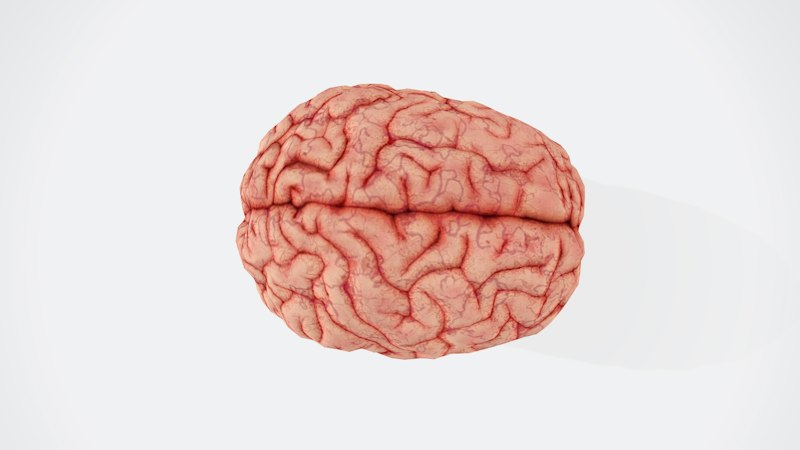
The Organizational Hypothesis posits a fundamental principle in human cognition: that individuals actively perceive and structure information by employing various cognitive shortcuts. At its heart, this theory explains how people manage the daunting task of processing vast and often complex data from their environment. Rather than engaging in exhaustive, resource-intensive analysis for every piece of information, the mind naturally seeks to simplify and organize, thereby reducing cognitive load. This initial simplification allows for more efficient understanding, storage, and retrieval of knowledge, making it a cornerstone concept for comprehending human information processing.
Expanding on this, the hypothesis suggests that these cognitive shortcuts are not merely arbitrary reductions but systematic strategies that enable the human brain, with its inherently limited capacity, to operate effectively in a complex world. The fundamental mechanism involves the creation of structured mental models or frameworks into which new information is assimilated. This active organization transforms raw, unstructured input into meaningful and manageable units. It is an adaptive strategy, crucial for survival and effective decision-making, allowing individuals to navigate intricate situations without being overwhelmed by informational overload.
The pervasive influence of the Organizational Hypothesis extends across numerous domains, highlighting its broad applicability. From understanding how students learn and retain educational material to explaining how professionals make rapid decisions under pressure, its principles resonate. It forms a critical foundation in fields such as cognitive psychology, which studies mental processes like memory and problem-solving; organizational behavior, which examines human behavior in organizational settings; and the science of education, informing pedagogical approaches. This interdisciplinary reach underscores its importance in explaining how individuals make sense of their world.
Historical Context and Origin
The Organizational Hypothesis was first formally articulated by the Nobel laureate Herbert Simon in his seminal work, “Administrative Behavior: A Study of Decision-Making Processes in Administrative Organization,” published in 1947. Simon, a polymath whose contributions spanned economics, political science, computer science, and psychology, challenged the then-dominant classical economic theories which posited that individuals consistently make purely rational decisions aimed at maximizing utility. His ground-breaking perspective introduced the concept of bounded rationality, arguing that human rationality is inherently limited by cognitive constraints and available information.
The origin of the hypothesis emerged from Simon’s observations of decision-making within administrative structures. He noted that even highly intelligent individuals in organizations did not possess infinite cognitive resources or perfect information. Instead, they adapted by employing simplified mental models and decision rules to arrive at “satisficing” outcomes – decisions that are good enough, rather than optimal. This empirical observation formed the bedrock of the Organizational Hypothesis, suggesting that the human mind actively organizes and simplifies complex data to make it manageable for processing within these limitations.
Simon’s work diverged significantly from prevailing views by emphasizing the practical limitations of human cognition. He proposed that instead of processing every single piece of information, individuals employ strategies like chunking (grouping discrete pieces of information into larger units) and categorizing (assigning items to conceptual groups based on shared features) to reduce the sheer volume of data they need to consider. These strategies were not seen as imperfections but as essential adaptive mechanisms that allow humans to function effectively in an information-rich yet cognitively demanding world. This foundational work laid the groundwork for much of modern cognitive science and our understanding of human decision-making.
A Practical Example: Learning a New Software
To illustrate the Organizational Hypothesis in a relatable, everyday context, consider the scenario of an individual learning to use a complex new software application, such as a professional video editing suite or a data analysis tool. Upon first opening such software, a user is typically confronted with a bewildering array of menus, icons, toolbars, and panels, each representing numerous functions and features. Without a structured approach, this initial experience can be overwhelming, leading to frustration and a steep learning curve. The organizational hypothesis explains how a user instinctively, or with guided instruction, simplifies this complexity.
The “how-to” of applying this psychological principle unfolds step-by-step. Initially, the user does not attempt to learn every single function simultaneously. Instead, they might first focus on the most common tasks they need to perform, such as “importing a file,” “making a basic edit,” or “saving a project.” These tasks act as initial conceptual anchors. As they learn, they begin to chunk related functions together: for example, all tools related to “audio adjustments” might be mentally grouped, regardless of their physical location on the screen, forming a single cognitive unit. Similarly, “visual effects” might become another chunk.
Further, the user starts to categorize these chunks. They might create mental categories like “input/output operations,” “core editing tools,” and “advanced effects.” This mental categorization allows them to build a hierarchical understanding of the software’s capabilities, making it easier to navigate and recall specific functions. When faced with a new problem, instead of searching through every menu item, they can efficiently recall the relevant category (“I need to adjust the sound, so I’ll look in my ‘audio adjustments’ chunk within the ‘core editing tools’ category”). This active process of simplifying, grouping, and classifying information transforms an otherwise chaotic learning experience into a manageable and ultimately mastery-oriented endeavor, demonstrating the power of the organizational hypothesis in action.
Significance and Impact
The significance of the Organizational Hypothesis to the field of psychology is profound, as it fundamentally shifted the understanding of human cognition from a purely rational, limitless capacity model to one that acknowledges and integrates inherent limitations. It provided a robust theoretical framework for explaining why individuals often deviate from perfectly optimal decisions and how they manage information under real-world constraints. This paradigm shift opened new avenues for research into cognitive processes, memory, problem-solving, and decision-making, emphasizing the adaptive and constructive nature of human thought rather than viewing deviations from rationality as flaws. It validated the idea that mental shortcuts are not just errors but necessary tools for navigating complexity.
Its impact extends far beyond theoretical discussions, finding practical applications across a multitude of domains today. In user interface (UI) and user experience (UX) design, for instance, the principles derived from the organizational hypothesis are crucial. Designers strive to present information in organized, digestible chunks, using clear categories and visual hierarchies to minimize cognitive load and enhance usability. Think of the intuitive layout of modern websites and applications, where related functions are grouped, and complex processes are broken down into manageable steps.
Furthermore, in education, the hypothesis informs pedagogical strategies, advocating for curriculum design that introduces complex topics incrementally, employing techniques like concept mapping and outlining to help students organize new information effectively. In organizational behavior, it guides the design of information systems and training programs, ensuring that data is presented in a structured manner that aligns with natural human cognitive tendencies, thereby improving decision-making efficiency and reducing errors. Even in marketing, understanding how consumers categorize and simplify product information influences packaging, advertising, and brand messaging strategies, highlighting its pervasive influence on how we interact with and interpret information in our daily lives.
Connections and Relations to Other Concepts
The Organizational Hypothesis is deeply interwoven with several other key psychological terms and theories, providing a richer, more comprehensive understanding of human cognition. Foremost among these is bounded rationality, a broader concept also introduced by Herbert Simon. While bounded rationality describes the idea that human decision-making is constrained by limited information, time, and cognitive abilities, the organizational hypothesis specifically addresses the mechanisms—the cognitive shortcuts—by which individuals cope with these bounds, primarily through the active structuring and simplification of information. It essentially provides the operational details for how bounded rationality manifests in information processing.
Another closely related concept is Cognitive Load Theory, which directly examines the amount of mental effort expended in working memory. The organizational hypothesis explains how individuals attempt to manage and reduce cognitive load by structuring information. Techniques like chunking, which involves grouping individual pieces of information into larger, more meaningful units, are direct applications of the organizational hypothesis aimed at minimizing the burden on working memory. For example, remembering a phone number as three chunks (e.g., 555-123-4567) is easier than remembering ten individual digits.
Furthermore, the hypothesis connects with the study of heuristics and biases, pioneered by Daniel Kahneman and Amos Tversky. Heuristics are mental shortcuts or rules of thumb that people use to make decisions and judgments quickly and efficiently. While often effective, these shortcuts can sometimes lead to systematic errors or biases. The organizational hypothesis provides a framework for understanding why these heuristics are employed—they are a form of cognitive shortcut used to organize and simplify information, particularly under conditions of uncertainty or limited cognitive resources. It also relates to Schema Theory, which posits that knowledge is organized into mental structures or schemas that help individuals interpret and respond to new information, essentially acting as pre-organized frameworks for new data.
Broader Category and Subfields
The Organizational Hypothesis fundamentally belongs to the broader category of Cognitive Psychology, which is the scientific study of mental processes such as attention, language use, memory, perception, problem-solving, creativity, and thinking. Within this expansive field, it specifically aligns with theories of information processing, which view the human mind as an information processor, much like a computer, taking in input, processing it, and producing output. The hypothesis explains a crucial aspect of this processing: how the input is structured and simplified to be manageable for the system.
Beyond cognitive psychology, its principles are highly relevant and frequently applied in several interconnected subfields. Organizational Psychology (often paired with Industrial Psychology as I-O Psychology) heavily utilizes the organizational hypothesis to understand how individuals and groups process information within workplace settings, influencing organizational design, communication strategies, and decision-making protocols. It helps explain how employees manage complex tasks, interpret company policies, and assimilate new training material.
Moreover, the hypothesis plays a significant role in Educational Psychology, where it informs theories of learning and instruction. Educators leverage these principles to design curricula, develop teaching methods, and create learning materials that facilitate the organized assimilation of knowledge by students, ensuring that information is presented in manageable chunks and logical categories. Its insights are also vital in Human-Computer Interaction (HCI) and user experience (UX) design, where understanding how users organize and simplify digital information is paramount to creating intuitive and effective interfaces. This broad applicability highlights its foundational role across various psychological and applied disciplines.
Further Research and Current Perspectives
In contemporary psychology, research surrounding the Organizational Hypothesis continues to evolve, delving deeper into the neurological underpinnings and behavioral manifestations of information organization. Modern investigations leverage advanced neuroimaging techniques, such as fMRI and EEG, to observe the brain activity associated with chunking, categorization, and other cognitive shortcuts, providing empirical evidence for the neural mechanisms proposed by Simon. This includes studying how different brain regions collaborate to form coherent mental representations from fragmented sensory input, and how these organizational processes can be enhanced or impaired.
Current perspectives also explore the influence of individual differences and cultural contexts on organizational strategies. Researchers examine how factors like expertise, working memory capacity, and cultural background might shape the specific ways in which individuals simplify and structure information. For instance, an expert in a field might employ highly specialized and efficient chunks of knowledge, whereas a novice would rely on more general categories. Similarly, cross-cultural studies investigate whether the preferred methods of information organization vary across different societies, potentially influencing communication styles, learning preferences, and problem-solving approaches.
Challenges and critiques of the hypothesis often center on the precise delineation of “cognitive shortcuts” and the potential for these shortcuts to lead to systematic biases, as highlighted by research on heuristics and biases. While the hypothesis emphasizes the adaptive nature of simplification, understanding the conditions under which these strategies lead to errors remains a critical area of inquiry. Future research aims to develop more granular models that predict not only when and how information is organized but also the subsequent impact on decision quality, learning efficacy, and the potential for cognitive distortions, thus refining and expanding Simon’s foundational insights into human information processing.