Digital Diagnostics: Precision Paths to Perfect Smiles
Scientifically Reviewed · Dr. Marwa Abd-Alazim · September 22, 2026
Review Criteria & Clinical Standards
This content undergoes rigorous scientific peer-review and medical editorial standards at Arab Psychology Network to ensure clinical accuracy, validity, and compliance with evidence-based guidelines from leading psychological and healthcare authorities (APA / WHO).
Introduction to Ortho-Rater and the Digital Transformation of Orthodontics
The field of orthodontics has undergone a radical transformation with the integration of advanced computational tools designed to enhance diagnostic precision. At the forefront of this technological shift is Ortho-Rater, a sophisticated computer-aided system engineered for the automated assessment of malocclusion. Traditionally, the identification and classification of dental irregularities relied heavily on the subjective expertise of practitioners, a process that, while grounded in established clinical theory, often introduced variability in treatment planning. Ortho-Rater seeks to standardize this process by utilizing high-resolution 3D facial scans and algorithmic analysis to provide a quantitative foundation for orthodontic intervention. This innovation is not merely a technical upgrade but represents a paradigm shift toward objective, data-driven healthcare in dental medicine.
The development of Ortho-Rater was driven by the necessity to bridge the gap between traditional diagnostic frameworks and the capabilities of modern imaging technology. By automating the assessment of complex craniofacial structures, the system allows for a level of detail that surpasses the limitations of human visual inspection. This tool is particularly relevant in the context of contemporary orthodontic assessment, where the demand for efficient and reproducible results is higher than ever. The system integrates multiple data points to generate a comprehensive profile of a patient’s needs, effectively serving as a second opinion that is both tireless and consistent. Consequently, Ortho-Rater is becoming an essential component in the modern clinical toolkit, facilitating a more streamlined approach to patient care.
Furthermore, the introduction of Ortho-Rater addresses the growing complexity of malocclusion cases that practitioners face today. As our understanding of dental aesthetics and functional harmony evolves, the criteria for “ideal” alignment have become more nuanced. Ortho-Rater accounts for these nuances by applying a set of predefined criteria that mirror the rigorous standards of the orthodontic community. By providing a visual representation of facial features alongside quantitative scores, the system empowers orthodontists to communicate more effectively with their patients, fostering a collaborative environment for treatment planning. This transparency is a key benefit of the system, as it aligns clinical objectives with patient expectations through clear, evidence-based visualizations.
Historical Foundations: The Legacy of Manual Orthodontic Assessment
To appreciate the significance of Ortho-Rater, one must first understand the historical context of orthodontic diagnosis. For over a century, the Angle Classification System, introduced by Edward Angle in 1907, has served as the primary method for categorizing malocclusion. This system focuses on the relationship between the permanent first molars, providing a foundational language for clinicians to describe dental misalignments. While the Angle system revolutionized the field by providing a standardized nomenclature, its reliance on a two-dimensional perspective of a three-dimensional problem highlighted the need for more comprehensive diagnostic tools. Despite its longevity, the manual application of this system is inherently limited by the observer’s subjective interpretation of dental landmarks.
Building upon the foundations laid by Angle, the Tweed-Merrifield Analysis emerged as another critical manual technique for evaluating craniofacial morphology. This method emphasizes the importance of the mandibular incisor position and the overall facial profile in determining treatment goals. Practitioners utilizing the Tweed-Merrifield approach must perform complex measurements on cephalometric radiographs, a process that requires significant time and precision. While these manual techniques have guided successful treatments for generations, they are susceptible to human error and inter-observer variability. Two different orthodontists may look at the same set of records and arrive at slightly different conclusions regarding the severity of the malocclusion or the optimal course of action.
The transition from these manual methods to automated systems like Ortho-Rater marks the culmination of decades of research into improving diagnostic reliability. Manual assessment is not only labor-intensive but also places a high cognitive load on the practitioner, who must synthesize vast amounts of visual and spatial information. The inherent fatigue associated with repetitive manual evaluations can lead to inconsistencies, especially in busy clinical settings. By codifying the logic of the Angle Classification System and the Tweed-Merrifield Analysis into a digital algorithm, Ortho-Rater preserves the wisdom of these classical theories while eliminating the pitfalls of manual execution. This evolution ensures that the core principles of orthodontics remain relevant in an increasingly digital world.
The Architecture of Ortho-Rater: 3D Scanning and Algorithmic Logic
The technical core of Ortho-Rater lies in its ability to process 3D facial scans with high fidelity. Unlike traditional photography or 2D X-rays, a 3D scan captures the full volumetric data of the patient’s oral and facial structures. This spatial data is then analyzed by the Ortho-Rater algorithm, which identifies key anatomical landmarks with sub-millimeter accuracy. The system’s architecture is designed to handle the complexities of human anatomy, recognizing that no two patients are identical. By establishing a digital twin of the patient’s dentition, the software can perform virtual measurements that would be impossible or highly invasive to conduct manually. This high-tech approach ensures that every aspect of the patient’s anatomy is considered in the final assessment.
Once the 3D facial scan is processed, the system applies a set of predefined criteria to evaluate the severity of the malocclusion. These criteria are derived from a combination of clinical guidelines and statistical norms, allowing the system to provide a quantitative score that reflects the urgency and complexity of the required treatment. The automation of this scoring process is a critical feature, as it removes the subjective bias that can often cloud clinical judgment. The algorithm is calibrated to detect even the most subtle deviations from the norm, ensuring that potential issues are identified early in the diagnostic phase. This proactive approach is a hallmark of the Ortho-Rater system, prioritizing precision and patient safety.
Moreover, the visual representation generated by Ortho-Rater serves as a powerful diagnostic and educational tool. The software produces a color-coded map of the patient’s facial features, highlighting areas of concern such as dental crowding or midline shifts. This visual output allows the orthodontist to see “under the hood” of the malocclusion, providing insights that might be missed during a standard clinical examination. For the patient, these visualizations make the abstract concepts of orthodontic treatment tangible and understandable. By seeing a digital model of their current state versus the ideal alignment, patients are more likely to engage with their treatment plan and adhere to the necessary protocols. This synergy between data and visualization is what sets Ortho-Rater apart from previous automated attempts.
Diagnostic Categories: The Five Pillars of Malocclusion Analysis
The Ortho-Rater system evaluates the severity of malocclusion across five distinct but interrelated categories. The first of these is overjet, which measures the horizontal overlap of the maxillary central incisors over the mandibular central incisors. Excessive overjet can lead to functional issues and increased risk of dental trauma, making its accurate measurement essential. The second category is overbite, the vertical overlap of the front teeth. Ortho-Rater precisely calculates these distances in three dimensions, providing a more accurate assessment than the traditional “percentage” estimates used in manual practice. By quantifying these relationships, the system helps clinicians determine the necessary movements for vertical and horizontal correction.
The third and fourth categories analyzed by the system are the molar relationship and anterior crowding. The molar relationship is a direct application of the Angle Classification System, where the system identifies the positioning of the first molars to determine if the patient exhibits a Class I, II, or III malocclusion. Anterior crowding, on the other hand, assesses the lack of space for teeth to erupt or align within the dental arch. Ortho-Rater calculates the required space versus the available space with high precision, allowing for better-informed decisions regarding tooth extraction or arch expansion. These metrics are vital for ensuring long-term stability and aesthetic success in orthodontic outcomes.
The final category evaluated by Ortho-Rater is midline deviation. This refers to the alignment of the dental midlines of the upper and lower arches relative to each other and the facial midline. Even minor deviations can significantly impact facial symmetry and the overall aesthetic result of the treatment. Ortho-Rater uses its 3D modeling capabilities to detect these deviations and provide a clear roadmap for correction. By assessing these five pillars—overjet, overbite, molar relationship, anterior crowding, and midline deviation—the system ensures a holistic evaluation of the patient’s orthodontic status. This comprehensive approach minimizes the risk of overlooking secondary issues that could complicate the primary treatment goals.
Clinical Validation: Evidence of Accuracy and Efficiency
The credibility of Ortho-Rater is supported by rigorous clinical testing, most notably a study involving 30 patients with varying degrees of malocclusion. This study compared the automated results generated by Ortho-Rater against the assessments of experienced orthodontists using traditional manual methods. The findings were remarkable, revealing that the system achieved a mean error rate of less than 1%. Such a high degree of accuracy demonstrates that the algorithm can reliably replicate the expertise of human specialists while maintaining a level of consistency that is difficult for humans to achieve over time. This validation is crucial for gaining the trust of the medical community and ensuring the system’s adoption in mainstream practice.
Beyond accuracy, the clinical study also highlighted the significant efficiency gains provided by Ortho-Rater. The results indicated that the system reduced the time required for a full orthodontic assessment by more than 35%. In a high-volume clinical environment, this time saving is transformative, allowing practitioners to dedicate more attention to patient interaction and complex treatment planning. The automation of routine measurements frees the orthodontist from the “grunt work” of manual calculations, thereby reducing the risk of human error stemming from cognitive fatigue. This efficiency does not come at the cost of quality; rather, it enhances the overall standard of care by providing faster, more reliable data points.
The impact of Ortho-Rater on clinical decision-making was also a key focus of the research. Participants in the study noted that the objective data provided by the system served as a valuable benchmark, helping to resolve ambiguities in difficult cases. When a clinician is faced with a borderline diagnosis, the quantitative score from Ortho-Rater can provide the necessary evidence to tip the scale toward the most effective treatment path. This reduction in diagnostic uncertainty is a major benefit for both the provider and the patient, as it leads to more predictable results and higher satisfaction rates. The successful clinical validation of Ortho-Rater underscores its potential as a disruptive force in the field of dental diagnostics.
Improving Workflow and Patient Communication
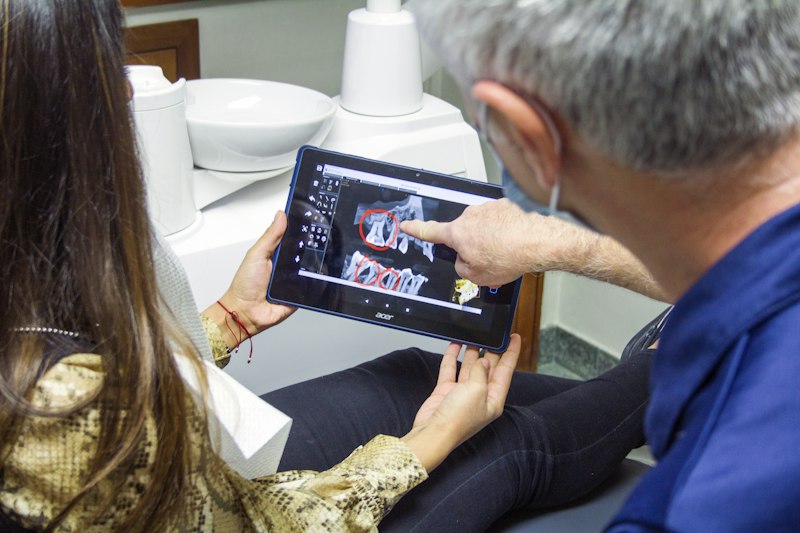
One of the most immediate benefits of implementing Ortho-Rater is the optimization of the clinical workflow. In traditional settings, the journey from the initial consultation to the final treatment plan can be slow, involving multiple appointments for impressions, X-rays, and manual analysis. Ortho-Rater streamlines this process by consolidating the data collection into a single 3D scanning session. The immediate availability of an automated report allows the orthodontist to discuss the findings with the patient during the same visit. This acceleration of the diagnostic phase not only improves the patient experience but also increases the throughput of the clinic, making high-quality orthodontic care more accessible.
Effective patient communication is another area where Ortho-Rater excels. Many patients struggle to understand the complexities of their malocclusion when explained using technical jargon or static 2D images. The visual representation provided by the system acts as a common language between the doctor and the patient. By viewing a 3D model of their own teeth, patients can clearly see the issues the orthodontist is describing, such as a midline deviation or anterior crowding. This visual clarity builds trust and empowers patients to take an active role in their health journey. When patients understand the “why” behind a treatment plan, they are more likely to comply with instructions, leading to better clinical outcomes.
Moreover, the objective nature of the Ortho-Rater report can assist in discussions regarding the necessity of certain procedures, such as extractions or surgery. When a computer-generated analysis confirms the severity of a condition, it provides an unbiased perspective that can help patients feel more confident in the recommended course of action. This transparency is vital for informed consent and helps to manage expectations regarding the duration and complexity of the treatment. By integrating Ortho-Rater into the consultation process, orthodontists can foster a more professional and evidence-based environment, which is increasingly valued by modern dental consumers.
The Psychological Impact of Automated Assessment
From a psychological perspective, the use of tools like Ortho-Rater can significantly influence the patient’s perception of care. The presence of advanced technology often signals a higher level of competence and precision, which can alleviate the anxiety many patients feel when undergoing dental evaluations. For children and adolescents—the primary demographic for orthodontic treatment—the interactive and high-tech nature of 3D facial scans can make the diagnostic process feel less intimidating and more engaging. This positive initial interaction can set the tone for the entire treatment process, fostering a sense of security and cooperation from the very beginning.
For the practitioner, the psychological benefits are equally noteworthy. The pressure of making a definitive diagnosis that will affect a patient’s appearance and function for a lifetime can be a source of significant stress. Ortho-Rater acts as a cognitive aid, providing a safety net that catches potential errors and confirms clinical suspicions. This reduction in cognitive load allows the orthodontist to focus on the creative and interpersonal aspects of their work, such as tailoring the treatment to the patient’s lifestyle and aesthetic preferences. By delegating the repetitive and data-heavy tasks to the software, clinicians can maintain a higher level of professional satisfaction and reduce the risk of burnout.
Furthermore, the standardization of assessment criteria through Ortho-Rater promotes a sense of fairness and objectivity. Patients are often concerned about the subjectivity of medical opinions, wondering if another doctor would recommend a different, perhaps less invasive, treatment. The use of a validated, automated system provides reassurance that the assessment is based on universal standards rather than personal bias. This objectivity is a cornerstone of modern medical ethics, ensuring that every patient receives a diagnosis based on the same rigorous criteria. In the long run, this builds a stronger reputation for the practice and the orthodontic profession as a whole.
Future Directions and the Integration of Artificial Intelligence
The success of Ortho-Rater is a precursor to a future where artificial intelligence (AI) and machine learning play an even larger role in orthodontics. While the current system relies on predefined criteria, future iterations could utilize deep learning to recognize patterns and predict treatment outcomes with even greater precision. By analyzing thousands of successful cases, an AI-enhanced Ortho-Rater could suggest the most efficient movement paths for teeth, further reducing treatment times and improving the stability of the final results. This evolution will likely lead to a more personalized form of orthodontics, where every treatment plan is optimized by a global database of clinical knowledge.
Another exciting prospect is the integration of Ortho-Rater with other digital technologies, such as clear aligner manufacturing and 3D printing. A seamless digital workflow from automated assessment to the production of orthodontic appliances would eliminate many of the manual steps that currently introduce delays and errors. This integration would allow for “real-time” orthodontics, where a patient could potentially receive their first set of aligners shortly after their initial 3D facial scan. The potential for such a streamlined system to lower costs and increase efficiency is immense, potentially making orthodontic treatment a reality for underserved populations around the world.
In conclusion, Ortho-Rater represents a major leap forward in the quest for an objective, efficient, and accurate method of automated orthodontic assessment. By synthesizing historical diagnostic principles with cutting-edge 3D imaging and algorithmic analysis, it addresses the long-standing challenges of manual evaluation. The system’s ability to provide a quantitative score across key categories like overjet and anterior crowding ensures a high standard of care that is both reproducible and transparent. As the technology continues to evolve, Ortho-Rater will undoubtedly remain a cornerstone of the digital orthodontic revolution, shaping the way we diagnose and treat malocclusion for years to come.
References
- Konstantinidis, G., Manos, A., Prountzos, A., & Eliades, T. (2020). Ortho-Rater: A novel tool for automated orthodontic assessment. International Journal of Computer Assisted Radiology and Surgery. https://doi.org/10.1007/s11548-020-02201-2
- Angle, E. H. (1907). Classification of malocclusion. The Angle Orthodontist, 7(3), 187-200.
- Tweed, C. H., & Merrifield, P. (1951). A comparison of the diagnosis and treatment of malocclusion of the teeth by the edgewise appliance and other systems. American Journal of Orthodontics and Oral Surgery, 37(6), 545-564.