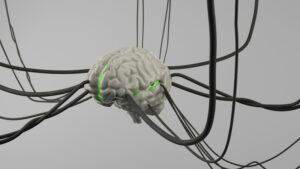
Out-of-Body Experiences: The Science of Your Detached Self
Scientifically Reviewed · Dr. Marwa Abd-Alazim · October 2, 2026
Review Criteria & Clinical Standards
This content undergoes rigorous scientific peer-review and medical editorial standards at Arab Psychology Network to ensure clinical accuracy, validity, and compliance with evidence-based guidelines from leading psychological and healthcare authorities (APA / WHO).

1. Defining the Out-of-Body Experience (OBE)
An Out-of-Body Experience (OBE) is a profound and often vivid perceptual phenomenon characterized by the distinct sensation of being outside of one’s physical body. Individuals experiencing an OBE typically report a feeling of detachment from their corporeal form, perceiving themselves as observing their own body and its immediate surroundings from an external, disembodied vantage point. This experience is highly subjective and varies widely among individuals, encompassing a spectrum from a mild feeling of separation to a complete and realistic perception of floating freely, often with an enhanced sense of clarity and awareness. The core of an OBE lies in this fundamental shift in self-perception, where the ‘self’ is felt to occupy a spatial position distinct from the physical body, challenging conventional notions of self-location and embodied consciousness.
The fundamental mechanism underlying an OBE is hypothesized to involve a temporary disruption or alteration in the brain’s processes responsible for integrating sensory information and maintaining a coherent sense of bodily self. Normally, the brain seamlessly combines data from various sensory modalities, including proprioception (the sense of one’s body position), vestibular input (sense of balance and spatial orientation), and visual perception, to construct a unified representation of the body in space. During an OBE, this intricate integration is believed to falter, leading to a misattribution of self-location. Instead of experiencing the self as centered within the physical body, the individual’s conscious awareness projects outward, creating the illusion of extracorporeal existence. This breakdown in the brain’s body schema and self-representation pathways is a central focus of scientific inquiry into the phenomenon.
While often associated with extraordinary or mystical contexts, OBEs are not exclusively religious or spiritual events. They have been reported across diverse cultures and throughout recorded history, with accounts ranging from spontaneous occurrences during sleep or relaxation to experiences induced by specific psychological or physiological states. The scientific study of OBEs, however, is a relatively modern endeavor, primarily gaining momentum and rigorous methodology since the latter half of the 20th century. This shift from anecdotal evidence to systematic investigation seeks to uncover the neural, psychological, and environmental factors that contribute to these compelling and often transformative perceptions.
2. Historical Perspectives and Early Inquiries
The concept of an individual’s consciousness or ‘soul’ existing independently of the physical body is deeply embedded in human culture and philosophy, predating modern psychological understanding by millennia. Throughout ancient civilizations and indigenous societies, experiences akin to modern OBEs were frequently interpreted through spiritual, mystical, or religious lenses. Shamans, mystics, and spiritual practitioners across various traditions have long described journeys of the soul outside the body, often undertaken during trance states, meditation, or vision quests, to gain wisdom, communicate with spirits, or perform healing rituals. These historical accounts, though varied in their specific interpretations, consistently point to a universal human experience of self-detachment, suggesting that the phenomenon is not a modern construct but rather an enduring aspect of human consciousness that has been understood through different cultural frameworks.
Early philosophical and religious texts from ancient Egypt, Greece, India, and China contain numerous references to concepts that resonate with the description of out-of-body experiences. For instance, ancient Egyptian beliefs in the ‘Ba’ soul, which could leave the body, or Platonic philosophy discussing the soul’s temporary separation from the corporeal form, illustrate a long-standing fascination with the non-physical aspects of human existence. During the medieval period and into the Renaissance, such experiences continued to be documented, often within the context of Christian mysticism or witchcraft trials, where they were attributed to divine intervention or demonic possession, respectively. These historical narratives, while lacking scientific rigor, provide invaluable contextual information, highlighting the persistent human attempt to rationalize and integrate these extraordinary perceptions into their understanding of the world.
The systematic and scientific study of OBEs is a comparatively recent development, largely emerging in the 20th century, particularly from the 1970s onwards. Prior to this period, most discussions of OBEs were confined to parapsychology or spiritual discourse. Pioneering researchers began to approach the phenomenon with empirical methods, attempting to collect standardized reports, identify common features, and explore potential physiological and psychological correlates. This marked a significant shift from purely anecdotal or metaphysical interpretations towards a more objective, evidence-based inquiry. The work of early parapsychologists and consciousness researchers laid the groundwork for contemporary neuroscience and cognitive psychology to investigate OBEs within the framework of brain function and perceptual processes, moving away from explanations rooted solely in the supernatural.
3. Phenomenological Characteristics of OBEs
The subjective experience of an Out-of-Body Experience is remarkably consistent across diverse accounts, yet also features significant individual variability. A defining characteristic is the profound sensation of being disconnected from one’s physical body, often described as a feeling of lightness or disembodiment. The individual reports being in a different spatial location from their physical form, frequently perceiving themselves as floating or hovering above their own body or the immediate environment. This external vantage point allows for the perception of one’s own physical body from a distance, a core element that distinguishes OBEs from other altered states of consciousness where body awareness might be distorted but not entirely externalized. This perception can be strikingly vivid and realistic, leading many experiencers to question the nature of reality and consciousness itself.
Sensory and perceptual alterations during an OBE extend beyond merely seeing one’s body from afar. Many individuals report enhanced or altered sensory perceptions, such as a heightened sense of hearing, an absence of physical pain, or a profound feeling of peace and tranquility. Visual perception during an OBE is often described as panoramic or 360-degree, sometimes even penetrating physical barriers. Auditory experiences might include buzzing, ringing, or disembodied voices, while tactile sensations, though rare, can involve feelings of being pulled or floating. Importantly, the sense of identity and personal awareness remains intact, even amplified, despite the radical shift in perceived bodily location. This preservation of self-identity within a disembodied state is a crucial aspect for understanding the psychological mechanisms at play.
The duration of reported OBEs can vary dramatically, ranging from fleeting moments lasting only a few seconds to more extended episodes that can persist for several hours. Brief OBEs often occur spontaneously, perhaps during states of relaxation or on the cusp of sleep, and may involve only a momentary ‘pop out’ sensation. Longer, more profound experiences are sometimes associated with specific triggers such as meditation, intense stress, or the use of certain substances. The content of these experiences also varies; some individuals report merely observing their physical body and surroundings, while others describe traveling to distant locations, encountering other entities, or experiencing profound spiritual insights. The consistency of core features, such as external self-perception, across such diverse durations and contents, underscores the robust nature of the underlying psychological and neurological phenomena.
4. Theoretical Frameworks and Potential Causes
The exact cause of Out-of-Body Experiences remains a subject of ongoing scientific investigation, with current research suggesting a complex interplay of psychological, physiological, and neurological factors. One prominent line of inquiry explores the role of altered states of consciousness. It is hypothesized that OBEs frequently occur when the brain is operating outside its typical wakeful and coherent state, such as during periods of extreme stress, intense meditation, or profound relaxation. The use of certain psychedelic drugs is also known to induce states where individuals report sensations of detachment and external self-perception, further suggesting a link between altered neurochemical environments and the propensity for OBEs. These states are thought to disrupt the normal integration of sensory input, leading to a temporary misinterpretation of bodily boundaries and self-location.
From a psychological perspective, dissociation is a key concept in understanding OBEs. Dissociation refers to a mental process that causes a lack of connection in a person’s thoughts, memories, feelings, actions, or sense of identity. OBEs can be viewed as a specific type of dissociative experience, where the perception of self becomes detached from the physical body. This can occur as a coping mechanism in response to overwhelming psychological stress or trauma, or it can manifest spontaneously. Researchers like Irwin (2015) have suggested that individuals prone to dissociative tendencies might be more susceptible to experiencing OBEs. The ability of the mind to compartmentalize or separate aspects of experience could facilitate the feeling of an independent, disembodied self.
Neurological research points to potential physiological underpinnings for OBEs, focusing on disruptions in specific brain regions and sensory processing. The brain’s capacity to construct a coherent body image relies heavily on integrating various sensory inputs, including visual information, proprioception (the sense of one’s body position and movement), and vestibular information (sense of balance). Disruptions in these systems, particularly in areas like the temporoparietal junction (TPJ) which is involved in multisensory integration and self-other distinction, have been experimentally linked to OBE-like sensations. Studies involving direct electrical stimulation of the TPJ in patients have successfully induced feelings of floating or seeing one’s body from above, providing compelling evidence for a neurological basis. Furthermore, alterations in brainwave patterns, observed during certain states associated with OBEs, suggest that specific neural activity changes may precede or accompany the experience, contributing to the altered perception of self and body.
5. A Practical Illustration: The Disorientation of Sleep Paralysis
To grasp the intricate nature of an Out-of-Body Experience, a relatable real-world scenario can be found in the phenomenon of sleep paralysis, which often features OBE-like sensations. Imagine an individual who wakes up in the middle of the night, fully conscious and aware of their surroundings, but utterly incapable of moving their body. They might feel a heavy pressure on their chest, hear strange buzzing sounds, or even perceive shadowy figures in the room. In this state of profound immobility and heightened anxiety, the brain’s normal mechanisms for integrating self-perception and motor control can become severely disrupted, setting the stage for an OBE-like manifestation. This common, albeit unsettling, experience provides a vivid illustration of how a temporary breakdown in brain function can lead to a sense of disembodiment.
Let’s break down how the psychological principle of disembodiment, characteristic of an OBE, applies in this sleep paralysis scenario. The process unfolds in several steps. Firstly, during normal REM sleep, the brain actively paralyzes the body (a state known as atonia) to prevent individuals from physically acting out their dreams. In sleep paralysis, a person’s mind wakes up while their body remains in this state of atonia. This creates a stark sensory conflict: the mind is alert and attempting to move, but the body is unresponsive. This disjunction between conscious intent and physical reality is the initial trigger for perceptual anomalies.
Secondly, the brain, faced with this unusual sensory input and the absence of expected proprioceptive feedback from movement, attempts to make sense of the situation. Instead of registering the self as firmly rooted within the immobile physical body, it may begin to construct an alternative interpretation. The feeling of pressure, the auditory hallucinations, and the visual distortions (often hypnagogic or hypnopompic hallucinations) contribute to a sense of unreality and threat. In this context, the brain, particularly regions like the temporoparietal junction, which are critical for integrating body ownership and self-location, may misinterpret the conflicting signals. This misinterpretation can manifest as a feeling of the ‘self’ detaching or floating away from the perceived immobile body, as if observing the scene from a slightly elevated or external perspective. This step-by-step breakdown illustrates how a specific physiological state, combined with sensory and cognitive interpretations, can lead to the profound sensation of being outside one’s physical form, offering a compelling analogy for understanding the broader phenomenon of OBEs.
6. Significance, Impact, and Contemporary Applications
The study of Out-of-Body Experiences holds significant importance for the broader field of psychology, offering unique insights into the nature of human consciousness, self-perception, and the mind-body relationship. OBEs challenge traditional dualistic views that strictly separate mind and body, instead emphasizing the brain’s complex role in constructing our sense of self and our embodied existence. By investigating how the brain can create the illusion of disembodiment, researchers gain a deeper understanding of the neural mechanisms responsible for body ownership, self-awareness, and multisensory integration. This research contributes not only to cognitive psychology and neuroscience but also to philosophy of mind, prompting fundamental questions about where the ‘self’ truly resides and how our subjective reality is continuously constructed and maintained. The phenomenon underscores the brain’s remarkable capacity for generating complex perceptual states that can profoundly impact an individual’s understanding of their own being.
The applications of understanding OBEs extend into various contemporary fields, including clinical psychology, therapeutic interventions, and advanced technological research. In clinical settings, knowledge of OBEs can be crucial for addressing related phenomena such as dissociative disorders, where individuals experience persistent or recurrent feelings of detachment from their mental processes or body. Therapists equipped with an understanding of OBEs can better interpret and support individuals who report such experiences, helping them to navigate feelings of confusion, fear, or existential distress that can sometimes accompany these episodes. Furthermore, the study of OBEs has informed research in virtual reality and neuroprosthetics, where scientists aim to manipulate body perception and create realistic immersive experiences. By understanding how the brain projects the self, technologies can be developed to enhance human-computer interaction or even assist in rehabilitation by modifying patients’ body schema.
The implications of OBEs for mental health and well-being are multifaceted, encompassing both potentially positive and negative effects. For some individuals, experiencing an OBE can be a profoundly positive and transformative event, leading to feelings of greater interconnectedness with the world, a reduction in the fear of death, and a renewed sense of purpose. These individuals often report an enhanced sense of clarity or spiritual awakening following the experience. Conversely, for others, an OBE can be a deeply unsettling and frightening event. Feelings of intense fear, disorientation, confusion, or significant existential distress are not uncommon, particularly if the experience is unexpected or prolonged. Understanding these diverse reactions is critical for mental health professionals to provide appropriate support, recognizing that while OBEs are often benign and naturally occurring, they can also trigger significant psychological responses that warrant careful attention and psychological processing.
7. Related Concepts and Broader Psychological Context
Out-of-Body Experiences exist within a rich tapestry of related psychological and neurological concepts, sharing commonalities but also maintaining distinct features. One of the most frequently conflated phenomena is the Near-Death Experience (NDE). While NDEs often include OBEs as a component, they are not synonymous. An NDE is a profound subjective experience reported by individuals who have been close to death or have had a life-threatening event, often involving elements like a feeling of peace, a tunnel experience, meeting deceased relatives, or a life review, in addition to the feeling of leaving the body. OBEs, on the other hand, can occur spontaneously in non-life-threatening situations, during sleep, meditation, or under specific physiological conditions, without the broader narrative arc characteristic of an NDE. The distinction lies primarily in the triggering context and the wider array of subjective elements present in NDEs.
OBEs are also closely related to the broader psychological category of dissociation. Dissociation refers to a disconnection between a person’s thoughts, memories, feelings, actions, or sense of identity. OBEs can be understood as a specific form of dissociative experience, where the sense of self or identity detaches from the physical body. Other related concepts include depersonalization (a feeling of detachment from one’s self or mental processes) and derealization (a feeling of detachment from one’s surroundings). The mechanisms underlying OBEs often involve disruptions in proprioception, which is the body’s ability to sense its own position, movement, and action, as well as disturbances in how the brain integrates multi-sensory information to construct a coherent body schema or body image. These neurological and perceptual processes are fundamental to our everyday sense of being embodied, and their temporary disruption can lead to the extraordinary experience of being outside one’s body.
In terms of its broader psychological categorization, the study of Out-of-Body Experiences falls primarily under cognitive psychology and neuroscience, particularly within the subfields of consciousness studies and perception. Cognitive psychology investigates mental processes such as attention, memory, perception, and problem-solving, all of which are intricately involved in how we construct our sense of reality and self. Neuroscience provides the anatomical and physiological framework, exploring the brain structures and neural pathways that underpin these experiences. While historical and cultural accounts of OBEs might touch upon social psychology or anthropology, the modern scientific inquiry is firmly rooted in understanding the brain’s role in producing these subjective states. The interdisciplinary nature of consciousness research means that findings from OBE studies contribute to our understanding of normal and altered states of consciousness, body representation, and the very foundations of self-awareness.