Chiromancy: Decoding Personality Through Your Hands
Scientifically Reviewed · Dr. Marwa Abd-Alazim · September 1, 2026
Review Criteria & Clinical Standards
This content undergoes rigorous scientific peer-review and medical editorial standards at Arab Psychology Network to ensure clinical accuracy, validity, and compliance with evidence-based guidelines from leading psychological and healthcare authorities (APA / WHO).
Definition and Terminology
Palmistry, formally known as chiromancy, is a practice rooted in ancient traditions that involves discerning a person’s character traits, psychological disposition, and potential future events through the careful examination of the lines, ridges, mounds, and overall topography of the hands. This interpretive art posits that the unique patterns etched onto the palms serve as a microcosm of the individual’s life path and inherent potential. The term chiromancy derives from the Greek words cheir (hand) and manteia (divination), clearly positioning the discipline within the realm of predictive or revelatory arts, suggesting an attempt to decode hidden truths about the self or destiny that are not readily accessible through conventional means. It is fundamentally an esoteric system, relying on symbolic interpretation rather than empirical observation or standardized physiological evidence, a crucial distinction when considering its place within psychological studies.
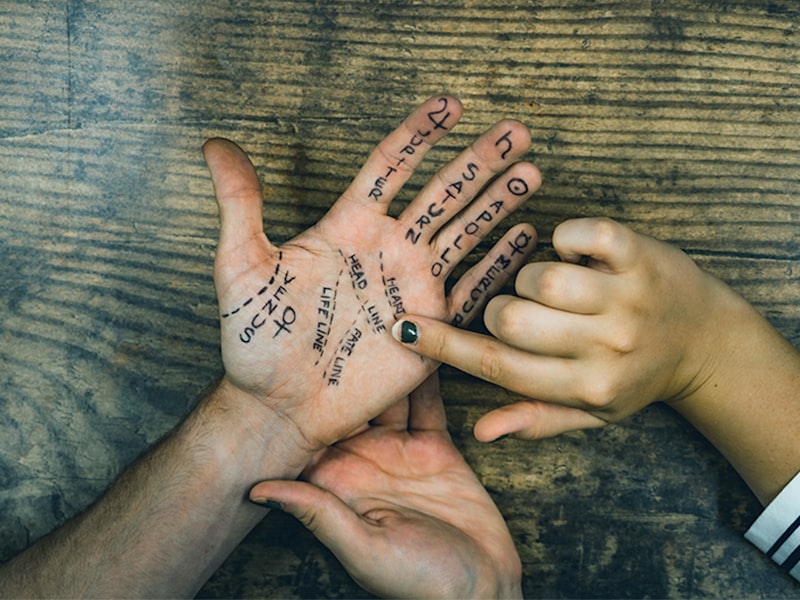
The core premise of palmistry rests on the belief that the physical features of the hand are constantly reflecting changes in the psyche, suggesting a dynamic, ongoing connection between the inner life and the physical manifestation on the palm. Practitioners examine not only the major creases—often referred to as the Heart, Head, and Life lines—but also the shape, size, texture, flexibility, and color of the hands and fingers. Furthermore, the raised fleshy areas at the base of the fingers and thumb, known as the mounts, are believed to correspond to classical planetary influences, such as Venus, Jupiter, and Mars, each symbolizing different aspects of personality, drive, and emotional tendencies. This holistic approach ensures that a reading is never based on a single line but rather on the complex interaction of all these elements, creating a comprehensive, albeit subjective, profile of the individual.
It is essential to strictly differentiate chiromancy from the biological science of dermatoglyphics, which is the legitimate study of skin patterns, particularly fingerprints and palmar creases, utilized primarily in genetics and forensic science. While both disciplines examine the ridges of the hand, dermatoglyphics is concerned with the biological and hereditary factors that determine these patterns, often correlating specific crease patterns (such as the Simian crease) with medical conditions or genetic syndromes. Chiromancy, conversely, employs these patterns for metaphysical interpretation and prognostication, seeking to predict relationship status, career success, or lifespan, areas that fall outside the purview of scientific methodology. This fundamental separation underscores that while the object of study is physically similar, the methodology, intention, and validity claims of palmistry are speculative and non-scientific.
Historical Origins and Evolution
The practice of palmistry boasts a profoundly ancient lineage, with evidence suggesting its existence in various complex societies across the globe dating back thousands of years. Early forms of hand reading are documented in ancient India, where it was integrated into Hindu spiritual and philosophical traditions, notably referenced in Vedic texts and believed to be codified by the sage Valmiki approximately 5,000 years ago. From India, the knowledge of chiromancy is believed to have spread eastward to China, where it was often combined with other forms of divination like face reading (physiognomy), and westward along trade routes, influencing cultures in Tibet, Egypt, and Persia. The persistence of these core interpretive structures across disparate ancient cultures suggests a widespread human fascination with the idea that fate or character could be intrinsically mapped onto the body.
Classical Greek and Roman scholars also engaged with the concepts of hand analysis, recognizing its potential utility in understanding human nature. The philosopher Aristotle (384–322 BCE) is often credited within chiromantic literature with encountering a treatise on palmistry, subsequently presenting it to his student, Alexander the Great, who reportedly used hand readings to judge the quality and loyalty of his officers. Though direct textual evidence linking Aristotle explicitly to the practice is scarce, the enduring anecdote highlights the way in which palmistry became associated with discerning power, leadership, and inherent capabilities within the classical world. Throughout this era, palmistry transitioned from a purely religious or mystical practice into a more standardized form of character analysis, laying the groundwork for the classifications and rules still utilized by modern practitioners.
During the Medieval period in Europe, palmistry faced significant challenges, often being condemned by religious authorities as superstition or witchcraft, forcing the practice underground or into the hands of nomadic groups, such as the Romani people, who are often credited with preserving and popularizing its form throughout European villages. Despite official censure, the practice persisted, often thriving in academic circles alongside astrology and alchemy, which were then considered legitimate areas of scholarly inquiry. By the Renaissance, a resurgence of interest in classical knowledge led to the formal publication of numerous detailed treatises on chiromancy. Scholars attempted to integrate hand analysis into broader philosophical systems, such as the work of Johannes Indagine in the 16th century, whose texts formalized the naming conventions of the lines and mounts, standardizing the practice for subsequent generations of readers and cementing its place as a recognized, though controversial, esoteric art.
Core Principles of Interpretation
A fundamental tenet of contemporary palmistry involves the analysis of both hands, recognizing that the dominant hand and the passive hand offer complementary information. Generally, the non-dominant hand (often referred to as the passive or inherited hand) is believed to represent the individual’s inherited potential, innate character, and destiny as initially bestowed at birth. It shows the raw material of the personality, including latent talents, genetic predispositions, and the basic framework of life. Conversely, the dominant hand (the hand used primarily for writing and activity) is considered the acquired hand, reflecting the choices made throughout life, the effects of environment, personal effort, and the current psychological state. The discrepancies observed between the two hands are therefore interpreted as the degree to which an individual has utilized, modified, or strayed from their inherent potential.
Beyond the lines, the overall physical structure of the hand provides the initial context for a reading. Practitioners categorize hands into four primary types, often aligning them with the classical elements—Earth, Air, Fire, and Water—each suggesting a distinct psychological profile. The Earth Hand is typically square-palmed with short fingers, suggesting practicality, stability, and a focus on tangible results and security. The Air Hand features a square palm and long fingers, indicative of intellect, communication skills, mental agility, and sometimes nervousness. The Fire Hand has a rectangular palm and short fingers, pointing toward energy, enthusiasm, creativity, and a need for action and dramatic expression. Finally, the Water Hand is characterized by a rectangular palm and long fingers, signifying emotional depth, intuition, sensitivity, and a strong connection to feelings and relationships.
The texture and flexibility of the hand and fingers also contribute significantly to the reading. A firm, resilient hand suggests a determined, energetic, and healthy individual, while a soft, flabby hand might indicate indolence or a lack of motivation. The spacing between the fingers is also highly symbolic; for instance, a wide gap between the index and middle finger might suggest independence of thought and a rebellious streak, whereas fingers held closely together often denote caution and a reserved nature. These seemingly minor physical attributes are layered upon the major linear structure to build a complex narrative. The palmist synthesizes all these variables—shape, texture, line depth, and hand usage—to form an interpretive baseline before diving into the specific meanings of the major creases, ensuring that the reading is contextualized within the individual’s perceived foundational character.
Major Lines and Their Meanings
The practice of chiromancy heavily relies on interpreting the three primary creases that traverse the palm, whose appearance, depth, length, and trajectory are considered indicators of fundamental life aspects. The Heart Line, usually the highest horizontal line starting below the fingers, is dedicated to emotional life, love, relationships, and cardiac health. A deep, clear, continuous heart line suggests emotional stability, capacity for deep love, and robust emotional health, whereas a faint, chained, or broken line may indicate emotional instability, difficulty maintaining relationships, or complex romantic histories. The direction of the line—whether it terminates under the index finger (signifying idealization of love) or under the middle finger (indicating self-centeredness in affection)—provides nuanced insight into the individual’s emotional psychology.
Running below the Heart Line is the Head Line, which is arguably the most important indicator of intellectual capacity, learning style, decision-making, memory, and psychological resilience. This line reflects the mental structure, including the individual’s approach to problem-solving and practicality. A long, straight head line suggests analytical thought, logic, and a methodical approach to life, often associated with careers demanding rigorous mental discipline. Conversely, a short head line might indicate a preference for physical or immediate action over long-term intellectual planning. A line that curves downward towards the wrist suggests a strong imagination, creativity, and intuition, while a line that remains high and straight indicates realism and a grounded perspective.
The third major crease is the Life Line, which circles the base of the thumb and is perhaps the most misunderstood element of palmistry. Contrary to popular superstition, this line is not generally interpreted as predicting the precise length of the individual’s life. Instead, it measures vitality, energy levels, physical health, major life transitions, and overall resilience. A broad, well-defined circle indicates high energy, enthusiasm for life, and robust health. Breaks or changes in the line are interpreted as periods of significant change, illness, or relocation, rather than fatality. For instance, a line that runs close to the thumb base may indicate a need for security and a tendency toward lower energy, while a wide, sweeping line suggests great vigor and an adventurous spirit.
The confluence and separation points of these lines are also critical. When the Head Line and the Life Line start joined together, it often suggests a cautious personality, someone who thinks deeply before acting and relies on the guidance of family or tradition early in life. A separation between these lines, however, indicates independence, courage, and a willingness to take risks. Furthermore, any unusual markings—such as islands (indicating confusion or illness during that life period), crosses (indicating obstacles or turning points), or squares (interpreted as protection against negative influences)—are meticulously noted and integrated into the overall forecast. The reading process thus becomes a detailed mapping of potential psychological and physical challenges and strengths.
Minor Lines and Features
In addition to the three major lines, palmistry incorporates several minor lines and the aforementioned mounts to complete the interpretive profile. One key minor line is the Fate Line (or Line of Saturn), which typically runs vertically up the center of the palm. This line relates to career path, financial stability, and the influence of external factors on one’s destiny. A strong, clear Fate Line suggests a defined career path and professional success, while a missing or fragmented line often indicates a highly independent, non-traditional career, or frequent changes in professional direction. The precise point where the Fate Line begins or ends can indicate the age at which career focus begins or shifts substantially.
Other minor lines include the Apollo Line (or Sun Line), which runs vertically parallel to the Fate Line, and is associated with fame, success, artistic talent, and happiness. A clear Sun Line is indicative of public success and enjoyment of life, enhancing the potential promised by the Fate Line. The Mercury Line (or Health Line) runs from the base of the little finger downwards and is interpreted in relation to health, business acumen, and communication skills. Unlike the major lines, minor lines are often subject to change over time, reflecting ongoing, smaller psychological and practical shifts in the individual’s life.
The interpretation of the fleshy pads known as Mounts forms a vital, non-linear component of the reading. These raised areas are named after planetary deities and are believed to channel specific energetic and psychological qualities. For example, the Mount of Venus, located at the base of the thumb, represents love, passion, sexuality, and physical health; a highly developed Mount of Venus suggests a great capacity for affection and vitality. The Mount of Jupiter, located under the index finger, signifies leadership, ambition, honor, and spirituality. The assessment of the mounts—whether they are prominent (excessive characteristic), flat (deficient characteristic), or balanced—provides profound insights into the underlying drives and motivations that shape the individual’s actions.
The overall synergy between the lines and the mounts is paramount. A strong Head Line coupled with a prominent Mount of Mercury would suggest exceptional intellectual ability geared towards business or complex communication. Conversely, a weak Heart Line combined with an overly prominent Mount of Venus might suggest a person whose emotional life is dominated by possessiveness or superficial attraction rather than genuine connection. Palmists use this complex overlay of linear fate and topographical psychology to construct a detailed, if unsubstantiated, roadmap of the individual’s inner and outer life.
Scientific and Psychological Perspectives
Despite its detailed methodology and historical persistence, it must be stated unequivocally that palmistry has no scientific premise. Within the frameworks of psychology, medicine, and biology, chiromancy is classified as a pseudoscience. The claims made by practitioners regarding the predictive capacity of the lines or the correlation between hand features and future events have never been verified through repeatable, controlled studies. The formation of palmar creases is biologically determined during fetal development, largely influenced by genetic factors and the movement of the hand in utero, not by astrological forces or shifting psychological states in the manner claimed by palmists.
Psychologically, the appeal and perceived accuracy of palmistry can be explained through several well-documented cognitive biases. The Barnum Effect, or Forer effect, is highly relevant; this describes the phenomenon where individuals believe that general personality descriptions are tailored specifically to them, even when the statements are vague enough to apply to almost anyone. A skilled palmist often provides broad, flattering, or universally applicable statements about ambition, difficulty in relationships, or future success, which the client then actively interprets and validates using their own life experiences. This self-referential validation reinforces the belief in the system’s authenticity.
Furthermore, the mechanism of confirmation bias plays a strong role. After a palm reading, individuals are more likely to remember and focus on events or outcomes that align with the palmist’s predictions, while unconsciously filtering out the instances where the predictions failed or were irrelevant. If a palmist suggests a major career change is imminent, the client may subsequently interpret any job dissatisfaction or new professional opportunity as the fulfillment of the prophecy, thus confirming the validity of the initial reading, regardless of the actual causative factors.
The persistence of palmistry in modern society, despite the lack of empirical support, speaks more to its utility as a psychological tool for self-reflection and decision-making than its accuracy as a predictive science. People often seek readings during periods of uncertainty, transition, or anxiety. The act of consulting a palmist provides a structured narrative or framework through which the client can process their problems, identify potential paths forward, and feel a sense of control over an unpredictable future. From a psychological standpoint, the value is often therapeutic or narrative-building, functioning as a form of non-clinical counseling rather than a reliable method of prophecy.
Cultural Significance and Modern Practice
Palmistry maintains a significant presence in global popular culture, often appearing in literature, film, and media as a shorthand for mystery, the occult, or exotic spiritualism. It remains a popular fixture at carnivals, street fairs, and esoteric gatherings, primarily operating within the entertainment sector. In various cultural contexts, particularly in areas with strong folk magic traditions, the practice is still taken seriously as a method of fortune-telling, advising on matters of marriage, travel, and financial investment. This dual status—between serious divinatory practice and lighthearted entertainment—has allowed chiromancy to endure even in highly secularized societies.
The geographical concentration of alleged experts in esoteric practices often highlights specific cultural hubs where occult arts are accepted and commercialized. For example, specific locations known for their historical association with the supernatural or counterculture movements, such as Salem, Massachusetts, host numerous businesses dedicated to palmistry and related fortune-telling practices. In such communities, the presence of many alleged experts in palmistry is a function of market demand, catering to tourists and seekers who are actively exploring spiritual and unconventional methods of self-discovery or future prediction. These concentrations illustrate the commercial viability and continuing cultural interest in divination techniques, regardless of their scientific standing.
Modern practitioners often attempt to distance themselves from the label of simple fortune-telling, rebranding the practice as a form of character analysis or personality profiling. They emphasize the dynamic nature of the lines—stating that changes in the palm reflect psychological growth and shifts in behavior—to give the practice a veneer of modern relevance. By focusing on identifying strengths, weaknesses, and potential conflicts, contemporary palmists often frame their work as a tool for self-improvement and maximizing one’s potential, effectively merging the ancient art with modern self-help philosophy. This adaptation helps maintain the practice’s relevance in a world increasingly dominated by psychological models of personal development.
Ethical Considerations and Skepticism
The lack of scientific basis inherent in palmistry raises important ethical concerns, particularly when practitioners offer advice or predictions that might significantly influence a client’s life choices. Ethical practitioners are generally expected to treat the reading as an interpretive discussion of possibilities rather than a definitive statement of fate. A major ethical violation occurs when a palmist, knowingly or unknowingly, uses fear-mongering—such as predicting imminent doom, health crises, or financial ruin—to manipulate vulnerable clients into purchasing additional services or expensive protective items. Given the subjective nature of the reading, the power imbalance between the client seeking answers and the alleged expert providing them is substantial.
Skepticism toward palmistry is warranted not only due to its classification as a pseudoscience but also due to the variability and ambiguity of interpretations. Unlike standardized psychological assessments, there is no universal certification or agreed-upon metric for skill or accuracy in chiromancy. What one reader interprets as a sign of great artistic success, another might interpret as merely a strong imagination. This ambiguity allows the practitioner immense latitude in tailoring the reading to the client’s visible reactions and psychological needs, a technique known as cold reading. Critical analysis demands recognition that the perceived success of a reading is often a function of the reader’s social intelligence and psychological insight, rather than genuine prophetic ability derived from the palm lines themselves.
Ultimately, an informed approach recognizes palmistry as a cultural artifact and a form of symbolic language. If used purely for entertainment or self-reflection, the practice is generally harmless. However, when it is relied upon for making major life decisions—such as abandoning medical treatment, leaving a stable relationship based on a prediction, or making reckless financial choices—the potential for psychological and material harm becomes significant. The responsible stance requires acknowledging that while the human desire to understand one’s future and character is universal, the mechanism offered by palmistry remains outside the boundaries of verifiable scientific inquiry.