The Parahippocampal Gyrus: Your Brain’s Memory Gatekeeper
Scientifically Reviewed · Dr. Marwa Abd-Alazim · August 30, 2026
Review Criteria & Clinical Standards
This content undergoes rigorous scientific peer-review and medical editorial standards at Arab Psychology Network to ensure clinical accuracy, validity, and compliance with evidence-based guidelines from leading psychological and healthcare authorities (APA / WHO).
Introduction and Anatomical Definition
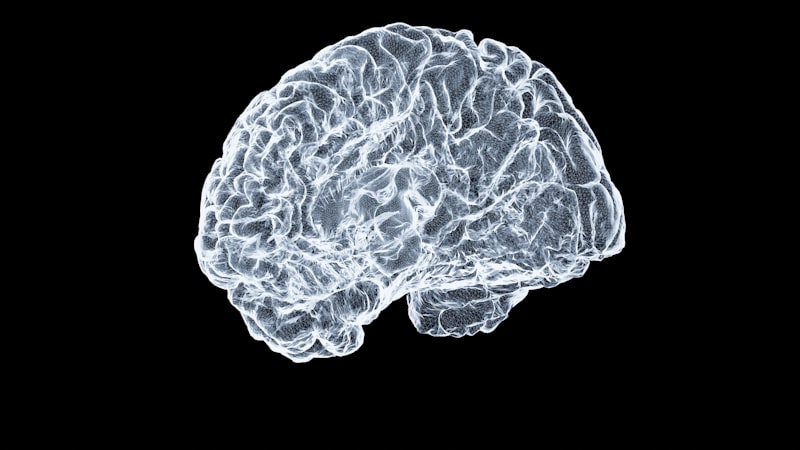
The Parahippocampal Gyrus (PHG) is a critical neuroanatomical structure situated on the medial aspect of the cerebral cortex’s temporal lobe, forming a prominent ridge. Its name derives from its location immediately adjacent to the hippocampus, specifically lying superiorly and medially to this vital memory structure. Functionally, the PHG is recognized as a fundamental component of the overarching limbic system, which governs emotion, behavior, motivation, and, most notably, long-term memory formation. Anatomically, the PHG is often subdivided into several key regions, including the perirhinal cortex (PRC), the postrhinal cortex (POR), and the entorhinal cortex (ERC), although the boundaries and precise functional distinctions between these adjacent areas remain subjects of ongoing neuroscientific inquiry. Its overall topographical organization suggests a crucial role in processing highly contextualized information necessary for spatial navigation and the recognition of complex environments.
Historically, the PHG has been frequently referred to as the parahippocampal cortex, a term that emphasizes its cortical nature and its direct involvement in the hierarchical processing streams that feed information into the hippocampal formation proper. This cortical area serves as a major gateway, receiving highly processed sensory input from various association cortices—visual, auditory, and somatosensory—before relaying this integrated information to the hippocampus, where memory consolidation is thought to occur. The integrity of this pathway is paramount; damage or atrophy in the PHG is often associated with profound deficits in memory recall, particularly those related to the setting or context in which an event occurred. The gyrus itself spans posteriorly from the temporal pole, wrapping around the midbrain structures, and terminates near the splenium of the corpus callosum, illustrating its extensive anatomical reach within the core temporal architecture.
A key defining feature of the PHG is its strategic position relative to the hippocampus, over which it lies. This physical juxtaposition allows for an intimate functional relationship, establishing the PHG as the principal interface between the neocortex and the hippocampus. While the hippocampus is essential for the initial encoding and retrieval of episodic memories, the PHG contributes the necessary contextual framework—the “where” and “when” of the experience. This distinction highlights its specialized function in spatial and topographic memory, allowing organisms to create and maintain cognitive maps of their surroundings. Furthermore, the PHG’s close association with the uncus anteriorly and the fusiform gyrus laterally underscores its integration into broader temporal lobe functions, including object recognition and high-level visual processing, which are often inextricably linked to memory formation.
Microscopic Anatomy and Cytoarchitecture
The cytoarchitecture of the Parahippocampal Gyrus is highly complex and diverse, reflecting its role as a transitional zone between the highly organized allocortex of the hippocampus and the six-layered neocortex. Unlike the uniformly layered neocortex, the PHG exhibits varying degrees of lamination across its subregions. The most studied of these subregions is the Entorhinal Cortex (ERC), which typically displays a five-layered structure rather than the standard six, particularly noted for its distinctive layer II stellate cells and layer III pyramidal cells, which form the origin of the critical perforant pathway projecting directly into the hippocampal dentate gyrus and CA fields. These subtle but profound cytoarchitectural variations are not merely structural curiosities; they dictate the specific computational roles of each segment of the PHG, controlling the flow and type of information processed before hippocampal engagement.
The perirhinal cortex (PRC), another essential component, is adjacent to the ERC and generally possesses a more transitional, five-to-six layered organization. The PRC is particularly known for receiving robust inputs from the ventral visual stream, making it highly specialized for processing complex object identity and recognizing familiarity. Its anatomical layout enables it to handle detailed perceptual features of objects, contrasting slightly with the postrhinal cortex (POR), which is situated more posteriorly and receives input predominantly from the dorsal visual stream, favoring spatial and contextual information processing. This intricate division of labor within the PHG—where the PRC focuses on the “what” and the POR focuses on the “where”—is supported by distinct cellular morphology and dendritic arborization patterns observed across these subfields, allowing for parallel processing streams critical for comprehensive memory formation.
Glia and neuronal subpopulations within the PHG are also crucial determinants of its function. Research has identified specialized cells, such as the prominent grid cells and border cells, particularly within the medial entorhinal cortex (MEC), which fire in response to an animal’s location within an environment, forming the basis of internal spatial mapping. Grid cells fire in a hexagonal pattern as the animal traverses space, providing a metric for distance and direction, thereby confirming the PHG’s central role in navigation. Furthermore, the PHG contains a rich network of inhibitory interneurons, utilizing GABAergic neurotransmission, which are essential for regulating the excitability of the principal neurons. This fine-tuning of neuronal activity is necessary for processes like pattern separation—the ability to distinguish between similar memories—which prevents memory interference and ensures the fidelity of stored information.
Connectivity and Afferent/Efferent Pathways
The Parahippocampal Gyrus functions as a central hub, possessing extensive and reciprocal connections with nearly all major association areas of the cerebral cortex, as well as crucial subcortical structures. The most significant afferent pathways originate from the highly processed sensory data arriving from the unimodal and polymodal association cortices (e.g., parietal, temporal, and prefrontal areas). These inputs converge onto the PRC and POR, providing the necessary sensory context and perceptual details of the external world. For instance, visual information regarding complex scenes and object layouts travels predominantly through the ventral “what” stream to the PRC, while spatial coordinates and environmental boundaries are routed via the dorsal “where” stream to the POR, establishing the foundation for contextual memory encoding.
The efferent pathways of the PHG define its relationship with the hippocampal formation. The most powerful and well-characterized pathway is the Perforant Pathway, which arises primarily from the layers II and III of the entorhinal cortex (ERC). Axons from the ERC project through the subiculum and into the dentate gyrus and the CA fields of the hippocampus (CA1, CA2, CA3). This pathway is the main conduit through which processed cortical information reaches the hippocampus for encoding. Damage to the perforant pathway severely compromises the ability to form new declarative memories, underscoring its indispensable role. Furthermore, the PHG maintains strong reciprocal connections with the thalamus, particularly the anterior thalamic nuclei, which are integral to the Papez circuit—a loop traditionally associated with emotion and memory processing—thereby integrating the PHG into broader limbic activity.
Beyond the hippocampus, the PHG also projects back to various cortical areas, completing the memory consolidation loop. These feedback projections are hypothesized to be critical for the long-term storage and retrieval of memories, allowing stored information to be eventually transferred from the hippocampus back to the neocortex for permanent consolidation, a process known as systems consolidation. The parahippocampal area also interacts heavily with the amygdala, a structure critical for emotional processing. The connection between the PHG and the amygdala ensures that memories are imbued with emotional significance, enhancing the retrieval likelihood of emotionally charged events—a mechanism essential for survival and adaptive behavior. The intricate network of afferents and efferents solidifies the PHG’s role not merely as a relay station, but as an active computational component that modulates and integrates sensory and emotional information before memory storage.
Role in Spatial and Topographic Memory
The involvement of the Parahippocampal Gyrus in spatial memory and topographic memory is perhaps its most celebrated function, deeply rooted in both human and animal studies. Topographic memory refers specifically to the ability to recall the layout of environments and routes, essentially creating and utilizing cognitive maps. The medial entorhinal cortex (MEC) component of the PHG houses the remarkable spatial tuning cells, including grid cells, head-direction cells, and border cells, which collectively create a detailed, metric representation of the spatial environment independent of specific sensory cues. Grid cells, for example, provide a coordinate system, while head-direction cells track the animal’s orientation, and border cells signal the proximity of environmental boundaries, offering a comprehensive internal navigation system.
In humans, the PHG is robustly activated during tasks involving navigation, virtual reality spatial exploration, and the recall of landmarks or geographical information. Functional magnetic resonance imaging (fMRI) studies consistently show increased blood flow and neural activity in the PHG when subjects are asked to mentally simulate a route or recall the arrangement of items in a room, even in the absence of visual stimuli. This activity is often lateralized, with the right PHG showing a slight dominance in processing large-scale environmental space, aligning with the idea that the PHG integrates complex visual scenes into a holistic spatial representation that the hippocampus can then bind into an episodic memory trace. This function is distinguishable from simple visual recognition, highlighting the PHG’s specialization in contextual localization.
The close functional synergy between the PHG and the hippocampus is what enables effective spatial memory. While the PHG provides the stable, context-rich spatial map (the layout of the city), the hippocampus binds this map with specific events (the moment you met a friend at a specific corner). When this spatial context is compromised, as seen in lesions of the PHG, subjects often suffer from profound topographic disorientation, struggling to find their way even in familiar environments, despite retaining the ability to recognize individual landmarks or objects. This deficit confirms the PHG’s dedicated role in linking perception to spatial coordinates and managing the complex processing required for effective navigation and cognitive mapping.
Function in Contextual and Recognition Memory
Beyond spatial processing, the Parahippocampal Gyrus plays a pivotal, non-redundant role in contextual memory and recognition memory. Contextual memory refers to the memory of the circumstances surrounding an event—the time, location, and emotional state—which gives richness to episodic memory. The PHG integrates the diverse inputs it receives (spatial from the POR, object identity from the PRC, and temporal markers from other cortical regions) to form a unified context representation. This binding function is crucial because, without context, memories are fragmented and difficult to retrieve. The hippocampus then uses this integrated contextual representation provided by the PHG to form the final, complete episodic memory trace.
The perirhinal cortex (PRC) component of the PHG is particularly specialized for recognition memory, specifically differentiating between familiarity and recollection. Recognition memory allows an individual to determine whether a current stimulus has been encountered before. According to dual-process models of recognition memory, the PRC supports the sense of familiarity—a feeling that one has seen something before without being able to recall specific details about the encounter. This is achieved through rapid, high-level visual processing that matches the input stimulus against stored representations in the cortex. Conversely, the full-fledged recollection of specific details about the past event typically relies more heavily on the hippocampal contribution, which uses the PHG’s contextual inputs.
Damage isolated to the PRC in primates demonstrates a selective impairment in object recognition memory, confirming its dedicated role in identifying ‘what’ an object is, irrespective of its spatial location. Furthermore, the PHG is essential for associative memory, the ability to link disparate pieces of information together—for example, associating a particular face with a name, or linking an action with a specific environment. This associative binding is a core function of the PHG, acting as the nexus where sensory features are cross-referenced with spatial and temporal information. The intricate interplay between the PHG’s subregions ensures that memories are not only stored but are retrieved as highly detailed, integrated experiences, critical for sophisticated cognitive functions.
Clinical Significance and Associated Disorders
Given its central role in memory processing and its strategic anatomical location, the Parahippocampal Gyrus is frequently implicated in several serious neurological and psychological disorders. Perhaps most significantly, the PHG is one of the earliest brain regions to exhibit neuropathological changes in Alzheimer’s disease (AD). Post-mortem studies consistently reveal the presence of neurofibrillary tangles and amyloid plaques, the hallmarks of AD, concentrated heavily in the entorhinal cortex (ERC) long before widespread cortical atrophy occurs. This early pathology explains why one of the first and most debilitating symptoms of Alzheimer’s is profound episodic memory loss and spatial disorientation, directly correlating with the functional impairment of the PHG and its input to the hippocampus.
The PHG is also heavily involved in various forms of epilepsy, particularly temporal lobe epilepsy (TLE). TLE often originates in or around the medial temporal lobe structures, including the hippocampus and the PHG. Seizures originating here can lead to characteristic symptoms such as memory disturbances, strong olfactory or gustatory hallucinations, and complex partial seizures. Chronic seizures can lead to sclerosis (tissue hardening and loss) in the PHG, further exacerbating memory deficits even during interictal periods. The structural changes observed in TLE patients underscore the vulnerability of this region to excitotoxicity and prolonged electrical disturbance, reinforcing its critical, yet delicate, role in maintaining cognitive stability.
Furthermore, functional abnormalities in the PHG have been linked to psychiatric conditions such as schizophrenia and severe anxiety disorders. Studies using neuroimaging have reported reduced gray matter volume and altered functional connectivity within the PHG in schizophrenic patients, which may contribute to their characteristic deficits in working memory, contextual processing, and reality monitoring. In anxiety and post-traumatic stress disorder (PTSD), the dysregulation of the PHG’s connection with the amygdala can lead to the over-association of benign environmental cues with fear, resulting in hypervigilance and impaired fear extinction. Understanding the pathology within the PHG is therefore crucial for developing targeted pharmacological and therapeutic interventions for these widespread neurological and psychiatric conditions.
Current Research and Future Directions
Contemporary neuroscientific research continues to unravel the precise mechanisms by which the Parahippocampal Gyrus orchestrates memory and spatial navigation. A major focus involves the detailed mapping of the PHG’s microcircuits, utilizing advanced techniques such as optogenetics and two-photon microscopy in animal models to observe cellular activity in real-time. Researchers are currently investigating the specific interplay between grid cells, place cells (in the hippocampus), and border cells, seeking to understand how these different spatial coordinate systems are integrated and maintained over long periods, especially during active movement and sleep-dependent memory consolidation processes. This detailed cellular resolution work is vital for transitioning from a gross anatomical understanding to a functional, computational model of spatial cognition.
Another burgeoning area of study concerns the role of the PHG in temporal memory—the ability to sequence events in time. While the structure is classically associated with spatial context, recent evidence suggests that the PHG, particularly the entorhinal and perirhinal cortices, contains neurons that encode temporal sequences, acting as a functional “time cell” system distinct from spatial coding. This indicates that the PHG may be responsible for encoding the entire spatiotemporal context of an experience, not just the location. Future research utilizing high-resolution fMRI and magnetoencephalography (MEG) in human subjects aims to isolate the PHG’s contribution to temporal ordering during episodic recall tasks, potentially redefining its functional scope beyond purely spatial mapping.
Finally, given the PHG’s early involvement in Alzheimer’s disease, a significant research objective is the development of early diagnostic biomarkers based on PHG integrity. Non-invasive imaging techniques are being refined to detect subtle volume changes, metabolic shifts (via FDG-PET), or functional connectivity alterations within the PHG years before clinical symptoms manifest. Furthermore, therapeutic strategies are focusing on protecting PHG neurons, either through neuroprotective agents or through deep brain stimulation aimed at enhancing the functional connectivity between the PHG and the hippocampus. The ultimate goal is to leverage the PHG’s established role as a critical memory interface to develop preventative treatments that halt the progression of memory decline associated with age and neurodegenerative disease.