The PASS Model: Decoding Your Brain’s Hidden Potential
Scientifically Reviewed · Dr. Marwa Abd-Alazim · August 31, 2026
Review Criteria & Clinical Standards
This content undergoes rigorous scientific peer-review and medical editorial standards at Arab Psychology Network to ensure clinical accuracy, validity, and compliance with evidence-based guidelines from leading psychological and healthcare authorities (APA / WHO).
Introduction and Historical Context
The PASS Model, an influential design of human intellect, was formally postulated in 1990 by American psychologists Jack A. Naglieri and J.P. Das. This model represented a significant departure from established psychometric theories, such as those relying primarily on the concept of General Intelligence (G), by shifting focus to the dynamic cognitive processes underlying intellectual functioning. The foundation of the PASS model is rooted deeply in the extensive neuropsychological research conducted by the renowned Soviet psychologist Alexander Luria, whose framework described the brain as comprising interacting functional units rather than distinct, isolated storage centers. Naglieri and Das adapted Luria’s concepts to create a measurable and educationally relevant framework, suggesting that intellectual ability is not a unitary construct but rather an inclusive set of four independent capacities required for effective problem-solving and learning.
The initial motivation for developing the PASS model stemmed from a perceived inadequacy in traditional intelligence testing, particularly instruments heavily reliant on verbal knowledge or crystallized abilities, which often failed to provide actionable information regarding intervention strategies for children with learning difficulties. Naglieri and Das sought a process-oriented model that could diagnose *how* a student failed or succeeded at a task, rather than simply scoring *what* they knew. This emphasis on cognitive processing skills—how information is received, organized, and utilized—makes the PASS model particularly valuable in clinical and educational psychology settings, offering a diagnostic bridge between assessment and intervention. It proposes that efficient intellectual performance relies on the effective execution and coordination of four primary cognitive functions, which form the acronym PASS: Planning, Attention, Simultaneous Processing, and Successive Processing.
Unlike models that prioritize factors like verbal comprehension or perceptual organization as measured by standard IQ batteries, the PASS model asserts that these four cognitive processes are the fundamental psychological mechanisms necessary for all higher-order thought. The integration of Luria’s neuroscientific perspective provides the theoretical rigor for the model, positioning intellectual capacity not merely as accumulated knowledge, but as the ability to manage and orchestrate these four core cognitive systems. Understanding the theoretical architecture of PASS requires an exploration of its Lurian foundation, which provides the biological and functional mapping for each component, ensuring that the model remains centered on observable, dynamic brain function rather than abstract statistical constructs.
The Theoretical Foundation: A.R. Luria’s Model
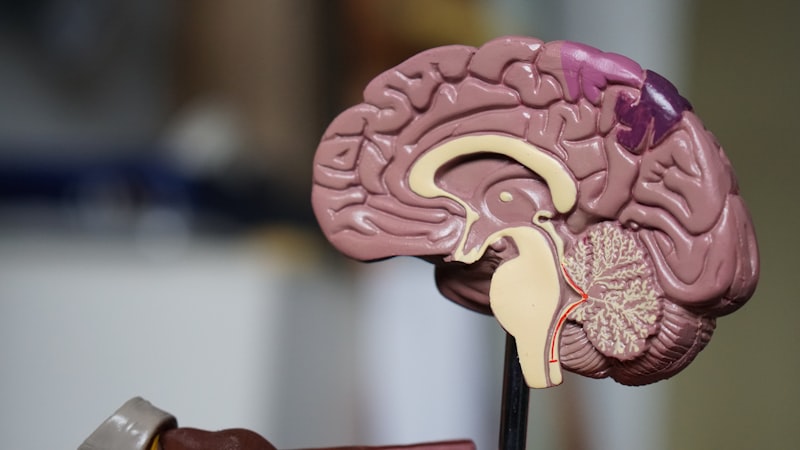
The entire structure of the PASS model is a direct application and refinement of the work of Alexander Romanovich Luria (1902–1977), a foundational figure in neuropsychology. Luria conceptualized the brain’s function through a hierarchical system of three interconnected functional units, each responsible for specific aspects of behavior and cognition. The brilliance of the PASS adaptation lies in mapping its four components directly onto these three units. Luria’s First Functional Unit, located primarily in the brainstem and medial cortex, is responsible for regulating tone, waking, and mental states—essentially, the necessary arousal and focus required for any cognitive task. This unit corresponds precisely to the Attention component of the PASS model, highlighting that sustained arousal and vigilance are prerequisite conditions for effective intellectual effort.
Luria’s Third Functional Unit, which encompasses the frontal lobes, governs programming, regulation, and verification of activity. This unit is the executive center, responsible for formulating intentions, selecting appropriate strategies, monitoring performance, and correcting errors as they occur. This executive control mechanism is the direct inspiration for the Planning component of the PASS model. Planning, therefore, is viewed as the highest level of cognitive control, necessary for self-monitoring, strategic problem-solving, and the intentional use of the other processing elements. By linking Planning directly to the frontal lobe structures, the PASS model incorporates a strong neurobiological basis for executive functioning that is often simplified or omitted in purely statistical models of intelligence.
The remaining two components of the PASS model, Simultaneous and Successive Processing, are derived from Luria’s Second Functional Unit, which is located in the posterior cortical regions (occipital, parietal, and temporal lobes) and is responsible for receiving, analyzing, and storing information. Luria argued that this unit organizes incoming stimuli via two distinct mechanisms. The first mechanism involves integrating discrete pieces of information into a synthesized, unified whole—a simultaneous process. The second mechanism involves arranging information in a strict, linear, and sequential chain—a successive process. Naglieri and Das recognized these two distinct methods of information encoding and retrieval as fundamental cognitive capacities, ensuring that the PASS model accurately reflects the diverse ways humans process sensory and symbolic data, thus maintaining fidelity to Luria’s comprehensive neuropsychological framework.
Component 1: Planning (P)
Planning represents the conscious, intentional, and strategic approach to problem-solving and task completion. It is the core executive function within the PASS framework, defining the individual’s capacity to determine and select the optimal strategies required to achieve a specific goal, to monitor the effectiveness of those strategies during execution, and to adjust behavior when necessary. This function is not reflexive; it requires deliberate mental effort and foresight. High planning abilities are essential for navigating novel situations, resisting impulsive responses, and effectively managing time and resources. For example, when a student is tasked with writing a research paper, the planning process involves defining the scope, organizing sections, setting deadlines, and continually checking the output against the initial thesis—all complex, self-regulatory actions that fall under this domain.
The psychological significance of the Planning component cannot be overstated, as it serves as the control center that regulates the application of Attention, Simultaneous, and Successive processing. A breakdown in planning ability often manifests as difficulty in initiating tasks, persistent reliance on ineffective or habitual strategies, or an inability to shift mental sets when facing obstacles. In the context of academic achievement, strong planning skills differentiate students who can autonomously structure their learning and study habits from those who require constant external guidance and structure. The assessment of planning, typically through tasks that require novel strategy generation and self-monitoring (such as Tower tasks or complex matching rules), provides critical diagnostic information about an individual’s executive capabilities, which is highly relevant for diagnosing conditions like Attention Deficit Hyperactivity Disorder (ADHD) or executive function deficits.
Furthermore, the Planning component emphasizes metacognition—the awareness and understanding of one’s own thought processes. Effective planning requires the individual to introspectively evaluate their cognitive strengths and weaknesses relative to the task at hand. This self-awareness allows for the selection of appropriate internal resources, ensuring that the simultaneous and successive systems are deployed efficiently. Individuals with deficits primarily in planning often possess the necessary knowledge and basic processing skills, but they fail because they cannot organize, initiate, or sustain the strategic effort required to utilize those skills effectively. This highlights the vital role planning plays as the orchestrator of all cognitive activity, making it a powerful predictor of real-world success that extends far beyond standardized test performance.
Component 2: Attention (A)
The Attention component refers to the focused cognitive effort required to selectively attend to certain stimuli while ignoring distracting elements, and the capacity to sustain this focus over extended periods. Drawing directly from Luria’s First Functional Unit, Attention is understood as a fundamental, foundational mechanism that regulates the level of cortical arousal necessary for processing information. Without adequate and sustained attention, the input required for simultaneous and successive organization cannot be reliably received or maintained in the working memory system. Attention acts as the gatekeeper of cognition, ensuring that the limited resources of the brain are directed towards the most relevant information for the task being executed.
The concept of attention within the PASS model encompasses both selective attention (the ability to focus on one stimulus source) and sustained attention (vigilance over time). Deficits in this area manifest not only as distractibility but also as difficulty in maintaining vigilance, leading to inconsistencies in performance, particularly during long or repetitive tasks. For academic learning, attention is paramount; a student must be able to focus on the teacher’s instructions, filter out classroom noise, and maintain focus while reading complex texts. When attention is compromised, the subsequent steps of information processing—synthesizing relationships (simultaneous) or ordering sequences (successive)—become unreliable or impossible.
In clinical practice, the assessment of Attention is crucial for differential diagnosis. While attention is often associated with conditions like ADHD, the PASS framework allows clinicians to distinguish between a primary attentional deficit and a planning deficit where the individual fails to self-monitor or organize their focus. Tasks designed to measure Attention in the associated Cognitive Assessment System (CAS) typically involve simple, repetitive tasks that require sustained vigilance and rapid discrimination, such as identifying targets quickly or responding to specific auditory cues. The efficiency of the Attention component directly impacts the individual’s overall cognitive capacity, serving as the necessary energetic foundation upon which all goal-directed intellectual activities are built.
Component 3: Simultaneous Processing (S)
Simultaneous Processing is defined as the cognitive ability to integrate discrete elements of information into a holistic, interconnected group or configuration. This process involves seeing the relationships between different parts and synthesizing them into a unified concept or structure, often described in psychological literature as Gestalt processing. When an individual engages in simultaneous processing, they are not merely observing individual components but are understanding the spatial, logical, or semantic connections that bind those components together. This type of processing is essential for tasks requiring understanding context, perceiving complex patterns, and grasping the interrelationship between ideas.
Examples of simultaneous processing abound in both everyday life and academic settings. Reading comprehension relies heavily on simultaneous processing, as the reader must integrate the meanings of individual words and sentences into a coherent thematic whole. Similarly, solving non-verbal analogy problems, interpreting maps or diagrams, and understanding the spatial relationships in geometric proofs all necessitate the ability to perceive and manipulate information simultaneously. If a student struggles with this component, they may see the individual pieces of information but fail to grasp the overarching meaning or the structural pattern that connects them, leading to fragmented understanding and difficulty in abstract reasoning.
The importance of simultaneous processing highlights its role in critical thinking and complex learning. This function is typically measured through tasks that require spatial visualization and the integration of multiple stimuli presented concurrently. These assessments often include matrix analogies, geometric design tasks, or figure analysis, demanding that the individual form a mental model of the structure presented. Deficits in simultaneous processing are frequently linked to difficulties in mathematics (especially geometry and higher-order concepts), reading comprehension, and tasks requiring complex spatial judgment, underscoring its pivotal role in abstract and relational thought.
Component 4: Successive Processing (S)
Successive Processing refers to the capacity to manage and organize information in a strict, serial order, where each element is dependent on the preceding element in a chain. This linear style of processing is crucial for temporal organization and the execution of sequences, emphasizing the importance of accurate sequencing for meaning. Unlike simultaneous processing, where elements are viewed holistically, successive processing requires the individual to focus sequentially, ensuring that the correct order is maintained. If the order is disrupted, the meaning or outcome of the sequence is typically lost or distorted, making this component vital for tasks requiring precise temporal recall and execution.
This cognitive mechanism is fundamentally important for language acquisition and use, particularly in tasks involving phonological awareness, articulation, and working memory related to speech sounds. For instance, successfully repeating a string of unfamiliar words, remembering a phone number, or spelling a word aloud requires robust successive processing skills. In academics, following multi-step instructions, learning the order of operations in mathematics, or maintaining fluency in reading (where decoding relies on sequencing phonemes) are all heavily dependent on this function. A weakness in successive processing can manifest as difficulty with rote memorization, challenges in following narratives or temporal events, or problems with tasks requiring rapid, sequential output.
Assessment of successive processing involves tasks that explicitly require the maintenance and recall of linear order, such as digit span recall, sentence repetition, or word series memory tasks. These measurements help pinpoint specific difficulties related to the temporal organization of information, often providing key insights into certain types of learning disabilities, particularly dyslexia, where the sequencing of sounds and letters is frequently impaired. The clear distinction between simultaneous and successive processing within the PASS model allows for a highly granular diagnosis, enabling educators and clinicians to target specific cognitive deficits with corresponding remediation strategies.
The Cognitive Assessment System (CAS)
The practical application of the PASS model is embodied in the Cognitive Assessment System (CAS), developed by Naglieri and Das to provide a direct measure of the four processes. The CAS is a standardized battery of tests designed for children and adolescents (typically ages 5 through 17) and serves as the primary instrument for operationalizing the theoretical tenets of the PASS framework. Unlike traditional IQ tests that yield a single global score, the CAS provides four distinct scale scores—one for Planning, one for Attention, one for Simultaneous, and one for Successive Processing—alongside a Full Scale score, allowing for a detailed profile of an individual’s cognitive strengths and weaknesses.
The design philosophy behind the CAS is rooted in the principle that assessment should inform intervention. By measuring specific cognitive processes, the CAS facilitates the linkage between diagnostic findings and psycho-educational remediation. Each subtest is carefully constructed to isolate and measure one of the four PASS processes as much as possible, minimizing the influence of prior knowledge or crystallized intelligence, thereby offering a fairer assessment of core cognitive ability, particularly for individuals from diverse linguistic or cultural backgrounds. For example, the Simultaneous subtests often rely on non-verbal, spatial reasoning tasks, while the Successive subtests focus purely on temporal ordering, thus reducing confounding variables.
Since its introduction, the CAS has undergone several revisions (e.g., CAS2) and has demonstrated strong psychometric properties, including high reliability and substantial evidence of construct validity, supporting the underlying factor structure of the PASS model. Its utility in identifying specific learning disabilities (LDs) and understanding the cognitive profile of children with various clinical conditions, such as ADHD, autism spectrum disorder, and traumatic brain injury, has been widely documented. The CAS is championed by its adherents for offering a more nuanced and diagnostically rich profile of cognitive functioning than traditional intelligence tests, making it a powerful tool for educational planning and evidence-based decision-making in special education.
Application and Educational Implications
One of the most compelling advantages of the PASS model is its inherent link to educational remediation and intervention. Because the model defines intelligence in terms of distinct cognitive *processes*, deficits identified by the CAS directly suggest targeted instructional strategies. This process-based approach shifts the focus from merely identifying a disability to understanding the specific cognitive mechanisms that require strengthening. For example, if a student demonstrates a significant weakness in Successive Processing, educational interventions would focus on explicit training in sequential tasks, such as mnemonic devices for ordering information, structured reading instruction (phonics), and practicing multi-step commands.
The PASS model has inspired specific cognitive intervention programs, such as the Planning, Attention, Simultaneous, and Successive (PASS) Reading Enhancement Program (PREP) and the Cognitive Enhancement Training (COGENT). PREP, for instance, is designed to improve reading skills by directly strengthening the underlying PASS processes required for reading comprehension and fluency. Activities within these programs are not academic content drills; instead, they are non-content-specific exercises designed to flex and improve the cognitive control systems themselves. For example, a planning intervention might involve structured games that require anticipatory strategy formulation and self-correction, thereby improving the student’s metacognitive awareness and executive function.
The use of the PASS model also provides a valuable framework for understanding and addressing the cognitive profile of diverse learners, including those with intellectual disabilities or those identified as gifted. By providing a profile rather than a single score, educators can leverage a student’s strengths (e.g., strong Simultaneous Processing) to compensate for weaknesses (e.g., weak Successive Processing). This approach fulfills the mandate of modern special education to provide individualized instruction that addresses specific cognitive needs, moving beyond generalized academic tutoring toward meaningful cognitive remediation. The model thus serves as a pragmatic bridge between neuropsychological theory and effective classroom practice.
Criticisms and Current Scientific Standing
While the PASS model and the CAS have achieved significant recognition within clinical and educational psychology, particularly in the domain of psycho-educational assessment, it is important to acknowledge that the model is not as highly regarded in the broader scientific community as some of its proponents might believe, especially when compared to the dominant Cattell–Horn–Carroll (CHC) Theory of cognitive abilities. The primary criticisms leveled against PASS often center on methodological issues, concerns about the independence of the four factors, and the lack of widespread acceptance among mainstream cognitive scientists.
One major area of critique involves the factor structure itself. Skeptics often argue that the four PASS factors, while theoretically distinct, show substantial empirical overlap, particularly between Attention and Planning (both related to executive control) and between Successive Processing and certain components of working memory and short-term memory as defined in CHC theory. Critics using advanced statistical techniques like confirmatory factor analysis sometimes suggest that the four-factor model may not provide a significantly better fit to the data than simpler models, challenging the assertion that Planning, Attention, Simultaneous, and Successive processing represent truly independent cognitive abilities that are distinct from established factors like Fluid Intelligence (Gf) or Visual-Spatial Processing (Gv).
Furthermore, the general cognitive science community tends to favor the CHC framework due to its robust empirical foundation, its integration of decades of factor analytic research, and its broad consensus across intelligence researchers. Consequently, while the CAS is valued by special educators for its practical, intervention-oriented output, the PASS model faces ongoing challenges in demonstrating its superiority or even its unique necessity over established, psychometrically validated CHC-based instruments. Despite these limitations, the enduring legacy of the PASS model lies in its pioneering role in introducing Luria’s dynamic, process-based neuropsychology into standardized assessment, offering a valuable alternative perspective that continues to inform clinical decision-making and cognitive remediation strategies globally.