Apractagnosia: Decoding the Brain’s Hidden Motor Mystery
Scientifically Reviewed · Dr. Marwa Abd-Alazim · August 31, 2026
Review Criteria & Clinical Standards
This content undergoes rigorous scientific peer-review and medical editorial standards at Arab Psychology Network to ensure clinical accuracy, validity, and compliance with evidence-based guidelines from leading psychological and healthcare authorities (APA / WHO).
Definition and Conceptual Framework of Apractagnosia
Apractagnosia is a complex neuropsychological disorder characterized fundamentally by a profound difficulty in executing skilled motor acts, often involving intricate sequences of movements, despite the absence of elemental motor paralysis or significant sensory deficits. Unlike simple apraxia, which primarily addresses the inability to perform purposeful movements upon command or imitation, apractagnosia introduces an essential element of organizational and mnemonic impairment, suggesting a breakdown in the overarching cognitive blueprints necessary for organized action. This deficit encompasses not only the failure to recall the precise steps required for a task but also the inability to correctly sequence those steps in a logical and effective manner, transforming common, everyday activities into insurmountable challenges. The core difficulty lies in the integration of temporal and spatial information required for smooth, goal-directed behavior, highlighting its nature as a disturbance in higher-order cognitive motor planning.
The conceptualization of apractagnosia often necessitates acknowledging its dual nature, distinguishing between the motor sequencing difficulties and the associated spatial relational deficits, which sometimes manifest concurrently or independently. Historically, the term has been closely linked to the failure to analyze and utilize spatial relationships, a critical component for tasks such as navigating environments, dressing correctly, or constructing visual-spatial patterns. This spatial component, sometimes labeled spatial apractagnosia, underscores the involvement of cortical areas responsible for processing visuospatial information crucial for guiding action. Therefore, understanding this condition requires moving beyond a simple motor disorder classification and viewing it as a disorder of integrated cognitive-motor processing, where the internal representation of action schemas—the mental scripts detailing how an action should unfold—are severely compromised or inaccessible.
The implications of this disorder extend far beyond mere clumsiness or slowness; rather, they reflect a disintegration of the procedural memory systems essential for autonomous functioning. Tasks that are typically automatic or deeply engrained through years of practice, such as preparing a meal, tying shoelaces, or engaging in occupational tasks, become laborious processes marked by errors in order, substitution of incorrect steps, and frequent hesitations. This disorganization is rooted in the failure to maintain the working memory necessary to track the progress of the sequence while simultaneously recalling the subsequent required action. Consequently, the individual may initiate an action correctly but quickly lose the overall structural plan, resulting in fragmented and ultimately unsuccessful completion of the intended skilled activity. This persistent organizational failure defines the debilitating impact of apractagnosia on daily life competence.
Neuroanatomical Basis and Etiology
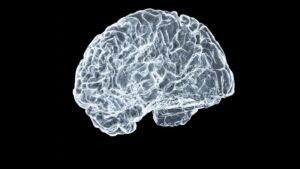
The etiology of apractagnosia is invariably linked to focal or diffuse damage within specific regions of the cerebral cortex, primarily those dedicated to integrating sensory input, spatial awareness, and motor planning. Crucially, the condition is strongly associated with lesions affecting the lower aspects of the occipital lobe and the adjacent posterior regions of the parietal lobe. This critical junction, often referred to as the parieto-occipital association cortex, plays a pivotal role in constructing the internal representation of three-dimensional space and mapping the body’s position within that space, functioning as a nexus for visuospatial integration necessary for effective motor output. Damage here disrupts the crucial feedback loops that inform the motor system about the spatial context and the required orientation for sequential movements, leading directly to the hallmark organizational and spatial deficits observed in apractagnosia.
The integrity of the posterior parietal cortex (PPC) is particularly vital, as this area is integral to the praxis system, responsible for storing and retrieving action knowledge (praxicons). Lesions in this region, especially when affecting the dominant or non-dominant hemisphere depending on the specific subtype of apractagnosia, interrupt the flow of information from visual association areas to the frontal lobe motor planning centers. When the lower occipital lobe is also involved, the processing of object recognition and spatial localization is compromised, exacerbating the difficulty in sequencing actions based on environmental cues. Common causes leading to such damage include vascular incidents, such as strokes involving the posterior cerebral artery territory; traumatic brain injury (TBI), particularly penetrating injuries or severe contusions; and neurodegenerative conditions that preferentially target these posterior cortical regions, although the latter often presents with a broader spectrum of cognitive decline.
Furthermore, the precise localization of the lesion determines the specific profile of the apractagnostic symptoms observed. Damage typically lateralized to the non-dominant (usually right) hemisphere is often implicated in the more prominent spatial components of the disorder, manifesting as severe constructional apraxia or dressing difficulties stemming from spatial disorientation rather than purely sequencing errors. In contrast, deficits involving the organization and memory of the sequence itself can sometimes involve connections to the prefrontal cortex or deep white matter tracts, emphasizing the distributed nature of the functional networks underlying skilled action. Understanding the neuroanatomical substrate is essential not only for diagnosis but also for predicting the specific functional limitations a patient is likely to experience, guiding tailored rehabilitative strategies designed to circumvent or compensate for the impaired neural pathways.
Clinical Manifestations and Symptomatology
The clinical presentation of apractagnosia is characterized by a conspicuous failure to execute tasks requiring logical progression and spatial manipulation, often manifesting in highly observable ways during activities of daily living (ADLs). A classic and frequently cited example is the difficulty in dressing, where the patient struggles not because of muscle weakness, but due to an inability to organize the steps (e.g., putting socks on before shoes, or the correct limb through the correct sleeve) and a failure to orient the clothing item correctly in space. They might attempt to put trousers on upside down or try to place two layers of clothing on the same limb, indicating a severe breakdown in the internal representation of the body schema relative to external objects and the requisite temporal order of actions.
Beyond self-care, apractagnosia profoundly impacts instrumental activities of daily living (IADLs), particularly those involving tool use or complex object interaction. For instance, preparing a cup of tea involves a sequence: boil water, put tea bag in cup, pour water, add milk/sugar. An apractagnosic individual might omit crucial steps, reverse the order (e.g., attempting to pour the water before it has boiled or putting the teabag in the kettle), or use objects inappropriately, such as attempting to stir the tea with a fork or using the sugar bowl as a cup. This pervasive organizational deficit reflects a failure in procedural memory retrieval coupled with an inability to monitor and correct ongoing action errors, often resulting in fragmented, illogical, and incomplete tasks.
The mnemonic aspect of the disorder is particularly revealing. Patients may describe knowing the goal of the action but being unable to hold the necessary steps in their working memory long enough to execute the entire sequence successfully. This is distinct from simple amnesia, as the declarative knowledge (the “what” of the task) often remains intact; it is the procedural knowledge (the “how” and “when”) that is lost or disorganized. They may attempt to restart the sequence repeatedly, or perseverate on an early step, unable to transition smoothly to the next stage. This fragmentation of action plans places a significant burden on executive function, as constant conscious effort is required to manage tasks that should normally be automatic, leading to considerable fatigue and frustration.
In cases dominated by the spatial component (spatial apractagnosia), the patient exhibits significant difficulties in tasks requiring constructional abilities, such as drawing complex figures, assembling simple puzzles, or arranging blocks according to a model. This is often termed constructional apraxia, but when coupled with the organizational motor sequencing issues, the combined deficit falls under the broader umbrella of apractagnosia. The inability to correctly analyze spatial relationships means they cannot accurately perceive or replicate angles, distances, or proportions, resulting in disorganized, scattered, or structurally flawed creations. This spatial impairment further complicates motor sequences, as orienting the body or tools correctly in relation to the work environment becomes an additional, often insurmountable, challenge.
Differential Diagnosis: Distinguishing Apractagnosia from Related Conditions
Differentiating apractagnosia from related motor and cognitive disorders is crucial for accurate diagnosis and effective rehabilitation planning. The condition must be carefully distinguished from standard definitions of apraxia, such as ideomotor or ideational apraxia. While ideational apraxia involves a failure to conceptualize the sequence of actions (the idea of the task is lost), apractagnosia emphasizes the organizational and spatial memory failure within the execution phase, often while the basic idea remains conceptually available. Furthermore, apractagnosia carries the heavier burden of spatial disorientation, which is not necessarily a defining feature of all apraxic subtypes. The defining difference rests on the patient’s capacity to organize the motor steps in time and space, rather than merely the inability to perform the movement on command or imitate it.
It is equally important to distinguish apractagnosia from primary motor disorders, such as paresis or ataxia. In apractagnosia, the underlying musculature and motor pathways are intact; the patient possesses the physical strength and coordination to perform the individual component movements. The failure is cognitive and organizational, not neuromuscular. If asked to make a single, isolated movement, they can usually comply, demonstrating that the deficit lies in the assembly and execution of the procedural chain. This contrasts starkly with ataxia, where movement is clumsy due to cerebellar or sensory input failure, or paresis, where movement is weak or absent due to damage to the corticospinal tract.
A careful distinction must also be made from pure agnosia, which is a failure of recognition despite intact sensation, and generalized cognitive decline associated with syndromes like Alzheimer’s disease. While patients with severe dementia certainly exhibit sequencing errors and spatial deficits, in apractagnosia resulting from focal injury, other cognitive domains (such as language comprehension or general declarative memory) may remain relatively preserved, allowing for a more focused localization of the functional deficit. When agnosia is present, the patient cannot recognize the object (e.g., a spoon), making the sequential task impossible. In apractagnosia, the patient recognizes the spoon and the task goal (eating soup), but fails to organize the motor sequence of bringing the spoon to the mouth, or uses the spoon in an illogical manner due to disorientation.
Specific Subtypes: Focusing on Spatial Deficits
The term spatial apractagnosia is often used synonymously with or as a primary subtype of the broader condition, underscoring the dominant role of visuospatial processing failures in many clinical presentations. This variant is characterized by a pronounced inability to perceive, analyze, and manipulate spatial relationships, which critically undermines the execution of motor sequences that rely on accurate spatial mapping. The deficit is not merely visual but involves the integration of visual input with proprioceptive and vestibular information to create a stable, actionable model of the environment and the body’s position within it. When this model collapses, activities requiring spatial judgment become profoundly impaired.
A hallmark manifestation of spatial apractagnosia is severe dressing apraxia, which is often asymmetrical in its severity. The patient struggles to correctly orient garments relative to their body axis, frequently misjudging the required rotation or alignment. For instance, they might fail to distinguish between the front and back of a shirt, or attempt to put both legs into one trouser leg opening. This is a direct consequence of the spatial analysis failure; the cognitive map of the garment’s three-dimensional structure and its necessary spatial alignment with the body is lost. This is distinct from a pure sequencing error, although sequencing errors often compound the spatial confusion.
Furthermore, spatial apractagnosia significantly impacts navigational skills and reading maps, falling under the broader category of topographical disorientation. The patient may struggle to follow directions or draw a route, not because of memory loss for landmarks, but due to an inability to relate these landmarks spatially or to correctly interpret the spatial relationships depicted on a map or schematic. Their internal topographical knowledge is fragmented, making familiar routes seem new and confusing, even within their own home environment, leading to significant functional dependence.
In clinical assessment, spatial apractagnosia is typically confirmed through constructional tasks. Patients asked to copy geometric figures, build structures from blocks, or draw simple objects often produce fragmented, rotated, or severely distorted reproductions. Lines may fail to connect, angles may be inaccurate, and the overall structure may appear scattered on the page, reflecting the underlying failure of spatial synthesis. This deficit confirms the involvement of the posterior cortical regions critical for visuospatial integration, validating the strong neuroanatomical link between this subtype and lesions in the right parietal-occipital region.
Assessment and Diagnostic Procedures
The diagnostic process for apractagnosia relies heavily on a comprehensive neuropsychological evaluation designed to isolate the specific nature of the organizational and spatial deficits while excluding elemental motor or sensory impairments. Assessment typically begins with standardized tests of motor function and sensation to confirm their integrity. The core of the evaluation then involves specialized praxis assessments, where the patient is asked to perform complex, sequential tasks, both upon command and through imitation, and spontaneously during ADLs. Clinicians closely observe for errors of commission (wrong action), errors of omission (skipped step), perseveration (repetition of a step), and spatial disorientation.
Specific tests utilized to quantify apractagnosia include batteries that measure constructional ability, such as the Rey-Osterrieth Complex Figure Test (assessing copying accuracy and organizational approach), and dedicated apraxia screening tools. For evaluating sequencing abilities, tasks involve ordering pictures that depict steps of a common activity or asking the patient to perform a multi-step, symbolic action (e.g., lighting a cigarette or making a sandwich). Crucially, the diagnostic observation focuses on the quality of the error: is the error due to forgetting the order (apractagnosia) or forgetting the use of the object (ideational apraxia)? The hallmark sign in apractagnosia is the observable struggle to maintain the internal sequence and spatial orientation despite an understanding of the overall goal.
Neuroimaging, particularly Magnetic Resonance Imaging (MRI) or Computed Tomography (CT) scans, plays a supportive but essential role in confirming the presence and location of the underlying brain lesion. The identification of damage in the inferior parietal and occipital lobes provides strong corroborating evidence for the diagnosis. Furthermore, functional neuroimaging techniques, though less common in routine clinical practice, can help map the compromised neural networks responsible for the integration of spatial and motor planning. The combination of detailed clinical observation, standardized neuropsychological testing, and confirmatory neuroimaging allows the clinician to accurately localize the functional deficit to the specific cognitive components compromised in apractagnosia.
Management Strategies and Therapeutic Approaches
Management of apractagnosia focuses primarily on rehabilitation aimed at maximizing functional independence through compensatory strategies and targeted relearning, as pharmacological interventions are generally ineffective for core deficits resulting from focal brain lesions. The initial therapeutic goal is meticulous task analysis, breaking down complex activities into their simplest component parts. Therapists, often occupational and physical therapists, work with patients to externalize the sequencing process, reducing the reliance on compromised internal memory and organization systems. This externalization typically involves the use of visual aids, such as step-by-step checklists, pictorial instructions, or spatial markers to guide movement and sequence.
For individuals struggling predominantly with spatial apractagnosia, environmental modifications are paramount. This involves simplifying the home environment, utilizing clear labeling, and employing spatial cues to assist in orientation and dressing tasks. For instance, marking the front of clothing with distinctive colors or tactile indicators can help bypass the spatial analysis deficit. Rehabilitation exercises often utilize repetitive practice of specific sequences (e.g., sequencing the steps of making a bed) combined with errorless learning techniques, where the patient is prevented from making mistakes, thereby reinforcing the correct procedural memory trace. The intensity and repetition of these drills are critical for establishing alternative, often frontally-mediated, pathways for routine execution.
A major focus of therapy is the development of strong, reliable compensatory strategies that rely on intact cognitive functions. If verbal memory is preserved, verbal self-cuing (talking oneself through the steps) can be highly effective in maintaining the sequence flow. Furthermore, therapists teach patients and caregivers to recognize the early signs of organizational failure, prompting them to intervene before the task breaks down completely. The goal is not necessarily to restore the automatic, unconscious execution of the sequence, but to establish a robust, conscious, and structured approach to task performance, minimizing the functional impact of the organizational deficit.
The prognosis for apractagnosia is highly dependent on the underlying etiology and the extent of the brain damage. If the condition results from an acute, localized event like a stroke, significant recovery, particularly in the acute and subacute phases, is possible through intensive rehabilitation. However, if the cause is progressive (e.g., neurodegenerative disease), the therapeutic focus shifts entirely to maintaining current functioning and adapting the environment to the patient’s worsening abilities. Regardless of the cause, sustained therapeutic input aimed at reinforcing compensatory mechanisms and providing caregiver training is essential for mitigating the long-term consequences of this debilitating disorder of skilled motor organization.