Tag: Motor Skills


PROXIMODISTAL DEVELOPMENT

Introduction to Proximodistal Development The concept of proximodistal development describes a fundamental biological principle of human growth where maturation and control proceed from the center of the body outward toward the extremities. This pattern dictates that physical development and the acquisition of motor skills initiate in areas closest to the body’s midline—such as the torso, […]

Read More

ATHETOSIS

Understanding the Fundamental Nature of Athetosis Athetosis is a complex neurological movement disorder characterized by a continuous stream of slow, sinuous, and writhing involuntary movements. These movements typically affect the distal portions of the limbs, such as the hands and feet, but can also manifest in the face, neck, and trunk. In the broader field […]

Read More

MOTOR LEARNING

The Foundations and Evolution of Motor Learning Research The field of motor learning represents a critical intersection between psychology, neuroscience, and physical education, focusing primarily on the internal processes that lead to a relatively permanent change in the capability for skilled movement. Historically, motor learning has been viewed as a fundamental aspect of human development, […]

Read More

DIRECTED MOVEMENT

The Nature and Significance of Directed Movement The concept of directed movement represents a fundamental cornerstone of behavioral psychology and biological survival. It is defined as the purposive navigation of an organism through its physical environment, a process that is far from random and is instead governed by a complex interplay of internal drives and […]

Read More

FOOTEDNESS

The Fundamental Nature of Footedness in Human and Animal Biology Footedness, defined as the innate or learned tendency to preferentially utilize one foot over the other for specific tasks involving locomotion, balance, or manipulation, represents a significant aspect of behavioral lateralization. This phenomenon is not exclusive to the human species but is a documented trait […]

Read More

DEVELOPMENTAL SCALE

The Theoretical Framework of Developmental Scales A developmental scale serves as a sophisticated psychometric instrument designed to systematically map the trajectory of a child’s growth across various functional domains. These scales are grounded in the principles of developmental psychology, which posit that human growth follows a predictable, though individually paced, sequence of milestones. By utilizing […]

Read More

LEARNED AUTONOMIC CONTROL

Theoretical Foundations of Learned Autonomic Control The concept of learned autonomic control represents a significant paradigm shift in the history of psychology and physiology, challenging the long-held assumption that the autonomic nervous system operates entirely outside of voluntary influence. Historically, the autonomic nervous system was viewed as a purely reflexive mechanism, governed by the brainstem […]

Read More

BIOLOGICAL MOTION

Conceptual Foundations of Biological Motion The scientific study of biological motion, frequently referred to in academic literature as human motion, constitutes a specialized branch of psychology and kinesiology dedicated to understanding how living organisms execute coordinated movement. This field of inquiry does not merely observe movement as a whole but systematically dissects the kinematic patterns […]

Read More

BIMANUAL COORDINATION

Introduction to the Concept of Bimanual Coordination Bimanual coordination is defined as the sophisticated ability of the human central nervous system to organize and execute movements involving both hands simultaneously. This multifaceted skill is a cornerstone of human functional independence, enabling a vast array of daily activities that range from the mundane to the highly […]

Read More

OVERLEARNING

The Conceptual Foundations and Definition of Overlearning In the field of educational psychology and cognitive science, overlearning refers to the pedagogical practice of continuing to study or rehearse material immediately after a learner has achieved a specified level of initial mastery. While traditional learning models often focus on reaching a point of proficiency where a […]

Read More

DECOMPOSITION OF MOVEMENT

Conceptual Foundations of the Decomposition of Movement The decomposition of movement represents a fundamental strategy within the field of kinesiology and cognitive psychology, focusing on the systematic breakdown of intricate motor tasks into primary, manageable sub-units. This methodology is predicated on the understanding that complex human actions are rarely monolithic; rather, they are composed of […]

Read More

DYSTAXIA

Conceptualizing Dystaxia and Its Clinical Significance Dystaxia is a complex neurological disorder characterized primarily by a significant impairment in an individual’s ability to coordinate and control voluntary muscle movements. While it is often categorized within the broader spectrum of ataxic disorders, dystaxia specifically manifests as a partial loss of muscular coordination, leading to a variety […]

Read More

BALANCING

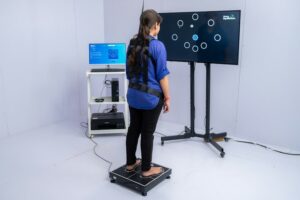
Balancing is a vital component of physical fitness, which is the ability to maintain the center of gravity over a base of support and control the body’s movements in relation to the environment (Cheung et al., 2018). Balance is an important factor for the maintenance of physical health, as it helps to prevent falls, injuries, […]

Read More

MIRROR CELL

Introduction and Discovery of Mirror Neurons The concept of the mirror cell, more commonly referred to as the mirror neuron, represents one of the most significant discoveries in modern neuroscience, fundamentally altering our understanding of how the brain processes social interactions and motor actions. These specialized neurons bridge the traditional gap between sensory perception and […]

Read More

DYSBASIA

Definition and Nomenclature of Dysbasia Dysbasia, formally recognized in clinical and developmental psychology settings as Developmental Coordination Disorder (DCD), is a complex neurodevelopmental condition characterized by significant deficits in the acquisition and execution of coordinated motor skills. This disorder is not attributable solely to intellectual disability, visual impairment, or specific neurological conditions such as cerebral […]

Read More

BASIC REFLEXES

Abstract: Overview of Basic Reflexes This comprehensive encyclopedia entry details the subject of basic reflexes, providing an in-depth analysis of their definition, historical study, and profound clinical and developmental implications. Basic reflexes, often synonymous with primitive reflexes, constitute the foundational automatic motor responses critical for human survival and subsequent neurological development. This article reviews the […]

Read More

MCCARTHY SCALES OF CHILDREN’S ABILITIES

is an instrument which is used to measure the cognitive and motor abilities of children between the ages of 2 and 81 years old. There are 18 sub tests which use 6 overlapping scales. First proposed by Dorothea McCarthy in 1972. MCCARTHY SCALES OF CHILDREN’S ABILITIES: “One of the many scales which looks at the […]

Read More

CORPUS CALLOSUM

Introduction and Definition of the Corpus Callosum The Corpus Callosum stands as the largest and most critical structure for interhemispheric communication in the human brain, functioning as an immense pathway of nerve fibers traveling superiorly over the longitudinal fissure. This massive white matter tract serves as the primary linkage for the two opposing cerebral hemispheres, […]

Read More

BRAIN DAMAGE

Definition and Scope of Brain Damage Brain damage, formally defined as injury to the central nervous system, constitutes a broad category of impairment that manifests through observable deficits in the cognitive, sensory, and motor skills mediated by the nervous center. This condition is not a singular diagnosis but rather a descriptor for neurological injury resulting […]

Read More

PURSUITMETER

The Pursuitmeter Defined: An Introduction to Psychomotor Tracking The pursuitmeter stands as a historically significant apparatus within the realm of experimental psychology, specifically categorized as a device designed to quantify an individual’s ability to execute **continuous visual-motor tracking**. Functionally, it measures the precision and coordination required to follow a moving target, demanding a constant and […]

Read More

POWER GRIP

The Nature and Definition of the Power Grip The concept of the power grip refers to the fundamental mechanism utilized by the human hand to secure and stabilize an object, prioritizing containment and force generation over fine manipulation. This mechanism is defined physiologically as the manner of grabbing hold of an item primarily through sustained […]

Read More

EYE-HAND COORDINATION

Introduction and Definitional Scope Eye-hand coordination, often termed visuomotor coordination, represents a fundamental and highly complex sensorimotor skill defined as the precisely synchronized combined motions of the hands and eyes, working in tandem to execute targeted actions. This intricate process allows an individual to utilize visual input concerning the location, distance, and trajectory of an […]

Read More

PSYCHOMOTOR TEST

Introduction and Definition A psychomotor test is a specialized assessment tool designed to quantify the efficiency and quality of an individual’s coordinated use of cognitive and motor skills. Fundamentally, these tests measure the speed, accuracy, and dexterity with which a person translates internal mental processes—such as attention, decision-making, planning, and perception—into observable, external physical actions. […]

Read More

PERCEPTUAL-MOTOR COORDINATION

PERCEPTUAL-MOTOR COORDINATION Perceptual-motor coordination (PMC) represents a foundational concept in cognitive and motor psychology, defined fundamentally as the organized and continuous employment of perceptually-gathered data in the management of continuing motions. This complex process is not merely the sequential execution of perception followed by action, but rather a dynamic, closed-loop feedback system where sensory input […]

Read More

APRACTAGNOSIA

Definition and Conceptual Framework of Apractagnosia Apractagnosia is a complex neuropsychological disorder characterized fundamentally by a profound difficulty in executing skilled motor acts, often involving intricate sequences of movements, despite the absence of elemental motor paralysis or significant sensory deficits. Unlike simple apraxia, which primarily addresses the inability to perform purposeful movements upon command or […]

Read More

PERCEPTUAL-MOTOR MATCH

Introduction: Defining the Perceptual-Motor Match The concept of the perceptual-motor match describes a fundamental cognitive and neurophysiological capacity essential for successful interaction with the environment: the ability to seamlessly relate incoming sensory and perceptual information with a formerly acquired, calibrated, and appropriate group of motor reactions. This complex process is far more than a simple […]

Read More

SINISTRALITY

Definition and Scope of Sinistrality Sinistrality refers formally to the preferential and habitual use of the left hand or the left side of the body for engaging in complex motor activities requiring precision, strength, or coordination. This tendency is most commonly observed and studied through left-handedness, where the left hand is chosen for tasks such […]

Read More

PERFORMANCE TEST

Defining the Performance Test The performance test fundamentally represents any systematic challenge of capacity or competency necessitating mainly motor, manipulative, or physical reactions, rather than requiring extensive verbal articulation, written responses, or reliance on linguistic comprehension. This diagnostic approach shifts the focus from what an individual can state or describe to what they can physically […]

Read More

PERCEPTUAL-MOTOR LEARNING

Introduction and Definition of Perceptual-Motor Learning Perceptual-motor learning is fundamentally defined as the intricate process involved in the acquiring of a skill which necessitates the precise and rapid connection between the sensory processing of environmental information—specifically, the perceptual discrimination of imperative stimulants—and the subsequent production of contextually appropriate physical movement, known as adequate motor reactions. […]

Read More

SKILL

Defining Skill and Its Psychological Basis A skill is fundamentally a learned ability that manifests as a high level of proficiency in performing a specific task or function. Unlike innate abilities, which represent an individual’s potential capacity, skill is the realized capability, acquired and refined exclusively through dedicated training and practice. This acquisition process integrates […]

Read More

MANUAL DOMINANCE

Defining Manual Dominance and Laterality Manual dominance, often colloquially referred to as handedness, describes the pervasive tendency for an individual to consistently prefer and more effectively utilize one hand—the dominant hand—for fine motor tasks requiring precision, dexterity, and power. While the most common and visible manifestation of this preference is the act of writing, manual […]

Read More

POSTURAL CONTROL

Foundational Concepts and Definition Postural control is defined as the complex capacity to manage the position of one’s body in space, ensuring stability and orientation. This crucial neurophysiological function involves maintaining the body’s center of mass (COM) within the limits of the base of support (BOS). Effective postural control is not merely a static act […]

Read More

MOVEMENT EDUCATION

Introduction and Definition Movement Education is an established educational philosophy and pedagogical strand dedicated to fostering the comprehensive development of human motor abilities through intentional, structured physical movement. Fundamentally, this discipline aims to educate individuals to develop their motor skills not merely through repetitive drills, but through a process of exploration, understanding, and application of […]

Read More

PREHENSION

noun. the action of clasping, grasping, or taking an item or reinforcing the body, generally with a limb adapted for such a reason. PREHENSION: “Who can explain the concept of prehension to the class?”

Read More

MOTOR TEST

Motor Test: Assessment of Motor Capabilities Core Definition and Scope of Motor Tests A motor test is a specialized psychological and physiological assessment tool meticulously designed to examine an individual’s motor capabilities and the integrity of their underlying motor system. At its core, it seeks to quantify and qualify performance across various dimensions of movement, […]

Read More

DYSPRAXIA

Dyspraxia (Developmental Coordination Disorder) Core Definition of Dyspraxia Dyspraxia, often formally referred to as Developmental Coordination Disorder (DCD), is a chronic neurological condition characterized by an impaired ability to execute skilled and coordinated movements. It is not caused by general intellectual disability or any specific muscle weakness, but rather by difficulties in the brain’s ability […]

Read More

ATAXIAGRAPH

The Ataxiagraph: An Advanced System for Neurological Assessment The Core Definition of the Ataxiagraph The Ataxiagraph is a highly specialized, novel psychometric tool designed specifically for the quantitative and objective assessment of Ataxia severity in patients suffering from various neurological disorders. Ataxia, fundamentally, is a pervasive lack of voluntary coordination of motor skills, which can […]

Read More

SENSORIMOTOR STAGE

SENSORIMOTOR STAGE The Core Definition of the Sensorimotor Stage The Sensorimotor stage is the foundational period of mental growth, marking the first of four stages in the comprehensive theory of cognitive development proposed by the influential Swiss psychologist, Jean Piaget. Spanning from birth until approximately two years of age, this critical phase is defined by […]

Read More

MOTOR NEURON POOL

Motor Neuron Pool: Fundamental Units of Motor Control The Core Definition of the Motor Neuron Pool The Motor Neuron Pool (MNP) is defined as the distinct collection of all the motor neurons located within the central nervous system (CNS) that are dedicated to innervating a single muscle. This concept is foundational to neurophysiology and motor […]

Read More

ROTARY PURSUIT TEST

The Rotary Pursuit Test: Measuring Continuous Motor Skill The Core Definition and Mechanism The Rotary Pursuit Test (RPT) is a foundational psychomotor assessment tool designed to measure an individual’s ability to maintain continuous visual-motor tracking skills under dynamic conditions. At its core, the RPT requires the participant to follow a small, moving target, typically a […]

Read More

STANCE REFLEX

Stance Reflex Introduction to the Stance Reflex The stance reflex is a fundamental primitive reflex, also known as a primary reflex, that is inherently present in human infants. This complex reflex is not a single, isolated action but rather a coordinated set of involuntary movements involving multiple parts of the body, primarily the lower limbs […]

Read More

DEVELOPMENTAL TEST OF VISUAL-MOTOR INTEGRA

Developmental Test of Visual-Motor Integration (VMI) Introduction to Visual-Motor Integration The Developmental Test of Visual-Motor Integration (VMI) is a highly respected and widely utilized standardized assessment tool specifically designed to evaluate an individual’s capacity for visual-motor integration. This fundamental psychological construct refers to the complex interplay between an individual’s visual perception and their motor skills, […]

Read More

MASSED PRACTICE

Massed Practice Introduction to Massed Practice In the vast landscape of learning and skill acquisition, various methodologies are employed to optimize performance and retention. One such approach, widely recognized and extensively researched, is massed practice. Fundamentally, massed practice refers to a learning strategy characterized by the intensive and continuous engagement with a large volume of […]

Read More

MOTOR EQUIVALENCE

Motor Equivalence Introduction to Motor Equivalence Motor equivalence is a fundamental concept in motor control and learning, referring to the remarkable ability of individuals to achieve the same movement outcome or complete a specific task using a variety of different muscles, muscle groups, or even different parts of the body. This inherent flexibility means that […]

Read More

PROPRIOCEPTIVE STIMULUS

Proprioceptive Stimulus: A Comprehensive Overview The Core Definition of Proprioceptive Stimulus Proprioception, often referred to as kinaesthesia, represents a sophisticated sensory system that provides the brain with continuous, real-time information regarding the position and movement of the body in space. At its most fundamental level, it is the unconscious sense of where one’s body parts […]

Read More

MIRROR DRAWING

MIRROR DRAWING Introduction to Mirror Drawing Mirror drawing is a distinctive and insightful cognitive task widely employed within experimental and clinical psychology to evaluate an individual’s motor, visual, and cognitive capabilities. At its core, this activity requires participants to reproduce a given geometric figure or pattern, such as a star, not by directly observing their […]

Read More

STEPPING REFLEX

Stepping Reflex Introduction: The Core Definition The Stepping Reflex is a fascinating example of the intricate, innate behaviors observed in human infants during their earliest stages of life. Classified as a primitive reflex, it represents an automatic, involuntary motor response that is present at birth and typically fades within the first few months. Fundamentally, this […]

Read More

DIADOCHOKINESIS

Diadochokinesis Core Definition of Diadochokinesis Diadochokinesis is a specialized motor skill that encompasses the capacity to execute rapid, alternating movements with exceptional coordination and rhythmic precision. It represents a fundamental aspect of motor control, requiring the seamless and swift transition between two distinct, opposing actions. This ability is not merely about speed but also about […]

Read More

DEVELOPMENTAL AGE (DA)

Developmental Age (DA) Introduction to Developmental Age (DA) Developmental Age (DA) is a sophisticated measure used to quantify a child’s overall developmental level in comparison to their chronological age. Unlike simply counting years or months, DA assesses a broad spectrum of a child’s capabilities across multiple domains, including cognitive development, language acquisition, motor skills, social-emotional […]

Read More