Human Intent: The Psychology of a Powerful Grip
Scientifically Reviewed · Dr. Marwa Abd-Alazim · September 5, 2026
Review Criteria & Clinical Standards
This content undergoes rigorous scientific peer-review and medical editorial standards at Arab Psychology Network to ensure clinical accuracy, validity, and compliance with evidence-based guidelines from leading psychological and healthcare authorities (APA / WHO).
The Nature and Definition of the Power Grip
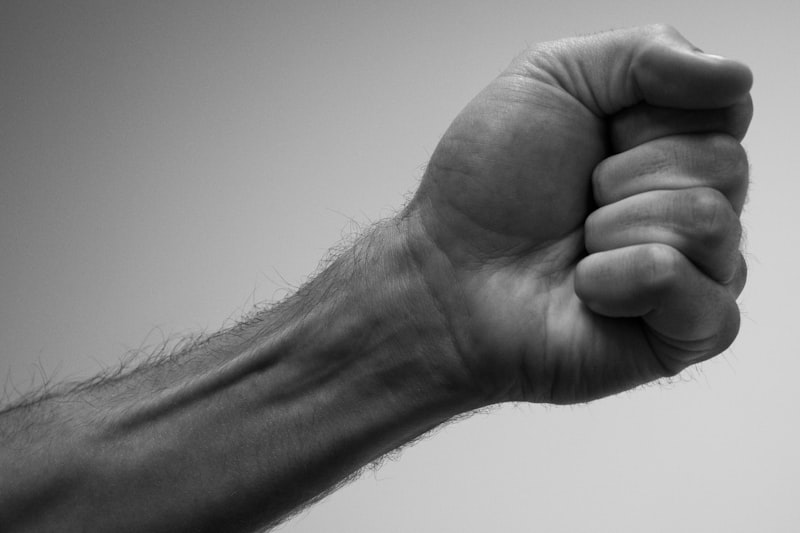
The concept of the power grip refers to the fundamental mechanism utilized by the human hand to secure and stabilize an object, prioritizing containment and force generation over fine manipulation. This mechanism is defined physiologically as the manner of grabbing hold of an item primarily through sustained contact between the object, the palm, and the palmar surfaces of the fingers, particularly the distal and middle phalanges. Unlike fine motor skills, which rely on dexterity and isolated movement, the power grip employs the synergistic action of the entire hand and often the forearm musculature, thereby maximizing the surface area of contact to distribute pressure effectively and enhance frictional stability. It serves as the primary mode for activities requiring strength, such as carrying heavy loads, wielding tools, or stabilizing large implements against external forces.
Functionally, the power grip is instrumental in establishing a robust interface between the user and the environment, facilitating tasks that demand gross motor control and significant muscular output. Its intrinsic design allows for the application of substantial compressive forces, critical for effective tool usage where the object must remain rigidly fixed within the hand structure despite counter-forces generated during the activity, such as swinging a hammer or lifting a heavy kettle. The grip configuration is fundamentally determined by the geometric properties of the object being grasped; for instance, a cylindrical object necessitates the fingers curling uniformly around the axis, while a spherical object requires greater divergence and abduction of the fingers to encompass the volume. This adaptability underscores the evolutionary success of the human hand structure, allowing for both forceful interaction and subsequent precise manipulation.
The evolutionary significance of the power grip cannot be overstated, as it is inextricably linked to the development of early hominid tool use and survival strategies. The ability to tightly secure crude implements, stones, and later, more sophisticated tools, provided a substantial advantage in hunting, defense, and processing resources. While the specialization of the human thumb allows for the contrasting precision grip, the power grip provided the necessary brute force for heavy labor. Therefore, the integrity and functional availability of the power grip are essential indicators of overall manual ability and neuromuscular health, reflecting both the anatomical structure of the hand and the efficiency of the central nervous system pathways controlling motor execution.
Neuromuscular Basis and Biomechanics of Execution
The execution of a mature power grip is a complex biomechanical process requiring precise coordination between the intrinsic muscles of the hand and the powerful extrinsic flexors located in the forearm. The primary drivers of the power grip are the Flexor digitorum superficialis and the Flexor digitorum profundus, which generate the necessary force to curl the fingers tightly against the palm. This action must be carefully balanced by the activation of the wrist extensors, particularly the Extensor carpi radialis longus and brevis. This synergistic relationship is paramount: maintaining the wrist in slight extension optimizes the length-tension relationship of the finger flexors, allowing them to produce maximal gripping force. Without this antagonistic balance, gripping force would be dramatically reduced, often resulting in wrist flexion known as active insufficiency.
Neural control originates primarily from the motor cortex, with efferent signals descending via the corticospinal tracts to innervate the relevant motor units. The stability and modulation of the grip are highly dependent on sensory feedback, predominantly relayed through the median and ulnar nerves. Cutaneous receptors in the palm and fingertips constantly monitor pressure and slippage, allowing the central nervous system to dynamically adjust the force applied—a critical feature for preventing objects from being dropped or, conversely, crushed. This sophisticated sensorimotor loop allows for subtle, unconscious adjustments, ensuring that the grip is firm enough to secure the object while being energy-efficient and responsive to changes in object properties or external perturbation.
The biomechanical leverage achieved during a power grip utilizes the entire length of the metacarpals and phalanges as levers against the fulcrum provided by the object itself. The deep transverse metacarpal ligament and the palmar fascia provide structural reinforcement, transforming the hand into a rigid, unified unit capable of absorbing and transmitting considerable force. The thumb, though often positioned axially to counteract the force exerted by the fingers (as in a cylindrical grip), plays a critical stabilizing role rather than a manipulative one, distinguishing this movement from the precision grip where the thumb is an active partner in fine pinch movements. Furthermore, the arch systems of the hand—the longitudinal and transverse arches—are maintained during the power grip to ensure conformability and maximal contact area, essential for friction-based security.
Developmental Milestones and Ontogeny of Grasping
The acquisition of the power grip is a crucial milestone in early human development, reflecting the maturation of both peripheral musculoskeletal structures and descending neural pathways. Grasping begins reflexively with the palmar grasp reflex, observable immediately after birth. This primitive reflex, elicited by pressure in the infant’s palm, is purely involuntary and typically fades between four and six months of age as higher cortical control begins to inhibit reflexive responses. The transition from reflexive to voluntary grasping marks a significant cognitive and motor leap, paving the way for intentional interaction with the environment.
Voluntary grasping develops sequentially, progressing through predictable stages. Initially, around five to six months, the infant may utilize an ulnar-palmar grasp, securing the object against the palm using the pinky side of the hand, often without thumb opposition. This progresses to the palmar grasp (around six to seven months), where the object is held squarely in the palm, still using the whole hand but with slightly better control. The mature power grip, characterized by the ability to wrap the fingers uniformly around an object and stabilize it with the palm, typically solidifies between nine and twelve months, often coinciding with the onset of cruising or walking, indicating a generalized maturation of gross motor skills and trunk stability.
It is noteworthy, as documented in developmental psychology research, that the establishment of the power grip is sometimes delayed in infants, even those who are otherwise perfectly healthy and who exhibited good Apgar scores at birth. This variability underscores that the maturation of the complex corticospinal pathways required for coordinated, voluntary power generation is not always synchronized with general physical health indicators. Developmental delays in this area, while potentially benign, necessitate careful monitoring, as they can sometimes be an early indicator of subtle neurological differences, requiring occupational therapy or physical intervention focused on improving hand strength, proprioception, and purposeful motor planning. Consistent failure to transition from a reflexive to a voluntary, controlled power grip warrants a thorough developmental assessment.
Classification and Taxonomy of Power Grips
While often discussed as a singular entity, the power grip encompasses several distinct configurations, classified based on the shape of the object being held and the specific involvement of the hand structures. The most common variation is the Cylindrical Grip, utilized when grasping objects such as a drinking glass, a hammer handle, or a railing. In this configuration, the fingers are uniformly flexed around the object, and the thumb wraps around the opposite side to provide counter-pressure, ensuring the object is held firmly within the concavity of the palm. This grip maximizes contact area and is crucial for activities requiring rotation or sustained force.
A secondary, yet functionally distinct, type is the Spherical Grip, employed when handling rounded objects such as a softball or an orange. Because spherical objects lack parallel surfaces, this grip requires greater finger abduction and often wider separation of the digits than the cylindrical grip. The arches of the hand must be maintained to conform to the curvature of the object, ensuring maximal stability and preventing slippage. The force vectors involved in the spherical grip are more complex, requiring fine tuning of intrinsic muscle activity to maintain the curvature without excessive strain or loss of control, particularly when the object is heavy.
Two other important classifications include the Hook Grip and the lateral power grip. The hook grip is unique in that it typically involves only the fingers (usually the distal and middle phalanges) hooking around an object, with minimal to no involvement of the palm or thumb for stabilization. This grip is primarily used for carrying tasks, such as shopping bags or buckets, where the load is passively supported by the tensile strength of the flexor tendons. The lateral power grip, sometimes termed the side-to-side grip, involves the object being held forcibly between the sides of two adjacent fingers, often used when manipulating flat, heavy items or when the palm is otherwise compromised. Understanding these classifications is essential for ergonomic design and for precise clinical assessment of specific hand function deficits.
Differentiation from the Precision Grip
A cornerstone of human manual dexterity is the functional dichotomy between the power grip and the precision grip. These two modes of grasping represent specialized endpoints on the spectrum of hand function, optimized for entirely different tasks. The power grip, as established, is optimized for stability, containment, and maximal force application, utilizing the bulk of the hand musculature and the palmar surfaces. In contrast, the precision grip is specialized for manipulating small objects, prioritizing dexterity, fine tuning, and sensory feedback over brute strength.
The anatomical execution of the precision grip relies heavily on the opposed action of the thumb pulp against the pulp of one or two fingers (pulp-to-pulp or tip-to-tip pinch). Muscular recruitment differs substantially; while the power grip utilizes the powerful extrinsic flexors for force, the precision grip relies more on the intrinsic hand muscles, such as the lumbricals and interossei, for subtle adjustments and isolation of finger movement. The neural control pathways for precision gripping are also thought to be more refined and later maturing than those governing the gross power grip, reflecting the evolutionary need for highly specialized manipulation skills unique to higher primates.
The ability to transition smoothly and quickly between the power grip and the precision grip—known as the prehension pattern—is a hallmark of mature, unimpaired hand function. For example, when using a screwdriver, a person first employs a power grip to apply torque and rotational force, but if the screw is dropped, they must immediately transition to a precision grip to pick up the small object. Impairment in either mode, or in the transition between them, severely limits an individual’s independence and ability to perform activities of daily living. Therefore, both forms of grasping are assessed rigorously in rehabilitation settings to diagnose the extent and location of neurological or musculoskeletal injury.
Clinical Significance and Assessment of Impairment
The functional status of the power grip holds significant clinical importance, serving as a reliable indicator of the integrity of the peripheral nervous system, the musculoskeletal system, and the motor control centers of the brain. Impairment in the power grip can manifest as reduced strength (weakness), inability to sustain the grip (fatigability), or poor force modulation (clumsiness). These deficits are frequently observed following neurological events such as Cerebrovascular Accidents (CVA) or traumatic brain injuries, where damage to the descending motor tracts disrupts the central command signals necessary for strong muscle contraction.
Peripheral nerve injuries are another common cause of power grip failure. Damage to the ulnar nerve often compromises the intrinsic muscles and affects the ability to maintain the arches of the hand, leading to difficulty in securing spherical objects. Conversely, significant damage to the median nerve can impair the function of the Flexor digitorum profundus in the index and middle fingers, severely limiting the overall compressive force. Assessment of power grip strength is standardized using a hand dynamometer, providing objective, quantifiable data measured in kilograms or pounds. This data is critical for establishing a baseline, tracking recovery progress, and determining the functional limitations of the patient.
In pediatric and developmental contexts, persistent weakness or awkwardness in the power grip beyond typical developmental timelines signals potential developmental dyspraxia, hypotonia, or underlying neuromuscular disorders. Occupational therapists utilize functional assessments, observing the child’s ability to grasp and manipulate age-appropriate toys, tools, and utensils. Early identification of power grip deficits is essential, as the inability to securely grasp objects can impede a child’s participation in school, play, and self-care, potentially leading to secondary developmental and psychological challenges related to perceived incompetence and frustration.
Implications in Rehabilitation and Therapeutic Interventions
Rehabilitation strategies targeting the power grip are multifaceted, aiming to restore strength, endurance, and coordination following injury or illness. For individuals recovering from stroke or brain injury, therapy often focuses on neuroplasticity—retraining the brain to utilize alternative or spared pathways to initiate the grip command. This frequently involves repetitive, task-specific training, such as grasping varying sizes and textures of objects, coupled with sensory stimulation to improve the crucial feedback loop necessary for force modulation. Techniques like constraint-induced movement therapy (CIMT) may be employed to encourage the use of the affected limb.
In cases of peripheral nerve injury or orthopedic trauma, interventions focus on maximizing the strength of remaining functional muscle groups and utilizing adaptive equipment where necessary. Strengthening exercises typically involve resistance training using therapeutic putty, hand exercisers, and calibrated weights to build the endurance of the extrinsic flexors and the stabilizing capacity of the wrist extensors. Furthermore, maintaining passive range of motion is crucial to prevent joint stiffness and contractures that would physically limit the hand’s ability to conform to the shape required for an effective power grip.
For pediatric clients with developmental delays, therapeutic intervention often centers on providing graded sensory and motor experiences. This includes activities that encourage sustained weight-bearing through the hands, which helps normalize muscle tone and improve proprioception, followed by activities that promote purposeful grasping of objects that require different grip configurations (e.g., large blocks for cylindrical grip, balls for spherical grip). The goal of these interventions is not merely strength improvement but rather the integration of the power grip into the child’s spontaneous, functional movement repertoire, ensuring that this foundational skill supports subsequent development of fine motor manipulation and complex tool use.